Why Your Home Appraisal Came in Low and How a Reconsideration of Value Can Fix It
You found your dream home. The seller accepted your offer. The loan process is moving forward, and then the appraisal comes back lower than…
Why Your Home Appraisal Came in Low and How a Reconsideration of Value Can Fix It
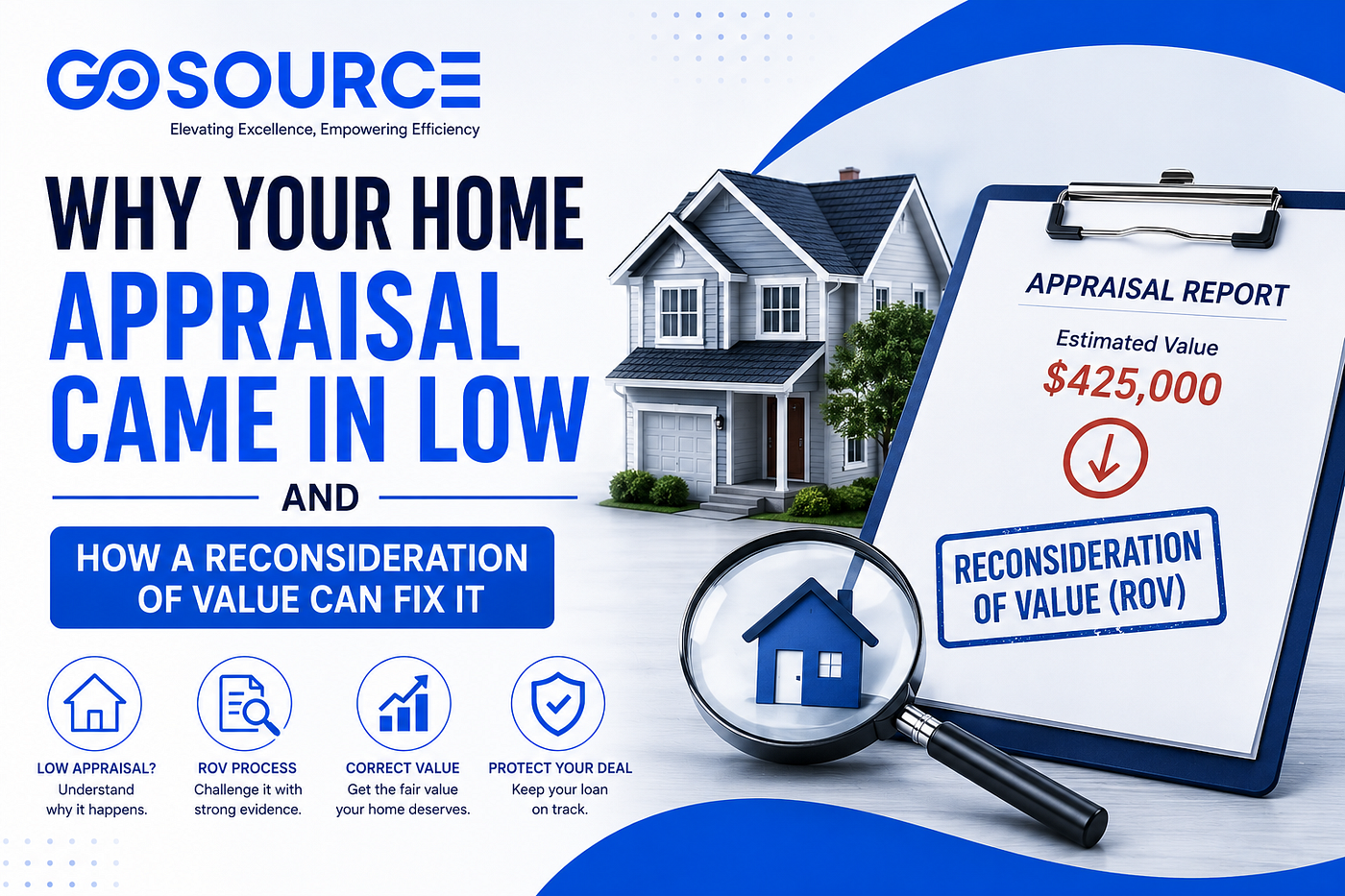
You found your dream home. The seller accepted your offer. The loan process is moving forward, and then the appraisal comes back lower than expected.
It’s one of the most stressful moments in any real estate transaction, and it happens more often than buyers and agents realize. But a low appraisal doesn’t automatically kill the deal. In many cases, you can formally challenge it through a process called “Reconsideration of Value” (ROV).
In this guide, we’ll break down exactly what an ROV is, when you should request one, how the process works, and what you need to include to give your challenge the best possible chance of success.
What Is a Reconsideration of Value?
A Reconsideration of Value is a formal written request asking an appraiser or the appraisal management company handling the order to take another look at a completed appraisal. The goal isn’t to pressure the appraiser into hitting a number. It’s to provide evidence that the original appraisal may have missed something important: a better comparable sale, a factual error, or a shift in local market conditions.
The ROV process has existed in the mortgage industry for years, but it gained new structure and stricter guidelines in 2024 when federal regulators, including Fannie Mae, Freddie Mac, and the CFPB, updated their requirements to reduce bias and increase transparency. Under the new rules, lenders are required to have formal ROV policies in place, and appraisers are required to respond to properly submitted requests in a structured, documented way.
For a deeper breakdown of what lenders and appraisers are required to do under the updated framework, GoSource Valuation’s guide to the Reconsideration of Value process is an excellent starting point.
Common Reasons Appraisals Come in Low
Before filing an ROV, it helps to understand why appraisals miss the mark. The most common causes include:
1. Incorrect or Missing Comparable Sales Appraisers determine value by comparing your property to similar homes that have recently sold nearby; these are called “comps.” If the appraiser selected comps that are smaller, less updated, or in a weaker part of the neighborhood, the resulting value may be artificially deflated.
2. Factual Errors in the Report Appraisers are human, and mistakes happen. The report might list the wrong square footage, miss a bathroom, fail to note a recent kitchen renovation, or misclassify the property type. These errors can shave thousands of dollars off the final value.
3. Appraiser Unfamiliarity with the Local Market Appraisers are sometimes assigned to properties outside their core area of expertise, especially in rural or rapidly changing markets. An appraiser who doesn’t know the neighborhood for micro-dynamics can miss value drivers that a local expert would catch immediately.
4. Outdated Market Data Real estate markets can shift quickly. If the appraiser relied on sales that closed six months ago in a market that has since appreciated significantly, the value won’t reflect current reality.
5. Missed Improvements If you or a prior owner made substantial upgrades to a finished basement, new HVAC system, solar panels, or renovated bathrooms, and they weren’t properly accounted for, the appraisal may undervalue the property.
When Should You Request an ROV?
Not every low appraisal warrants a challenge. If the appraiser value appears to be well-reasoned and the comps are solid, filing an ROV without new evidence is unlikely to succeed and may delay your closing.
You should consider requesting a reconsideration of value when:
- You can identify two or more comparable sales that are stronger than those the appraiser used and were not included in the report
- You spot a factual error in the appraisal, wrong square footage, missing rooms, or incorrect lot size
- The appraiser failed to note significant improvements that affect value
- Market conditions have changed materially since the effective date of the appraisal
- The appraiser chose comps from a different neighborhood or inferior location when better nearby sales were available
The key is that your challenge needs to be evidence-based. Saying “the value feels too low” won’t get traction. Showing the appraiser three recent sales of comparable homes that closed at higher prices gives them something concrete to work with.
How the ROV Process Works Step by Step
Here’s what typically happens from the moment you identify a problem to the time a final determination is made:
Step 1: Review the Appraisal Report Carefully Get a copy of the full appraisal report and read every section. Look at the comps selected, the adjustments made, the property description, the market conditions commentary, and any addenda. Flag everything that seems incorrect or incomplete.
Step 2: Gather Your Evidence This is the most important step. Collect:
- MLS data on comparable sales that the appraiser missed
- County records showing correct property details
- Receipts or permits for improvements not noted in the report
- Local market data showing appreciation trends
- A written statement explaining your concerns in factual, non-emotional terms
Step 3: Submit the ROV Through the Lender Under current federal guidelines, borrowers cannot contact the appraiser directly. All ROV requests must go through the lender, who then forwards the information to the appraiser (or the AMC) while maintaining appraiser independence. Submit your evidence in writing and keep a copy.
Step 4: The Appraiser Reviews and Responds Under the updated guidelines, the appraiser is required to review each piece of evidence provided and respond to it in writing, either explaining why it wasn’t used or adjusting the value accordingly. They are not required to change the value, but they are required to address the evidence.
Step 5: The Lender Communicates the Outcome Your lender will notify you of the appraiser’s decision. If the value is revised upward, the loan may proceed with the original terms. If the value stands, you’ll need to consider alternatives, such as renegotiating the purchase price, making a larger down payment, or walking away if the contract allows.
What Makes an ROV Request Strong vs. Weak
The difference between a successful ROV and a rejected one usually comes down to preparation and documentation.
Strong ROV requests include:
- Specific, factual errors identified with supporting documentation
- Two or three comparable sales with MLS detail sheets attached
- A clear, professionally written narrative explaining each concern
- No emotional language or pressure to “hit the number.”
Weak ROV requests include:
- Vague statements that the value “doesn’t seem right.”
- No supporting evidence, just the buyer’s or agent’s opinion
- An appeal based solely on the purchase price
- Any language that could be interpreted as pressuring the appraiser
Remember: the goal of an ROV is accuracy, not advocacy. If you approach it as a fact-finding mission rather than a battle, you’re far more likely to get a fair outcome.
What the New 2024 ROV Rules Changed
In August 2024, a coalition of federal agencies, including the OCC, FDIC, Federal Reserve, NCUA, and CFPB, finalized new rules governing how lenders must handle ROV requests. The key changes included:
- Lenders must have a written ROV policy that describes the process borrowers can use to request reconsideration
- Borrowers must receive a copy of the completed appraisal in advance, giving them time to review it before closing
- Appraisers must provide written responses to each item of evidence submitted in a properly formatted ROV
- Anti-coercion protections were strengthened; lenders cannot attempt to pressure appraisers into changing their values for reasons other than legitimate factual errors or missed comps
These changes were designed to address long-standing concerns about appraisal bias, particularly in communities of color where studies have shown appraisals can systematically undervalue properties. The new framework makes the process more transparent, more structured, and more accessible to borrowers who previously had little recourse when they believed an appraisal was wrong.
The operational implications for appraisers and AMCs are significant. Understanding how to handle these requests compliantly and at scale is part of what GoSource Valuation helps appraisal professionals navigate.
Tips for Real Estate Agents Helping Clients Through an ROV
If you’re a real estate agent and your buyer’s deal is at risk because of a low appraisal, here’s how you can help:
Pull the comps yourself. Don’t wait for the lender to investigate. Go into the MLS and identify every comparable sale from the past 90 days that the appraiser may have overlooked. Prioritize sales that are similar in size, condition, location, and amenities.
Document the property’s features. If the appraisal missed a finished basement, a new roof, or a renovated kitchen, gather contractor receipts, permits, or photos to support the correction.
Write a professional cover letter. Help your client submit a clear, organized ROV packet. Include a brief narrative explaining each concern, followed by supporting documents. Keep the tone factual and professional.
Manage expectations. The ROV process typically takes five to ten business days. If the closing timeline is tight, communicate proactively with the lender about potential schedule adjustments.
Know when to renegotiate. Sometimes the appraiser’s value holds up after review. In that case, a frank conversation with your seller client about adjusting the purchase price may be the fastest path to save the deal.
Frequently Asked Questions About Reconsideration of Value
Q: Can I contact the appraiser directly to request a reconsideration? No. Under current federal guidelines governing the ROV process, all communication must go through the lender to preserve appraiser independence. Contacting the appraiser directly could be considered improper influence and may jeopardize your loan.
Q: How long does an ROV take? Most lenders aim to process ROV requests within five to ten business days, though timelines vary depending on the lender, the AMC, and the complexity of the evidence submitted. Faster response is now an industry expectation under the updated guidelines.
Q: Does submitting an ROV guarantee the value will change? No. The appraiser is required to consider and respond to your evidence, but they are not required to change the value. If the evidence is compelling, adjustments are common. If your original analysis was sound and your evidence doesn’t meaningfully change the picture, the value will likely stand.
Q: What if I believe the low appraisal is the result of bias? If you believe the appraisal was influenced by discriminatory factors such as the racial composition of the neighborhood, you may have grounds to file a complaint with the Consumer Financial Protection Bureau CFPB or your state’s appraisal regulatory board, in addition to submitting an ROV. The new federal rules were specifically designed to make it easier to challenge potentially biased appraisals.
Q: Can I request a second appraisal instead? In some circumstances, yes, particularly if you believe the appraiser had a fundamental methodological error or conflict of interest. However, lenders aren’t required to order a second appraisal simply because you disagree with the value. The ROV process is typically the first required step.
Q: What happens if my ROV is denied? If the appraiser reviews your evidence and the value stands, your options include renegotiating the purchase price with the seller, increasing your down payment to cover the gap, applying for a different loan product that may use different valuation methods, or walking away from the deal if the contract includes an appraisal contingency.
Q: Is there a cost to file an ROV? Generally, no. Filing an ROV through your lender should not cost you anything. However, if a second appraisal is ordered (a separate process), there will typically be an additional fee.
Q: What’s the difference between an ROV and an appraisal appeal? The terms are often used interchangeably, but technically, an ROV is a request to the original appraiser to reconsider their analysis in light ofnew evidence. An appraisal of appeal in some institutional contexts may refer to a separate internal review process. Always clarify with your lender which process applies to your situation.
Final Thoughts
A low appraisal is not necessarily a dead end. With the right preparation, the right evidence, and a clear understanding of the process, a reconsideration of value can correct legitimate errors and give a transaction the second chance it deserves.
What it requires is discipline: fact-based, professional, and focused on accuracy rather than advocacy. If you can make that case clear, the updated ROV framework gives you real tools to do it.
For lenders and appraisers navigating ROV compliance on the operational side, Go Source Valuation’s Reconsideration of Value resource outlines an eight-step framework to keep ROV workflows compliant, efficient, and defensible.
메타데이터
- post_id
- 3c12e8911646
- slug
- why-your-home-appraisal-came-in-low-and-how-a-reconsideration-of-value-can-fix-it-3c12e8911646
- url
- https://medium.com/@gosource07/why-your-home-appraisal-came-in-low-and-how-a-reconsideration-of-value-can-fix-it-3c12e8911646
- canonical_url
- https://medium.com/@gosource07/why-your-home-appraisal-came-in-low-and-how-a-reconsideration-of-value-can-fix-it-3c12e8911646
- author_url
- https://medium.com/@gosource07
- status
- ok
- fetched_at
- 2026-06-21 07:44:09