How LEGO Tricks You Into Having Fun
The Psychology That Explains My Ever-growing Closet Of Bricks
How LEGO Tricks You Into Having Fun
The Psychology That Explains My Ever-growing Closet Of Bricks
Photo by Xavi Cabrera on Unsplash
I’ve been a huge fan of LEGO since I was a child, and at this point, I can almost say it has become an addiction. I currently have a cabinet full of LEGO, and I just bought another cabinet to fill with even more sets. Just look at the picture below.
I love LEGO. But LEGO isn’t supposed to be fun. When you really break it down, LEGO is work. You follow instructions, you sort pieces, you make mistakes, and you have to fix them. But instead of them paying you, you’re the one paying them. It’s time consuming, sometimes frustrating, and definitely not cheap either.
Plus, they seem to have trapped my soul in this LEGO minifigure.
But despite all this, millions of people worldwide spend their hard earned money and precious hours just like me, snapping these little blocks together, completely hooked. So I wanted to figure out why.
I knew there was some kind of underlying psychology behind these plastic bricks. But the more I dug, the more I realized that LEGO doesn’t just sell toys, they engineer fun. And this is how they do it.
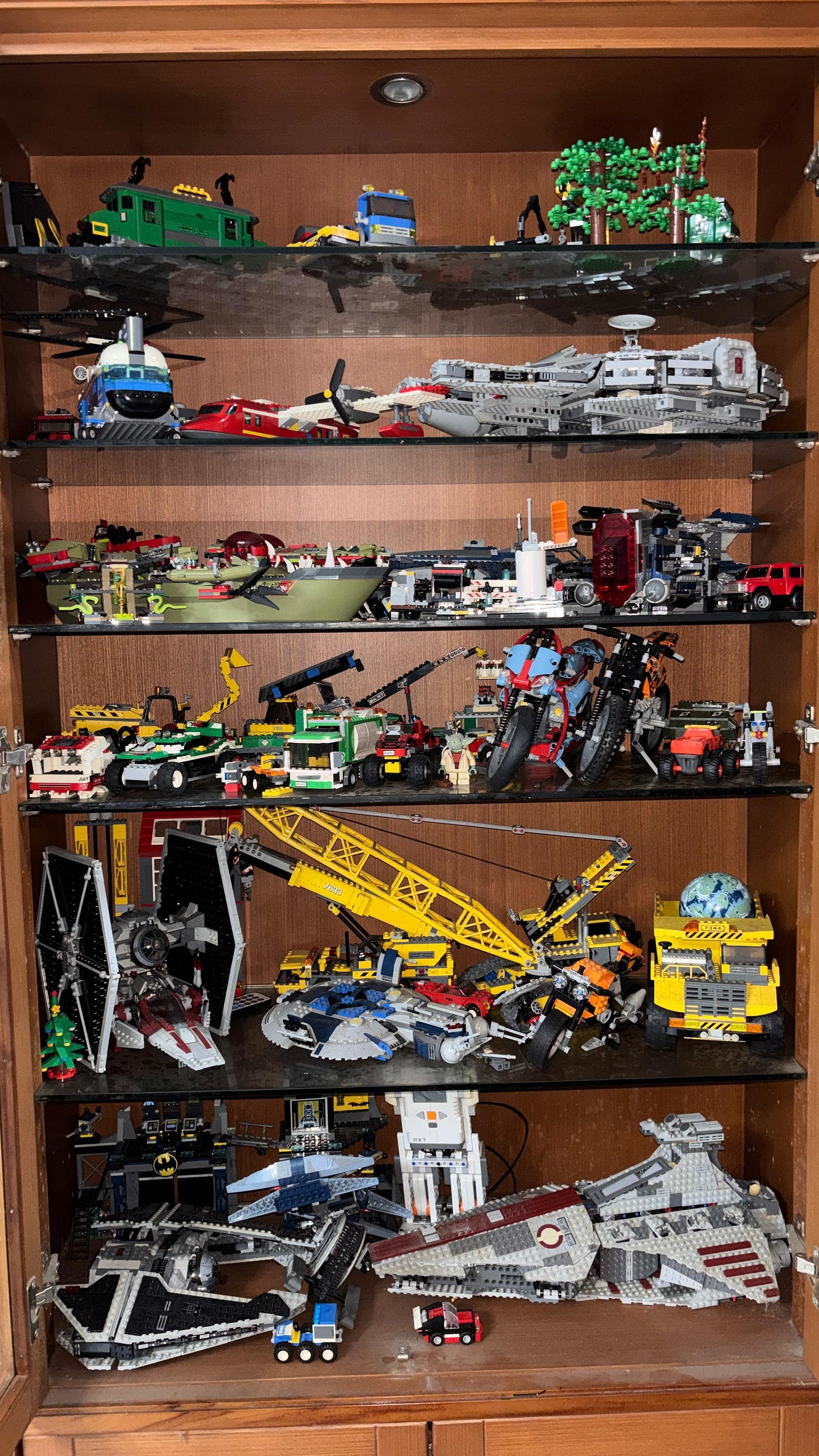
Photo by author
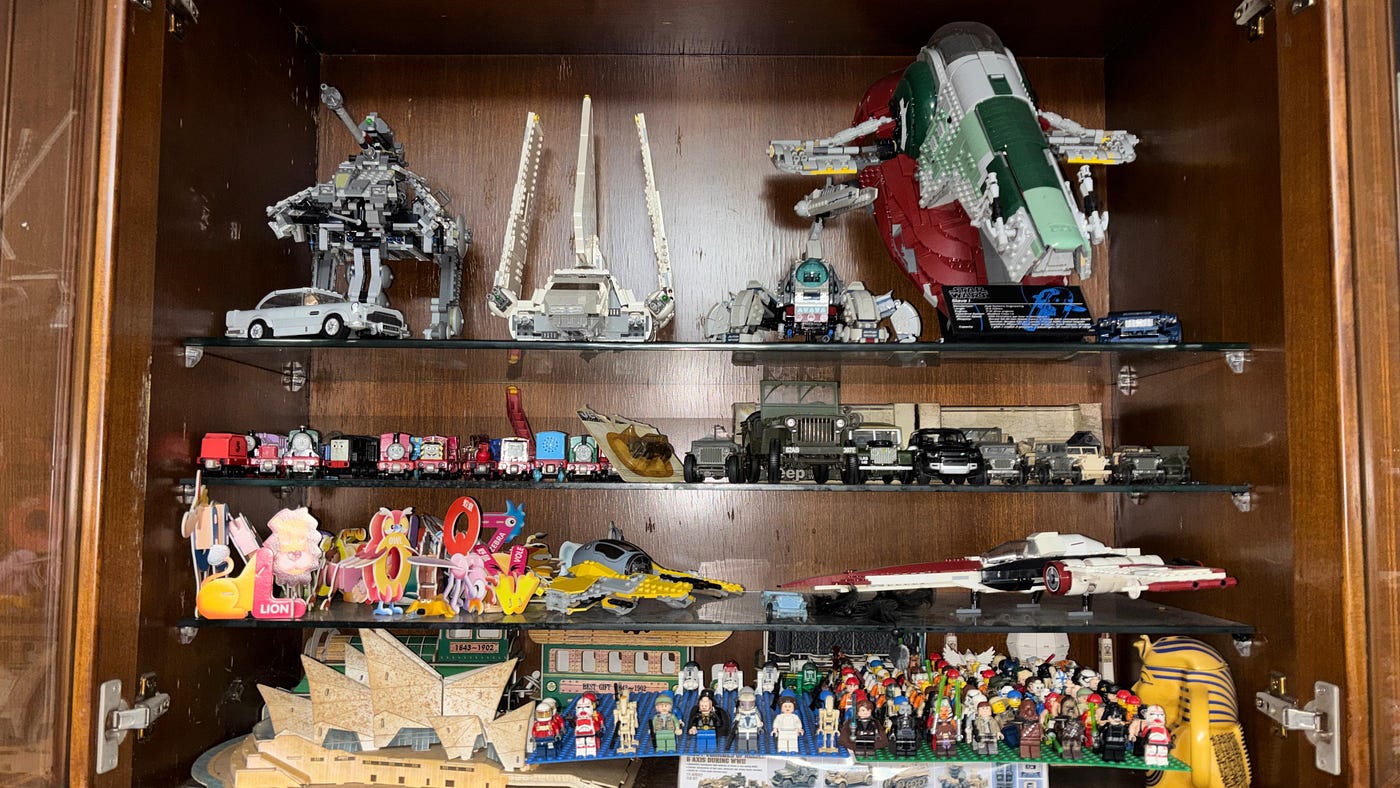
Photo by author
The IKEA Effect
There’s an idea in behavioral economics called the “IKEA effect,” which basically says we place a higher value on things we put effort into building ourselves. Research from the Journal of Consumer Psychology found that people were willing to pay significantly more for furniture they assembled themselves, even when the final product wasn’t as polished as a factory made one.
The mere act of building made them care more. And LEGO, it’s basically like a designer drug for this very effect. Even if you’re just following a manual brick by brick, there’s a real sense of pride that comes from seeing that sports car or potted plant come together.
It’s yours because you made it happen. But because it took time, patience, and attention, your brain decides this must be valuable. It’s why people hang onto old LEGO sets or display them on shelves like trophies. The work makes it feel meaningful.
But this goes even deeper. Because our brains have this little quirk called effort justification. If something requires effort, we assume it must be worth it. This is the same mental math we use to justify finishing a brutal workout or going for a run on a cold winter morning. The more effort, the more pride we get from finishing the task.
Now, I’m not trying to equate LEGO to working out, but the underlying idea is that by asking for better work from our side, LEGO gets us invested. We’re putting in a tiny piece of ourselves into the product at every step. By end of all of this, a LEGO car isn’t just a LEGO car anymore.
It’s your LEGO car. You’re the one who put on the doors. You’re the one who put on the wheels. And you’re the one who really focused when it came time to put on the stickers. Both the product and the progress are yours.
Photo by Sebastien Bonneval on Unsplash
The Progress Principle
Have you ever noticed how LEGO sets don’t just dump 1,200 pieces into a single plastic bag and say, good luck? Instead, they’re carefully divided into little numbered bags, bag one, bag two, bag three, and each one gives you just enough pieces to build a small portion of the final set.
That’s not just organization, that’s psychology at play. In his book, “Deliver What You Promised,” the former COO of LEGO talked about how this decision to have built-in milestones in the building process was an intentional one.
These milestones and natural breaks add to your sense of achievement when building a LEGO set. It helps to keep you engaged as you see everything coming together. It’s not just about getting to the final product that’s advertised on the box, it’s about getting as much enjoyment as possible from the process of putting it all together and figuring out how everything fits into each other.
Researchers call this the progress principle. They studied thousands of daily work diaries from professionals at work and found something surprising. The single biggest factor that boosts mood and motivation at work isn’t a bonus or promotion, it’s simply making progress in meaningful work.
Even small steps forward can dramatically increase happiness and productivity. LEGO takes this to heart by breaking down a large, potentially overwhelming build into bite-sized steps that give you this constant sense of forward momentum. You add a tiny tire? Amazing. A steering wheel? You’re crushing it. An entire engine? You’re a genius.
The whole process feels rewarding because your brain keeps checking off these tiny wins, and those microdoses of accomplishment make you want to keep going. This is something a lot of successful games and apps use too. Think about progress bars, leveling systems, or daily streaks. These all tap into our brain’s love for progress.
LEGO just happens to do it with actual bricks. Even the instruction manuals are designed to pace your sense of accomplishment. Every page you turn feels like another rung up a ladder, and some instruction manuals even have progress bars on them.
Zoom out a bit, and you’ll also start noticing that very few LEGO sets are created in isolation. They’re usually part of some larger collection that you can grow brick by brick, set by set. LEGO Botanical Collection, LEGO Architecture, LEGO Harry Potter, LEGO Icons, LEGO Star Wars, LEGO Ninjago, LEGO Speed Champions, and even LEGO Fortnite just scratch the surface of what LEGO has to offer.
No matter how much progress you make, there’s always another similar set waiting for you on the shelf of the nearest LEGO store. And that’s not by accident, it’s by design.
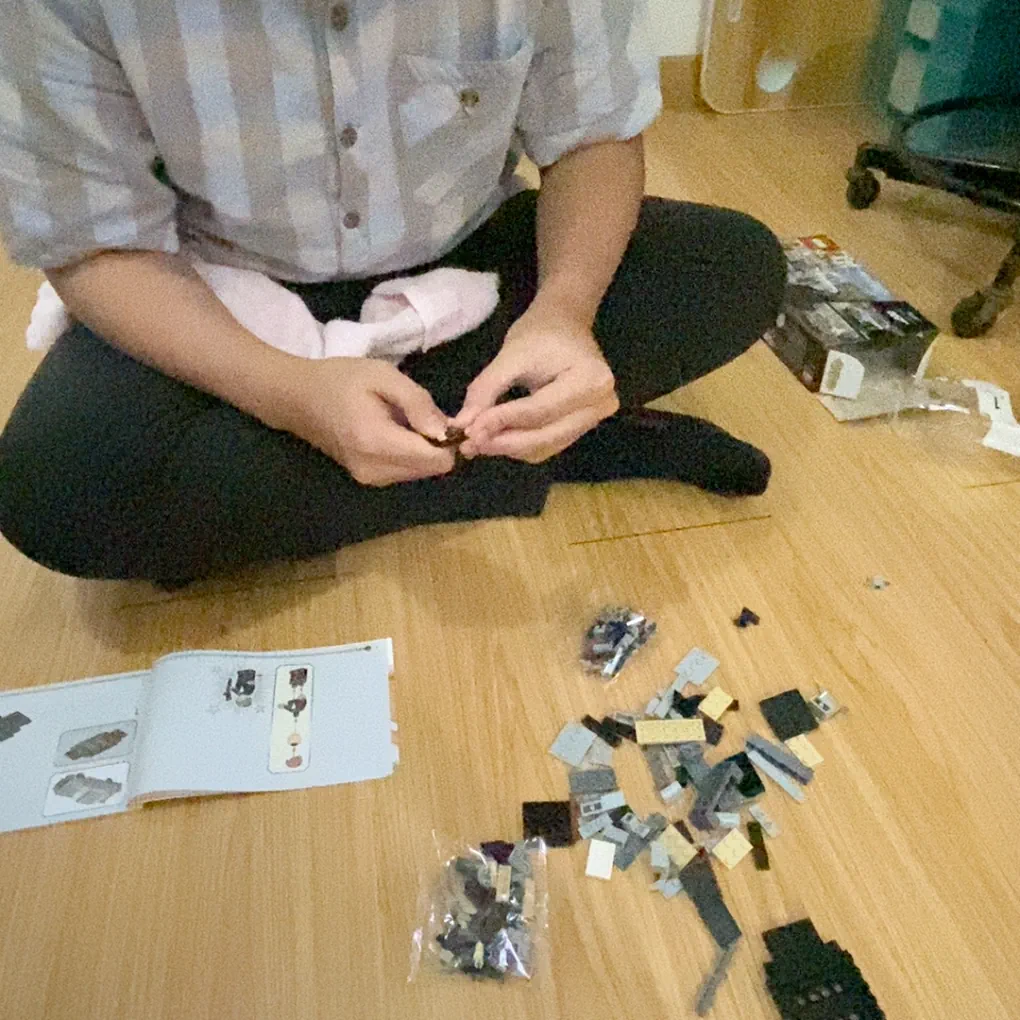
Photo by author
The Flow State
Have you ever sat down with a LEGO set, looked up at the clock, and suddenly two hours had vanished? That’s flow. Flow is that magical mental state where you’re so focused, so immersed that time slips away. You’re not bored, but you’re not overwhelmed either, you’re just in it.
Psychologists coined it as the optimal zone of human experience. It happens when challenge meets skill in just the right balance. Building LEGO doesn’t quite trigger a flow state, but it comes surprisingly close by incorporating a lot of factors that you’d usually need for flow state to occur:
- Clear goals, so you know what you’re trying to build.
- Immediate feedback, because every piece you place tells you whether you’re getting it right.
- Just enough challenge, not so hard that you give up, but not so easy that you zone out.
It’s the same reason games like Tetris, Stardew Valley, and Minecraft feel so addictive. This sweet spot of difficulty and reward is a psychological goldmine to ensure positive experiences. They reward your attention and effort with visible, satisfying progress.
In a LEGO set, that moment when a wing finally clicks into place or a tricky gear assembly finally works, that’s the hit. That’s the good stuff. That’s your brain saying, "Nice job, do it again!” But when you chain those moments together for hours, you don’t just feel accomplished, you feel happy.
Research shows that people who regularly experience flow report higher levels of well-being, better emotional regulation, and greater creativity. It’s a full-on experience for your brain, and it comes wrapped in a box of colorful bricks. So when you’re snapping LEGO pieces together for hours, you’re not just passing the time, you’re tapping into one of the most fulfilling mental states out there.
Photo by Astrid Schaffner on Unsplash
Conclusion
LEGO isn’t just fun because it’s nostalgic or creative. It’s fun because it’s engineered to be. It taps into three core psychological ideas:
- The IKEA effect, because we value what we work for.
- The progress principle, because we crave progress, no matter how small.
- The flow state, because we love losing ourselves in a focused activity.
LEGO tricks us into doing work, thinking more, and investing a lot of time into something, but somehow it makes it feel like a good way to spend a lazy Sunday afternoon. It’s a toy, but it’s also a kind of brain workout. It’s a lesson in effort and reward, even if we don’t think about it like that.
And maybe that’s why so many adults never stop loving LEGO, because underneath all the bricks, there’s something deeper, a carefully engineered experience that is actively trying to make life a little bit more fun. So the next time you dump a box of pieces onto the floor and dive in, just remember you’re not just playing, and that’s no accident.
That’s just LEGO.
메타데이터
- post_id
- 3c49ccba68d6
- slug
- how-lego-tricks-you-into-having-fun-3c49ccba68d6
- url
- https://medium.com/design-bootcamp/how-lego-tricks-you-into-having-fun-3c49ccba68d6
- canonical_url
- https://medium.com/design-bootcamp/how-lego-tricks-you-into-having-fun-3c49ccba68d6
- author_url
- https://medium.com/@favianrafif20
- status
- ok
- fetched_at
- 2026-07-09 06:11:55