Mora Mora*: A trip to the field in Madagascar
*Slow down or take it easy. Reflects briefly and concisely the attitude to life of most Malagasy people.
*Mora Mora: A trip to the field in Madagascar**
*Slow down or take it easy. Reflects briefly and concisely the attitude to life of most Malagasy people.
Access to electricity is the beginning of sustainable development. This story, packaged neatly into SDG 7, is repeated by energy stakeholders across the globe. Electricity means light, mechanisation, digitalisation, cooling, and heating. It means children can study at night and hospitals can cool vaccines. All in all, a pretty convincing narrative, isn’t it?
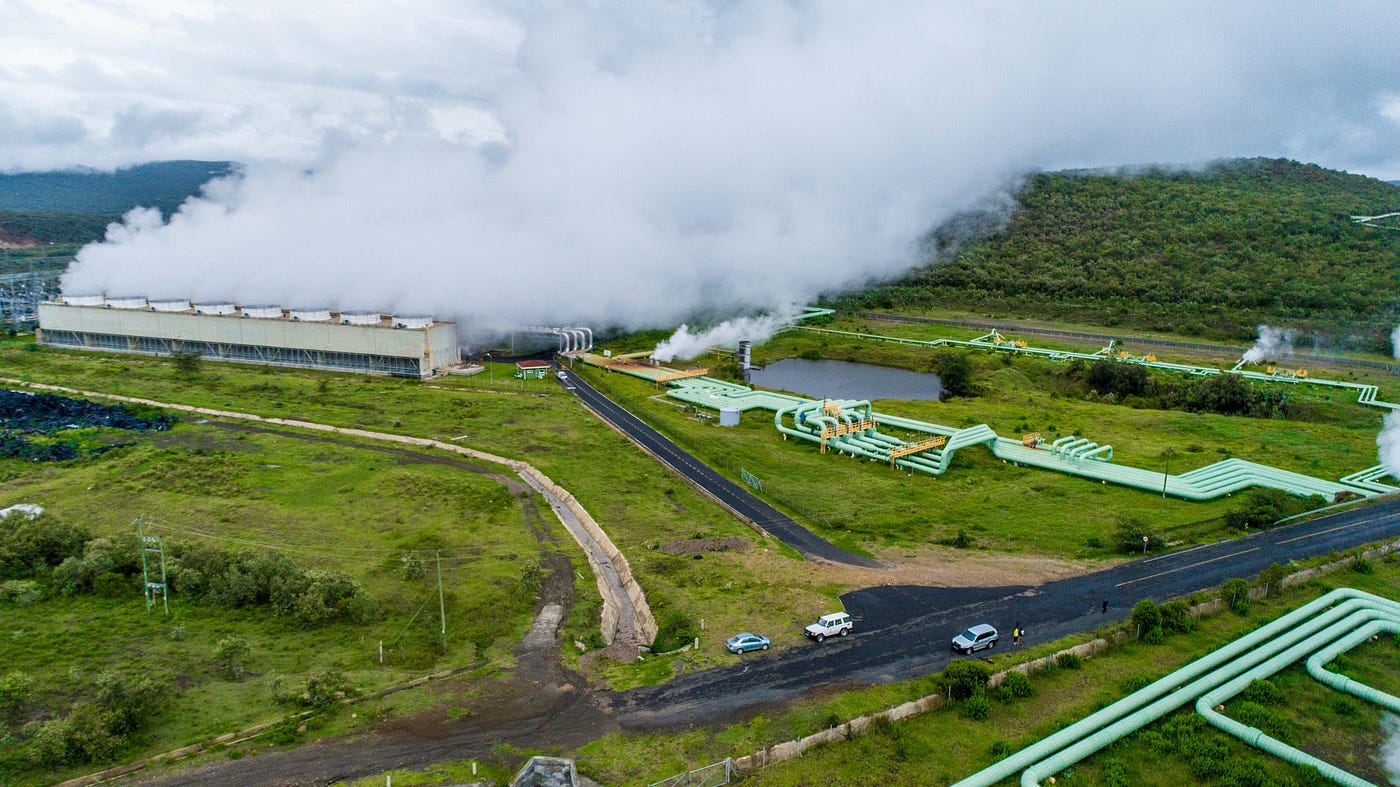
This is the story that brought me to Mahavelona. Though located only 100 km west of Madagascar’s capital city Antananarivo, the village has no access to running water, sanitation facilities, or road infrastructure. For the past two years, however, Africa GreenTec’s mini grid has been supplying 100% green electricity to the majority of the communities’ households, businesses, and social institutions. Is Mahavelona a point in case for the electrification of remote, marginalised communities? Let’s backtrack to my first trip to the field.

Africa GreenTec’s solar mini grid in Mahavelona, Madagascar
5.15 am — It is still dark outside when I descend the steps from my apartment in Antananarivo to meet my taxi driver. The aim: An auto brousse (local minibus) *station — the heart of Madagascar’s public transport system — at the outskirts of the capital city, where one of the buses will take me westwards towards Mahavelona. The rain from the prior evening has turned into a light drizzle and I make a mental note of the value of streetlights — which only becomes evident when there are none.
6.15 am — The auto brousse station is alive with bustling morning activity. I am watching a young man dump a heap of little fish from an oil canister onto a rice bag on the dusty floor, then dip them into an old bucket, which he clamps on his bicycle. As he drives off, towards one of the many street markets here in Tana, my appetite is all but gone. Around me, the roofs of old busses are being loaded and unloaded with any imaginably cargo — dead and alive.
My taxi driver returns and explains that there is no auto brousse driving to Mahavelona today — or any day during the rainy season. When I explain my ambitious plan to take a Taxi Moto (a motorcycle taxi) for the last 20 km of the “route” to Mahavelona, he looks at me incredulously. I smile in response. Mora Mora.*
7.30 am — After waiting on a wooden bench for one hour, I see my friend Tinasoa emerge from the crowd and get up in expectation to board the bus.
9.24 am — Two hours later — I’m still sitting on the same bench — we receive the happy news that the departure is imminent. Meanwhile, Tinasoa has explained to me that “the latest arrival time is 6.30 am” roughly translates to “you will be the first one there to reserve the best seat”. We have been patiently waiting for the driver to fill each and every last seat of the little bus. As there is no schedule, nor a reservation system, this is a rather passive process. In fact, it mainly encompasses standing around until passengers show up.
12.47 pm — Throughout the drive, the outskirts of the city slowly give way to Madagascar’s beautiful countryside: The hills, shining in a thousand shades of green, are spotted by meter-long cracks which reveal the red earth that have given Madagascar the name “la terre rouge”. We finally arrive in Ankadinondry Sakay, the last town connected to electricity and accessible by road. I notice the sheer number of young men and women standing around, who are hoping to earn a few cents from one of the arriving passengers. This is just one of many testaments to the lack of employment and opportunities in one of the poorest countries in the world [1].
13.30 pm — We cover our backpacks in rain protections and mount the backs of two motorcycles. It takes about 7 minutes until my romanticised idea of a liberating motorcycle ride across this incredible countryside — literally — disappears in the mud. Large parts of the “route” are covered in puddles so big they are home to entire families of ducks. Others are covered in patchy attempts to lay bricks, which only increases the bumpiness of an already uneven route.
After half an hour of what was at best a bouncy ride and at worst an attempt to navigate the motorcycles through knee-deep water, I start to feel my back. An hour later, my hands gripping the back of the motorcycle start to hurt. Every half an hour, we have to dismount and walk for several minutes because the “route” is too destroyed to drive across with a motorcycle.
5 pm –12 hours and 100 kilometres later, we finally arrive in Mahavelona. Mora Mora, for real. It dawns on me that I just experienced first-hand what seems to be missing in much of the grand rural electrification narrative.


The route to Mahavelona
Throughout the rainy season, when Mahavelona is surrounded by the saturated greens of rice and maize fields, the village exists in a near-vacuum. Most of the farmers’ savings are used up, and they are waiting impatiently for the beginning of the new harvesting season. Meanwhile, the village is disconnected from all but its neighbouring settlements by 20 kilometres of mud road only passable by motorcycle or lorry — the latter of which is only owned by Mahavelona’s elite minority.
The route, it turns out, is the biggest obstacle to Mahavelona’s development. And whilst my interviews reveal a new-found sense of security, improved well-being and entrepreneurial spirit brought about by the mini grid, I come to learn that rapid socio-economic development — the kind promised in the electrification narrative — will only occur when coupled with the holistic development of a village’s infrastructure.

[1] Madagascar ranks 177/ 193 on the Human Development Index and 80% of its population live in poverty according to World Bank data
메타데이터
- post_id
- 3c56cb8cfccc
- slug
- mora-mora-a-trip-to-the-field-in-madagascar-3c56cb8cfccc
- url
- https://medium.com/@oemmelenkatharina/mora-mora-a-trip-to-the-field-in-madagascar-3c56cb8cfccc
- canonical_url
- https://medium.com/@oemmelenkatharina/mora-mora-a-trip-to-the-field-in-madagascar-3c56cb8cfccc
- author_url
- https://medium.com/@oemmelenkatharina
- status
- ok
- fetched_at
- 2026-07-24 00:11:06