Sun-Dried for 14 Days: Why Yunnan’s Incense Tradition Still Uses No Kilns
Yunnan is not like the rest of China. It is where 26 of the country’s 56 recognized ethnic groups live, where snow-capped peaks overlook…
Sun-Dried for 14 Days: Why Yunnan’s Incense Tradition Still Uses No Kilns

Yunnan is not like the rest of China. It is where 26 of the country’s 56 recognized ethnic groups live, where snow-capped peaks overlook tropical river valleys, and where over 17,000 plant species — more than 60% of China’s total — have been catalogued. The elevation difference between the Red River and Kawagarbo Peak is over 6,600 meters, a few hours’ drive apart.
This is not a place that industrializes easily. And incense-making here still follows a process that predates kilns.
— -
Two weeks in the sun
Most commercial incense is kiln-dried. Hot air, a few hours, shelf-ready. It is fast. It is also destructive — many of the compounds that give incense its complexity break down around 40°C, and industrial kilns run significantly hotter.
Sun-drying takes two weeks. After botanicals are ground, blended with water, and hand-pressed into sticks, they are laid on bamboo trays under high-altitude sun. The incense-making region sits around 2,000 meters above sea level. At night the trays come indoors to keep humidity off. The temperature on the drying rack stays between 28 and 35°C throughout.
What happens during those 14 days is a sequence: surface water evaporates first (days 1–3), internal moisture migrates outward as the scent notes integrate (days 4–7), and the stick reaches its final cure at about 8–10% moisture content (days 8–14). The color deepens. The scent matures.
The difference between a kiln-dried stick and a sun-dried stick is measurable — sun-dried retains a broader profile of volatile terpenes, esters, and aldehydes. But the practical test is simpler: if you burn both side by side, you can tell which one hit a kiln.
— -
What goes in matters as much as how it’s made
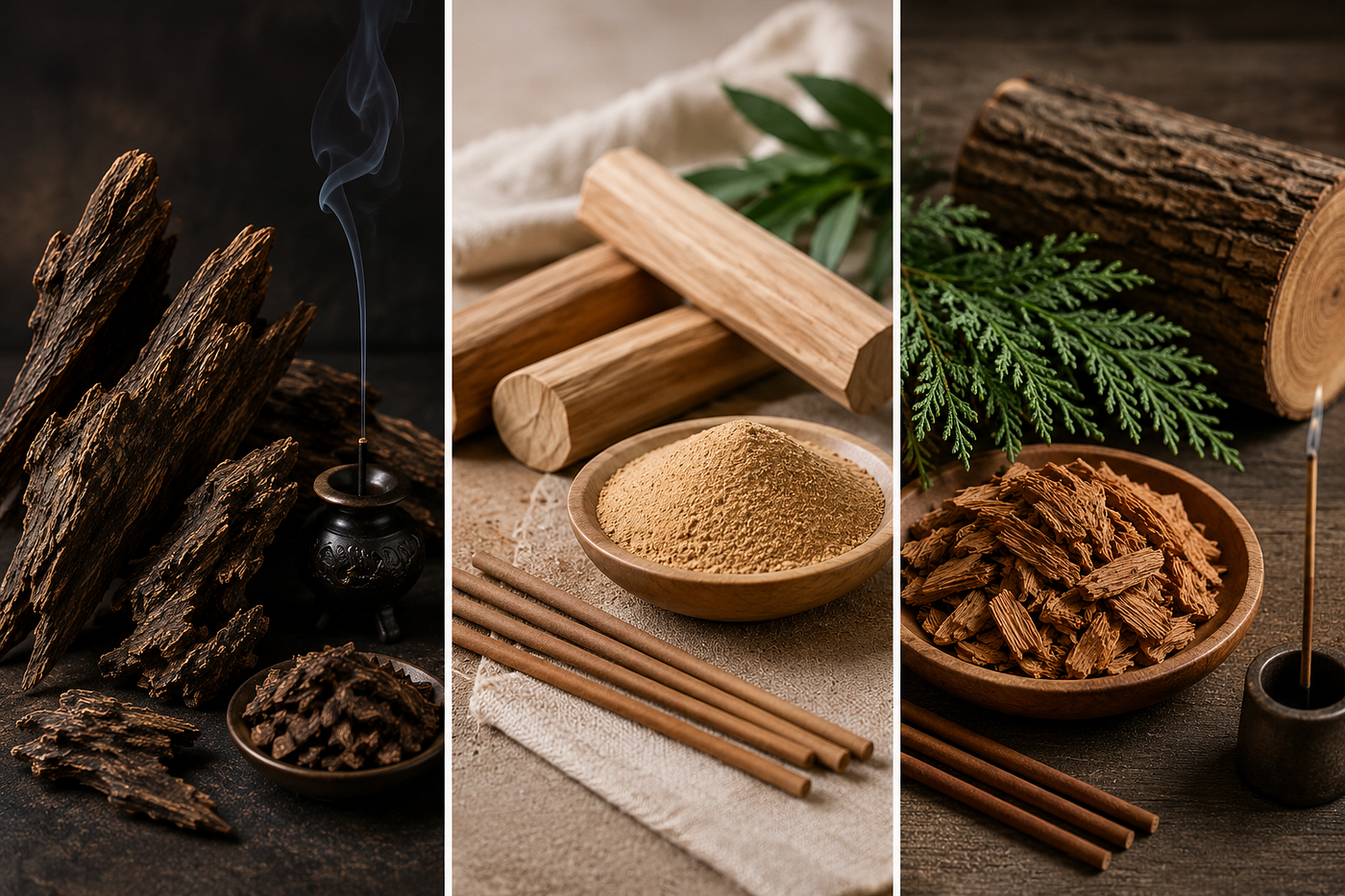
No charcoal filler. The base of a natural incense stick is the plant itself — ground sandalwood, agarwood, cedar, or dried herb.
No synthetic fragrance oil. The scent comes from the volatile compounds naturally present in the botanicals.
No chemical binder. The adhesive is makko powder — the bark of Machilus thunbergii — ground fine and mixed with water. Makko burns clean, with almost no smoke of its own.
If a stick is uniformly charcoal-grey regardless of what it claims to be made from, something has been added.
— -
See the full process — from raw botanicals to finished incense sticks →
메타데이터
- post_id
- 3c5a7bb6daed
- slug
- sun-dried-for-14-days-why-yunnans-incense-tradition-still-uses-no-kilns-3c5a7bb6daed
- url
- https://medium.com/@orientalscentofficial/sun-dried-for-14-days-why-yunnans-incense-tradition-still-uses-no-kilns-3c5a7bb6daed
- canonical_url
- https://medium.com/@orientalscentofficial/sun-dried-for-14-days-why-yunnans-incense-tradition-still-uses-no-kilns-3c5a7bb6daed
- author_url
- https://medium.com/@orientalscentofficial
- status
- ok
- fetched_at
- 2026-06-09 15:37:30