Subscription vs Freemium: Choosing the Right Model for a Mental Health App
The monetization model you choose can determine whether your mental health platform becomes a sustainable digital product or struggles to…
Subscription vs Freemium: Choosing the Right Model for a Mental Health App
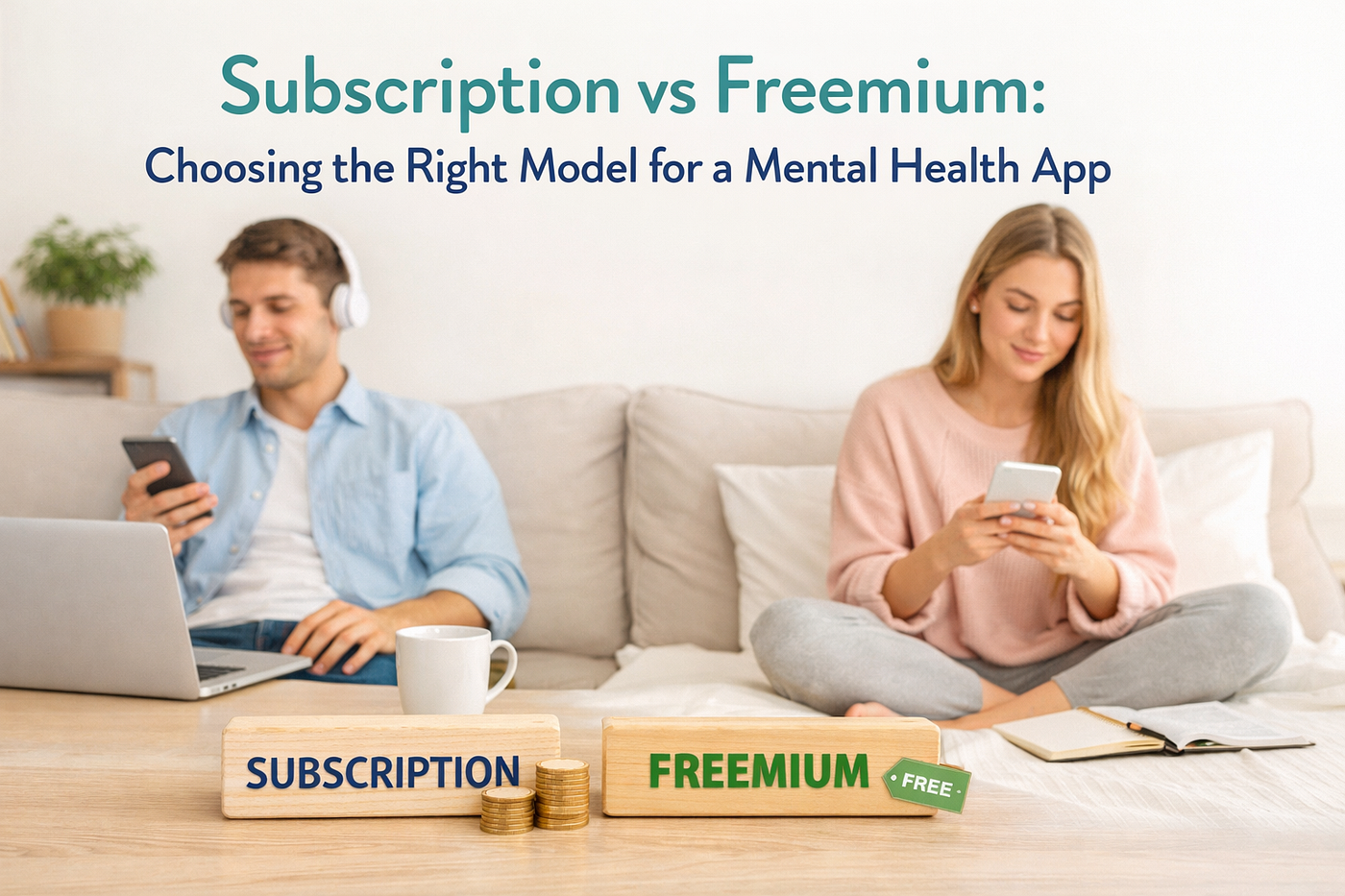
The monetization model you choose can determine whether your mental health platform becomes a sustainable digital product or struggles to scale. For founders, clinics and wellness brands working with mental health app developers, the debate often narrows down to two dominant strategies: subscription and freemium.
Both models have powered successful digital health platforms. Yet each comes with different implications for user acquisition, retention, revenue predictability, compliance and long-term product development. Selecting the right one requires more than financial forecasting. It demands a clear understanding of your target users, therapeutic value proposition and growth roadmap.
Understanding the Business Context of Mental Health Apps
Mental health platforms operate in a sensitive and highly regulated environment. Unlike casual fitness or productivity apps, they deal with emotional well-being, therapy access, mood tracking and sometimes clinical interventions. This complexity influences monetization choices.
Professional mental health app developers approach monetization decisions alongside product architecture. They assess:
- User demographics and willingness to pay
- Clinical depth (self-help vs therapist-led services)
- Regulatory requirements and data security standards
- Content delivery models (live sessions, AI chat, guided modules)
A meditation app targeting stress relief among college students may succeed with a freemium approach. A platform offering licensed therapy sessions, psychiatric consultations or personalized treatment plans typically leans toward subscription.
The monetization structure must align with the intensity of service offered. High-touch, clinically integrated experiences demand predictable recurring revenue to sustain operations, compliance audits and licensed professionals.
The Subscription Model: Predictable Revenue and Premium Positioning
The subscription model charges users a recurring monthly or annual fee for continued access. In mental health platforms, this often includes therapy sessions, structured programs, mood tracking tools, AI-driven support and exclusive educational content.
For many mental health app developers, subscription offers operational stability. Recurring revenue enables long-term planning, regular feature updates, enhanced security infrastructure and scalable support systems.
Why Subscription Works for Clinical-Grade Apps
When building apps that involve therapists, psychologists or structured cognitive behavioral therapy (CBT) programs, subscription aligns naturally with service delivery. It ensures:
- Continuous access to licensed professionals
- Ongoing program progression
- Regular content updates
- Dedicated customer support
Users who commit financially are more likely to remain engaged in structured programs. Behavioral consistency is essential in mental health interventions and subscription reinforces accountability.
However, a subscription introduces a barrier to entry. Users must commit before experiencing full value. Without strong onboarding and clear value communication, conversion rates can suffer.
Mental health app development companies often counter this by offering limited free trials. This allows users to explore core benefits before committing.
The Freemium Model: Expanding Reach and User Acquisition
Freemium provides a free base version while charging for advanced features. This model thrives on accessibility. It lowers the barrier to entry, allowing users to explore essential features before upgrading.
In the mental health space, freemium can include:
- Basic mood tracking
- Limited guided meditations
- Community forums
- Introductory educational resources
Premium tiers may unlock therapy sessions, AI personalization, deep analytics or structured recovery programs.
Strategic Advantages of Freemium
For startups aiming to build a large user base quickly, freemium is attractive. It supports:
- Rapid user acquisition
- Data-driven product refinement
- Brand awareness growth
- Network effects through community engagement
Many digital health entrepreneurs collaborate with mental health app developers to design scalable freemium architectures that allow seamless upgrading without disrupting user experience.
Yet freemium presents its own challenge. Conversion rates from free to paid can be low if the free tier delivers too much value. Striking the right balance requires behavioral analytics and careful feature gating.
Financial Sustainability and Average App Development Cost
Monetization decisions directly influence financial projections. The average app development cost for a mental health platform varies depending on complexity, compliance requirements, integrations and customization. Features like video consultations, HIPAA-compliant storage and AI-driven chat support increase development investment.
A subscription model often provides faster return on investment because revenue begins earlier in the user lifecycle. Freemium may require a larger marketing budget and longer runway before reaching profitability.
Founders working with experienced mental health app developers typically evaluate:
- Customer acquisition cost (CAC)
- Lifetime value (LTV)
- Expected churn rate
- Infrastructure maintenance expenses
Subscription supports predictable forecasting. Freemium depends heavily on volume and conversion optimization.
Product Complexity and Technical Architecture
Monetization affects backend structure. Subscription platforms require secure payment integration, recurring billing management, cancellation workflows and automated renewals.
Freemium systems demand dynamic feature toggling, role-based access management and seamless upgrade pathways. Both require strong user authentication and encryption protocols.
Technical Considerations
- Secure cloud storage for sensitive data
- Compliance with healthcare data regulations
- Scalable API integrations for telehealth services
- Real-time analytics for user engagement
When building a custom mobile app for mental wellness, architecture must support both growth and compliance from day one. Experienced development teams design modular frameworks so that monetization strategies can evolve without rebuilding the entire platform.
White-Label and Readymade Solutions in Monetization Strategy
Not every organization builds from scratch. Some clinics and wellness brands opt for a white-label mental health app to accelerate market entry. These solutions come pre-built with configurable monetization models, often supporting subscription out of the box.
White-label systems reduce development timelines and risk. However, flexibility may be limited when experimenting with hybrid monetization approaches.
Readymade apps can also offer rapid deployment. They are cost-effective but may lack deep customization. For organizations requiring highly specialized therapy workflows or unique engagement models, partnering with mental health app developers to build a tailored solution ensures greater strategic control.
Choosing between subscription and freemium becomes more complex when using templated platforms. Flexibility in pricing experiments may be restricted.
User Psychology and Willingness to Pay
Mental health is deeply personal. Users may hesitate to pay upfront without trust in the platform. Freemium allows trust-building before financial commitment.
However, premium pricing can signal higher credibility and professional quality. Subscription often positions the app as a serious therapeutic solution rather than a casual wellness tool.
Behavioral economics plays a major role. Users investing financially tend to engage more consistently. This improves clinical outcomes and retention rates.
Mental health app developers frequently integrate behavioral nudges, personalized reminders and progress tracking to support both subscription retention and freemium conversion.
Hybrid Models: Blending Subscription and Freemium
Many successful platforms combine both strategies. They offer a free tier for entry-level support and a subscription for structured programs or professional therapy.
Common Hybrid Structures
- Free self-help tools + paid therapy sessions
- Limited AI chatbot access + premium personalization
- Basic tracking + advanced analytics and coaching
- Community access + private consultation services
Hybrid models offer flexibility. They allow gradual user progression while generating recurring revenue from committed users.
The key lies in mapping value to user journey stages. Early-stage users may need exploration. Mid-stage users seek structure. Advanced users demand personalization and professional support.
Scaling and Long-Term Growth Considerations
As platforms expand, monetization must adapt. Enterprise partnerships, corporate wellness integrations and insurance reimbursements introduce new revenue streams beyond individual subscriptions.
Mental health app developers with industry experience design systems capable of handling multiple billing models simultaneously. This ensures scalability without disrupting user experience.
Global expansion introduces currency management, regional compliance and localized pricing strategies. Subscription simplifies multi-region forecasting. Freemium may require aggressive localized marketing to sustain conversion rates.
Conclusion
Choosing between subscription and freemium is not a simple financial decision. It reflects your clinical depth, target audience, growth strategy and technical roadmap. Subscription offers stability and credibility. Freemium enables accessibility and rapid scale. Hybrid models combine the strengths of both.
Organizations seeking sustainable success collaborate with experienced mental health app developers who understand regulatory requirements, user psychology and scalable architecture. The right monetization model supports not just revenue, but meaningful impact in the mental wellness journey.
FAQs
Which monetization model is better for therapy-based mental health apps?
Subscription generally works better for therapy-based apps because it supports recurring sessions, licensed professionals and structured programs that require ongoing engagement.
Is freemium suitable for early-stage startups?
Freemium can help early-stage startups build a large user base quickly. However, it requires strong analytics and conversion strategies to achieve profitability.
How does monetization impact development costs?
Monetization influences backend architecture, payment integration, compliance requirements and analytics systems. These factors directly affect the average app development cost.
Can a mental health app switch from freemium to subscription later?
Yes, but it requires careful migration planning. Experienced mental health app developers design flexible systems that allow pricing model adjustments without user disruption.
Are white-label mental health apps customizable for different pricing models?
Many white-label mental health app solutions support subscription by default. Customization for hybrid or freemium models may depend on the provider’s flexibility.
메타데이터
- post_id
- 3c6d241320bf
- slug
- subscription-vs-freemium-choosing-the-right-model-for-a-mental-health-app-3c6d241320bf
- url
- https://mobileappcircular.com/subscription-vs-freemium-choosing-the-right-model-for-a-mental-health-app-3c6d241320bf
- canonical_url
- https://mobileappcircular.com/subscription-vs-freemium-choosing-the-right-model-for-a-mental-health-app-3c6d241320bf
- author_url
- https://medium.com/@micckdavis
- status
- ok
- fetched_at
- 2026-07-26 11:40:32