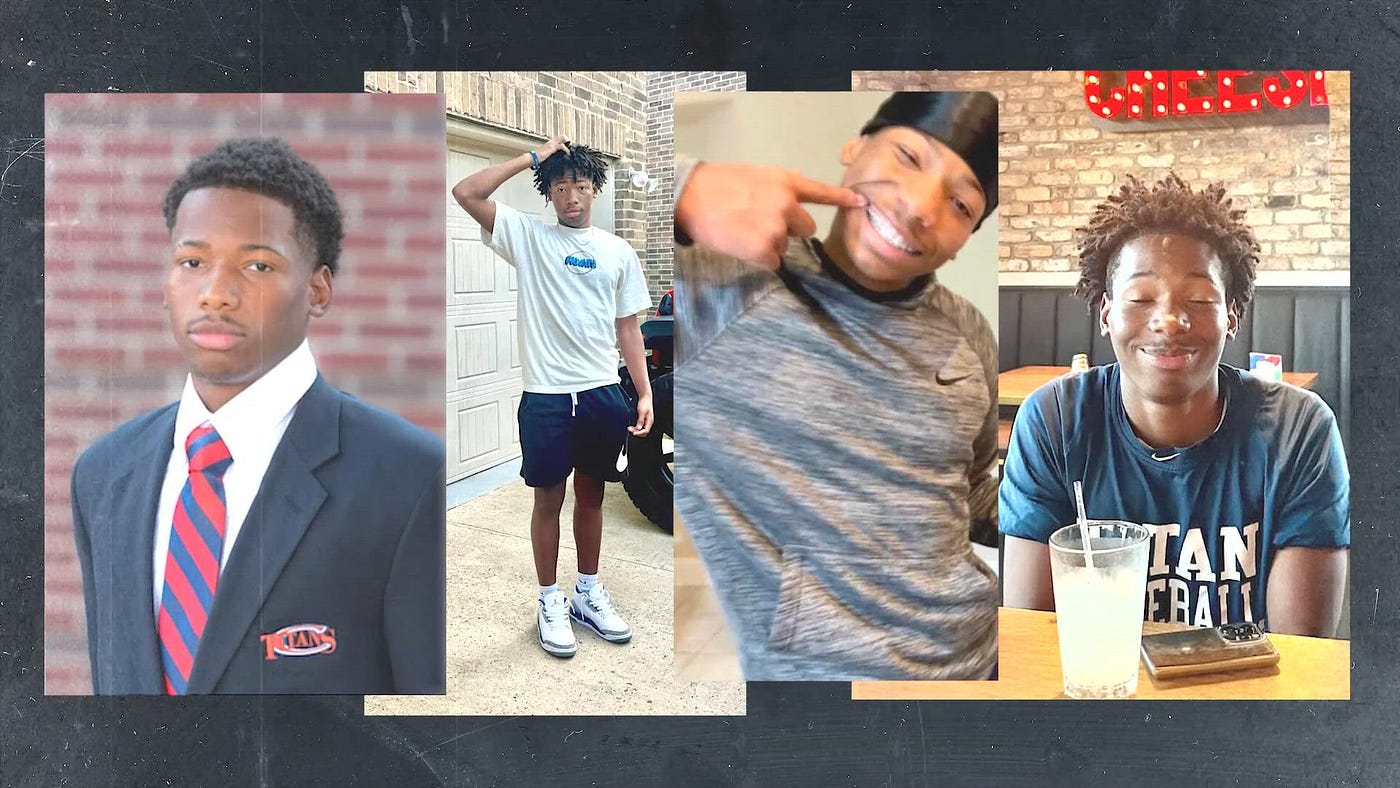
Why Did Nolan Xavier Wells’ Family Call Ben Crump Before They Had Answers?
Eighteen-year-old Nolan Xavier Wells left for a Fourth of July outing on Horn Island, a barrier island off the Mississippi Gulf Coast, with…
Why Did Nolan Xavier Wells’ Family Call Ben Crump Before They Had Answers?
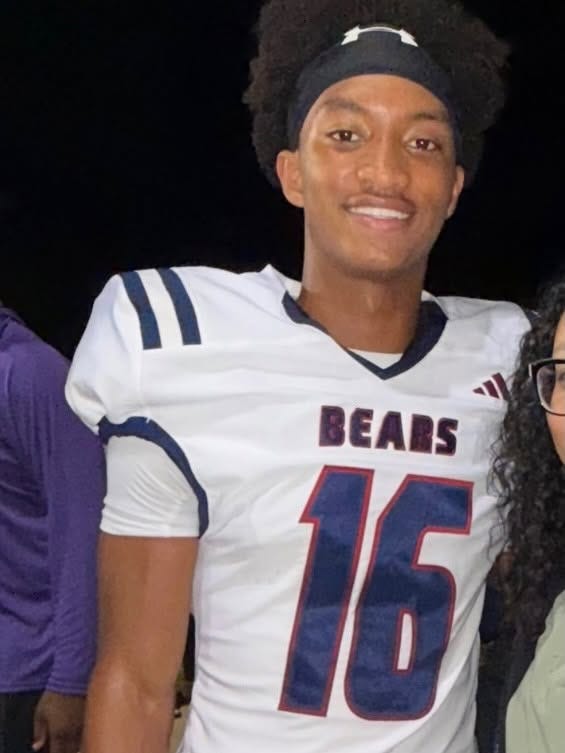
Eighteen-year-old Nolan Xavier Wells left for a Fourth of July outing on Horn Island, a barrier island off the Mississippi Gulf Coast, with a group of friends. He never came home. After an extensive search, his body was recovered. As of yet, investigators have not released a cause of death, and the investigation remains ongoing.
Nolan’s friends are reportedly cooperating with law enforcement, and officials say they are still working to determine exactly what happened. But then came another headline. Nolan’s family retained civil rights attorney Ben Crump.
When I saw that headline, my first thought wasn’t, “I wonder what Ben Crump knows.” Because somewhere along the way, many Black families learned that grief alone isn’t enough. Sometimes you have to hire accountability.
A Black eighteen-year-old dies under circumstances with his white friends that remain unclear. Before there is an autopsy. Before there are official conclusions. Before anyone knows whether this was a tragic accident, a crime, or something else entirely, the family decides they need one of the country’s most prominent civil rights attorneys standing beside them.
That isn’t just a legal decision. It’s a cultural one. For many Black families, hiring an attorney like Ben Crump isn’t always about a direct accusation against law enforcement. It’s an acknowledgment of history.
It’s saying, “We’ve seen enough to know that transparency isn’t something we assume. It’s something we insist on.” This might be one of the saddest commentaries on America today. What kind of country teaches an entire community that advocacy must begin before the investigation does?
We often hear conversations about “trusting the process.” But trust doesn’t exist in a vacuum. Trust is built — or broken — through experience.
For generations, Black Americans have watched investigations that felt incomplete, delayed, dismissed, or inconsistent. They’ve watched families spend years fighting not just for justice, but sometimes for basic acknowledgment. They’ve watched evidence emerge only because someone kept asking questions long after the cameras left, if there were any cameras at all.
Psychologists have long understood that our past experiences don’t just shape how we remember the world. They shape how we prepare for it. One concept that helps explain this is proactive coping, the process of taking protective action before something bad happens because experience has taught us that waiting may come at a cost. Rather than reacting after the fact, people anticipate potential stressors and prepare for them in advance to reduce uncertainty and increase their sense of control.
Through that lens, the decision to hire a civil rights attorney before there is even a cause of death can be understood as more than a legal strategy. It can also be seen as a psychological one. For many Black families, the attorney isn’t necessarily hired because the family knows something investigators don’t. The attorney is hired because history has taught them that transparency, urgency, and accountability sometimes require an additional advocate from the very beginning.
In other words, they aren’t necessarily preparing for what will happen. They’re preparing for what they fear could happen based on what they’ve seen happen before. That isn’t paranoia. It’s adaptation. The truth is, Ben Crump has become more than a lawyer. He’s become a symbol.
Not because every case he takes is the same, or because every investigation is flawed. But because his presence signals that a family wants another set of eyes watching alongside the official investigation. They’re asking for urgency. They’re asking for transparency. They’re asking not to be forgotten.
That response also reflects a broader body of research on institutional trust. Decades of survey research have found that Black Americans, on average, report lower levels of trust in institutions such as the criminal justice system than white Americans.
Researchers generally attribute these differences not to individual cynicism but to accumulated historical and contemporary experiences with discrimination, unequal treatment, and perceived procedural unfairness. Trust, in this context, is not simply a personality trait; it is shaped by lived experience and collective memory. This is where the conversation becomes bigger than Nolan Wells.
If a family feels compelled to build its own layer of oversight before an investigation has even reached its conclusions, the question isn’t simply whether investigators deserve that skepticism. The question is what historical experiences have made that skepticism feel reasonable in the first place.
In some communities, casseroles arrive after tragedy. In others, attorneys do. That isn’t normal. Or at least it shouldn’t be. This isn’t a declaration that investigators in Nolan Wells’ case have failed. It isn’t an accusation against his friends. It isn’t a conclusion about what happened on Horn Island. We simply do not know those answers yet.
But we do know something else. We know that Nolan’s family didn’t feel comfortable waiting. That instinct deserves examination all by itself.
When the default response to unimaginable loss is, “We need independent advocacy immediately,” the conversation is no longer just about one family. It’s about institutional trust. Or perhaps more accurately, institutional distrust.
That distrust didn’t appear overnight. It was built case by case, generation by generation, headline by headline, and trauma after trauma. A justice system doesn’t function on procedures alone.
It also depends on public confidence. If large segments of the public feel they need to create a parallel system of accountability before the official one has even finished introducing itself, then we’ve got a bigger problem than any single investigation.
We’ve got a legitimacy problem. Maybe that’s the real story here. Not simply what happened to Nolan Wells on Horn Island — although that’s of central importance.
That said, we’ll learn more about that, hopefully soon. The bigger question is why so many Americans read the words “The family has retained Ben Crump” and immediately understood exactly why.
No explanation required. No surprise expressed. Just a collective nod that said, “Yeah…that tracks.” If that reaction feels ordinary, we’ve become accustomed to something that should never have become ordinary in the first place, and perhaps that’s the most unsettling headline of all.
메타데이터
- post_id
- 3c78a76c7ada
- slug
- why-did-nolan-xavier-wells-family-call-ben-crump-before-they-had-answers-3c78a76c7ada
- url
- https://zora.medium.com/why-did-nolan-xavier-wells-family-call-ben-crump-before-they-had-answers-3c78a76c7ada
- canonical_url
- https://zora.medium.com/why-did-nolan-xavier-wells-family-call-ben-crump-before-they-had-answers-3c78a76c7ada
- author_url
- https://medium.com/@mnhoskin25
- status
- ok
- fetched_at
- 2026-07-10 10:20:21