USMC MCWCS: A Practical Deep Dive into the Marine Corps Cold Weather System
How It Started
USMC MCWCS: A Practical Deep Dive into the Marine Corps Cold Weather System
How It Started
Many years ago, while skiing in the Carpathians in clothing that was completely unsuitable for active winter use, I noticed an acquaintance wearing an impressive green camouflage suit with a coyote-colored hat and gloves.
At that moment, I had no real understanding of layering systems, how they worked, or even what modern military gear actually looked like. During our conversation, he explained that he was modeling US Marine Corps units in airsoft — and that his outfit was part of their kit. That was also the first time I heard the term ECWCS (Extended Cold Weather Clothing System). I barely even caught the acronym, but that moment stuck with me.
Over the years, that curiosity turned into a deeper interest. I spent a lot of time reading forums, digging through articles, and browsing gear stores. Back then, I didn’t really understand the difference between commercial brands like Helikon-Tex, Mil-Tec, Rothco, Tru-Spec and genuine military-issued gear. Luckily, I didn’t go too far down the wrong path before realizing the difference — although I still think many of those brands offer solid gear for the money.
The first truly “technical” military item I owned was a pair of Level 5 trousers from the US Army ECWCS Gen III system in UCP camouflage. Compared to anything I had worn before, it felt like gear from another world. Since then, I’ve handled a wide range of equipment — from UCP and OCP systems to elements of the PCU used by special operations forces. That experience gave me a practical understanding of how layering actually works in real conditions: how materials behave, how moisture moves, and how different layers interact.
This article focuses on a system that is discussed far less often — the Marine Corps MCWCS (Mountain/Cold Weather Clothing System).
A Different Philosophy
The Mountain/Cold Weather Clothing System (MCWCS) was developed for the United States Marine Corps specifically for operations in mountainous terrain and cold-weather environments. It was designed with improved moisture management, flexible layering for adapting to rapidly changing conditions, and reliable protection across a wide temperature range — from -40°C to +21°C. At the same time, the system emphasizes low weight, compact packability, and fast drying performance.
The primary goal of MCWCS was to replace older, heavier wool-based gear used by the Marine Corps since the 1980s. This included the M65 field jacket and trousers, early-generation ECWCS parkas (Gen I/II), as well as various insulating liners and sweaters.
What immediately stands out about MCWCS is how different it feels compared to the Army’s ECWCS Gen III.
The Army system is highly structured and very detailed in how it connects temperature ranges with activity levels. MCWCS, on the other hand, feels more intuitive and less prescriptive. It is built around a simple assumption: a Marine is expected to stay in motion most of the time. Because of that, the system doesn’t try to over-optimize for static conditions. Instead, it focuses on moisture control, adaptability, and keeping the user functional while moving.
This difference might seem subtle on paper, but in practice it changes how the entire system is used.
In its current form, MCWCS consists of six primary layers supported by additional accessories, forming a complete and adaptable cold-weather clothing system.
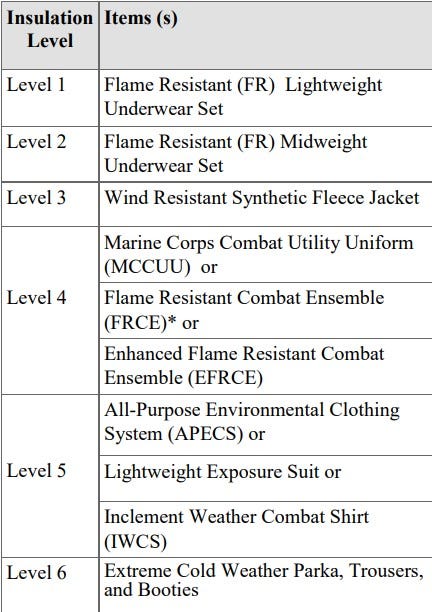
MCWCS Levels

Recommendations for use
Level 1 — The Foundation
Level 1 is the base layer, worn directly against the skin. Its role is simple but critical: managing moisture.
Compared to earlier silk-weight synthetic layers used by the Army, the Marine Corps version made from flame-resistant materials feels slightly different. It is more comfortable against the skin, but at the same time it seems to dry a bit slower. Over time, the fabric also tends to develop pilling, which is something I noticed fairly quickly in use.
Despite that, this layer does exactly what it is supposed to do. It creates the foundation for everything else. In the Marine Corps, it is essentially always worn once temperatures begin to drop, and that makes sense — if your base layer fails, everything above it becomes less effective.

Level 1 Top (FR)
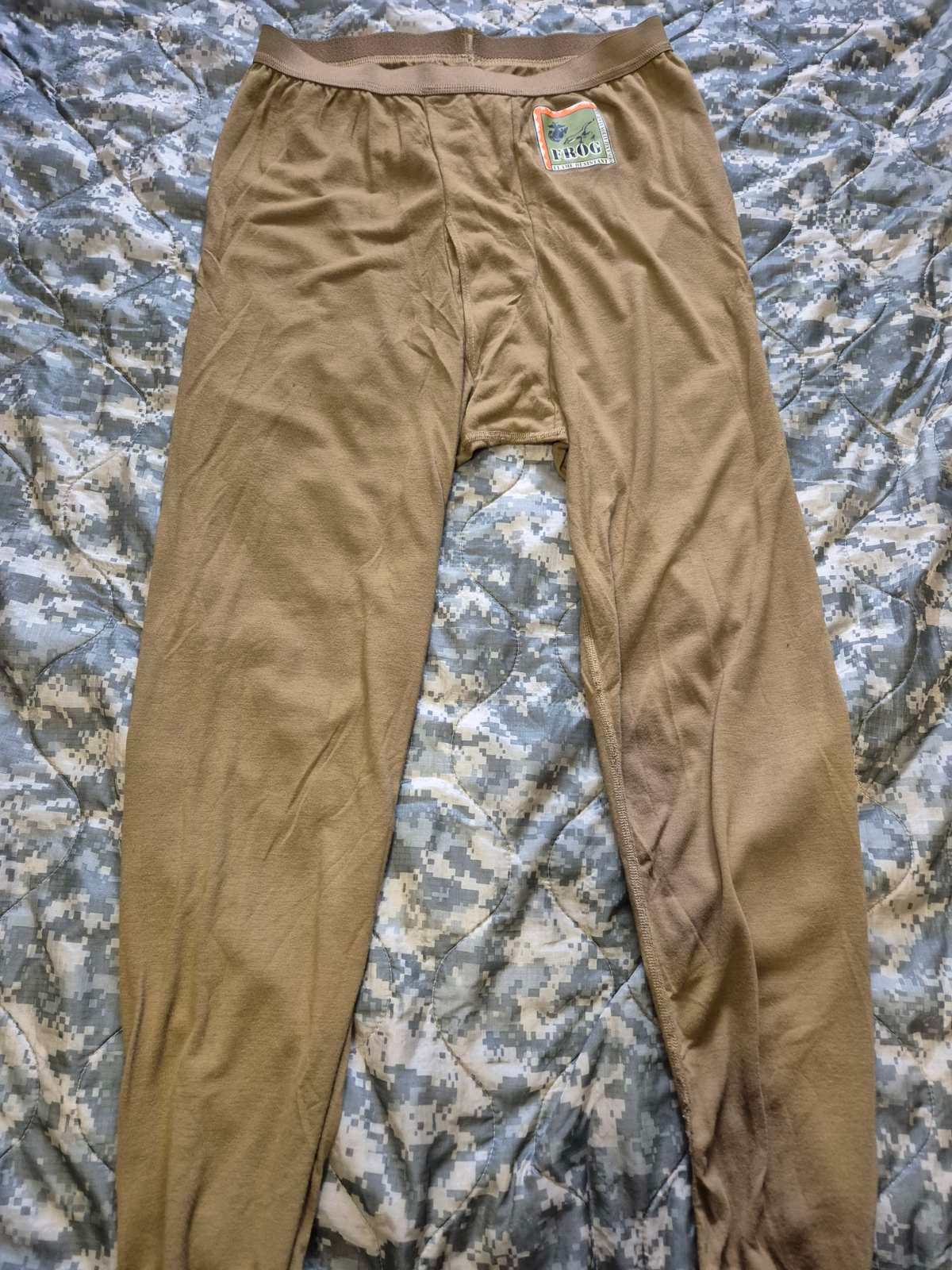
Level 1 Bottom (FR)
Level 2 — Where Warmth Begins
Level 2 is where insulation starts to play a noticeable role. Like its counterparts in ECWCS and PCU systems, it uses a waffle fabric structure that traps air and improves thermal efficiency.
In use, this layer is one of the most straightforward and reliable parts of the system. It adds warmth without feeling heavy, and it works equally well whether worn directly on the skin or over Level 1. There’s a reason why this type of layer has remained largely unchanged across different systems — it simply works.
From my perspective, this is one of the strongest elements of MCWCS. It doesn’t try to do anything complicated, but it performs consistently well in real conditions.

Level 2 Top (FR)

Level 2 Bottom (FR)
Level 3 — The Evolution of Fleece
Level 3 is where things start to get more interesting.
Early fleece layers used by the Marine Corps were relatively basic. The Polartec 100 pullovers that were issued in the early 2000s struggled to provide enough warmth, especially during periods of inactivity. They also lacked wind resistance, had an outdated cut, and wore out relatively quickly under field conditions.

Polartec 100 Pullover
Later versions improved insulation by switching to heavier fleece materials like Polartec 300, but they still didn’t fully solve the problem. They remained bulky and still allowed wind to cut through too easily.
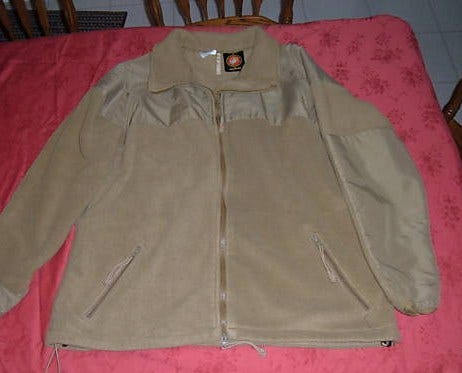
Polartec 300 Fleece Jacket
The introduction of the Wind Pro Fleece Jacket marked a noticeable shift. This version was clearly designed with movement in mind. It became lighter, more breathable, and better at dealing with wind — at least to a certain extent. The addition of elastic panels improved mobility and ventilation, which makes a difference during active use.

WindPro Fleece Jacket
In practice, this fleece is very comfortable and noticeably more functional than earlier versions or standard Army fleece. However, its wind resistance and moisture protection are not as strong as one might expect from the specifications. It helps in light wind, but it is not a replacement for a proper outer shell.
Another important detail is that this layer is not widely issued. It is typically reserved for Marines operating in colder or mountainous environments, such as those training at the Mountain Warfare Training Center in Bridgeport. In many cases, Marines rely on simpler solutions or even unofficial alternatives.
It’s also worth mentioning that a newer generation of this fleece already exists, and it deserves a separate, detailed discussion. In its current form, it is most often seen worn under a Level 5 shell, where it functions as part of a broader system rather than a standalone solution.

Level 4 — Rethinking the “Outer Layer”
Level 4 is where MCWCS really diverges from the Army approach.
Instead of introducing a dedicated softshell or windproof jacket, the Marine Corps integrates the field uniform and combat shirts directly into the layering system. At first glance, this might seem like a simplification — but in practice, it changes how the system works.
The field uniform effectively becomes the main working layer — the layer in which the Marine operates most of the time. It provides a basic level of insulation and moisture management, while also reducing the need for additional specialized layers.
From a practical standpoint, this approach has clear advantages. Fewer layers mean less weight and less complexity. It also allows for faster adaptation in the field: instead of constantly changing between layers, you simply add protection on top when conditions worsen.
Interestingly, many people who have experience with traditional wind layers eventually move away from them and rely on the field uniform in a similar role. It’s not a perfect substitute, but in many real-world situations, it is good enough — and sometimes that’s exactly what you need.

Level 5 — Two Approaches to Protection
Level 5 is one of the most distinctive parts of MCWCS because it introduces two different solutions for weather protection.
The first one, APECS (All-Purpose Environmental Clothing System), is a full-featured waterproof layer. It is designed as a primary protective shell that can handle heavy rain, wind, and generally harsh conditions. It feels like a complete jacket system — durable, structured, and reliable. At the same time, that level of protection comes with trade-offs. APECS is relatively heavy, takes up space, and is not ideal when mobility is the main priority.

APECS

APECS Inner Shell

The second option, LES (Lightweight Exposure Suit), approaches the problem from the opposite direction. It is built around the idea of minimalism. Made from lightweight Gore-Tex Paclite, it is extremely compact and easy to carry. You don’t really “wear” it all the time — you keep it with you and deploy it when needed.

LES

LES Inner Shell
In use, the difference between the two becomes very clear. APECS is something you rely on when conditions are consistently bad. LES is something you reach for when the weather changes suddenly or when you need protection without sacrificing mobility.
Neither is strictly better than the other. They simply reflect two different priorities. APECS focuses on protection, while LES focuses on efficiency and adaptability.
Level 6 — Extreme Cold Weather (“Happy Suit”)
The sixth layer in the MCWCS system is the most heavily insulated and is intended primarily for static use — bivouacs, rest periods, and duty in mountainous environments. Among Marines, it earned the nickname “Happy Suit”, partly because of the smiley face printed on early garment tags, and partly because of the level of comfort it provides in cold conditions.
In terms of construction, it is very similar to its Army counterpart, with only minor differences. The materials are also nearly identical, although subjectively it feels like the outer fabric on the Marine Corps version may be slightly more durable. This is difficult to confirm by touch alone, but the impression is there. Insulation levels between the two systems are essentially the same.

Outer Shell Level 6\Level 7 (USMC\Army)
One important distinction, however, is sizing. The MCWCS version tends to run slightly larger and longer compared to ECWCS in equivalent sizes, which is worth considering when selecting gear.
Since its initial release, the suit has gone through several revisions. Early production versions featured contrasting reinforcement panels on the knees and seat, while later versions became more uniform in appearance. There were also minor changes in hood construction and internal labeling.
From a design standpoint, the parka features a central zipper with an internal storm flap, a collar with a stowable insulated hood, and reinforced elbow areas for durability. The cuffs are elastic with adjustable hook-and-loop closures, and the jacket includes two zippered front pockets along with internal mesh chest pockets with elastic openings. Both the hood and the hem can be adjusted using elastic drawcords.
The trousers follow a similar philosophy. They include a zippered front closure with a storm flap, an elastic waistband with suspension loops, and reinforced panels in high-wear areas such as the knees and seat. Articulated knees improve mobility, while full-length side zippers with internal storm flaps allow for easy donning and removal over boots. The lower leg openings are elastic and adjustable, again using hook-and-loop closures.

Happy Suit Jacket

Happy Suit Bottoms
Final Thoughts
MCWCS reflects a very specific way of thinking about gear.
It is not about having the maximum number of specialized layers or covering every possible scenario in detail. Instead, it is about keeping the system practical, adaptable, and efficient for a user who is expected to stay in motion.
Compared to ECWCS Gen III, it may seem less structured. But in real-world use, that simplicity often becomes an advantage. You spend less time managing your gear and more time actually using it.
From my experience, that philosophy makes a lot of sense — especially outside of static or highly controlled environments.
메타데이터
- post_id
- 3c8d9652fe18
- slug
- usmc-mcwcs-a-practical-deep-dive-into-the-marine-corps-cold-weather-system-3c8d9652fe18
- url
- https://medium.com/@maxvell228/usmc-mcwcs-a-practical-deep-dive-into-the-marine-corps-cold-weather-system-3c8d9652fe18
- canonical_url
- https://medium.com/@maxvell228/usmc-mcwcs-a-practical-deep-dive-into-the-marine-corps-cold-weather-system-3c8d9652fe18
- author_url
- https://medium.com/@maxvell228
- status
- ok
- fetched_at
- 2026-06-24 04:09:36