Heritage Sambar: The South Indian One-Pot Every Kitchen Forgot How to Make
There is a very particular smell that announces a South Indian weekend.
Heritage Sambar: The South Indian One-Pot Every Kitchen Forgot How to Make
There is a very particular smell that announces a South Indian weekend.
It isn’t coffee.
It isn’t freshly steamed rice.
It’s the moment mustard seeds begin to dance in hot oil, curry leaves crackle loudly enough to fill the kitchen, and a pinch of asafoetida blooms into something that somehow smells like home.
By then, everyone already knows what’s for lunch.
Sambar.
Not the thin restaurant version that arrives beside idli in a steel bucket.
Not the hurried weekday pot made with packet masala and whatever vegetables happen to be left in the refrigerator.
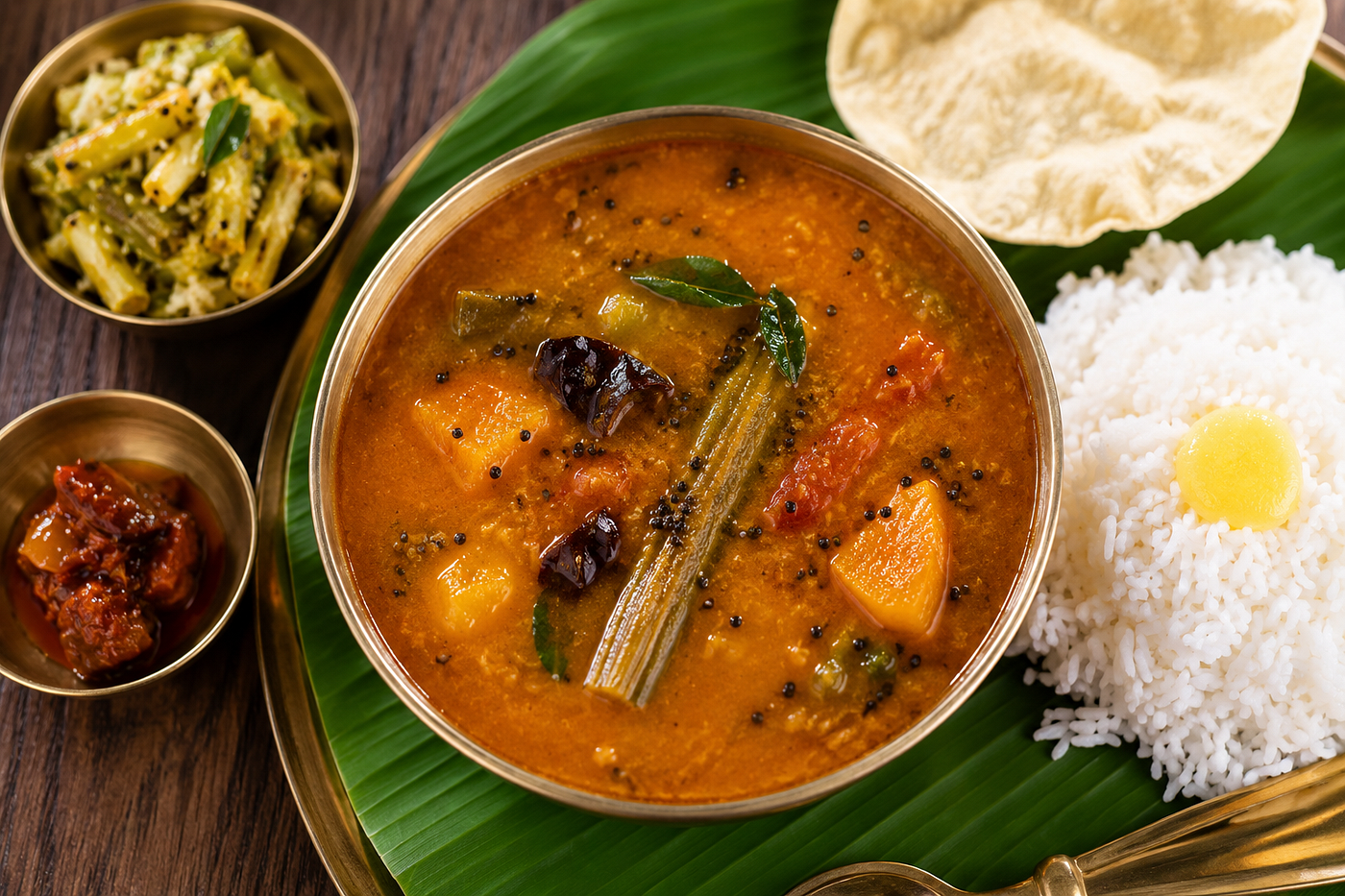
This is lunch sambar — the kind poured generously over steaming rice, finished with a spoonful of ghee, served alongside appalam, and followed by the kind of Sunday afternoon nap that almost feels compulsory.
Somewhere over the years, though, many of us stopped making this version.
Convenience quietly took over.
Ready-made sambar powder.
Tamarind paste from a jar.
Everything pressure-cooked together.
Perfectly edible.
But somehow… flat.
The truth is that heritage sambar isn’t difficult.
It simply asks you to slow down.
One fresh spice blend.
One proper tempering.
One patient pot.
The result tastes remarkably close to the sambar many of us grew up eating — and that’s exactly why the Fullmeals Heritage Sambar recipe deserves a place in every home cook’s weekend rotation.
What Does “Heritage” Actually Mean?
Food has a habit of collecting shortcuts.
Sometimes those shortcuts are brilliant.
Sometimes they quietly erase what made a dish memorable.
Heritage sambar isn’t about claiming there is only one authentic recipe.
There isn’t.
Every South Indian community has its own version.
Tamil Brahmin kitchens make it one way.
Iyengar homes adjust the spice balance differently.
Udupi cooks lean into sweetness.
Chettinad versions become bolder and more peppery.
All of them are valid.
This article follows the home-style Tamil tradition — not because it’s better, but because choosing one lane keeps the cooking honest.
The defining difference isn’t the vegetables.
It’s the process.
Freshly roasted sambar podi.
Real tamarind extract.
Vegetables cooked in stages.
Tempering added at the very end.
Those four choices transform an ordinary lentil curry into something layered and deeply aromatic.
If you’ve ever enjoyed the North Indian cousin to this dish, Panchmel Dal, you’ll notice a similar philosophy: simple ingredients treated with patience rather than shortcuts.
https://fullmeals.com/recipe/panchmel-dal-wholesome-and-delicious
The Four Pillars You Cannot Skip
Every memorable sambar rests on four foundations.
Ignore one, and the difference shows.
1. The Dal Must Almost Disappear
Toor dal shouldn’t simply be soft.
It should surrender.
Cook it until it mashes effortlessly with the back of a spoon.
That creamy texture becomes the body of the entire dish.
Lumpy dal creates lumpy sambar.
Smooth dal allows every spoonful to coat the rice beautifully.
2. Tamarind Pulp Beats Tamarind Paste
Jarred tamarind paste is convenient.
Fresh tamarind pulp tastes alive.
Soak it in warm water.
Massage it gently.
Strain it.
The resulting extract has complexity that bottled versions often miss.
More importantly, it lets you control the sourness.
That balance is what separates comforting sambar from aggressively tangy soup.
3. Fresh Sambar Podi Changes Everything
Ask almost any grandmother when she last made sambar powder.
The answer is rarely “six months ago.”
Spices lose their personality surprisingly quickly.
Fresh coriander seeds still smell citrusy.
Fenugreek retains gentle bitterness.
Red chillies keep their brightness.
Roast them patiently.
Grind them.
Use them.
The aroma alone explains why generations insisted on doing it this way.
4. Tempering Belongs At The End
Many people begin cooking by tempering mustard seeds.
Heritage sambar finishes with them.
This matters.
Mustard seeds.
Urad dal.
Curry leaves.
Hing.
Dried red chilli.
The hot, fragrant oil is poured over the finished pot just before serving.
That final flourish perfumes the entire dish.
If you boil the sambar afterwards, much of that beautiful aroma disappears.
It’s a tiny detail.
It makes a remarkable difference.
Walking Through The Recipe
The beauty of the Fullmeals Heritage Sambar recipe lies in its rhythm.
Nothing feels rushed.
The vegetables go into the tamarind broth first.
This step often surprises newer cooks.
Why not add the dal immediately?
Because tamarind slows vegetable cooking.
Let the vegetables soften first before introducing the dal.
Otherwise carrots remain stubborn.
Drumsticks stay fibrous.
Pumpkin never quite becomes silky.
Once the vegetables are tender, stir in the mashed toor dal.
Now the sambar begins to resemble itself.
The freshly roasted sambar powder follows.
Not at the beginning.
Not halfway through.
At the point where the dal and vegetables are ready to become one.
Allow everything to simmer gently.
No furious boiling.
Just enough time for the spices to bloom into the broth.
Finally comes the tempering.
Mustard seeds pop.
Urad dal turns golden.
Curry leaves erupt dramatically.
Hing perfumes the oil.
A dried red chilli darkens slightly.
That fragrant oil gets poured directly over the waiting pot.
Pause for a moment.
Resist stirring immediately.
Let the aroma settle across the surface before folding it in.
It sounds almost ceremonial.
Perhaps it is.
The Mistakes That Flatten Good Sambar
Every experienced cook has made them.
The good news?
They’re easy to fix.
Adding tamarind too early
Acid slows vegetable cooking.
Always let the vegetables soften before expecting tamarind to work its magic.
Under-roasting the sambar powder
Raw spices taste dusty.
Roasted spices taste alive.
Patience pays off here.
Boiling after tempering
This is heartbreak in saucepan form.
The volatile aromas disappear almost instantly.
Once the tempering goes in, keep the heat gentle.
What To Serve It With
The obvious answer is still the correct one.
Rice.
A spoon of ghee.
Appalam.
Nothing else is really required.
That combination has survived generations for a reason.
Leftover sambar deserves special mention.
Many South Indian families quietly agree it tastes even better the following day.
The flavours settle.
The vegetables absorb more seasoning.
The tamarind mellows.
Next morning, warm it gently and serve it alongside a moong-jowar uttapam to dunk in next morning’s leftover sambar:
https://fullmeals.com/recipe/healthy-moong-jowar-uttapam-with-coconut-chutney-1
By evening, you might naturally transition into the rasam that follows it for dinner:
https://fullmeals.com/recipe/rasam-rice-home-cooking
One comforting meal quietly becomes two.
Why Heritage Still Matters
Cooking heritage recipes isn’t about nostalgia for its own sake.
It’s about remembering that flavour often comes from attention rather than expense.
Fresh spices.
Patient simmering.
Thoughtful timing.
These aren’t old-fashioned ideas.
They’re timeless ones.
A pot of heritage sambar asks for perhaps twenty extra minutes compared to the quickest weekday version.
Those twenty minutes buy something difficult to bottle.
Depth.
Warmth.
Memory.
The kind of meal people remember years later.
Maybe that’s why so many South Indian homes still reserve proper sambar for weekends.
It’s not because the recipe is difficult.
It’s because it deserves your full attention.
Make it once on a quiet Saturday or Sunday.
Taste the difference between packet podi and freshly roasted spices.
Notice how the tempering perfumes the entire kitchen.
Watch everyone reach for one more spoonful of rice.
The full recipe — complete with measurements, podi roasting times, and step-by-step instructions — is available on Fullmeals:
**https://fullmeals.com/recipe/heritage-sambar-south-indian-style**
And if you’d like it waiting for the next weekend without hunting through browser tabs, the Sweet’N’Spicy app on iOS and Android keeps it saved and ready whenever you’re in the mood to cook slowly again.
메타데이터
- post_id
- 3c8dfd967693
- slug
- heritage-sambar-the-south-indian-one-pot-every-kitchen-forgot-how-to-make-3c8dfd967693
- url
- https://medium.com/@sweetnspicy/heritage-sambar-the-south-indian-one-pot-every-kitchen-forgot-how-to-make-3c8dfd967693
- canonical_url
- https://medium.com/@sweetnspicy/heritage-sambar-the-south-indian-one-pot-every-kitchen-forgot-how-to-make-3c8dfd967693
- author_url
- https://medium.com/@sweetnspicy
- status
- ok
- fetched_at
- 2026-07-17 08:43:13