AI News of the Week: The Industry’s Biggest Seven Days Yet
Anthropic files for IPO near $1T, Claude Opus 4.8 tops coding benchmarks, Microsoft goes rogue with its own model family, Google ships the…
AI News of the Week: The Industry’s Biggest Seven Days Yet
Anthropic files for IPO near $1T, Claude Opus 4.8 tops coding benchmarks, Microsoft goes rogue with its own model family, Google ships the agentic era, and OpenAI moves into life sciences — all in one week.*
The Week That Rewrote the Leaderboard
Three flagship model launches in ten days. A company confidentially filing to go public at nearly a trillion dollars. A $13 billion backer deciding to build its own models from scratch. And OpenAI quietly putting AI to work trying to cure diseases.
This is the week of June 2–8, 2026. It was genuinely strange.
The timeline reads like someone left the release calendar unsupervised: GPT-5.5 landed April 23, Gemini 3.5 Flash hit May 19 at Google I/O, Claude Opus 4.8 arrived May 28. By the time Microsoft Build kicked off on June 2, developers were already juggling three new flagship models, trying to figure out which one to use for what. No prior stretch of AI history fits this many top-tier releases into such a short window.
The compression matters because the benchmark splits are not subtle. These models do not all win the same tests. If you route software engineering work to the wrong one, you are leaving real performance on the table. The AI industry spent years pretending the answer was whichever model your API key pointed at. That excuse is gone.
On June 1, Anthropic confidentially submitted a Form S-1 to the SEC, formally starting the IPO process at a $965 billion post-money valuation. Revenue hit roughly a $47 billion annualized rate in May, up from around $10 billion a year earlier. The company is growing so fast that it is genuinely hard to model. SpaceX filed its own IPO paperwork last month. OpenAI is reportedly preparing its own S-1. Three companies that collectively represent the largest private-market bet on AI infrastructure since the dot-com era are simultaneously heading for public markets. Whether that is healthy or not is a fair debate. It is certainly interesting.
— -
Claude Opus 4.8: Coding King, With One Asterisk
Anthropic released Claude Opus 4.8 on May 28, 2026. The company’s own framing was oddly restrained: “a modest but tangible improvement” over Opus 4.7. The benchmark numbers tell a more pointed story.
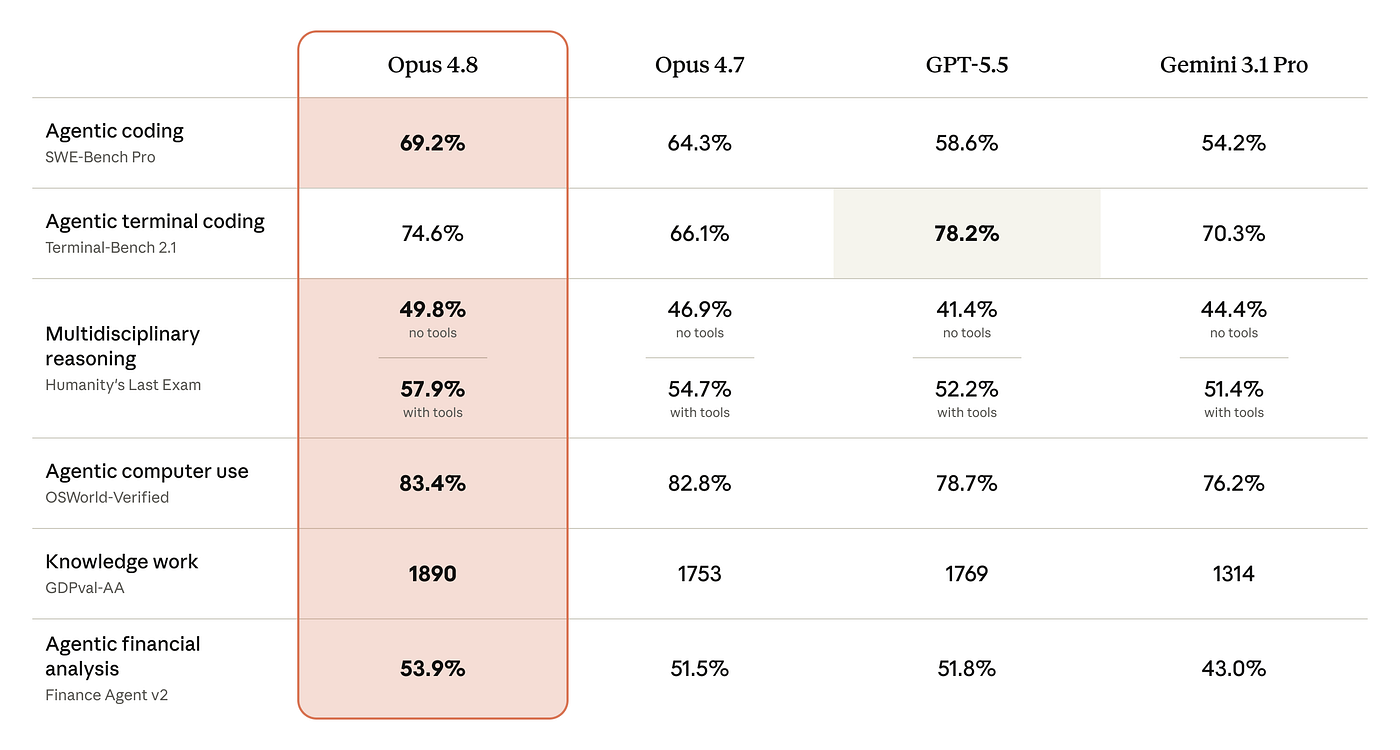
On SWE-bench Pro, the hardest real-world software engineering benchmark currently running, Opus 4.8 scores 69.2%. GPT-5.5 scores 58.6%. Gemini 3.1 Pro scores 54.2%. That 10.6-point gap over GPT-5.5 is not a rounding error. SWE-bench Pro pulls from actively maintained open-source repositories with multi-file diffs and no public ground-truth leakage. It is hard to game. Scoring 69% there means something.
The headline coding number holds across variants. SWE-bench Verified (the original 500-problem set) came in at 88.6%, up from 87.6% on Opus 4.7. SWE-bench Multilingual hit 84.4%, up from 80.5%. Computer use via OSWorld-Verified landed at 83.4%. On knowledge and agentic tasks, GDPval-AA Elo reached 1890, compared to GPT-5.5’s 1769.
The math result is the one worth stopping on. Opus 4.8 scored 96.7% on USAMO 2026. Opus 4.7 scored 69.3%. That is a 27.4-point jump in one model cycle on proof-based competition math. Not incremental refinement — something qualitatively different happened in mathematical reasoning between these two releases.
The asterisk: GPT-5.5 wins Terminal-Bench 2.1, scoring 78.2% against Opus 4.8’s 74.6%. Terminal-Bench tests shell scripting, CLI automation, and DevOps-style command workflows. If your primary use case is terminal-heavy infrastructure work, GPT-5.5 is the right default.
Dynamic Workflows shipped alongside the model in Claude Code. It allows hundreds of parallel subagents to run within a single session, coordinating on tasks like multi-repo refactoring or distributed testing. Anthropic also added an effort control slider in claude.ai and Cowork, plus mid-task system entries inside the Messages API. Pricing stays at $5/$25 per million input/output tokens for standard mode. A new Fast Mode sits at $10/$50, built for high-throughput pipelines.
Anthropic noted that Opus 4.8 generates four times fewer unflagged code flaws than Opus 4.7. That is a harder-to-fake improvement than raw benchmark scores, and it is the number enterprise security teams tend to care about more than any leaderboard position.
What comes next is Mythos. Anthropic continues teasing Mythos-class models through Project Glasswing, currently limited to roughly 200 trusted organizations in 15-plus countries, most doing cybersecurity work. Anthropic held back broader public access specifically because the hacking capabilities surfaced during evaluation were beyond what they were comfortable releasing. “We expect to be able to bring Mythos-class models to all customers in the coming weeks,” the company said in the Opus 4.8 announcement. That is the tightest public timeline Anthropic has given — and it puts the window squarely in June or July.
— -
Anthropic Files for IPO: The $1 Trillion Shot
On June 1, 2026, Anthropic submitted a confidential draft registration statement on Form S-1 to the U.S. Securities and Exchange Commission. The company said the filing “gives us the option to go public after the SEC completes its review.” No shares, no price range, no ticker, no listing date.
That is normal for this stage. What is not normal is the number attached to it.
The filing followed a $65 billion Series H round co-led by Altimeter Capital, Dragoneer, Greenoaks, Sequoia Capital, Capital Group, Coatue, and D1 Capital Partners. Post-money valuation: $965 billion. Revenue run rate hit roughly $47 billion in May 2026, up from around $10 billion in annual revenue a year prior. That trajectory is what gave bankers confidence to anchor a potential debut above the $1 trillion mark if markets cooperate.
The context is competitive. OpenAI, last valued at $852 billion in March 2026, is also reportedly preparing a confidential S-1. SpaceX officially filed its prospectus and is in roadshow mode. 2026 is shaping up to be the year three privately-held companies that collectively reshaped the tech industry all hit public markets in the same calendar year. Wall Street has been waiting for this.
Anthropic’s growth engine is not Claude the chatbot. It is Claude Code and enterprise integrations. When Bedrock launched general access to Claude Opus 4.8 on June 1, it landed alongside GPT-5.5 and Codex in the same cloud — which tells you something about where enterprise AI spend is concentrating.
The safety angle is woven into the IPO narrative more deliberately than most tech filings. Dario Amodei has spent years differentiating Anthropic on safety grounds, and that framing is now a sales pitch as much as a mission statement. Holding back Mythos Preview due to cybersecurity concerns is not a setback to investors — it is a proof point that the company can resist deployment pressure. That is a feature for enterprise buyers and institutional investors who watched the post-ChatGPT chaos up close.
$47 billion in annualized run rate from roughly zero three years ago is not a valuation story. It is a business story.
— -
Google I/O 2026: The Agentic Gemini Era Begins
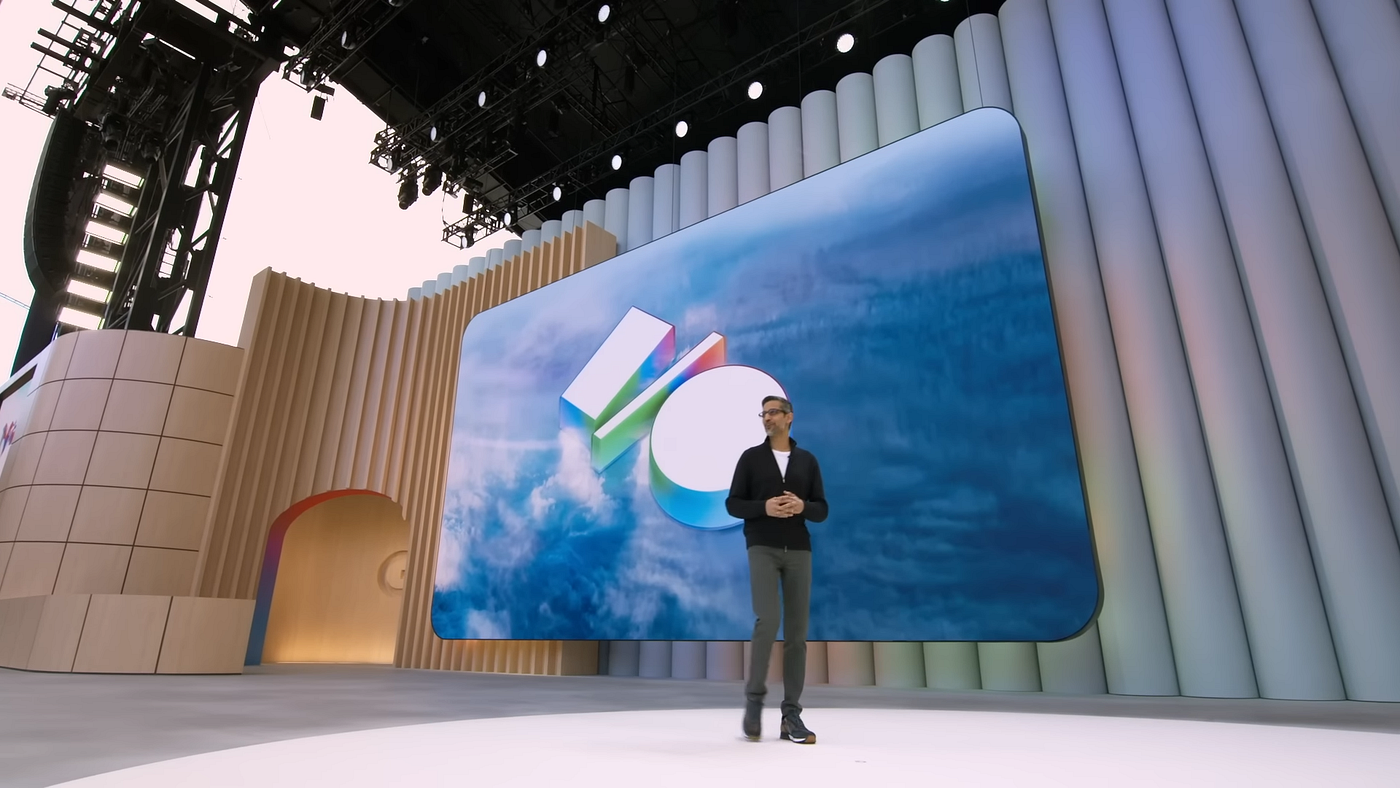
Google held I/O 2026 on May 19–20 in Mountain View. Two hours, somewhere around 100 announced items by the company’s own count. Here is what actually matters for builders.
The headliner was Gemini 3.5 Flash. It shipped generally available the same day it was announced — rare for a model at this tier. As of May 19, it replaced Gemini 3.1 Pro as the default model in the Gemini app and in AI Mode in Google Search worldwide. If you opened Gemini that day, you were already running it without knowing.
On benchmarks, Gemini 3.5 Flash beats its predecessor across every internal evaluation. Terminal-Bench 2.1 at 76.2%, GDPval-AA at 1656 Elo, MCP Atlas at 83.6%. Google also claims the model delivers four times the output token generation speed of competing frontier models, which is a meaningful spec for high-volume pipelines.
The routing context matters here. Gemini 3.5 Flash scores 55.1% on SWE-bench Pro, compared to Claude Opus 4.8’s 69.2%. But it costs $1.50/$9.00 per million tokens versus Opus 4.8’s $5/$25. Gemini wins on terminal tasks and runs at roughly one-third the price. For cost-sensitive or speed-sensitive pipelines, that is a real trade-off worth running the numbers on.
The usage numbers from Sundar Pichai were striking. Google is now processing more than 3.2 quadrillion tokens per month, up from 480 trillion at I/O 2025. That is a 6.7x increase in one year. The Gemini app crossed 900 million monthly active users (from 400 million a year ago). AI Mode in Search surpassed 1 billion monthly users.
Gemini Omni handles multimodal video generation — text, image, and audio in, video out — with character and voice consistency preserved across scenes. It is already embedded in YouTube Shorts Remix.
Gemini Spark is a new 24/7 ambient agent. Configure it once and it surfaces relevant information and takes action in the background without needing a prompt. The Daily Brief feature generates personalized morning digests. This is Google’s clearest answer to the “personal AI operating system” framing that has been floating around since ChatGPT went viral.
Antigravity 2.0 shipped as a standalone desktop app with two views: an Editor view that looks like an IDE with an agent sidebar, and a Manager view for orchestrating multiple agents simultaneously. Enterprise access is available through Google Cloud. More than 4 million developers had used the previous Antigravity version, and the desktop app is a direct shot at Cursor and Claude Code’s growing install base.
Gemini 3.5 Pro is confirmed rolling out next month.
— -
Microsoft and OpenAI: Sovereignty Bets and Life Sciences Moves
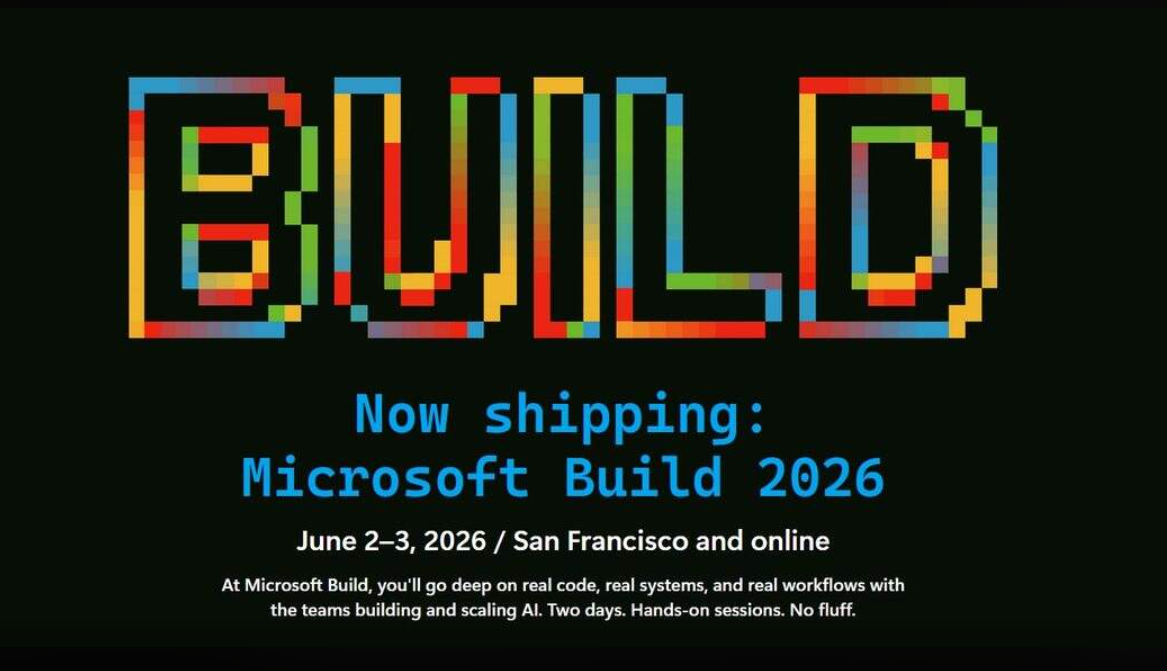
Microsoft held Build 2026 on June 2 in San Francisco. The headline was buried slightly in the keynote framing, but it is the most strategically interesting thing in the week: Microsoft released seven AI models it built itself.
Sit with that for a second. Microsoft invested roughly $13 billion in OpenAI across multiple rounds. It co-built GPT-4 into its product stack. It ran one of the most successful third-party AI deployments in the industry. Then it stood on stage and announced a family of models trained with no distillation from OpenAI, explicitly framing it as a bid for “long-term self-sufficiency.”
The flagship is MAI-Thinking-1, a 35 billion active parameter mixture-of-experts model with a 256,000-token context window. Trained from scratch on clean, commercially licensed data. It scored 97% on AIME 25 and 53% on SWE-bench Pro. Independent human raters on Surge preferred it over Claude Sonnet 4.6 in blind side-by-sides. Not at Opus 4.8 territory yet on coding, but close enough to matter for enterprise buyers with compliance requirements around data provenance — and this is a first release.
The rest of the MAI lineup: MAI-Code-1 is tuned for GitHub and VS Code. MAI-Transcribe-1 transcribes speech across 25 languages at 2.5 times the speed of Azure’s current Fast offering. MAI-Voice-1 generates 60 seconds of audio in roughly one second with custom voice support. MAI-Image-2 handles image generation. MAI-Voice-2-Flash targets ultra-low-latency voice agents. All are available on Azure AI Foundry; MAI-Thinking-1 also runs on Fireworks AI, Baseten, and Open Router.
Microsoft also announced a partnership with Mayo Clinic to jointly develop a frontier model for healthcare and deploy it inside the hospital system.
The Microsoft/OpenAI relationship did not implode — it restructured. On April 27, 2026, the two companies revised their agreement and dropped the exclusivity clause that had prevented OpenAI from distributing API-accessible products through competing cloud providers. The updated license runs non-exclusively through 2032. Within 24 hours of that deal being announced, OpenAI and AWS announced a limited preview of GPT-5.5 on Amazon Bedrock. General availability arrived June 1 — the same day Anthropic’s Opus 4.8 also landed on Bedrock. Four million developers use Codex weekly, and they can now run it from AWS.
Separately, OpenAI released a major update to GPT-Rosalind on June 3. The model is named after Rosalind Franklin, whose work was foundational to understanding DNA structure. GPT-Rosalind is built on the GPT-5.5 base with additional training in drug discovery domains — medicinal chemistry, genomics, wet-lab protocols.
The benchmark improvements over base GPT-5.5 are domain-specific: MedChemBench at 27.5% vs 25.1%, GeneBench at 21.6% vs 20.4%, LabWorkBench at 63.2%. The bigger win is efficiency: GPT-Rosalind completes long-horizon quantitative biology analyses using 31% fewer tokens than GPT-5.5. For research pipelines that routinely process large genomics datasets, that cost reduction compounds at scale.
Rosalind Biodefense extended access to vetted U.S. government and allied public-health partners for early-warning systems, outbreak modeling, and medical countermeasure development. Access was granted to the Johns Hopkins Applied Physics Laboratory and the Coalition for Epidemic Preparedness Innovations. OpenAI briefed the White House during the rollout.
— -
What This All Means: Where Things Actually Stand
No single model wins everything. That has been technically true for a while, but the current splits are sharp enough to have real routing implications.
For repository-level software engineering, Claude Opus 4.8 is the default best choice based on SWE-bench Pro (69.2%). For terminal-heavy DevOps and CLI automation, GPT-5.5 leads on Terminal-Bench 2.1 (78.2%). For cost-sensitive pipelines at scale, Gemini 3.5 Flash at $1.50/$9.00 per million tokens is roughly three times cheaper than Opus 4.8. If your product runs millions of API calls per day, that price gap shapes your entire infrastructure budget.
The Microsoft story is about more than seven new models. It is the clearest signal yet that large enterprises want AI supply chains they control. MAI-Thinking-1 is not as strong as Opus 4.8 — but it is available on multiple cloud providers, trained without distillation from a competitor, and architected by a team that can hill-climb quickly. For enterprise buyers with legal, compliance, or data sovereignty concerns, “strong enough and fully auditable” often beats “best-in-class but opaque.”
The IPO wave is not coincidental. The Anthropic S-1, the OpenAI preparations, SpaceX’s filing: institutional investors have decided that AI infrastructure is real, durable, and ready for public market pricing. Whether those valuations hold depends on revenue sustaining the growth curves. Anthropic’s $47 billion run rate suggests at least one lab has the business to back the pitch.
GPT-Rosalind and Rosalind Biodefense signal that OpenAI made a deliberate call to go deep on domain-specific models rather than trying to win every task with a general one. The life sciences bet is explicit. The biodefense angle adds government contracts and policy relationships to what was previously a commercial-only offering — that broadens the business profile.
Agents stopped being promised this week. Antigravity 2.0 is a shipping desktop app. Dynamic Workflows is live in Claude Code today. MAI agents are in Foundry now. The gap between “we are building toward agentic AI” and “here is the agentic product” closed at Google I/O or Microsoft Build, depending on which ecosystem you live in.
What to watch next: Gemini 3.5 Pro is confirmed for this month and is the most anticipated near-term release. Mythos-class model broader rollout from Anthropic is on a “coming weeks” timeline from May 28, putting it in June or July. OpenAI’s own S-1 is reportedly in preparation, which would make it the second major AI lab to file in the same quarter.
One week. Four companies. Seven new models. A near-trillion-dollar IPO. A deal that restructured cloud AI distribution for the next six years. If this pace holds through the rest of 2026, keeping track of it is becoming a full-time job on its own.
— -
All benchmark figures cited here come from official launch documentation, Anthropic’s system cards, and third-party evaluations via BenchLM, Vellum, Bind AI, and Nerd Level Tech. Benchmarks are compared under standard configuration unless noted otherwise. Pricing as of June 2026.*
Tags: AI News, Machine Learning, Claude, GPT, Gemini, Anthropic, OpenAI, Google, Microsoft, AI Benchmarks
메타데이터
- post_id
- 3cc02caaa128
- slug
- ai-news-of-the-week-the-industrys-biggest-seven-days-yet-3cc02caaa128
- url
- https://medium.com/@ffguci8/ai-news-of-the-week-the-industrys-biggest-seven-days-yet-3cc02caaa128
- canonical_url
- https://medium.com/@ffguci8/ai-news-of-the-week-the-industrys-biggest-seven-days-yet-3cc02caaa128
- author_url
- https://medium.com/@ffguci8
- status
- ok
- fetched_at
- 2026-06-13 12:55:53