DIGITAL TRANSFORMATION: Digital Transformation Is Not a Technology Problem #19
Visual Thinking for Transformation | Post 19 of 30
From Noise to Clarity | Track 9
DIGITAL TRANSFORMATION: Digital Transformation Is Not a Technology Problem #19
Visual Thinking for Transformation | Post 19 of 30

Before you read: think of a digital transformation you have witnessed or been part of. What proportion of the challenge turned out to be about the technology, and what proportion turned out to be about something else entirely?
The phrase digital transformation is now used to describe almost any significant change that involves technology. Replacing a legacy system with a cloud-based alternative is a digital transformation. Introducing a new customer-facing application is a digital transformation. Moving from paper-based processes to digital workflows is a digital transformation. The word has become so broadly applied that it no longer reliably tells you what kind of problem you are actually dealing with, and that ambiguity has consequences.
The most consequential ambiguity is this: digital transformation is typically framed and funded as a technology problem, and the technology is typically the part that works. The systems get implemented, the platforms get built, the applications get deployed on time and broadly within budget. Project managers mark their milestones green. Go-live dates are celebrated. And what then fails to happen is the transformation itself, the change in how people think, work, make decisions, and relate to each other and to the people they serve. The technology arrives at the building. The transformation stops at the door.
This pattern is consistent enough to constitute something close to a rule: the technical challenges of a digital transformation are almost never what makes it fail. What makes it fail is the human and organisational challenges that the technology framing renders invisible, because they do not fit the category of problems that technology investment is designed to solve. They do not appear in the project plan. They do not have a budget line. They do not have a named owner in the programme structure. By the time the invisible challenges become visible, the technology has been implemented, the budget has been spent, and the project is formally complete. The transformation, however, has not happened, and it is only at this point that the organisation begins to ask why.
“The technology works. The transformation fails. These are not contradictions. They are the most common outcome in digital change.”

What the technology framing makes invisible
When a digital transformation is framed primarily as a technology problem, it produces a specific set of priorities that systematically underinvests in the human and organisational dimensions of the change. Technology problems require technical solutions: selecting the right platform, managing the implementation, ensuring integration with existing systems, building the features that users need. These are real and important problems, and they absorb an enormous proportion of the time, attention, and budget available to the programme.
What does not appear in a technology problem frame is the question of whether the people using the technology will actually use it in the ways it was designed to be used, whether their existing workflows and habits will adapt around the technology or whether the technology will be quietly adapted around their existing habits, and whether the organisation’s underlying processes are capable of delivering the value the technology is supposed to enable. These are not technology questions. They are human and organisational questions, and they determine whether the technology investment produces a transformation or simply produces a more expensive version of the same operating model it was supposed to replace.
In one case, a professional services firm implemented a sophisticated new knowledge management platform designed to improve the capture and sharing of expertise across its project teams. The platform itself was well designed and technically robust. It had features that directly addressed the knowledge sharing gaps the firm had identified as a strategic priority. Eighteen months after implementation, the platform was being used by fewer than a quarter of the firm’s staff on a regular basis. The rest had reverted to email, shared drives, and informal conversations, exactly as they had before the platform existed. The technology had not failed. The change in how people worked, thought about knowledge, and trusted the platform had not happened. That change had never been part of the programme design, because the programme had been designed as a technology implementation rather than as a transformation.
The knowledge management failure was not a technical failure. It was a change failure wearing a technology label. The platform could not solve a problem it had not been designed to address, which was the question of why people did not share knowledge in the first place, what the existing incentives and norms around knowledge hoarding were, and what would need to change in those incentives and norms for any system, regardless of its quality, to be used differently.
“Every failed digital transformation contains a people problem that the technology budget was never asked to solve.”

The three problems that technology cannot solve
There are three categories of problem that digital transformation consistently encounters and that technology investment consistently fails to address, not because the technology is inadequate but because these problems are genuinely outside the scope of what technology does. Each one is invisible through a technology lens and clearly visible through a human one.
The first is the problem of incentives. Technology changes what is possible. It does not change what is rewarded. If the existing incentive structure rewards individual performance over collaboration, a collaboration platform will be used for individual performance. If the reward structure values speed of output over quality of thinking, a knowledge management system will be used for rapid retrieval rather than deep engagement. The technology provides a new capability. The incentive structure determines how that capability will actually be used. Transformations that invest in the capability without examining the incentive structure tend to produce expensive new tools for doing the old thing in a slightly different way.
The second is the problem of trust. Digital tools require people to work in ways that are more visible, more accountable, and more interconnected than many existing workflows. This requires trust, both in the organisation and in the people who will see what the tool makes visible. In organisations where that trust does not exist, digital tools either go unused or get used in ways that minimise their visibility function, which is precisely the function that was supposed to make them valuable. In one case, a retail organisation implemented a new performance tracking dashboard that was intended to give store managers real-time visibility into their teams’ activity. Within weeks, patterns emerged showing that the most closely tracked metrics were being managed to rather than genuinely improved, with staff timing their activity to produce the numbers the dashboard needed to see rather than delivering the underlying performance the dashboard was supposed to measure. The technology had made the wrong thing visible, not because it was poorly designed but because the trust conditions that would have made genuine visibility safe and productive did not exist in that organisation.
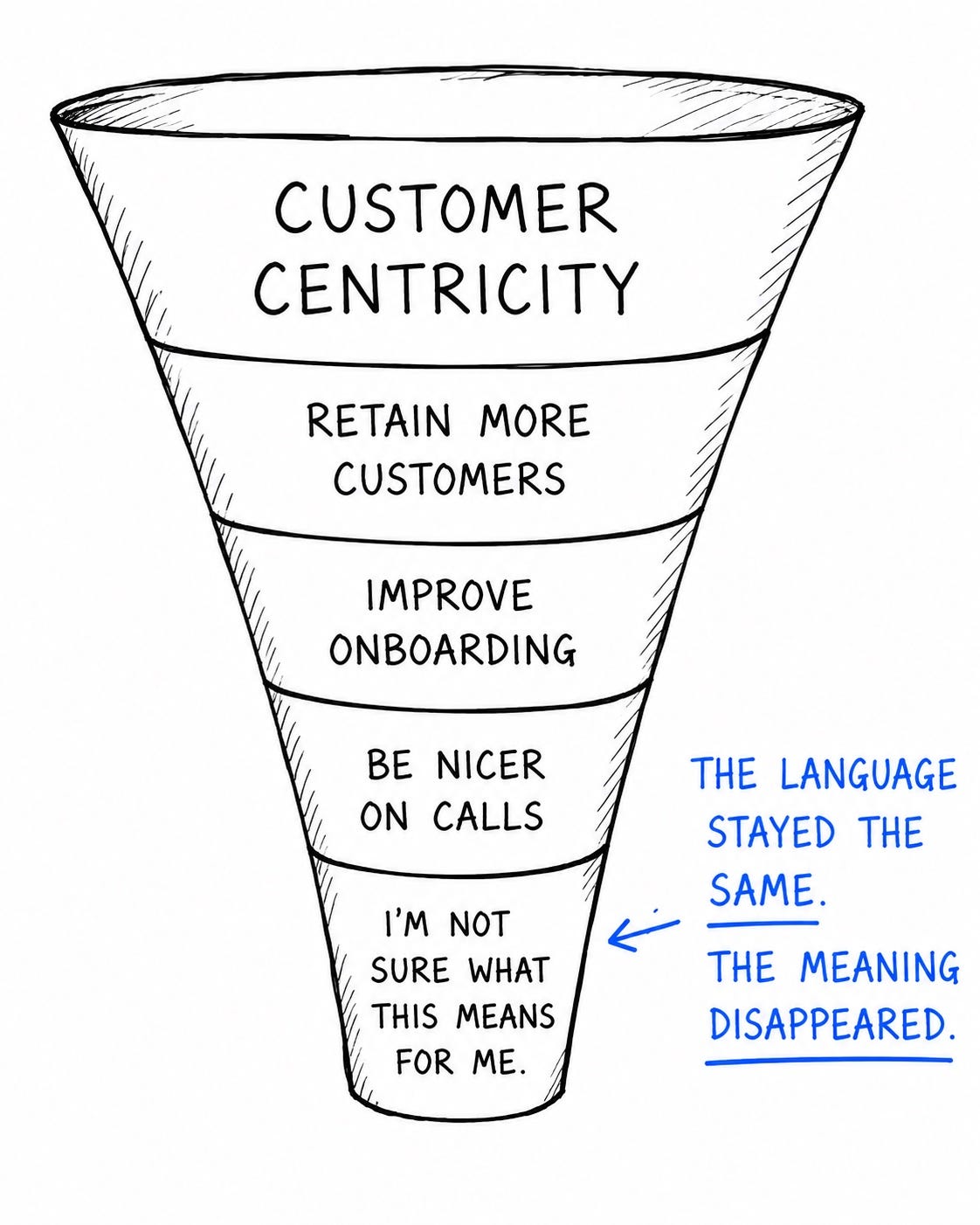
The third is the problem of meaning. People engage differently with technology when they understand why the new way of working matters, not just what it requires of them. This is the problem that most digital transformation programmes address last, with end-user training scheduled in the final weeks of the implementation, at the point where the system is essentially complete and what is being communicated is instruction rather than meaning. Training can teach people how to use a tool. It cannot tell them why the tool is worth using in the new way rather than reverting to the old workaround that is faster and more familiar. That question requires a different conversation, conducted much earlier in the process, with the people who will use the tool rather than with the people who designed it. And it requires a willingness to sit with the answers even when they reveal that the rationale for the change has not been adequately connected to the people being asked to change.
“Incentives, trust, and meaning. These are the three things technology cannot provide and transformation cannot succeed without.”

What it means to treat digital transformation as a human problem
Treating digital transformation as a human problem does not mean deprioritising the technology. The technology matters and it has to work. What it means is designing the transformation with the human and organisational dimensions receiving the same rigour, the same budget allocation, and the same senior attention as the technical ones, from the very beginning of the programme rather than as an afterthought appended to it when the technical implementation is already well advanced and the human problems have already had months to harden.
In practice, this means asking different questions at the design stage. Not only what system do we need and how do we implement it, but who will use this system and what will make them want to. What currently makes the old way easier, and what needs to change for the new way to be genuinely preferable in the daily conditions of real work. What do people need to understand about why this matters before the system goes live, and who is the right person to have that conversation with them, not the project team but the people whose credibility the users trust. What incentives currently reward the old behaviour, and what would reward the new one without requiring heroic personal effort from people who are already under pressure.
These questions do not require technical expertise. They require the same diagnostic thinking that any significant organisational change requires, which is precisely why they tend to be underrepresented in programmes that have been framed and staffed as technology implementations. The people best qualified to ask and answer them are often not in the room when the programme is being designed, because the room was assembled to solve a technology problem and they are not technologists. Bringing them in requires a decision about what kind of problem the programme is actually trying to solve, made early enough to shape the design rather than late enough to manage the consequences.
Digital transformation is a technology problem in the way that building a road is an engineering problem. The engineering has to be right. But whether the road goes anywhere worth going, whether people use it, and whether it changes how they move through the world, those questions are not engineering questions. They never were.
What is the human problem sitting underneath the technology problem in your current digital transformation, and is anyone in your programme specifically responsible for solving it?
Next time, we look at Why Tools Fail When Thinking Does Not Change.
If this resonates, you will find a deeper exploration of how to see business situations clearly in The S.T.A.R. System: Applying Visual Thinking for Career & Business Success, available on Amazon.

Ai Yat Goh is the co-author of The S.T.A.R. System: Applying Visual Thinking for Career & Business Success(Marshall Cavendish Business, with Sherrie Low). Follow Ai Yat on LinkedIn and Medium.
VisualThinking #DigitalTransformation #Leadership #ChangeManagement #FromNoiseToClarity
BK HAN Candy Chan RH Malini GOW Hui Yian Germaine Kwek Joelynn Koh
메타데이터
- post_id
- 3cea22d1bf23
- slug
- digital-transformation-digital-transformation-is-not-a-technology-problem-19-3cea22d1bf23
- url
- https://medium.com/@aiyat.goh/digital-transformation-digital-transformation-is-not-a-technology-problem-19-3cea22d1bf23
- canonical_url
- https://medium.com/@aiyat.goh/digital-transformation-digital-transformation-is-not-a-technology-problem-19-3cea22d1bf23
- author_url
- https://medium.com/@aiyat.goh
- status
- ok
- fetched_at
- 2026-07-15 13:27:44