Glasses are Getting Stronger — So Why Are We Still Stuck in the ‘Screen Mirroring’
As developers deep in the AR trenches, we’ve been watching the hardware race — bigger FOV, sleeker audio, and dedicated chips like the X1…
Glasses are Getting Stronger — So Why Are We Still Stuck in the ‘Screen Mirroring’
As developers deep in the AR trenches, we’ve been watching the hardware race — bigger FOV, sleeker audio, and dedicated chips like the X1 crushing millisecond latency. Glasses are getting good, and acceptance is growing. The Core Problem: A Glaring Mismatch
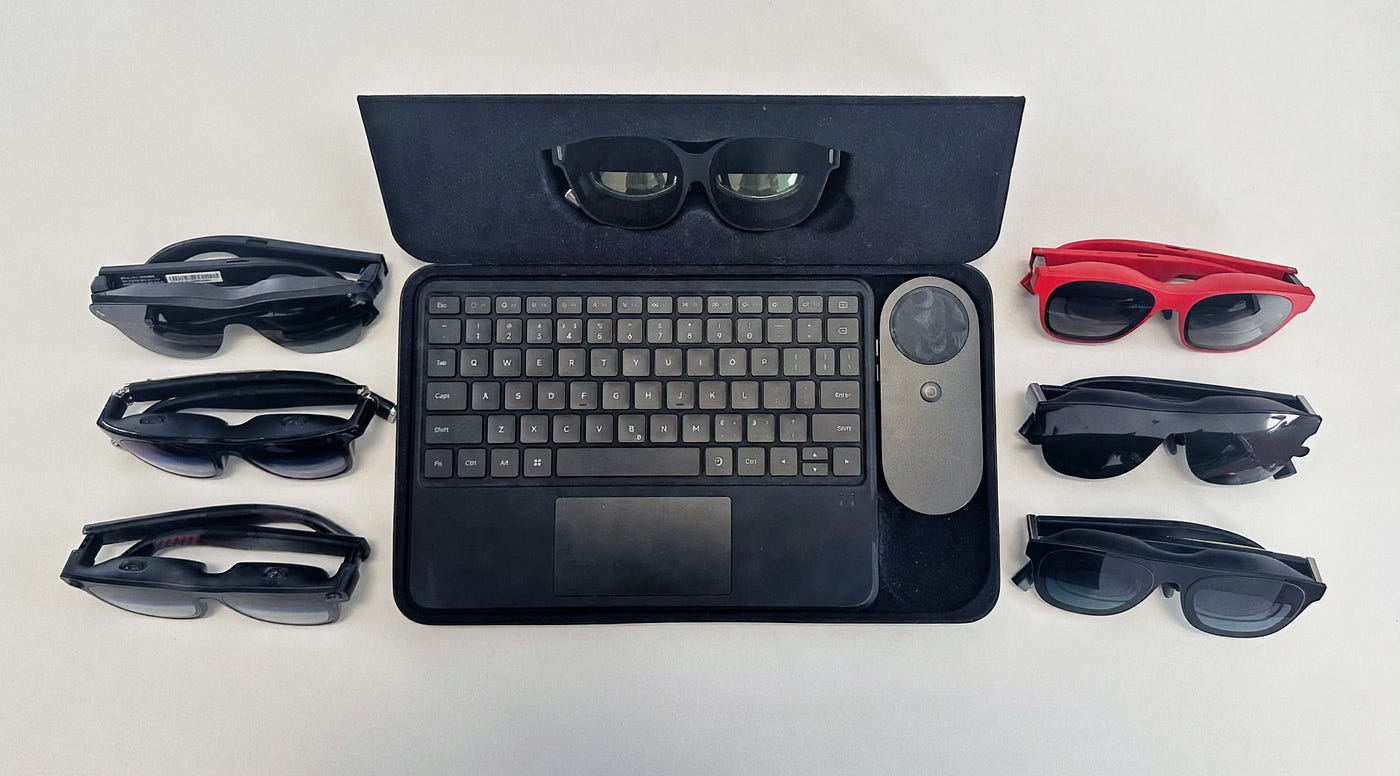
We all expect AR to extend our vision, let tasks live simultaneously, and have information flowing around us. But the reality? Most AR experiences are still dragged back into the familiar smartphone logic: single-threaded, interrupt-driven, centered on swiping, and ruled by notifications. There’s a huge disconnect: The glasses evolved, but the experience is stuck as ‘just a phone extension.’ It’s not that the glasses aren’t great; it’s that we’re trying to run a continuous, immersive, spatial use case on a system built for fragmented communication. We have a great engine, but the racetrack is all wrong.
The Unsolved Puzzle: Unlocking AR’s Potential We realized there’s a huge, long-ignored gap in the current AR experience chain. That’s where INAIR Pod steps in.
- The Physics Problem: Moving the “Brain” Spatial computing and AI rendering are heavy-duty tasks. Constant compute power inevitably brings heat, power draw, and bulk. If you cram all that into the glasses, the issue stops being “Can we optimize performance?” and becomes a physical bottleneck: face weight, thermal throttling, and frequent slowdowns. At this stage, the smart move isn’t to squeeze the glasses harder. It’s to split the system architecture: Glasses: Handle display and sensing. The “Brain” (INAIR Pod): Moves the heavy compute and energy off your head. This is the only honest way to stop sacrificing comfort for performance.
- The Interaction Problem: Escaping the Phone Logic The phone OS is fundamentally centered on communication — instant response and fragmented use. AR needs continuous, immersive, spatial tasks. When AR parasitically relies on a phone’s system, the conflict explodes: Constant pop-up notifications. “Battery anxiety” from rapid drain. Continuous switching between “seeing” and “operating.” No true blind operation. These mechanisms from the phone world constantly break the spatial experience. The real issue isn’t just about raw power; it’s about having a “native brain” designed specifically for spatial tasks, free from interruption. INAIR Pod fills this dual physical and interactive void. It’s interesting to see industry pioneers like Meta (with their Orion efforts) and XREAL/Google moving in similar directions. This isn’t a “final answer,” but it’s the most honest and reasonable balance given current physical limits.
The Open Secret: Why We Support Third-Party Glasses Why open the Pod to “rivals” like XREAL, Viture, and Rayneo? Because you — the people who already own and use these glasses — understand the Pod’s value the most. You’ve experienced the best optical displays, but you also know the pain of lacking a native spatial OS. We don’t claim to have the only answer, but we want to fill the massive gap in system and interaction.
메타데이터
- post_id
- 3cecdbfc0267
- slug
- glasses-are-getting-stronger-so-why-are-we-still-stuck-in-the-screen-mirroring-3cecdbfc0267
- url
- https://medium.com/@2302crewyzj/glasses-are-getting-stronger-so-why-are-we-still-stuck-in-the-screen-mirroring-3cecdbfc0267
- canonical_url
- https://medium.com/@2302crewyzj/glasses-are-getting-stronger-so-why-are-we-still-stuck-in-the-screen-mirroring-3cecdbfc0267
- author_url
- https://medium.com/@2302crewyzj
- status
- ok
- fetched_at
- 2026-06-21 15:33:18