The House of Representatives or the House of Appointed Members?
The collapse of the Ba’athist regime on December 8, 2024, dismantled more than five decades of iron-fisted rule by the Assad family and…
The House of Representatives or the House of Appointed Members? Post-Assad Governance and the Legacies of Authoritarianism in Syria
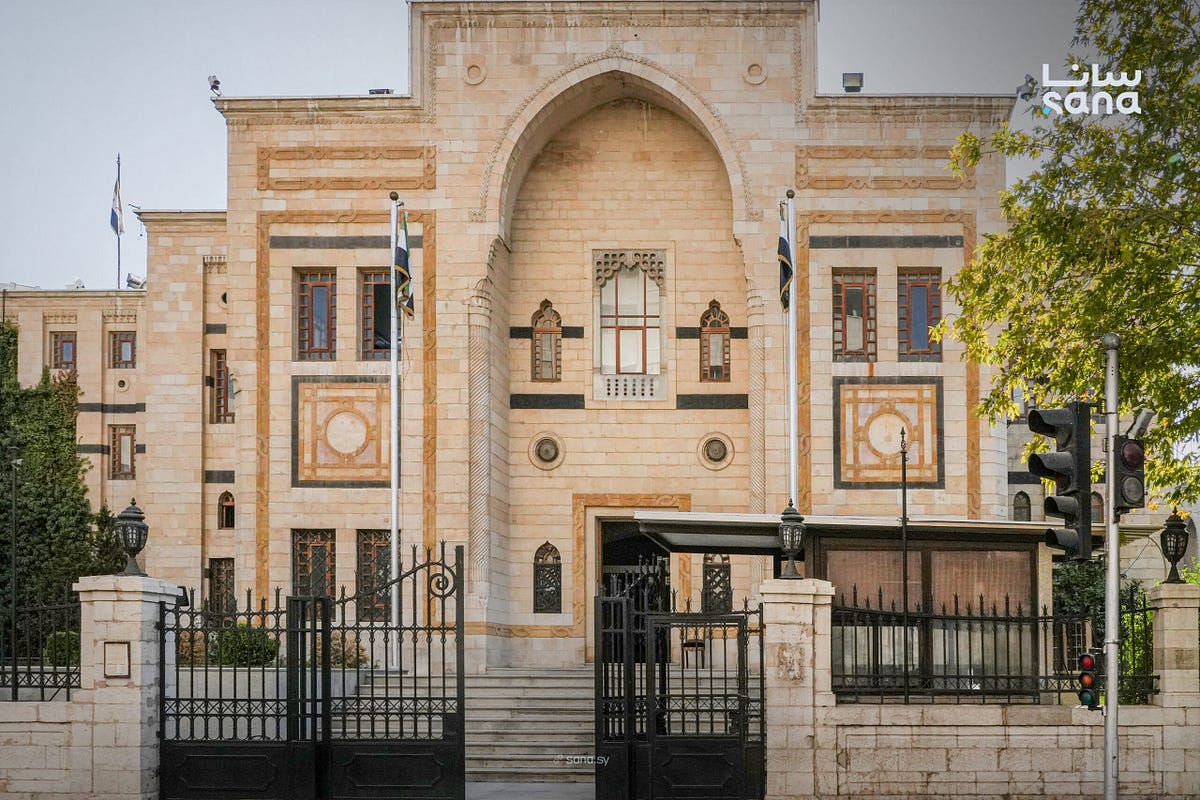
The House of Representatives in Damascus, the syrian capital (SANA)
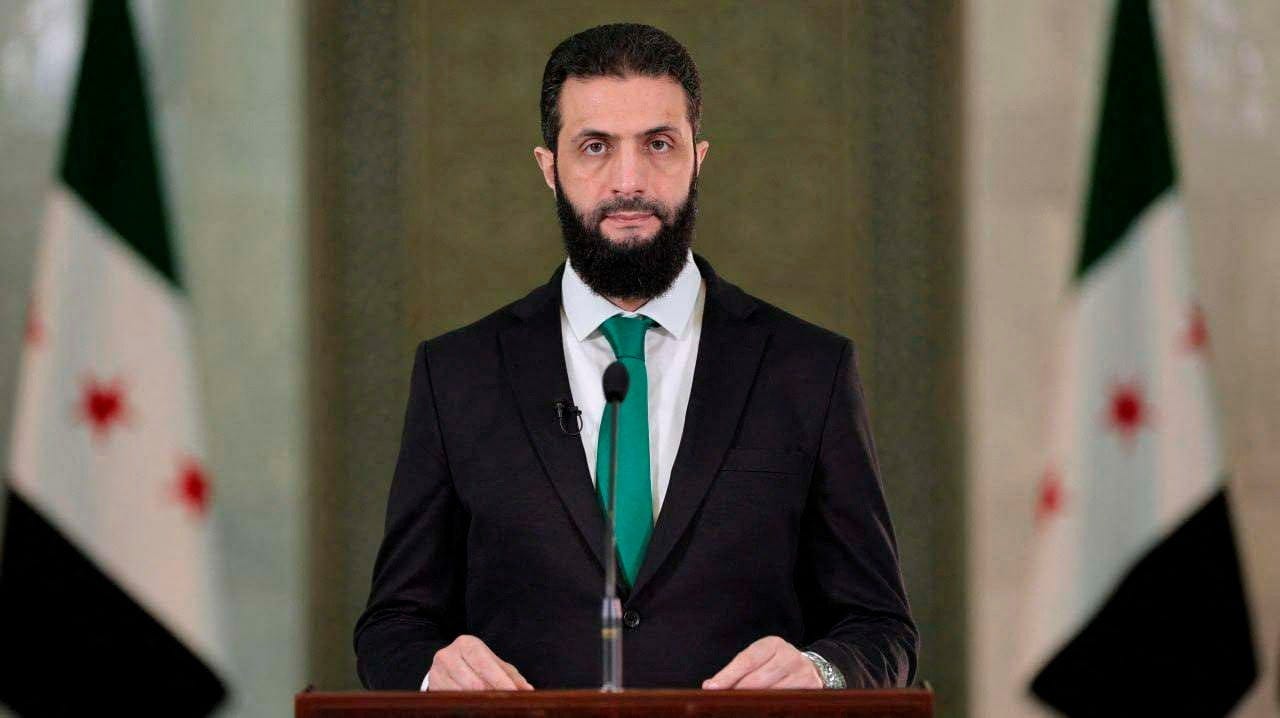
The collapse of the Ba’athist regime on December 8, 2024, dismantled more than five decades of iron-fisted rule by the Assad family and initiated a profound shift in Syria’s political architecture. Following the rapid military offensive led by Hay’at Tahrir al-Sham (HTS), Ahmed al-Sharaa, formerly known by his nom de guerre Abu Mohammad al-Julani, emerged as the de facto leader of the state. Serving as the president of the Syrian transitional government since January 29, 2025, al-Sharaa has overseen a highly centralized and managed transition designed to rebuild state institutions and secure regional legitimacy.
A pivotal moment in this transition occurred on July 1, 2026, when the High Elections Commission announced the names of the 70 lawmakers directly appointed by President al-Sharaa to the transitional People’s Assembly. This announcement finalized the composition of the 210-member unicameral legislature, which convened for its inaugural session on July 6, 2026. The completion of this legislative body, constructed through a hybrid model of indirect electoral colleges and direct presidential appointments, has sparked intense debate among political analysts, human rights monitors, and civil society actors. Specifically, observers question whether the transitional authority is steering Syria toward genuine representative pluralism or merely replicating the highly centralized, co-optive, and exclusionary methods that defined the Assad era.
Comparative Architecture: Assad’s Clapping Chamber versus Sharaa’s Managed Assembly
To evaluate whether the newly formed People’s Assembly represents a structural break from Syria’s authoritarian past, it is necessary to contrast its design with the legislative machinery of the Ba’athist regime. Under Hafez and Bashar al-Assad, the 250-seat People’s Council functioned as an instrument of autocratic consolidation rather than a representative legislature. Through the constitutional guarantee of a two-thirds majority for the Ba’ath-led National Progressive Front (NPF), direct popular elections were reduced to structured performances. The security services meticulously vetted all candidates — including nominal independents — to ensure unswerving loyalty, rendering the parliament a “clapping chamber” designed to rubber-stamp executive decrees and manage the regime’s patronage networks.
The transitional system established under President al-Sharaa represents a departure in form, but its structural mechanics raise questions about executive dominance. Under the Constitutional Declaration signed on March 13, 2025, and subsequent presidential decrees, Syria adopted a unitary presidential system where executive power is heavily concentrated in the presidency. The 210-seat People’s Assembly was designed as a temporary legislative council for a five-year transitional period. Rather than relying on direct popular suffrage, the assembly was built on a multi-tiered, managed selection process.
The President appointed an 11-member Supreme Committee for the People’s Assembly Elections, which then appointed district-level subcommittees. These subcommittees selected electoral colleges consisting of local professionals, academics, and traditional notables. Only members of these electoral colleges were permitted to nominate themselves or vote to fill the 140 indirectly elected seats. The remaining 70 seats — comprising exactly one-third of the legislature — were reserved for direct appointment by the President.
Structural FeatureAssad-Era People’s Council (Pre-2024)Transitional People’s Assembly (2025–2026)Total Seats
250 seats
210 seats
Electoral Suffrage
Formal direct popular vote under single-party hegemony
Indirect electoral college voting (140 seats) and direct presidential appointments (70 seats)
Legal Status of Parties
Monopolized by the Ba’ath-led National Progressive Front (NPF)
No legal framework or licensing laws for political parties; candidates run as independents
Executive Vetting
Absolute control by state security apparatuses and Ba’ath Regional Command
Opaque vetting of electoral colleges by presidential-appointed subcommittees
Legislative Power
Devoid of independent initiative; subordinate to the executive
Formal legislative authority, but subject to a strong presidential veto requiring a two-thirds override
Constitutional Oversight
Supervised by a regime-controlled Supreme Constitutional Court
Seven-member High Constitutional Court appointed entirely by the President
Independent analysts have noted that the transitional assembly’s design closely resembles the consultative Shura councils historically employed by Islamist factions in northern Syria. Specifically, the methodology mirrors how HTS constructed its “General Shura Council” to govern the Idlib enclave through the Syrian Salvation Government (SSG) between 2017 and 2024. In Idlib, HTS bypassed popular elections by tasking a select circle of handpicked regional representatives, tribal figures, and professional unions with appointing council members. Senior transitional figures, including current Justice Minister and close Sharaa adviser Mazhar al-Wais, have explicitly advocated for “advisory and consultative councils” rather than Western-style representative parliaments. This “Shura-fication” of the legislative branch suggests that the new leadership prioritizes controlled, top-down consensus-building over open, adversarial democratic competition.
Procedural Anomalies and the Deficit of Independent Oversight
A major source of concern regarding the transitional People’s Assembly lies in the severe procedural anomalies and legal inconsistencies that characterized its formation. Independent legal monitors, including the Syrian organization The Day After (TDA) and the Access Center for Human Rights (ACHR), have documented a series of structural flaws that call into question the independence of the process.
A primary criticism is the complete absence of judicial oversight throughout the election cycle. Under standard Syrian electoral frameworks, the Higher Judicial Committee for Elections was historically required to consist of independent judges appointed by the Supreme Judicial Council. However, under Presidential Decree №66 of 2025, President al-Sharaa bypassed this requirement, appointing a committee that entirely excluded members of the judiciary. Furthermore, although Article 47 of the Constitutional Declaration mandated the dissolution of the old Constitutional Court and the creation of a new seven-member High Constitutional Court appointed by the President, this critical oversight body was never established before the election process commenced. Consequently, there was no independent judicial authority to supervise the High Elections Commission or rule on candidate appeals, leaving the executive-appointed commission to operate with unchecked authority.
The formation of the electoral colleges was also marred by opaque timelines and subjective vetting criteria. Local subcommittees were given a window of only five days to consult with communities and select the 50-member electoral bodies for each legislative seat. This extremely short timeframe made genuine civic consultation impossible, allowing the subcommittees to arbitrarily nominate or exclude candidates without clear standards or transparency. The eligibility criteria implemented under Decree №143 were broad and easily manipulated to sideline political rivals. Prohibitions against candidates who were “supporters of terrorist organizations” were applied without legal definitions, and requirements such as “commitment to the Constitutional Declaration” or verifying five years of continuous residency within an area prior to 2011 were functionally impossible to verify objectively.
Furthermore, the transitional government violated its own rules regarding campaigning and media neutrality. While the temporary electoral framework legally restricted campaigning to private interactions within the closed electoral colleges and strictly prohibited the use of state-owned media, several pre-selected candidates openly campaigned to the general public via social media. Official state channels, such as al-Ikhbariyah al-Souriyah, actively provided media platforms to select candidates without facing legal penalties.
This lack of transparency was exacerbated by the outright exclusion of independent election observation. The High Elections Commission failed to establish any formal mechanism for civil society monitoring, and when domestic human rights organizations formally requested permission to observe the polling stations, their applications were officially denied.
Finally, independent monitors have highlighted instances of executive overreach that directly undermine the separation of powers. Article 43 of Presidential Decree №143 unilaterally doubled the statutory penalties for electoral offenses, effectively amending the Syrian Penal Code. Under the Constitutional Declaration, the President is not empowered to amend penal laws via executive decree, meaning this action exceeded his constitutional authority.
Additionally, the transitional framework contains no legal mechanism for the legislature itself to fill vacant seats. Instead, the decree grants the President the unilateral power to directly appoint replacements for any elected or appointed member who loses their seat, allowing the executive branch to continually reshape the legislative majority.
The 70 Presidential Appointees: Demographic Balancing or Clientelist Co-optation?
The finalization of the People’s Assembly via Presidential Decree №143 on July 1, 2026, brought the chamber to its statutory size of 210 members, setting the stage for its first session on July 6. The distribution of the 70 presidentially appointed seats across Syria’s provinces indicates a strategic effort to establish geographic representation, particularly in restive or historically marginalized border regions.
Province & Appointed Legislative Seats
Aleppo — 14 seats
Al-Hasakah — 7 seats
Homs — 6 seats
Deir ez-Zor — 6 seats
Damascus — 5 seats
Damascus Countryside (Rif Dimashq) — 5 seats
Idlib — 5 seats
Hama — 5 seats
Latakia — 4 seats
Daraa — 4 seats
Raqqa — 3 seats
Tartus — 2 seats
Suwayda — 2 seats
Quneitra — 2 seats
Total Appointed Seats — 70 seats
The transitional government has framed these appointments as a necessary mechanism to correct demographic imbalances and integrate marginalized societal components. High-profile appointments were granted to prominent academic, professional, and community figures. In an effort to build symbolic legitimacy, the appointed list includes 13 former political prisoners who had been detained by the Assad regime, alongside relatives of war martyrs and survivors of chemical attacks. Key figures appointed include former opposition leaders Anas Mohammad al-Abdah and Badr Mohiuddin Jamous, alongside local intellectual and community leaders.
However, the political utility of these appointments extends far beyond symbolic inclusion. By directly appointing one-third of the legislature, President al-Sharaa has established a permanent, unified block of loyalists within the People’s Assembly. Under the 2025 Constitutional Declaration, any laws proposed or amended by the assembly must be sent to the President for signature. If the President objects to a law, the assembly can only override the executive veto with a two-thirds majority. Since the President’s direct appointees comprise exactly one-third of the chamber, the executive branch effectively possesses a built-in blocking minority that can prevent the legislature from enacting any independent policy or reversing presidential decrees.
This structural dependency creates a clientelist dynamic that mirrors the co-optation strategies of the Assad era. In the pre-2024 system, religious, ethnic, and tribal minorities relied heavily on the Ba’ath Party’s implicit quotas and presidential patronage for political survival and representation. In the post-Assad system, because ethnic and religious minorities struggled to secure representation through the highly localized and conservative electoral college voting, they remain structurally dependent on the presidency to appoint their representatives. This political indebtedness grants the executive significant leverage over minority communities, transforming representation from an institutional right into a presidential favor.
Demographic Fractures and the Representative Deficit
The results of the multi-wave legislative process reveal deep demographic and political representation gaps that reflect the fragmented state of post-conflict Syria. Despite the transitional government’s inclusive rhetoric, the actual composition of the assembly remains highly skewed.
The Gender Representation Deficit
The political marginalization of women is one of the most glaring deficiencies of the new legislative body. In the indirect elections held in October 2025, only six women were elected nationwide, representing just 4.9% of the elected seats. This marked a significant drop from the 11.2% female representation in the 2020 Assad-era parliament. Although the temporary electoral framework nominally mandated that women comprise at least 20% of the overall electoral committees, the High Elections Commission itself included only two women among its eleven members, and the local subcommittees remained overwhelmingly male and bound by traditional patriarchal networks.
To address this severe deficit, President al-Sharaa appointed 15 women in his July 1, 2026 decree, raising the total number of female legislators to 21 (approximately 10% of the assembly). While this appointment power partially mitigated the gap, female representation remains well below the nominal 20% target, and the underlying social and structural barriers to women’s political participation remain unaddressed.
Sectarian Fractures and the Exclusion of the Coast
The demographic distribution of the assembly is overwhelmingly dominated by Sunni Arab men, leaving religious and sectarian minorities heavily marginalized. The Alawite community, which constitutes roughly 12% to 14% of the population, secured only four elected seats, all from the coastal provinces of Latakia and Tartous. No Alawites were elected from Homs, despite the presence of a sizable Alawite population in the province. This marginalization is closely tied to the severe wave of sectarian violence and armed clashes that erupted in the coastal region in March 2025. The violent suppression of former regime loyalists, arbitrary arrests of prominent Alawite figures, and widespread reports of forced disappearances led to a pervasive boycott of the transitional institutions by the Alawite community.
The Southern Druze Boycott
The Druze community of southern Syria is entirely absent from the elected component of the assembly. The southern province of Suwayda, led by Druze spiritual leader Hikmat al-Hijri, remained outside the administrative control of Damascus throughout the transition. Local Druze armed groups actively opposed the central government’s initiatives, refusing to allow the establishment of electoral subcommittees or colleges. Consequently, the three elected seats allocated to Suwayda remain vacant. While President al-Sharaa appointed two Druze figures — most notably Laith Waheed al-Balous, the son of the prominent late Druze leader Waheed al-Balous — to project a facade of inclusivity, these appointments have been rejected by local southern leadership, who view them as unilateral impositions designed to co-opt their localized autonomy.
Ethnic Minorities and the Kurdish Question
The ethnic composition of the assembly remains overwhelmingly Arab, with smaller minorities such as Syriacs, Assyrians, and Circassians almost entirely unrepresented in the elected seats. The Kurdish community, which represents approximately 10% of the Syrian population, has experienced a highly complex integration process. Following a landmark agreement in March 2025 to integrate the civilian and military institutions of the Kurdish-led Syrian Democratic Forces (SDF) and AANES into the central state, by-elections were finally held in the northeast districts of Hasakah, Qamishli, Al-Malikiyah, and Ayn al-Arab on May 24, 2026.
The elections filled 11 seats, returning six Arab and five Kurdish MPs, a result praised by the central government as highly balanced. With the subsequent presidential appointment of prominent Kurdish figures — including Dr. Abdulhakim Bashar, Dr. Mustafa Abdi, and Yasser Suleiman Mansour — total Kurdish representation in the assembly stands at 12 seats (5.7% of the chamber). While this represents a significant structural step toward integrating the northeast, major Kurdish political parties remain critical, arguing that the selected Kurdish representatives are predominantly aligned with the presidency or the Kurdish National Council (ENKS) rather than reflecting the broader, autonomous aspirations of the northeastern population.
The Disenfranchisement of the Diaspora and Refugees
Perhaps the most significant representative gap is the systematic exclusion of over five million Syrian refugees and displaced persons. Article 21 of the transitional electoral decree effectively barred Syrians residing abroad from participating in the voting or nomination processes. By failing to establish mechanisms for out-of-country voting, the transitional government has locked out nearly a third of the pre-war population from participating in the most critical constitutional transition in modern Syrian history, prioritizing rapid state consolidation over genuine democratic franchise.
The Dual-Legitimacy Trap: Strategic Implications and Scenario Analysis
The transition from the Assad regime to the al-Sharaa administration has placed the new Syrian government in a profound “dual-legitimacy trap”. To secure international recognition, normalize regional diplomatic relations, and obtain the lifting of economic sanctions, Damascus must project an image of inclusivity, political pluralism, and transition toward democratic reform. This international imperative drove the strategic integration of Kurdish figures and the high-profile appointments of former political prisoners, women, and academics.
However, to maintain control over a deeply fractured territory characterized by active local insurgencies, sectarian tensions, and unintegrated armed groups, the transitional authority relies on highly centralized, top-down security mechanisms. This domestic imperative led to the adoption of the managed, indirect electoral college system and the retention of vast executive authority in the presidency.
Depending on how this dual-legitimacy trap is managed, Syria’s institutional transition is likely to follow one of two primary scenarios over the next 30 months:
Scenario A: Managed Hegemonic Stabilization (The “Idlib writ Large” Model)
Under this scenario, the transitional government successfully utilizes the People’s Assembly to institutionalize its rule while avoiding a return to active civil war. By leveraging the presidentially appointed block and the co-opted independents within the assembly, the executive ensures that the drafting of the permanent constitution remains tightly controlled.
The assembly functions primarily as a highly organized Shura council, providing a forum for technocratic policy debate and managing regional patronage without threatening the central authority of President al-Sharaa. Minorities and northeastern actors are gradually integrated through targeted co-optation and selective reconstruction funding, enabling Damascus to slowly normalize relations with regional Arab states, particularly Saudi Arabia and the United Arab Emirates, and secure partial sanctions relief.
Scenario B: Institutional Collapse and Recurrent Civil Conflict (The “Iraq 2005” Parallel)
This scenario envisions a breakdown of the transitional framework due to its highly exclusionary design. Disenfranchised and marginalized communities — most notably the Alawites on the coast and the Druze in the south — completely reject the legitimacy of the People’s Assembly and any laws or constitutional drafts it produces. The systematic exclusion of over five million refugees further undermines the domestic and international legitimacy of the state.
As the assembly passes highly contested laws regarding transitional justice and land ownership, local protests and armed resistance intensify. Because the transitional military is not a unified professional army but rather an unstable coalition of ideologically diverse rebel factions and local militias, the central government lacks the coercive capacity to enforce its laws without provoking a wider conflict. The failure of the assembly to act as a genuinely inclusive legislative forum ultimately triggers a fragmentation of the state, causing Syria to slide back into a devastating, multi-sided civil war.
Conclusion: The Structural Legacies of Centralization
The announcement of the 70 presidential appointments completing the transitional People’s Assembly demonstrates that while the actors and ideological framing of the Syrian state have shifted, the fundamental methods of governance retain a remarkable continuity with the Assad era. By replacing the Ba’ath Party’s direct, fraudulent electoral machinery with a multi-tiered, executive-controlled indirect system, the al-Sharaa administration has successfully modernized the tools of authoritarian consolidation. The strategic reservation of one-third of the legislature for presidential appointees, combined with the lack of independent judicial oversight and the systematic exclusion of refugees, ensures that the legislative branch remains subordinate to the executive.
While this highly managed model has succeeded in establishing a functional transitional parliament in Damascus, it has done so by generating a profound representative deficit. The deep-seated exclusion of the Druze, the marginalization of the Alawites, and the low representation of women indicate that the assembly does not reflect the diverse social reality of Syria. In a post-conflict environment characterized by deep sectarian trauma and security sector fragmentation, a legislative assembly that merely projects a facade of pluralism without a genuine separation of powers is highly fragile.
If the People’s Assembly is reduced to a modern “clapping chamber” designed to validate presidential decrees, the structural grievances that fueled Syria’s decadelong conflict will remain unaddressed, leaving the country highly vulnerable to recurrent instability and civil war
. . .
Sources:
Syrian president signs constitutional declaration for 5-year transitional period
Syria’s Sharaa appoints lawmakers, paving way for new parliament to convene
A New Syria in a ‘New Middle East’: Challenges and Opportunities for Democratization
Syria’s parliamentary elections: A turning point or another top-down exercise?
Explainer: Syria’s 2024 legislative elections — International IDEA
Inside Syria’s Clapping Chamber: Dynamics of the 2020 Parliamentary Elections
Elections in Wartime: The Syrian People’s Council (2016–2020) — EUI Cadmus
A Problematic Constitutional Declaration — Syria Justice and Accountability Center
Syrian Arab Republic — March 2025 | The Global State of Democracy — International IDEA
Selection or Election An Analytical Reading of the Formation of the People’s Assembly
Prospects for Syria’s Democratization Under Ahmed al-Sharaa
The Syrian People’s Assembly 2025: Electoral Results and Representation Gaps
In landmark Syria elections, women still face electoral hurdles — Atlantic Council
Syrian parliament set to announce Sharaa’s pick of 70 MPs — The New Arab
Ba’ath Party (Syrian-dominated faction)
Elections in the Northeast of Syria — Foundation Office Lebanon — Konrad-Adenauer-Stiftung
Syria’s first post-Assad Parliament takes shape as interim president names 70 lawmakers
Syria’s Sharaa appoints lawmakers, paving way for new parliament to convene
Syria appoints final lawmakers, new parliament to convene next week — Modern Diplomacy
Syrian poll shows low confidence in Ahmed al-Sharaa gov’t, support for talks with Sweida
1.2.2. Governance under the Transitional Administration — EUAA — European Union
메타데이터
- post_id
- 3cf70acea45f
- slug
- the-house-of-representatives-or-the-house-of-appointed-members-3cf70acea45f
- url
- https://medium.com/@m.imad.albahri/the-house-of-representatives-or-the-house-of-appointed-members-3cf70acea45f
- canonical_url
- https://medium.com/@m.imad.albahri/the-house-of-representatives-or-the-house-of-appointed-members-3cf70acea45f
- author_url
- https://medium.com/@m.imad.albahri
- status
- ok
- fetched_at
- 2026-07-09 08:02:55