Why My “Gold Image” Strategy Performed Great in the Datacenter and Failed in AWS
In my previous role as an on-premises sysadmin, a gold image was a critical asset. We would spend weeks perfecting a master VM template…
Why My “Gold Image” Strategy Performed Great in the Datacenter and Failed in AWS
In my previous role as an on-premises sysadmin, a gold image was a critical asset. We would spend weeks perfecting a master VM template (OS, patches, specific applications, and security hardening scripts), then deploy it across our homogeneous data center with perfect consistency. This meticulous build-once-deploy-many strategy formed the foundation of my initial cloud migration plan.
This approach gave me immense control and predictability, something I valued deeply. In a controlled environment with identical hardware and predictable network paths, it was the pinnacle of operational efficiency. For example, a new web server could be provisioned in minutes from a template that was certified by security and operations teams weeks prior, ensuring perfect standardization. It guaranteed every instance was an exact clone of a known-good state, simplifying troubleshooting and compliance audits immensely.
I assumed I could just replicate this proven process in AWS. I quickly learned that the cloud’s dynamic nature does not just challenge this model; it invalidates it completely. The very source of my on-premises success became my first major cloud liability, a classic example of an AWS gold image strategy failure. The operational drawbacks of gold image VMs in cloud environments became painfully obvious, forcing me to reconsider the fundamental differences between dynamic vs. static configuration models in AWS.
Here is a simplified view of how that process worked in the data center.
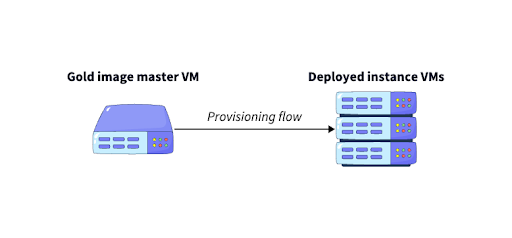
My journey from that controlled world to the dynamic cloud environment required a complete overhaul of my core beliefs about infrastructure management.
The problem with static AMIs: Security risks and configuration drift
When I started moving workloads to AWS, I tried to replicate my trusted gold image strategy with Amazon Machine Images (AMIs). This proved to be a significant misstep. The cloud is not a static data center; its scale, elasticity, and rapid velocity of change expose the critical weaknesses of a static provisioning model, leading to significant Amazon Machine Image security risks.
My biggest learning curve was understanding the immediate and severe impact of configuration drift. An AMI built just a few weeks prior is likely missing critical security patches, which highlights the inherent security vulnerabilities of static Amazon Machine Images. Every new instance launched from it becomes a vulnerability the moment it boots. A static image is a snapshot in time, and time in the cloud moves at a rapid pace, making the constant challenge of preventing configuration drift in AWS environments nearly impossible with this model.
Caution: An AMI older than 30 days should be considered a security risk. New vulnerabilities are discovered daily, and your base image must be kept current to avoid deploying unpatched instances.
This static model fails because its inability to respond to new threats in real time is exposed by the cloud’s dynamism. I saw this firsthand during an Auto Scaling event triggered by an Availability Zone outage. The system worked as designed, launching hundreds of new instances to handle the load. These Auto Scaling group operational challenges became a significant challenge.
The problem was that these instances were based on a two-month-old AMI. Suddenly, my perfectly designed, self-healing fleet was a massive, insecure liability, all missing the latest patches for a critical remote-code-execution vulnerability. I spent the next 48 hours in an urgent effort to patch a live, scaling fleet. At that point, I knew I had to rethink my entire approach, transitioning from static AMIs to dynamic configurations.
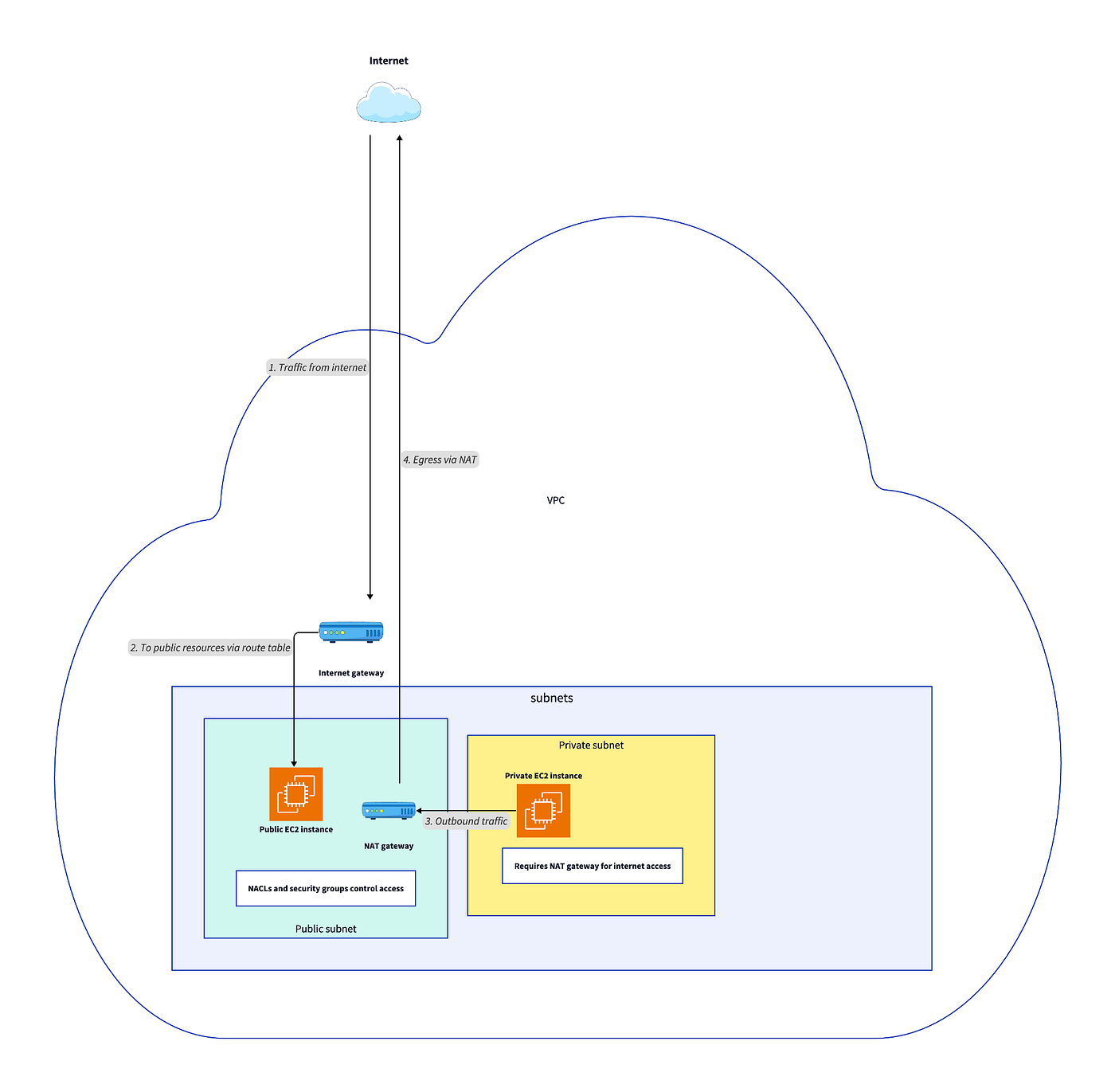
This diagram illustrates the exact failure mode I experienced.

That incident was a painful but necessary lesson in the fundamental differences between on-premises and cloud infrastructure management.
The cloud-native solution: Dynamic configuration in AWS
This is where my mindset shifted from a sysadmin to a cloud engineer. The cloud-native approach, as I have learned through experience, is dynamic configuration in AWS. Forget heavy, pre-baked, and instantly stale AMIs. The modern approach involves starting with a minimalist, hardened base AMI that AWS provides and updates regularly, and letting the instance configure itself at boot. This approach treats infrastructure as disposable cattle rather than unique pets that require manual care and feeding. Two key services, AWS User Data and Systems Manager, became the foundation of my new strategy.
First, I started using AWS User Data for instance initialization. This powerful feature allows for AWS User Data scripting, a script that runs on the first boot of a new instance. I use it for essential bootstrapping tasks:
- Installing agents: It’s perfect for installing the CloudWatch agent for monitoring and the SSM agent for ongoing management.
- Pulling code: It can pull the latest version of my application code from a secure S3 bucket or a code repository.
- Basic configuration: It handles setting initial environment variables or basic network configurations.
Practical tip: Keep your User Data scripts idempotent; this means they can run multiple times without causing unintended side effects. This helps prevent issues during certain reboot or recovery scenarios, a key part of AWS cloud operational best practices.
After that initial boot, I began leveraging AWS Systems Manager for configuration management across the entire instance life cycle. It’s the central component for my fleet, ensuring every instance remains patched and compliant. With AWS Systems Manager State Manager for configuration enforcement, I can define a required state, such as ensuring a specific security tool is always running, and SSM enforces it automatically. This combination is a complete paradigm shift, essential for understanding cloud fundamentals and implementing dynamic configuration models in AWS that are secure and compliant by default.
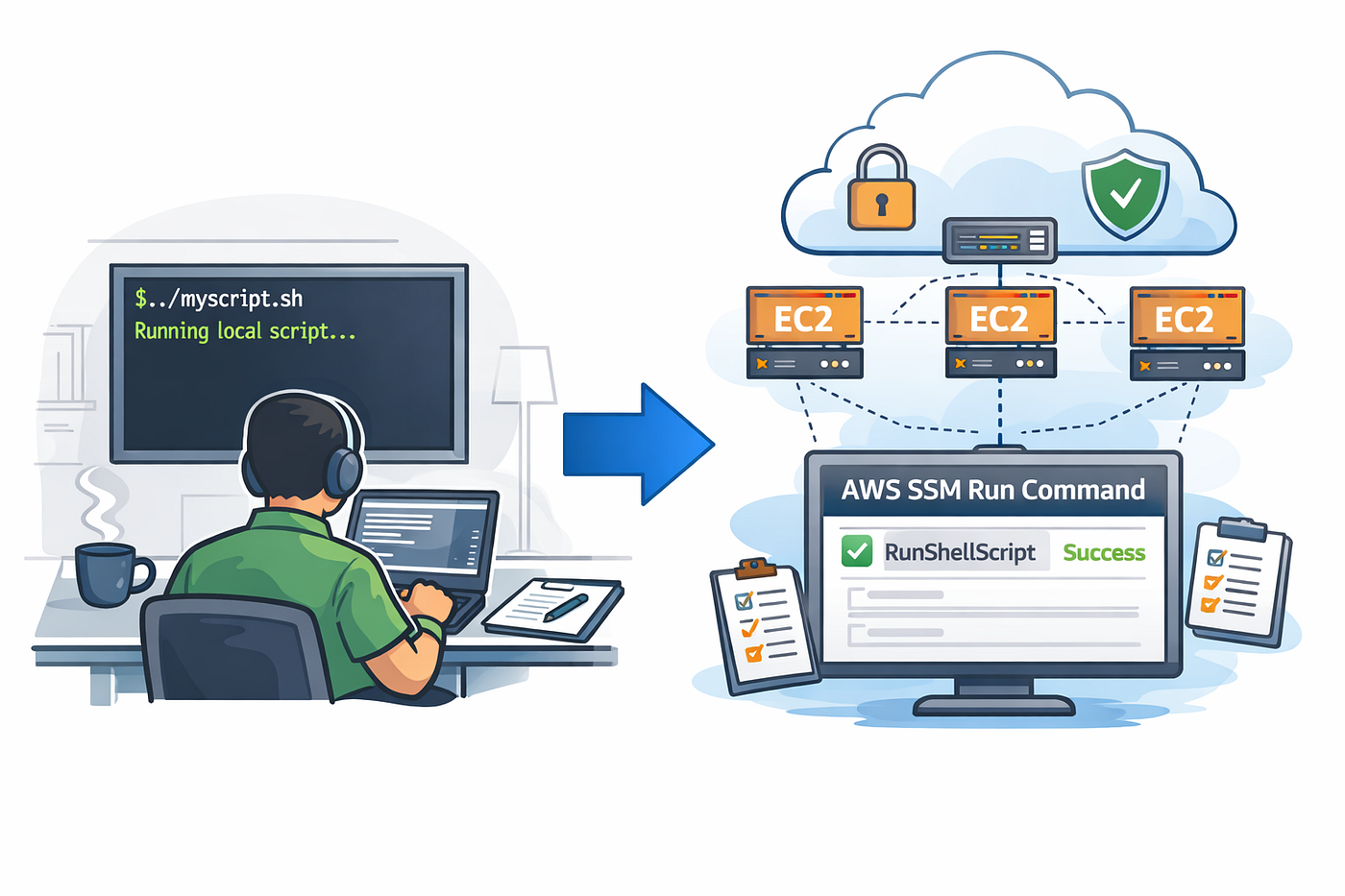
This workflow visualizes the shift from pre-baked images to on-demand configuration.

By embracing this model, I moved from being a reactive problem-solver to a proactive systems architect.
Building for failure: AWS infrastructure resilience and self-healing systems
Lessons learned from early AWS outages demonstrated a critical point, dynamic configuration is not just about initial setup; it is the foundation of true AWS infrastructure resilience. If an Availability Zone fails, or even a whole region experiences a service disruption, I need my Auto Scaling groups to launch fresh, compliant, and fully functional instances without manual intervention. Relying on a potentially faulty, weeks-old static image during a crisis is a sure way to extend an outage. This dynamic model is one of the most effective AWS cloud infrastructure failure recovery strategies because every new instance is built from a clean base and configured with the latest code and patches at the moment of its creation.
Note: This approach significantly improves your Mean Time to Recovery (MTTR). Because instances configure themselves, the recovery process is fully automated and less prone to human error during a high-stress incident.
This strategy is critical for building self-healing AWS infrastructure that can survive the kind of large-scale failures detailed in AWS outage analyses. A key nuance often overlooked is that this approach also reduces latency in Auto Scaling responses. The instances are lighter and boot faster because they are not bloated with pre-installed dependencies that may not even be needed, which is one of the important AWS cloud infrastructure scalability considerations.
This is the essence of building truly immutable infrastructure. Instead of logging in to patch a running server (a ‘pet’), you terminate it and let the Auto Scaling group replace it with a brand-new, perfectly configured instance. This philosophy is fundamental to designing highly available systems in the cloud. It completely protects against configuration drift and ensures continuous compliance, fundamentally changing how I approach my VPC layouts and cost optimizations for high availability.
A new mindset for the cloud
The transition from an on-premises sysadmin to a cloud architect required me to unlearn one of my most trusted practices. The gold image model, a symbol of stability in the data center, became a source of risk and fragility in the cloud, culminating in the AWS gold image strategy failure I experienced. Embracing dynamic configuration in AWS with tools like EC2 User Data and SSM represented a profound philosophical shift, beyond merely a technical adjustment. By treating infrastructure as disposable and building for automated recovery, I learned to harness the cloud’s true power. My advice to anyone making a similar journey is this: let go of the old patterns, build for failure, and automate everything. That is how you build systems that are not just stable, but truly resilient.
Frequently asked questions about AWS configuration strategies
Why does the gold image strategy fail in AWS?
The gold image strategy fails in AWS primarily due to the cloud’s dynamic nature. Static, pre-baked images (AMIs) quickly become stale, missing critical security patches and application updates. This creates significant risk, especially in elastic environments using Auto Scaling, where hundreds of vulnerable instances could be launched automatically.
What are the security risks of using static AMIs?
The primary security risks include deploying instances with known, unpatched vulnerabilities, leading to a massively increased attack surface. A static AMI is a snapshot in time; as new threats emerge daily, any instance launched from an old AMI is insecure from the moment it boots, a problem known as configuration drift.
What are the benefits of dynamic configurations over static AMIs?
Dynamic configurations offer superior security, agility, and resilience. Instances are always built with the latest patches and code, eliminating configuration drift. This model supports automation and immutability, leading to faster Mean Time to Recovery (MTTR), smaller image sizes for quicker boot times, and a more robust, self-healing infrastructure.
How does AWS Systems Manager enhance configuration management?
AWS Systems Manager (SSM) provides centralized and automated AWS Systems Manager configuration management. It allows you to automate patching, collect software inventory, and enforce desired state configurations using SSM State Manager. This ensures that your entire fleet of instances remains compliant and secure throughout its life cycle, moving beyond the initial setup provided by User Data.
메타데이터
- post_id
- 3cf70afbbcea
- slug
- why-my-gold-image-strategy-performed-great-in-the-datacenter-and-failed-in-aws-3cf70afbbcea
- url
- https://medium.com/@repobaby/why-my-gold-image-strategy-performed-great-in-the-datacenter-and-failed-in-aws-3cf70afbbcea
- canonical_url
- https://medium.com/@repobaby/why-my-gold-image-strategy-performed-great-in-the-datacenter-and-failed-in-aws-3cf70afbbcea
- author_url
- https://medium.com/@repobaby
- status
- ok
- fetched_at
- 2026-06-20 20:29:01