Why Nobody Will Declare World War Three — And Why It’s Already Here
Nobody in July 1914 believed they were starting a world war. The assassination of an Austrian archduke in a city most Europeans could not…
Why Nobody Will Declare World War Three — And Why It’s Already Here

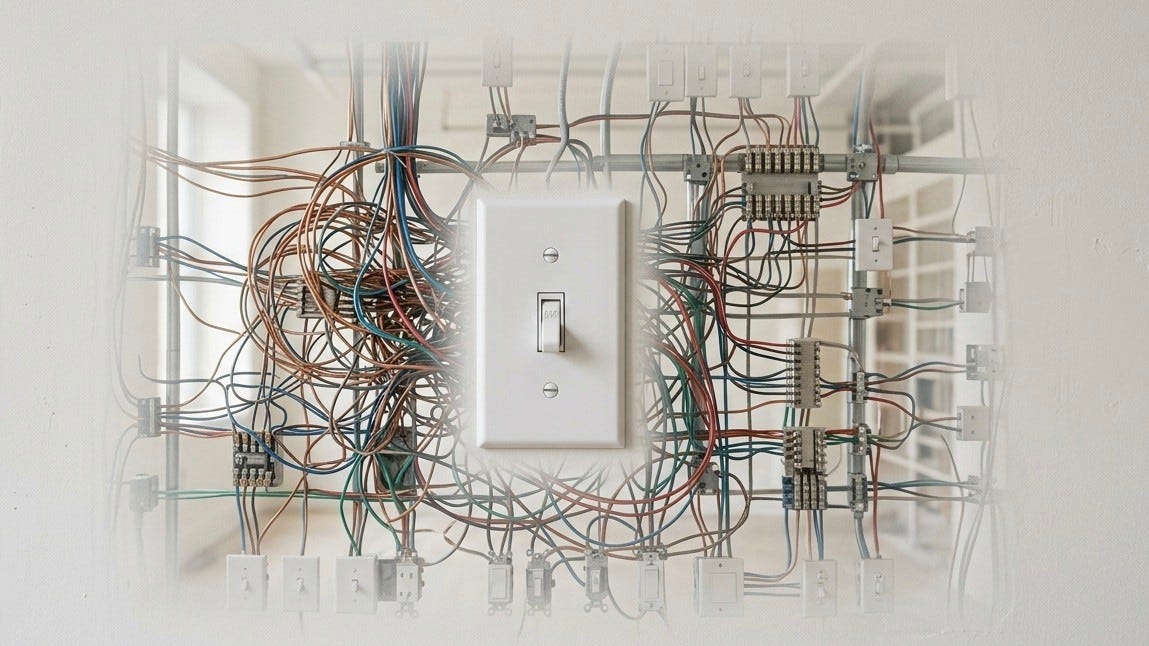
The map keeps getting redrawn. The name for what redraws it always arrives late. All images generated by the author unless stated
Nobody in July 1914 believed they were starting a world war. The assassination of an Austrian archduke in a city most Europeans could not have located on a map was, to the leaders who responded to it, a regional crisis to be managed, one more diplomatic flare-up in a continent that had absorbed several in the preceding decade without catastrophe. Kaiser Wilhelm II reportedly told his troops in August 1914 they would be “home before the leaves fall”, a line repeated in Barbara Tuchman’s The Guns of August and elsewhere, though the original speech it’s drawn from has never been definitively located. Contemporary press across Europe called it, variously, the European War, the Great War, or simply the war, a name that assumed it was singular, containable and finite.
The word “world war” existed from almost the first weeks, just not where most people expect. The German biologist Ernst Haeckel wrote of a “first world war” as early as September 1914 and English usage of the phrase traces back further still, to an 1848 Scottish newspaper and a 1909 piece in the Westminster Gazette. What took decades was not the coining of the phrase. It was its adoption as the settled, singular name for the specific conflict of 1914–18 and that adoption didn’t happen until Time magazine’s issue of 12 June 1939, which used “World War I” and “World War II” in the same pages, three months before the second one had even started. The retrospective naming this piece is arguing for isn’t hypothetical. It is exactly what happened, on a specific, documented date, to the war that came before this one.
The pattern repeated in 1939. Britain and France declared war on Germany over Poland with no expectation, at the outset, that the conflict would eventually stretch to the Pacific, North Africa and the Eastern Front simultaneously. The phrase “Second World War” only entered common usage after the fact, once the scale was undeniable, once historians and journalists needed a way to distinguish it from the first one.
The naming, in both cases, arrived after the war did. Nobody stood at the start of either conflict and declared: this is now a world war. The recognition came retrospectively, once the scale of what had already happened made any smaller name inadequate.
Why the mechanism has changed, not disappeared
There is a specific structural reason no government today would formally declare a third world war even if the underlying conditions matched the first two precisely and it has nothing to do with restraint or wisdom. It has to do with what a formal declaration would trigger.
Nuclear deterrence doctrine, built over eight decades by every nuclear power, assumes that a declared total war between nuclear armed states or their allies is the exact scenario the doctrine exists to prevent from ever formally occurring. A formal declaration of world war against a nuclear armed adversary is not merely diplomatically provocative. It is close to definitionally the trigger condition the entire architecture of deterrence was built to avoid naming out loud. States can fight proxy wars, conduct direct strikes, arm each other’s enemies and wage economic warfare against one another at extraordinary scale, all of which is happening right now, without any of it requiring, or permitting, the formal vocabulary of declared world war because that vocabulary carries an escalatory weight the underlying nuclear taboo cannot absorb.
The mechanism that used to produce the naming, a formal declaration, a mobilisation order, a parliamentary vote, has not survived into the nuclear age intact. What survives is the underlying reality the naming used to describe: a conflict involving multiple great powers, in more than one active theatre, with an explicit ideological dimension and restructuring the global economy in real time. The declaration mechanism disappeared. The conditions it used to name did not.
The doctrine itself has moved, and recently, in a direction worth being precise about. Russia’s 2020 nuclear doctrine permitted use only in response to WMD attack or conventional aggression that threatened “the very existence of the state.” A revision Putin signed on 19 November 2024 lowered that bar: the doctrine now asserts a right to respond to conventional attacks that create merely a “critical threat” to Russia’s “sovereignty and territorial integrity”, a substantially lower and more subjective threshold than existential threat. The declaration mechanism didn’t just stay silent while the war was fought around it. The threshold for the one escalation nuclear deterrence exists to prevent has been formally, publicly lowered mid-conflict, which makes the argument that the war is being fought without any of its stated stakes changing simply false. The stakes have moved. Only the name has stayed still.

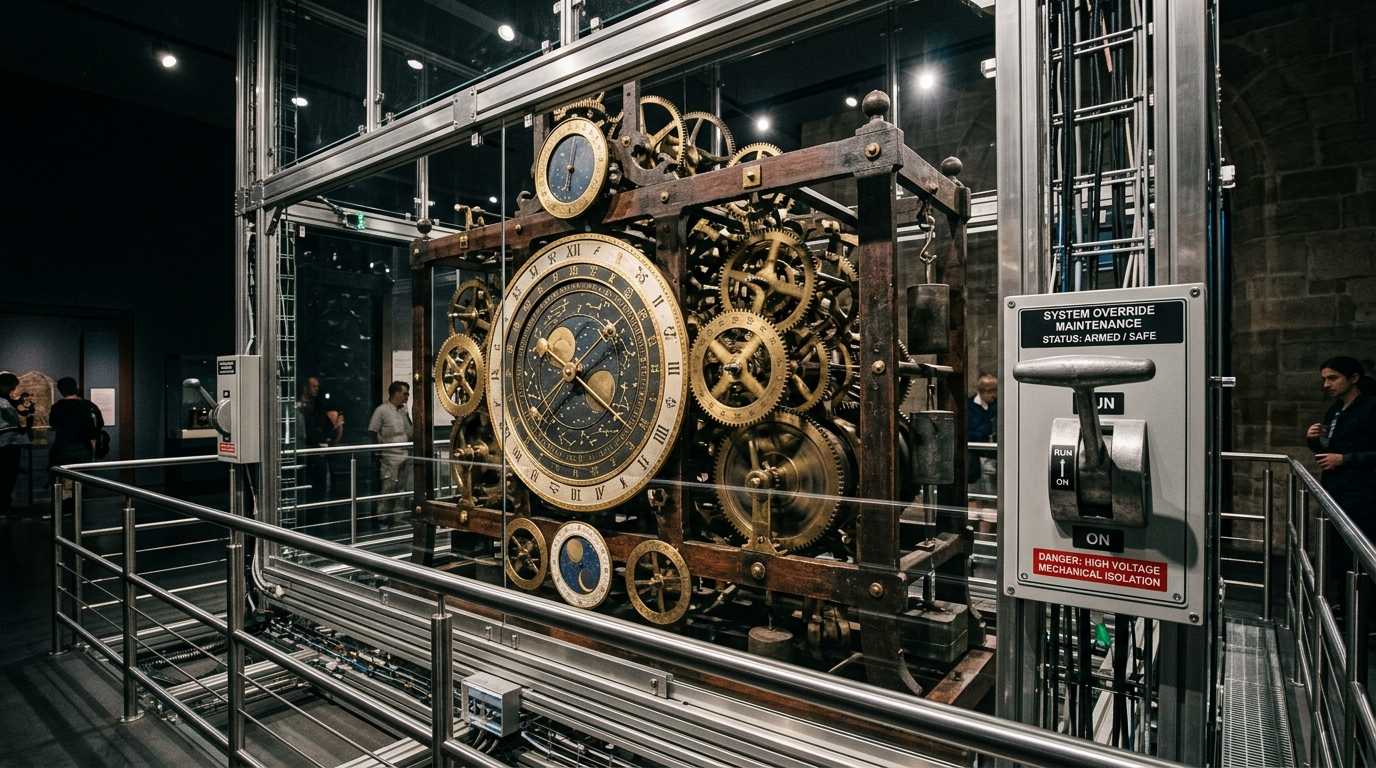
The instrument for declaring war stopped working decades ago. The wars did not stop happening.
The four conditions, checked against the present
Set aside the word “declaration” entirely and ask instead what actually defines a conflict of this scale, historically. Four structural conditions recur across both prior world wars, independent of any formal declaration:
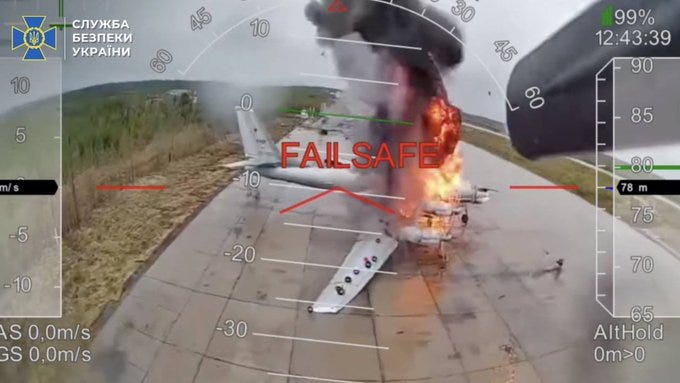
Multiple great powers in direct or proxy conflict. The United States, Russia, Iran, and, through arms, intelligence and diplomatic alignment, China and much of NATO are currently engaged, directly or by proxy, across Ukraine and the Middle East simultaneously. This is not a single great power against a minor state. It is several great powers, engaged against each other through a mix of direct strikes and supplied proxies, in more than one location at once.
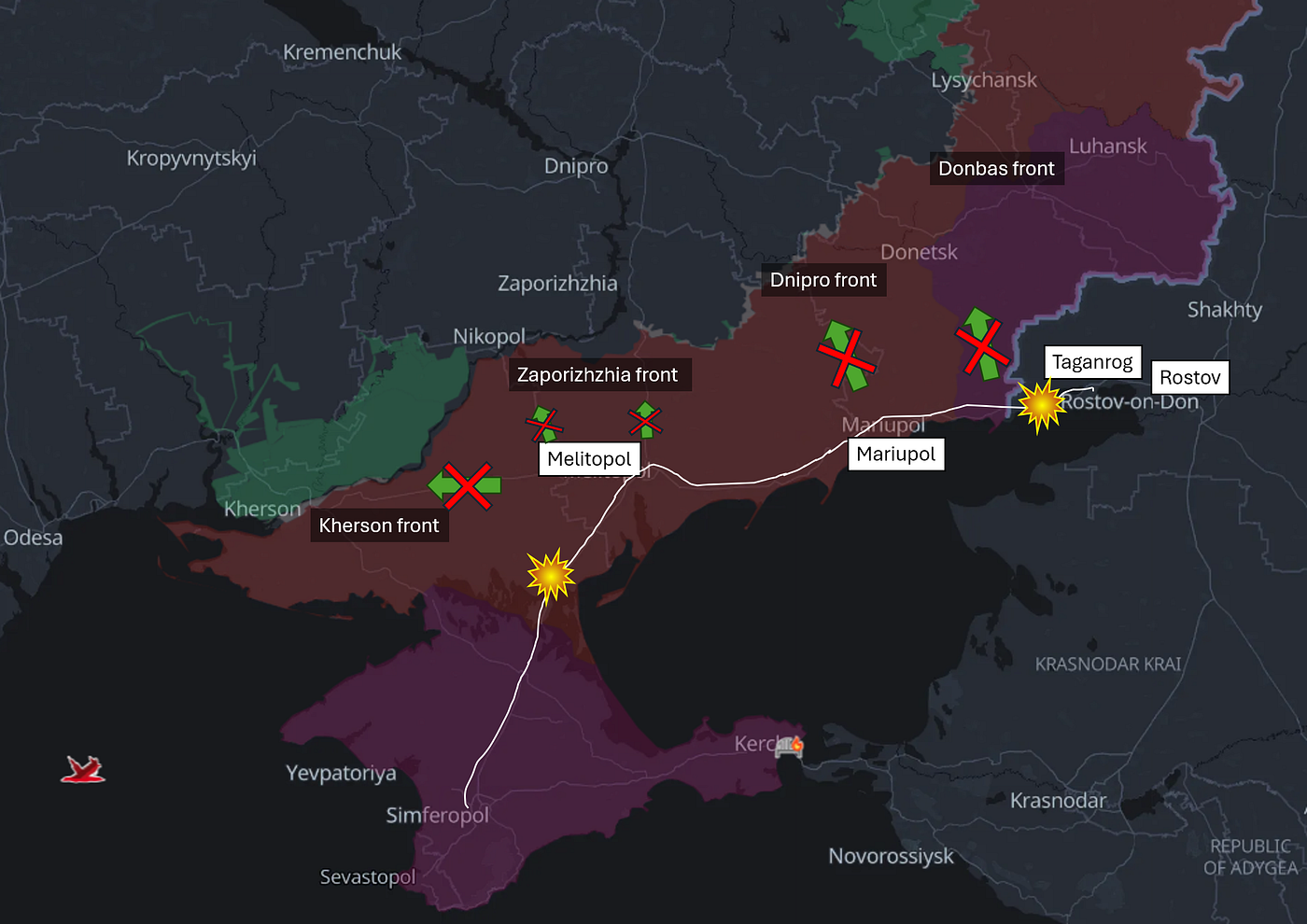
Multiple simultaneous theatres. Ukraine and Eastern Europe. The Persian Gulf and the wider Middle East. The Red Sea shipping lanes. A contested orbital domain above all of them, where satellite infrastructure is now being jammed, targeted and fought over directly. This is not one war. It is several wars, overlapping in time, drawing on the same alliance structures and, increasingly, the same finite stockpiles of interceptor missiles and precision munitions.
An explicit ideological dimension. This is not simply a series of territorial disputes. It is, on one side, a coalition explicitly organised around an American-led liberal international order; on the other, an alignment of states, Russia, Iran, North Korea, with China’s economic and diplomatic weight behind them, explicitly organised in opposition to that order’s continuation. Both sides describe the stakes in exactly these terms, publicly and regularly.
Global economic restructuring. The closure of the Strait of Hormuz has produced, by the International Energy Agency’s own assessment, the largest disruption to global oil supply in the history of the market, surpassing even the 1973 crisis. Sanctions regimes, frozen central bank assets and a live renegotiation of who trades with whom under what currency are not incidental side effects of the current conflicts. They are actively restructuring the global economic order in real time, the same way both prior world wars did.
All four conditions are present, simultaneously, right now. None of them require a formal declaration to be true.
What the naming will eventually look like
If the pattern from 1914 and 1939 holds, the name will not arrive from any government and it will not arrive during the conflict itself. It will arrive from historians, years or decades later, once the scale of what already happened makes any smaller name inadequate, in exactly the way “the Great War” gave way to “World War One” only once a second one made the numbering unavoidable.
There is a genuine, honest uncertainty worth naming here rather than resolving falsely: it remains possible, even now, that the current conflicts stay contained enough that history eventually treats them as a cluster of serious but ultimately separate twenty first century wars, rather than a single named global conflict. That outcome is not foreclosed. But the four structural conditions that have, in the past, retrospectively justified the name “world war” are already satisfied by the documented present, regardless of what anyone chooses to call it while it is still happening. The absence of a declaration has never been evidence of absence before. There is no clear reason to expect it to start being evidence of that now.
Even the question of when a world war “starts” turns out to have precedent for staying unsettled long after the fact. Historians still argue, seriously, over whether the Second World War began in September 1939, or with Japan’s full invasion of China in July 1937, or with the invasion of Manchuria in 1931, a debate the historian Rana Mitter has framed explicitly as a challenge to Eurocentrism, since dating the war from Poland relegates two years of the Pacific theatre to a footnote. If the starting gun for a war that ended eighty years ago is still contested by professional historians, there is no reason to expect the current conflict’s starting point, 2014, 2022, or later, to be settled any faster, or by anyone currently alive to argue about it.

The name is always engraved after the fact. The plaque is already on the wall.
Part of the What If AI Investigated series. Sources: this project’s World War One and World War Two complete histories and the Three-War Comparative Framework; International Energy Agency assessment of the 2026 Strait of Hormuz disruption relative to the 1973 oil crisis; Ernst Haeckel’s September 1914 usage of “first world war”; Time magazine, 12 June 1939 issue, first joint use of “World War I” and “World War II”; Barbara Tuchman, The Guns of August (1962); Russian Federation nuclear doctrine, 2020 baseline and 19 November 2024 revision; Rana Mitter and Robert Frank on the WW2 start-date debate and its Eurocentrism critique.
메타데이터
- post_id
- 3d259448156a
- slug
- why-nobody-will-declare-world-war-three-and-why-its-already-here-3d259448156a
- url
- https://medium.com/what-if-ai-investigated/why-nobody-will-declare-world-war-three-and-why-its-already-here-3d259448156a
- canonical_url
- https://medium.com/what-if-ai-investigated/why-nobody-will-declare-world-war-three-and-why-its-already-here-3d259448156a
- author_url
- https://medium.com/@jamie_gray027
- status
- ok
- fetched_at
- 2026-07-13 06:23:13