70 years since Watson and Crick publish the structure of DNA
On April 25th, 1953, James Watson and Francis Crick published Molecular Structure of Nucleic Acids: A Structure for Deoxyribose Nucleic…
70 years since Watson and Crick publish the structure of DNA
On April 25th, 1953, James Watson and Francis Crick published Molecular Structure of Nucleic Acids: A Structure for Deoxyribose Nucleic Acid. This paper helped Watson, Crick and Maurice Wilkins win the Nobel Prize in Medicine in 1962 (Rosalind Franklin had died).
Unraveling the structure of DNA was an inflection point in the emergence of the field of molecular biology. Instead of simply tracing patterns of inheritance in an abstract manner, or documenting external functions and form of organisms, now biological science could delve into the mechanisms that spanned the chasm between biochemistry and anatomy. The ultimate blueprint for organic machines is what in the 21st century would be called the genome, but the first step in producing this was the discovery of the physical substrate of inheritance, DNA.

Genetics before the genome
The 50 years of Mendelian genetics before Watson and Crick’s paper involved discoveries made through laborious analysis of pedigrees, tracing generations of traits passed down through families, or breeding fruit flies in dark labs and squinting to record their features. To obtain an individual’s genetic map consisted of assessing its characteristics and those of its parents (do pink eyes correlate with fuzzy antennae in flies?); ultimately it was statistical guesswork on the population level. This began to change in the 1940’s, when Oswald Avery, Colin MacLeod, and Maclyn McCarty confirmed that deoxyribose nucleic acids, DNA, was definitely involved in Mendelian inheritance. Now scientists knew the biochemical tracer that underpinned the traits that they were analyzing under a genetic framework. But without an understanding of DNA’s structure, its role in inheritance was simply a fact, it could not unlock genetic variation on the individual level.
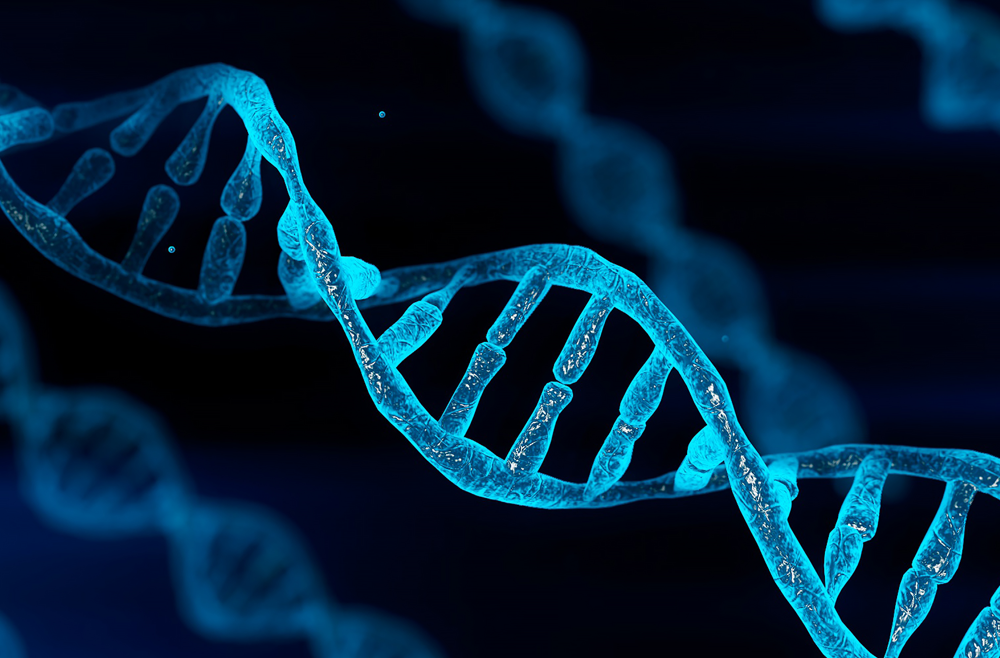
But this status quo changed rapidly. DNA’s structure was exposed in 1953, so now assessing it, measuring it and manipulating it became an engineering problem. Progress was long and hard. Even into the 1990’s researchers were not convinced that something like the Human Genome Project, mapping an individual’s genetic code in totality, was technically feasible. What changed were advances in molecular biology and chemistry that allowed for fine-grained accounting of DNA sequence. These advances were enabled by our structural understanding of what DNA was, two backbones of sugar and phosphate spanned by hydrogen bonds mediated by nitrogenous bases, adenine (A) with thymine (T), and cytosine with guanine (G). This biochemical form encodes discrete information in the sequence of variableA’s, C’s, G’s and T’s, the perfect inputs for computation that came to the fore at the turn of the 21st century.
Watson and Crick’s 1953 paper was primitive. It was a simple idea, illustrated by this figure drawn by Odile Crick, Francis Crick’s wife:

But this was the beginning of the road to having a $200 consumer-grade human genome of an individual, allowing you to investigate your own genetic past and possible future. Seventy years is a long time, but in the grand scale of human history it’s just an eye blink between when we uncovered the key to understanding inheritance to actually using it to unlock the future and opening the door.
The vision we see of a genomic century here at GenRAIT really couldn’t have happened without the discovery of the structure of DNA. So DNA Day to everyone!

메타데이터
- post_id
- 3d2f2b8bc583
- slug
- 70-years-since-watson-and-crick-publish-the-structure-of-dna-3d2f2b8bc583
- url
- https://medium.com/@GenRAIT/70-years-since-watson-and-crick-publish-the-structure-of-dna-3d2f2b8bc583
- canonical_url
- https://medium.com/@GenRAIT/70-years-since-watson-and-crick-publish-the-structure-of-dna-3d2f2b8bc583
- author_url
- https://medium.com/@GenRAIT
- status
- ok
- fetched_at
- 2026-08-25 09:12:03