A Cookie’s Global Journey: 7 Details Behind FDA/CE Certified Packaging
That individually wrapped gingerbread has passed seven safety checks before reaching your table — and you never noticed.
A Cookie’s Global Journey: 7 Details Behind FDA/CE Certified Packaging
That individually wrapped gingerbread has passed seven safety checks before reaching your table — and you never noticed.
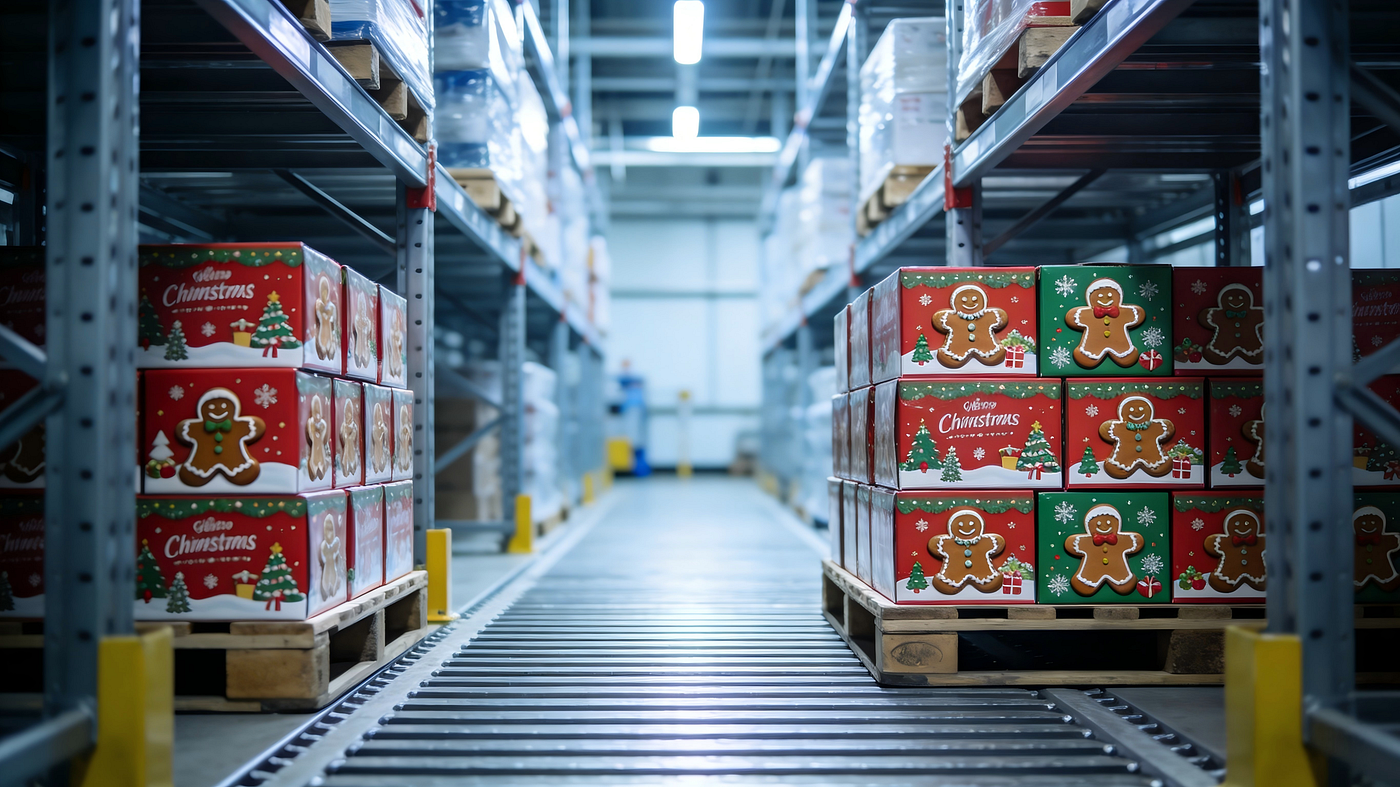
Ahead of Christmas 2024, a box of gingerbread labeled “Handmade in Germany” left a small bakery in Hamburg, traveled via cold-chain transfer at Frankfurt Airport, crossed the North Atlantic, and finally landed quietly on the shelves of a boutique supermarket in New York.
When consumers pick it up, what catches their eye is the vintage check pattern, bilingual German-English instructions, and the eco-label “Sustainable Palm Oil Used.” What they don’t see is the sophisticated safety engineering behind the packaging that ensures the cookie arrives safely on its long journey.
This is more than packaging — it is a multi-layer food safety system. Below are seven overlooked yet critical details.
Detail 1: Material Migration Testing — Safety Is When Packaging “Stays Silent”
Core Issue:
Can chemicals from packaging materials “migrate” into food? Such migration is often trace, invisible, and accumulative over time.
Technical Reality:
FDA requirements for food-contact materials are not “zero migration,” but controlled migration within safe limits. Take the common polypropylene (PP) material as an example:
- Testing Method: Soak materials in food-simulating solutions (acidic, fatty, alcoholic) and store at 40°C for 10 days
- Measurement Standard: Migrated substances must not exceed 0.05 mg/in²
- Target Substances: Plasticizers, heavy metals, primary aromatic amines, BPA, etc.
Our Practice:
At BoyuePrinting’s food packaging production line, every new batch of materials must include a third-party migration test report before being warehoused. We even conduct extra testing for “high-risk combinations” — such as how packaging for chocolate cookies (high-fat) performs under high temperatures.
Detail 2: Ink Barrier Design — Color Must Not Touch Food
Common Misconception:
“The design is printed on the outside, so it should be safe, right?”
Actual Risk:
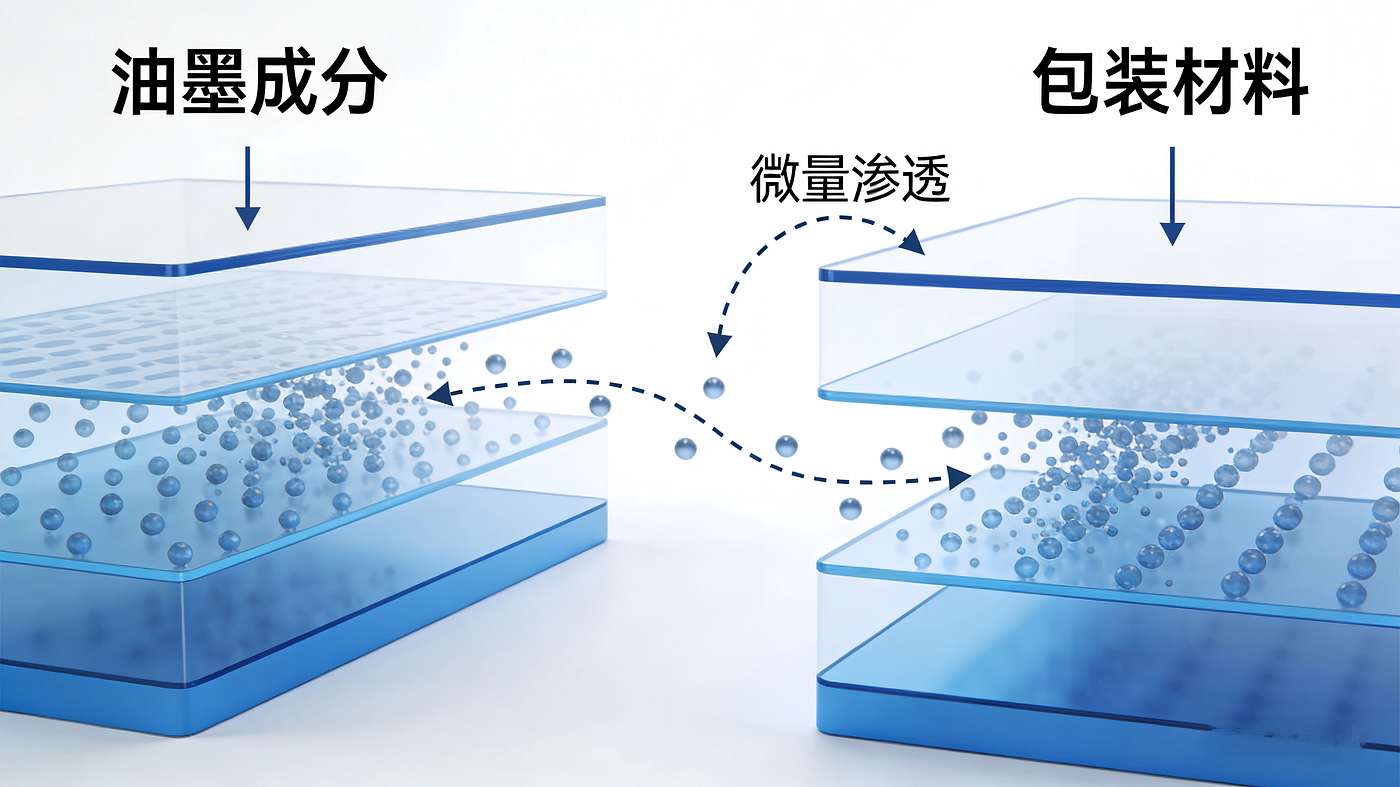
During roll printing and bag making, the printed surface may accidentally touch food. A more hidden risk: ink components can permeate slightly through the material.
Solution: 3-Layer Protective Structure
plaintext
Outer Layer: Printing layer (food-grade ink)
Middle Layer: Barrier layer (usually metallized film or EVOH coating)
Inner Layer: Food-contact layer (pure, unprinted PP or PE)
Even when using inks compliant with the strict Swiss REACH standards for the outer layer, we mandate a barrier layer — a hidden step many low-cost suppliers skip to cut costs.
Detail 3: Seal Integrity — The Last Line of Defense Against Microbes
Key Statistic:
According to the EU’s EFSA, approximately 23% of packaged food contamination incidents stem from seal failure, not the material itself.
Certified Required Tests:
- Bubble Test: Submerge inflated packaging in water to detect leaks
- Dye Penetration Test: Use dye solution to check seal penetration
- Burst Strength Test: Packaging must withstand at least 0.8 bar internal pressure without breaking
Our Process Details:
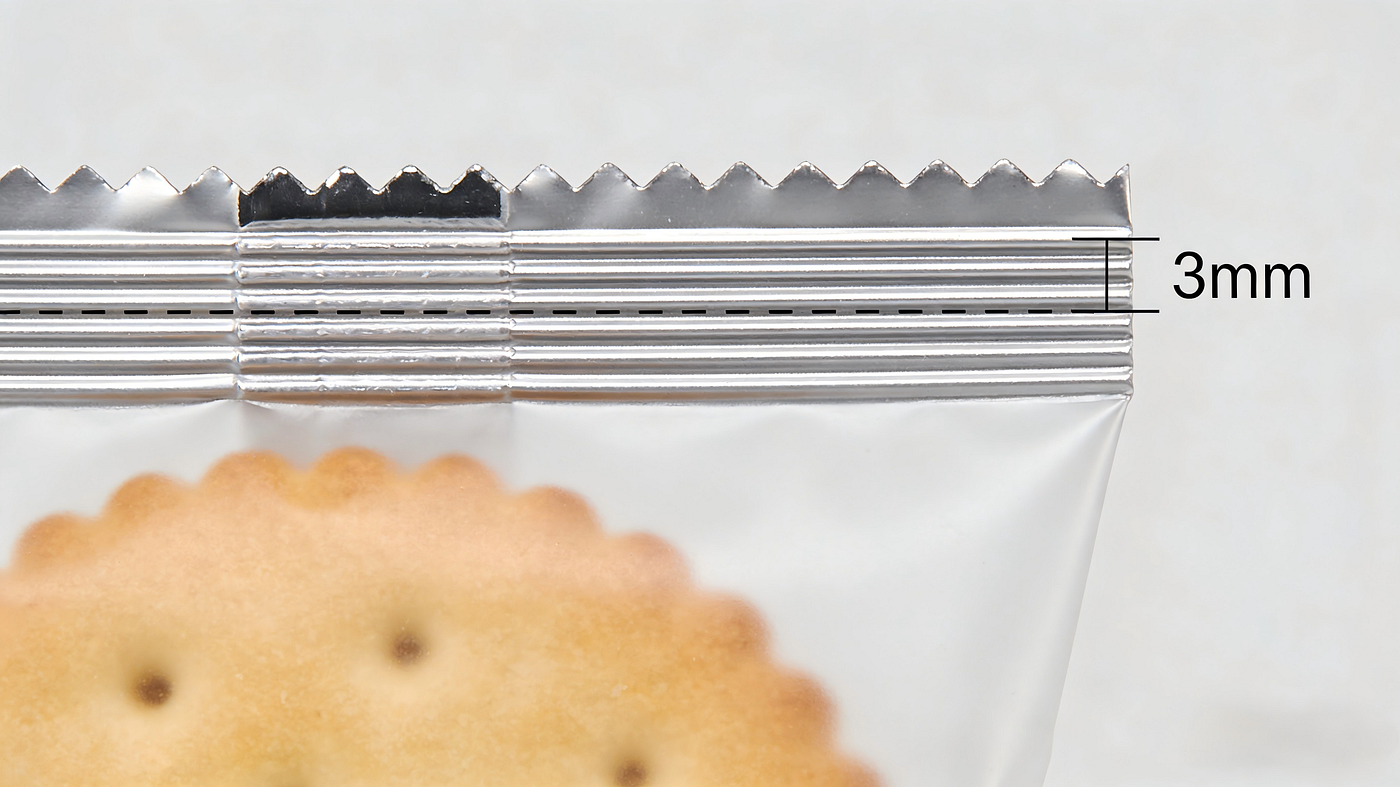
For low-water-activity products like cookie packaging, seal width is typically designed to be ≥ 3 mm (above the general 2 mm standard). Cookie crumbs can interfere with the sealing area, so a wider seal provides greater fault tolerance.
Detail 4: Oxygen & Moisture Transmission Rates — A Digital Promise of Freshness
A Cookie’s Two Greatest Enemies:
- Oxygen: Causes lipid oxidation (rancidity)
- Moisture: Makes cookies soft and allows potential microbial growth
Specific Values in Certification Standards:
- EU CE Requirement: Water vapor transmission rate ≤ 2.0 g/m²·24h (23°C, 85% RH)
- US FDA Guideline: Oxygen transmission rate ≤ 10 cm³/m²·24h·atm
Our Materials Laboratory:
We perform real-condition testing on common material combinations every quarter — not only under standard temperature and humidity, but also:
- Temperature and humidity fluctuations inside sea containers
- Dry, heated winter environments
- High-humidity tropical environments
Detail 5: The Certification “Scope Trap” — Is Your Product Really Covered?
Industry Truth:
Many suppliers claim to have “FDA-certified materials,” but certification may only apply to:
- A specific thickness range (e.g., 30–50 μm, while your product uses 45 μm)
- A specific processing temperature (e.g., cold processing, while your product requires heat sealing)
- A specific food type (e.g., dry foods, while your cookies contain 15% fat)
Our Verification Checklist:
When a client selects “FDA-certified cookie packaging,” our system automatically verifies:
- Whether material certification covers the actual thickness used (±5 μm tolerance)
- Whether it includes a list of potentially migrating additives
- Whether the certified lab is an FDA-recognized third-party institution
- Certification validity (usually 3–5 years, requiring timely renewal)
Detail 6: Visual Design for Allergen Warnings — Compliance Is More Than Text
Regulatory Requirements:
Both the FDA’s FALCPA and the EU’s 1169/2013 require clear labeling of major allergens.
Design Beyond Words:
We help clients implement:
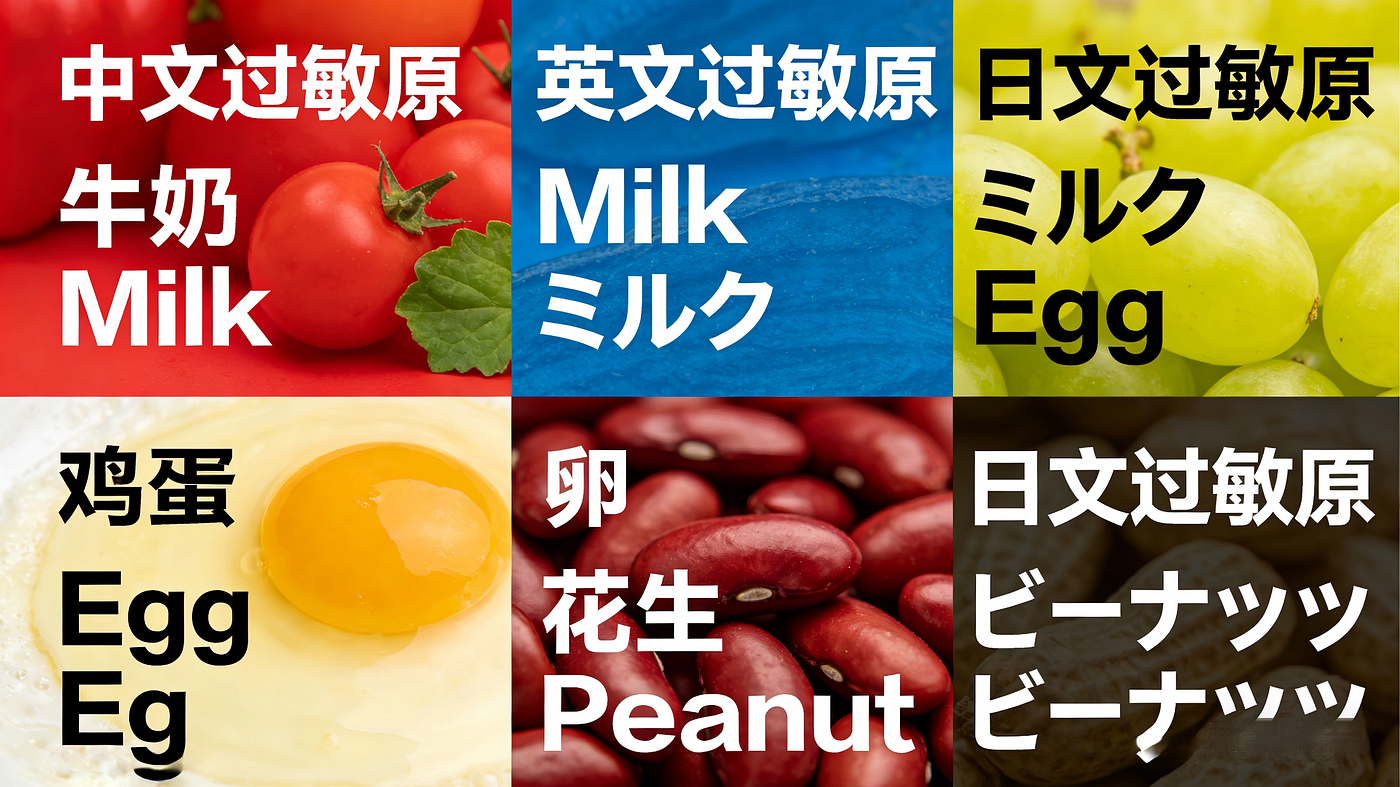
- Color-coding system: Nut-containing products use a specific border color
- Standardized icons: Internationally recognized allergen symbols (e.g., peanut icon)
- Multilingual typography: Ensuring font sizes meet “easy-to-read” requirements in all markets
- Position logic: Allergen information must be placed where consumers normally read
Real Case:
A nut cookie brand was ordered to remove products from the French market because allergen labels were “not sufficiently visible.” After our redesign, not only was it fully compliant, but allergen-related complaints dropped by 72%.
Detail 7: The Hidden Cost of Traceability — When Safety Issues Arise
Underestimated 环节:
In the event of a food safety incident (even a false alarm), the completeness of the traceability system determines:
- Whether you recall a single batch or the entire product line
- Whether you control the situation within 48 hours or face weeks of investigation
- Whether liability is clearly assigned or results in endless disputes
Our System Integration:
Every food packaging produced by BoyuePrinting includes three levels of traceability information:
plaintext
Level 1: Production batch number + date/time code
Level 2: Raw material batch number + printing ink batch number
Level 3: Inspector code + production line equipment ID
This information exists in both human-readable and machine-readable (QR code) formats, remaining partially identifiable even if the packaging is damaged.
The Difference of “Certification Mindset” Across the Entire Process
Traditional vs. Systematic Thinking:
Traditional Supplier:“We provide FDA-certified materials; you are responsible for correct use.”
BoyuePrinting:“We do not just provide ‘certified materials’ — we provide access to a certification system, covering material selection, structural design, printing processes, and testing validation across the entire compliance chain.”
A Complete Cookie Packaging Solution Includes:
- Pre-risk assessment report: Based on cookie formula (sugar content, fat content, water activity)
- Material recommendation matrix: 3 optional plans with cost-performance comparisons
- Design compliance check: Label position, font size, multilingual accuracy
- Production batch documentation: Full traceability file package
- Emergency response protocol: Communication and handling procedures if issues arise
Conclusion: When Packaging Becomes an Extension of Food Safety
That gingerbread’s packaging cost may only account for 5–8% of its retail price. Yet within these thin layers lies:
- Decades of material science research
- The evolution of global food safety regulations
- Practical applications of supply chain transparency technology
- A brand’s unseen promise to consumers
Choosing food packaging is ultimately choosing:
- A partner willing to invest 100% effort against a one-in-ten-thousand risk
- An expert team that understands certification is not “a single certificate” but “a complete system”
- A reliable system that protects product safety as it crosses borders
Your product deserves a journey where every step — from production line to consumer hands — is professionally guarded.
Start rethinking your food packaging strategy by understanding these seven details.
We don’t just provide packaging. We provide the promise of safe arrival.
메타데이터
- post_id
- 3d41d4f3b088
- slug
- a-cookies-global-journey-7-details-behind-fda-ce-certified-packaging-3d41d4f3b088
- url
- https://medium.com/@huangshijie972/a-cookies-global-journey-7-details-behind-fda-ce-certified-packaging-3d41d4f3b088
- canonical_url
- https://medium.com/@huangshijie972/a-cookies-global-journey-7-details-behind-fda-ce-certified-packaging-3d41d4f3b088
- author_url
- https://medium.com/@huangshijie972
- status
- ok
- fetched_at
- 2026-06-09 15:37:30