Biogas in Kerala: Can Water Hyacinth Become the State’s Next Renewable Energy Resource?
When discussing Biogas in Kerala, most people think of kitchen waste, cattle farms, or food-processing industries. However, one of Kerala’s…
Biogas in Kerala: Can Water Hyacinth Become the State’s Next Renewable Energy Resource?
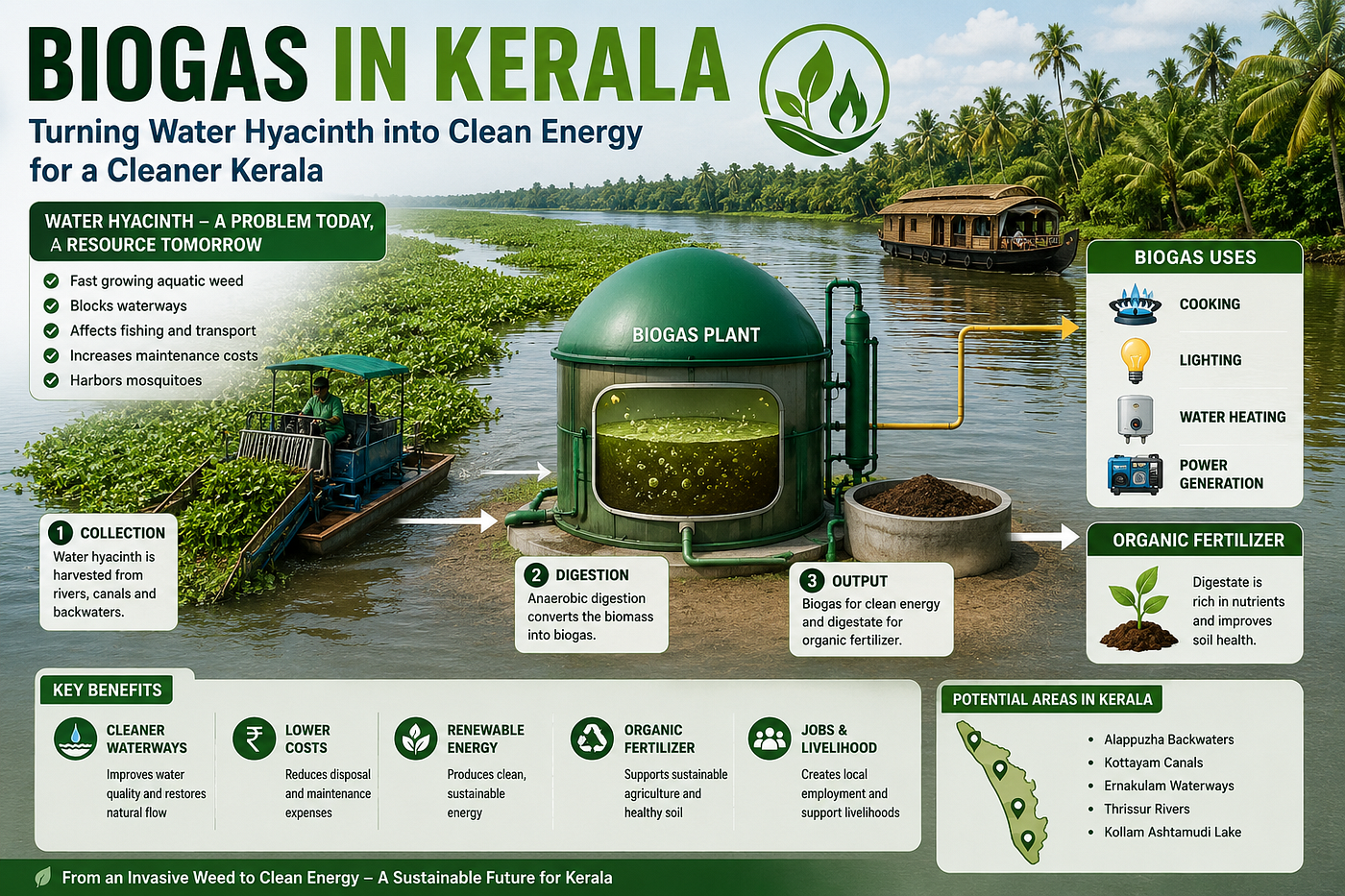
When discussing **Biogas in Kerala, most people think of kitchen waste, cattle farms, or food-processing industries. However, one of Kerala’s biggest environmental challenges may also be one of its most overlooked renewable-energy opportunities: Water Hyacinth**.
Known locally as “African Payal,” water hyacinth has spread across many rivers, canals, ponds, and backwaters throughout Kerala. The fast-growing aquatic weed blocks waterways, affects fishing activities, reduces oxygen levels in water bodies, and increases maintenance costs for local authorities.
What if this invasive plant could be transformed into clean energy?
Kerala’s Water Hyacinth Problem
Water hyacinth grows rapidly in nutrient-rich water bodies and can double its population within weeks.
The plant creates several challenges:
- Obstructs water transport
- Reduces fish populations
- Increases mosquito breeding
- Blocks irrigation channels
- Raises waterway maintenance costs
Every year, large quantities of the weed are removed from Kerala’s waterways, but disposal remains a challenge.
The Untapped Energy Potential
Unlike many aquatic weeds, water hyacinth contains significant organic matter suitable for anaerobic digestion.
When processed inside a biogas plant, the plant material can generate:
- Methane-rich biogas
- Organic fertilizer
- Renewable energy for local communities
Instead of becoming waste, the removed biomass can become a valuable energy resource.
Why Kerala Is Ideal for This Model
Kerala possesses several advantages:
- Extensive backwater systems
- Large canal networks
- Abundant aquatic biomass
- Growing demand for renewable energy
- Strong local-government participation in waste management
Districts such as Alappuzha, Kottayam, Ernakulam, Thrissur, and Kollam could potentially benefit from such initiatives.
Benefits of Water Hyacinth-Based Biogas
Cleaner Waterways
Regular harvesting helps restore natural water flow.
Reduced Disposal Costs
Collected biomass gains economic value instead of becoming a waste-management burden.
Renewable Energy Generation
Biogas can support cooking, heating, and small-scale electricity needs.
Organic Fertilizer Production
The digestate generated after biogas production can support sustainable agriculture.
A Circular Economy Opportunity
The process creates a sustainable cycle:
Water Hyacinth Collection → Biogas Production → Renewable Energy → Organic Fertilizer → Agriculture
This approach addresses both environmental and energy challenges simultaneously.
Challenges to Consider
Successful implementation requires:
- Efficient harvesting systems
- Transportation logistics
- Community participation
- Suitable preprocessing technologies
However, advances in decentralized biogas systems are making such projects increasingly feasible.
The Future of Biogas in Kerala
As Kerala continues to explore innovative waste-to-energy solutions, water hyacinth represents a resource that is currently underutilized.
Instead of spending resources solely on removing invasive aquatic weeds, the state can potentially transform them into renewable energy while improving water quality and supporting local economies.
Conclusion
The future of **Biogas in Kerala** may not be limited to food waste and livestock manure. Water hyacinth, one of Kerala’s most persistent environmental challenges, could become a valuable feedstock for renewable energy production.
By converting invasive aquatic weeds into biogas, Kerala can simultaneously improve its waterways, reduce waste-management costs, and strengthen its transition toward sustainable energy solutions.
메타데이터
- post_id
- 3d4ec8c158b0
- slug
- biogas-in-kerala-can-water-hyacinth-become-the-states-next-renewable-energy-resource-3d4ec8c158b0
- url
- https://medium.com/@akhilkr205/biogas-in-kerala-can-water-hyacinth-become-the-states-next-renewable-energy-resource-3d4ec8c158b0
- canonical_url
- https://medium.com/@akhilkr205/biogas-in-kerala-can-water-hyacinth-become-the-states-next-renewable-energy-resource-3d4ec8c158b0
- author_url
- https://medium.com/@akhilkr205
- status
- ok
- fetched_at
- 2026-06-17 10:49:34