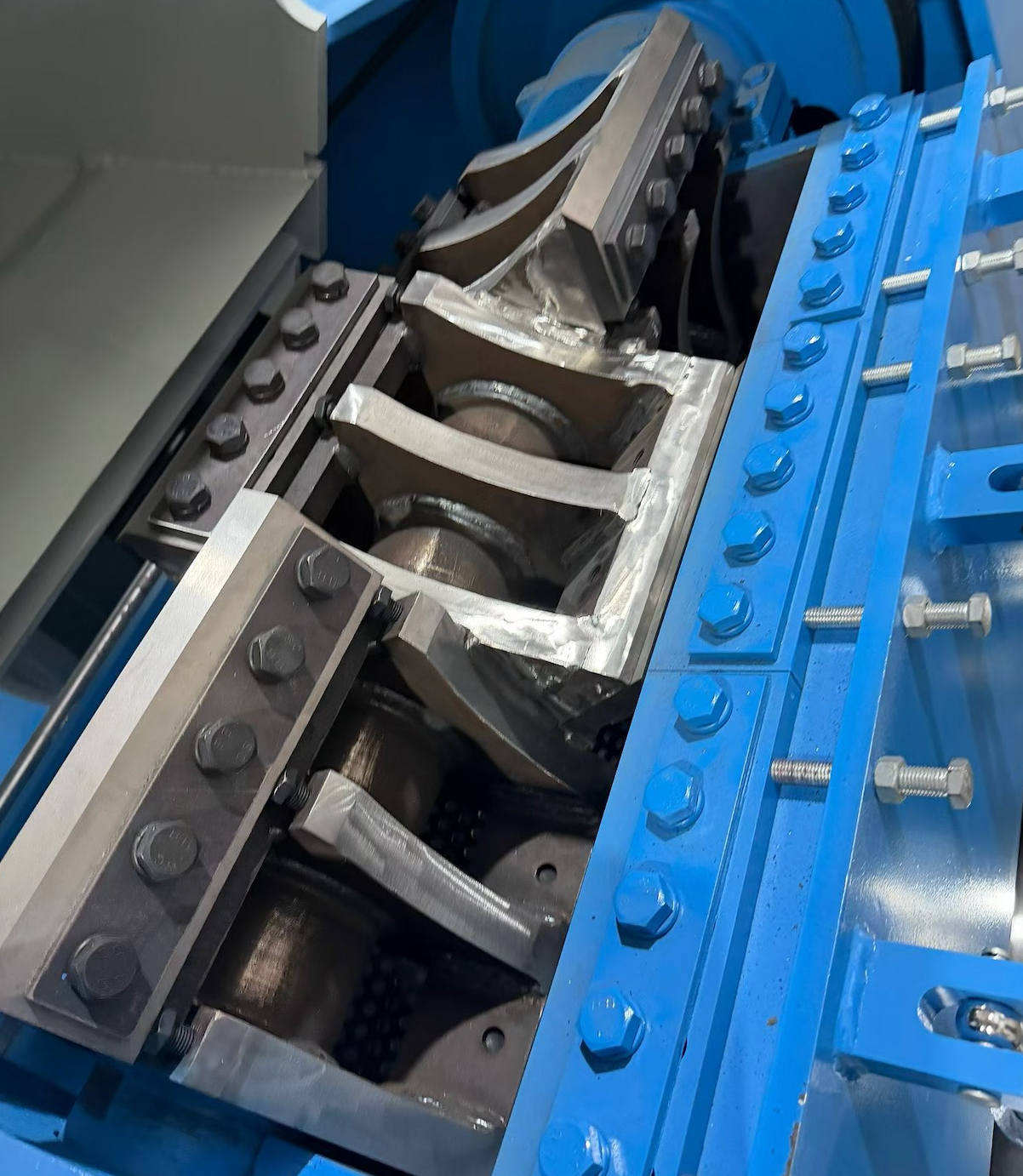
Best Steel for PA66 Nylon Crusher Blades: SKD11 vs D2 vs DC53
A practical guide for plastic recycling operators — match your blade steel to your feedstock and stop replacing blades too soon.
Best Steel for PA66 Nylon Crusher Blades: SKD11 vs D2 vs DC53
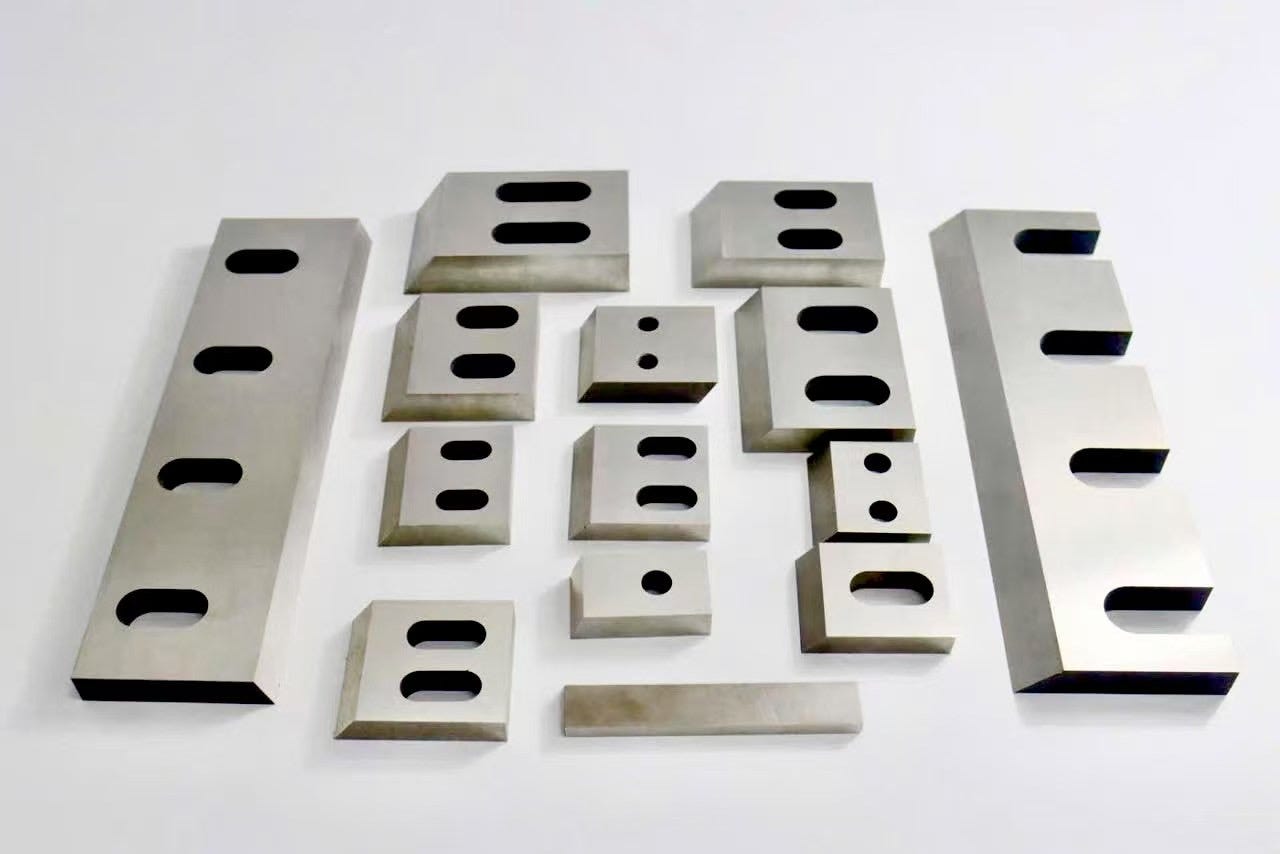
A practical guide for plastic recycling operators — match your blade steel to your feedstock and stop replacing blades too soon.
PA66 nylon is one of the most demanding materials in plastic recycling. Low surface friction, high tensile strength, and glass-fiber reinforced variants make it unusually hard on crusher blades. A steel grade that performs well on HDPE or ABS will wear out fast on engineering-grade nylon.
The right steel choice doesn’t just extend blade life — it directly reduces cost-per-ton and unplanned downtime.
At XTBLADES, we’ve supplied crusher blades to nylon recycling operations across 30+ countries. Here’s how we spec steel for PA66 applications.
Why PA66 Is Hard on Blades
Three factors make PA66 tough to process:
Low friction surface. Nylon chips slide across the blade face rather than being cleanly sheared. This constant contact accelerates abrasive wear on the cutting edge faster than softer plastics.
High tensile strength. PA66 resists shearing. The blade edge carries more load per cut compared to polyolefins, which accelerates edge deformation over time.
Glass-fiber reinforcement. PA66-GF30 and GF50 grades contain 30–50% glass fiber by weight. This content acts like fine sandpaper on the cutting edge during every pass. Standard blade steels that work fine on unfilled PA66 can lose up to 60% of their service life on GF30.
The Three Steels: What Changes and What Doesn’t
All three steels we recommend — SKD11, D2, and DC53 — are high-chromium cold-work tool steels. They share a common base chemistry but differ in carbide density, hardness ceiling, and toughness. That’s the entire decision.
SKD11 — HRC 58–62
The widest-range blade steel in plastic crushing. SKD11 combines solid wear resistance with high toughness, making it the right call when your feedstock varies or you encounter occasional hard contamination (metal fragments, thick-walled parts).
Toughness: ●●●●○ Wear Resistance: ●●●○○
Best for: unfilled PA66, mixed plastic loads, operations with frequent resharpening cycles.
D2 — HRC 58–62
Same hardness range as SKD11, but with a denser chromium carbide network. This gives D2 measurably higher wear resistance at equivalent hardness — the carbides do more of the cutting work and wear more slowly. The trade-off is slightly lower toughness; D2 is less forgiving of impact loads.
Toughness: ●●●○○ Wear Resistance: ●●●●○
Best for: dedicated PA66 lines, unfilled or lightly filled grades (≤GF15), consistent feedstock with low contamination risk.
DC53 — HRC 62–64
DC53 is a second-generation tool steel engineered specifically to solve the hardness-toughness trade-off that limits D2. It achieves 2–4 HRC points above D2 while maintaining toughness comparable to SKD11 — the result of finer, more uniformly distributed carbides and optimized secondary hardening.
Toughness: ●●●●○ Wear Resistance: ●●●●●
In glass-filled PA66 applications, DC53 blades consistently show 30–50% longer service life compared to D2 at equivalent operating conditions. For GF30 and GF50 grades, it’s the clear recommendation.
Best for: PA66-GF30, PA66-GF50, mineral-filled nylon, any application where blade change frequency is the primary cost driver.
How to Choose: A Simple Decision Framework
Glass fiber content ≥ GF15? → DC53
No glass fiber, dedicated PA66 line? → D2
Mixed loads or budget-sensitive? → SKD11
If you’re unsure about your PA66 grade, share your machine model and material spec — blade life data from similar installations usually makes the answer clear.
A Note on Hardness vs. Toughness
These two properties move in opposite directions in most tool steels. Push hardness up and toughness drops; optimize for toughness and wear resistance suffers. This is why D2 — despite excellent carbide density — chips under impact loads that SKD11 handles without issue.
DC53’s engineering achievement is decoupling this trade-off. By refining the carbide distribution rather than simply increasing carbon content, it adds hardness without the brittleness penalty. For abrasive materials like glass-filled nylon, this matters more than any other single variable.
Compatible Equipment
XTBLADES manufactures PA66-optimized blades for Genox, Zerma, Weima, Herbold, Vecoplan, and Cumberland equipment, as well as custom OEM dimensions from customer drawings. All blades are precision-ground to OEM tolerances and heat-treated in-house.
XTBLADES is an ISO 9001-certified industrial blade manufacturer based in Ma’anshan, China. Factory-direct supply, OEM customization, global shipping.
Specs and pricing: xtblades.com
메타데이터
- post_id
- 3d52f7d92561
- slug
- best-steel-for-pa66-nylon-crusher-blades-skd11-vs-d2-vs-dc53-3d52f7d92561
- url
- https://medium.com/@lc18096440190/best-steel-for-pa66-nylon-crusher-blades-skd11-vs-d2-vs-dc53-3d52f7d92561
- canonical_url
- https://medium.com/@lc18096440190/best-steel-for-pa66-nylon-crusher-blades-skd11-vs-d2-vs-dc53-3d52f7d92561
- author_url
- https://medium.com/@lc18096440190
- status
- ok
- fetched_at
- 2026-06-29 22:44:20