Central Air vs. Ductless Systems | Which Is Right for Your Home?
Selecting the right HVAC system is crucial for maintaining a comfortable home environment year-round. Whether you’re building a new home or…
Central Air vs. Ductless Systems | Which Is Right for Your Home?
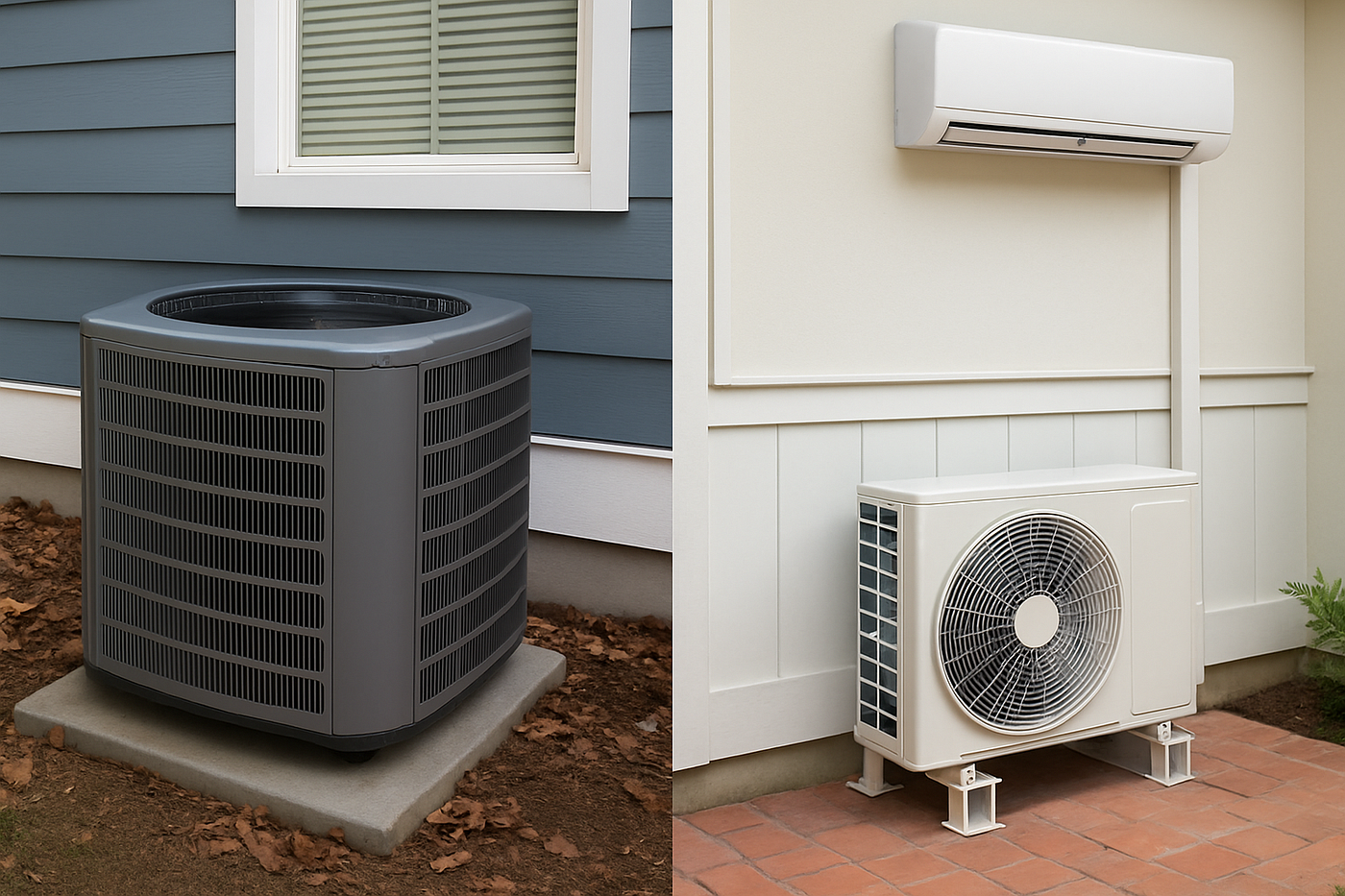
Selecting the right HVAC system is crucial for maintaining a comfortable home environment year-round. Whether you’re building a new home or upgrading an old system, two main options will likely come up: central air systems and ductless mini-split systems. Each has its benefits, installation needs, and cost factors.
This blog will help you understand the key differences and decide which system is best for your space, comfort needs, and budget.
What Is a Central Air System?
Central air systems are the traditional HVAC solution found in most homes. They use a centralized unit to cool or heat air, which then flows through a network of ducts into various rooms. These systems typically work with a furnace or air handler and provide even temperature control throughout the house.
This type of system is most suitable for homes that have existing ductwork, like those with forced-air heating systems. However, it can also be added during major renovations or new constructions.
What Is a Ductless Mini-Split System?
Ductless systems, also known as mini-splits, consist of one or more indoor units connected to an outdoor compressor. Instead of ducts, each indoor unit cools or heats a specific room or zone. This design allows for better temperature control and energy efficiency.
Ductless systems are ideal for older homes without ducts, additions, garages, and homeowners who prefer independent climate control in each room.
Installation Comparison
Installing central air can be labor-intensive, especially if ducts need to be added or replaced. If the home already has ductwork, the installation is smoother but still requires access to walls, ceilings, or floors.
Ductless systems are easier to install. A small hole is drilled to connect the indoor unit to the outdoor compressor, making it less invasive. Most ductless installations can be completed in just one day.
For homeowners wanting quick and minimally disruptive heating and cooling installation, ductless might be the better choice.
Energy Efficiency & Operating Costs
Central air systems can be efficient if installed and maintained correctly. However, the U.S. Department of Energy reports that up to 30% of energy can be lost through duct leaks, particularly in older or poorly insulated homes.
Ductless systems avoid this problem completely since they don’t use ducts. Many ductless units also feature inverter technology, which adjusts output based on real-time needs, improving efficiency and cutting energy bills. Both systems now come with high SEER (Seasonal Energy Efficiency Ratio) ratings, so selection depends on the unit.
Comfort & Airflow Control
Central air systems cool or heat the home uniformly, which is effective for open layouts or consistent use across rooms. However, they lack flexibility, treating every room the same whether it’s in use or not.
Ductless systems offer zoned control, meaning you can keep the living room cooler than the bedrooms or turn off units in unused spaces. This customization is great for families with different comfort preferences.
Design & Aesthetics
With central air, vents are discreetly installed in ceilings, floors, or walls. The equipment is typically hidden, which many homeowners prefer for aesthetic reasons.
Ductless systems are more noticeable, as wall or ceiling-mounted air handlers are part of each room they serve. While modern designs are sleek and minimalist, some homeowners still prefer the inconspicuous nature of central air.
Maintenance & Longevity
Central systems need regular filter changes and duct inspections to stay in top shape. Duct cleaning may also be required every few years. On average, a well-maintained central HVAC system lasts about 15 to 20 years.
Ductless systems are easier to maintain with washable filters and fewer parts that wear out. Their lifespan can also reach 15 to 20 years with regular servicing, and one indoor unit can be replaced without impacting the entire system.
Upfront Costs vs. Long-Term Value
Central air systems usually have lower initial equipment costs, especially if ducts are already in place. However, installing or replacing ducts can drive up the overall cost. Operating expenses may also be higher in the long run due to duct losses.
Ductless systems can be more expensive per room when installing multiple zones, but they often provide long-term energy savings and possible rebates. Many utility providers offer incentives for ductless installations because of their efficiency.
Which System Is Right for You?
Here’s a quick comparison:

Choosing between the two depends on your home’s layout, existing setup, energy goals, and personal preferences.
Conclusion
When it comes to heating and cooling installation, there’s no one-size-fits-all answer. Central air systems provide whole-home comfort and a hidden appearance, while ductless systems offer zoning flexibility and energy efficiency. Evaluating your home’s needs and consulting with a qualified HVAC professional can help you make the right choice.
Considering an upgrade or installation of a new HVAC system? Making an informed choice today can lead to greater comfort, improved air quality, and lower energy bills for years to come.
메타데이터
- post_id
- 3d59975c809a
- slug
- central-air-vs-ductless-systems-which-is-right-for-your-home-3d59975c809a
- url
- https://medium.com/@johnsonsinsulation/central-air-vs-ductless-systems-which-is-right-for-your-home-3d59975c809a
- canonical_url
- https://medium.com/@johnsonsinsulation/central-air-vs-ductless-systems-which-is-right-for-your-home-3d59975c809a
- author_url
- https://medium.com/@johnsonsinsulation
- status
- ok
- fetched_at
- 2026-07-18 08:40:09
