Why Resume Parsing Alone Isn’t Enough — and How Contextual AI Changes Everything
The Resume Parsing Mirage
Why Resume Parsing Alone Isn’t Enough — and How Contextual AI Changes Everything
The Resume Parsing Mirage
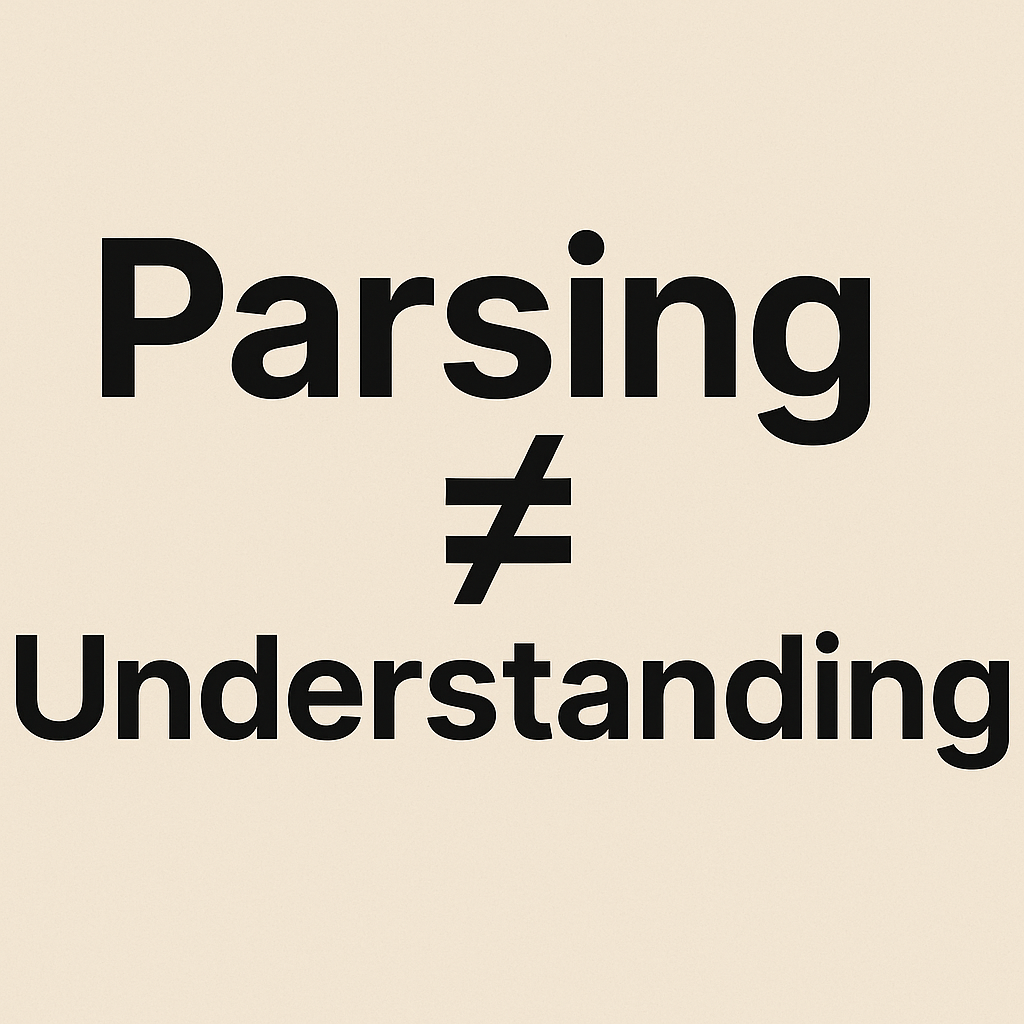
Most applicant tracking systems (ATS) proudly advertise “AI-powered resume parsing.” But if you look closer, most of what they actually do is data entry automation — taking a PDF or Word document and converting it into structured fields.
Sure, this saves time. You no longer have to manually copy-paste a candidate’s name, education, or job titles into your database. But that’s not intelligence — that’s digitization.
Parsing alone doesn’t tell you whether a candidate is the right fit. It doesn’t tell you if “Python” on a resume means experience in data analytics or back-end engineering. It doesn’t understand seniority, context, or the difference between “managed a team” and “was part of a team.”
In other words, resume parsing is the start of understanding — not the end of it.
[embed]
The Problem: Data Without Context
Most traditional ATS systems were designed 10–15 years ago for one purpose: collect and organize resumes at scale.
They do this by extracting information such as:
- Name, email, phone number
- Education history
- Work experience
- Skills listed under “Technical Skills” or “Tools Used”
And that’s where it stops.
The issue is, real hiring decisions rely on context, not just keywords. Recruiters don’t shortlist candidates because a resume has the word “Java” — they shortlist them because the Java experience is relevant, recent, and aligned with the job’s needs.
Traditional parsers can’t make that distinction.
Example:
- A Data Analyst who lists “Python” likely uses it for data cleaning, visualization, or statistical modeling.
- A Back-End Engineer listing “Python” probably focuses on frameworks like Django or Flask, database queries, and APIs.
Both are correct, but completely different in intent and application. A keyword parser can’t see that difference — but a recruiter can. And that’s exactly where contextual AI changes everything.
The Missing Layer: Meaning and Relevance
Modern recruiting requires more than static data extraction. It needs contextual understanding — the ability to evaluate how a candidate’s experience relates to a specific job description.
That’s what HaiTalent does differently.
Instead of parsing resumes once and storing them as static profiles, HaiTalent’s AI re-analyzes every resume dynamically for each job posting.
When a recruiter uploads a new job description, the system doesn’t just match keywords — it interprets intent:
- What does the role really prioritize?
- Which skills are essential vs. nice-to-have?
- How do years of experience map to expected seniority?
- Are there transferable skills that fit even if titles differ?
For example, if the JD says “Build data pipelines,” HaiTalent knows that experience in “ETL,” “Airflow,” or “SQL automation” is relevant — even if the candidate never used the phrase “data pipeline” directly.
This shift from literal matching to semantic understanding is what transforms AI from an assistant to an evaluator.
Contextual AI in Action: A Recruiter’s Perspective
Let’s take a real-world example.
Suppose you’re hiring a Marketing Data Analyst. You receive 200 resumes, all of which mention Excel, Google Analytics, and data visualization.
A traditional parser will treat them all equally.
HaiTalent, on the other hand, will go further:
- Read the Job Description: It identifies the analytical goals (e.g., campaign performance, lead attribution, forecasting).
- Interpret Each Resume in Context: It sees that Candidate A used Python for marketing mix modeling, while Candidate B used it for web scraping competitor data — both valuable, but one closer to the JD.
- Score and Rank Objectively: Each resume receives an AI-driven match score explaining why it’s high or low — for example: “Strong alignment in marketing analytics, but lacks SQL experience required for pipeline management.”
- Surface Hidden Talent: Candidates who may not use the same job title (“Growth Analyst”) but possess overlapping skills are flagged for review.
Suddenly, you’re not filtering based on luck or keywords — you’re filtering based on fit.
Step Beyond Parsing: Understanding Intent
Parsing extracts; understanding interprets.
HaiTalent’s AI reads between the lines — not just what’s written, but what it means for the role in question. That includes:
- Seniority detection: Is this a lead-level role or a junior position disguised by broad titles?
- Skill relevance: Are the skills used in the same context as the target job?
- Career trajectory: Is the candidate growing toward the role or away from it?
- Project complexity: Does the resume reflect leadership, collaboration, or independent contribution?
By bringing these insights together, HaiTalent transforms resume screening from a mechanical task into a strategic decision-making process.
Bias Guard: Fair Screening by Design
One of the biggest issues in recruitment today is unconscious bias. Even the best intentions can lead to skewed outcomes when details like name, gender, or college subtly influence perception.
HaiTalent takes a proactive stance against this.
Before analysis, the platform ignores all personally identifiable information (PII) — such as:
- Name
- Gender pronouns
- Location
- Contact details
- Photos
What’s left is pure professional data for scoring — skills, experience, education, achievements, and other qualifications.
The AI then evaluates the resumes only against the job description, not against each other. This ensures that every candidate is assessed on merit and relevance, not demography or design flair.
This approach doesn’t just reduce bias — it builds confidence in every shortlist you send to hiring managers.
Why Recruiters Love Contextual AI
Recruiters today are under pressure to deliver fast, diverse, and accurate shortlists — often with smaller teams and tighter timelines.
Here’s how contextual AI helps:
- Cuts manual screening time by up to 80%. Instead of scanning hundreds of resumes, recruiters get ranked, explainable results in minutes.
- Eliminates keyword games. Candidates can’t “stuff” their resumes with buzzwords to trick the system — context wins.
- Reveals transferable talent. Finds candidates who might not match 100% of the JD but show learning agility or cross-domain expertise.
- Improves hiring quality. By understanding the why behind every match, recruiters make stronger recommendations with less guesswork.
- Builds transparency with hiring managers. Every score is accompanied by reasoning — so teams can review decisions confidently.
The outcome? Less filtering, more hiring.
The Future of Resume Analysis: Dynamic, Not Static
The resume is no longer a static document. It’s a dynamic representation of evolving skills, projects, and outcomes.
Recruiting tools need to evolve too.
Static parsers freeze a candidate’s data in time. Contextual AI keeps it alive — reinterpreting each resume as job requirements evolve.
Whether you’re hiring engineers, marketers, or analysts, every role has different nuances. HaiTalent adapts to those nuances automatically.
That’s why leading recruiters are moving from “parse and store” to “analyze and understand.”
Conclusion: Think Like a Recruiter, Not a Robot
Parsing might help you collect resumes faster. But contextual AI helps you hire smarter.
It’s not about extracting text — it’s about understanding meaning. It’s not about building databases — it’s about building decision systems that think like recruiters do.
With HaiTalent, you can finally stop wrestling with irrelevant resumes and start focusing on conversations that matter.
Experience resume parsing that thinks like a recruiter, not a robot. 👉 Try HaiTalent free today — no credit card, no contracts.
메타데이터
- post_id
- 3d76d3ffbab4
- slug
- resume-parsing-vs-contextual-ai-3d76d3ffbab4
- url
- https://talentops.kudoswall.com/resume-parsing-vs-contextual-ai-3d76d3ffbab4
- canonical_url
- https://talentops.kudoswall.com/resume-parsing-vs-contextual-ai-3d76d3ffbab4
- author_url
- https://medium.com/@KudosWall
- status
- ok
- fetched_at
- 2026-06-28 10:39:35