Why is Australia’s wildlife so weird
A look into island ecology and how humans are screwing it up
Why is Australia’s wildlife so weird
A look into island ecology and how humans are screwing it up
Photo by James Wainscoat on Unsplash
Have you ever wondered why Australia has so many weird and unique animals found nowhere else on Earth? Mammals that lay eggs, mammals that give birth to underdeveloped young, poisonous birds, and way too many giant spiders. 87% of mammals, 93% of reptiles, and 94% of frogs are endemic to Australia (found nowhere else on Earth). But why is this the case? And is there a link to why Australia’s ecology is so messy right now? The simple answer is that Australia is an island — not just in a literal sense but also in an ecological sense.
What is an island?
In ecology, an island simply refers to a habitat that is isolated and surrounded by a dissimilar habitat. A small patch of grass surrounded by cement or a small landlocked lake can be considered an island. Australia split from Antarctica more than 45 million years ago, becoming an island and isolating itself from the rest of the World’s land masses ever since.
Species on ecological islands tend to evolve without strong predators or competitors, making them ecologically naive. When a species is ecologically naive, it lacks the experience or understanding to appropriately respond to a newly introduced species due to the lack of co-evolutionary history.
This is the case for Australia, as the lack of big cats and dogs meant that the marsupial lineage could thrive and diversify into niches usually filled by placental mammals. For example, Thylacine evolved to fill the apex predator role and kangaroos evolved into the large grazer role usually filled by bovines and deer. But this also meant that many of these animals are ill-equipped to deal with outside forces such as humans.
Photo by David Clode on Unsplash
Introduced species are wreaking havoc
When human ships docked on the island, we brought along with us a huge variety of animals: cats, dogs, boars and even rats — species of animals that the local Australian wildlife wasn’t ready to deal with. As mentioned earlier, many of Australia’s species were ecologically naive, and many were at the losing end when these introduced species started to compete against them.
- Cats and Foxes: Many of the smaller marsupial species weren’t used to dealing with predators that were as nimble and fast as cats and foxes, and are unable to outrun these medium-sized predators. This has led to the extinction of small marsupial, bird and reptile species, such as the lesser bilby.
- Feral pigs and rats: These animals are extremely adaptable and ravenous, eating up almost anything they can find and severely outcompeting the local herbivore population. Pigs and rats also cause problems for the local cassowary populations as they frequently eat their eggs.
- Cane Toads: These poisonous amphibians were introduced into Australia to control the cane beetle population. But because of their poisonous nature, they not only poisoned the local predator population but also exploded in numbers due to the lack of a natural predator, severely outcompeting the local amphibian population.
Photo by Kevin Jackson on Unsplash
Dogs vs Thylacine
Dogs, or more specifically, dingoes are one of the more famous introduced species in Australia and the one that had changed the Australian ecosystem the most. Dingoes arrived in Australia about 5000 years ago and quickly spread throughout the continent, directly competing with the then apex predator the Thylacine for resources, here is how they matched up.
Thylacine was much larger and stronger than a dingo. With an extremely powerful bite, thylacine were ambush predators that preferred to hunt larger prey such as kangaroos and wallabies. They were also mostly solitary.
Dingoes, on the other hand, were more intelligent and social, often living in packs. Physically, these dogs were more durable and fast, able to chase down small prey alone and take down medium-sized prey as a pack.
When these two species clashed, the dingo usually came out on top, owing to their more intelligent and social nature. Not only were dingoes out-hunting wallabies and young kangaroos, but they sometimes even directly attacked the thylacine. Coupled with the added pressure of hunting from humans, the thylacine eventually went extinct in Australia. The surviving thylacine populations on the island of Tasmania were also eventually outcompeted and wiped out by smaller introduced dog populations. The thylacine extinction caused one major issue: While the dingoes were effective at hunting young kangaroos, they lacked the strength to bring down a fully grown kangaroo (something the thylacine were good at), leading to a huge surge in the kangaroo population. This surge has caused a lot of problems for the local flora population, further complicating the Australian ecology issue.
Photo by Craig Manners on Unsplash
Conclusion
Australia, being an ecological island, hosts a unique cast of endemic creatures that can be found nowhere else on Earth. However, this also makes them extremely vulnerable to outside forces such as introduced species. Coupled with other environmental factors such as wildfires and habitat loss puts Australian wildlife under a lot of pressure, and if these species were to go extinct, they would be lost forever. This is already the case for many local species such as the thylacine and the lesser bilby. Australia has the highest rate of mammal extinction on the planet — a whopping 30 native mammal species have gone extinct since the European colonization.
Islands like Australia, the Galapagos, and Mauritius have extremely vulnerable ecosystems. While there is not much we can do on an individual level, we can still keep ourselves educated and help remind others to not do things like releasing their pets into the wild. We can also donate and help support conservation efforts and organizations like the Australian Zoo.
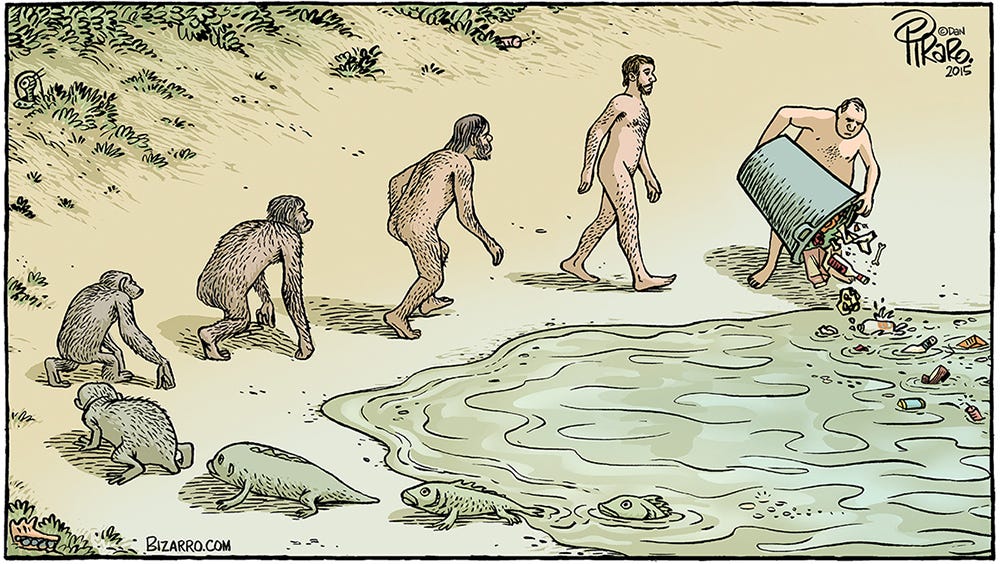
Islands are isolated pieces of land filled with many endemic creatures that have evolved away from those on the mainland. In a way, they are tiny worlds within our world — like a mini terrarium. In a world where humans are colonizing everywhere, it is usually island species that are at the most risk of extinction. If we don’t spread awareness about these fragile ecosystems, then there is no telling when beautiful islands like Australia and the Maldives will eventually turn into a wasteland.
If you enjoyed this article do help support me here: yarzsjd.medium.com/subscribe
메타데이터
- post_id
- 3d77d3cedda1
- slug
- why-is-australias-wildlife-so-weird-3d77d3cedda1
- url
- https://medium.com/the-environment/why-is-australias-wildlife-so-weird-3d77d3cedda1
- canonical_url
- https://medium.com/the-environment/why-is-australias-wildlife-so-weird-3d77d3cedda1
- author_url
- https://medium.com/@yarzsjd
- status
- ok
- fetched_at
- 2026-07-19 19:41:23