Designer Babies Are Here — And You Won’t Believe Who’s Selling the Blueprint
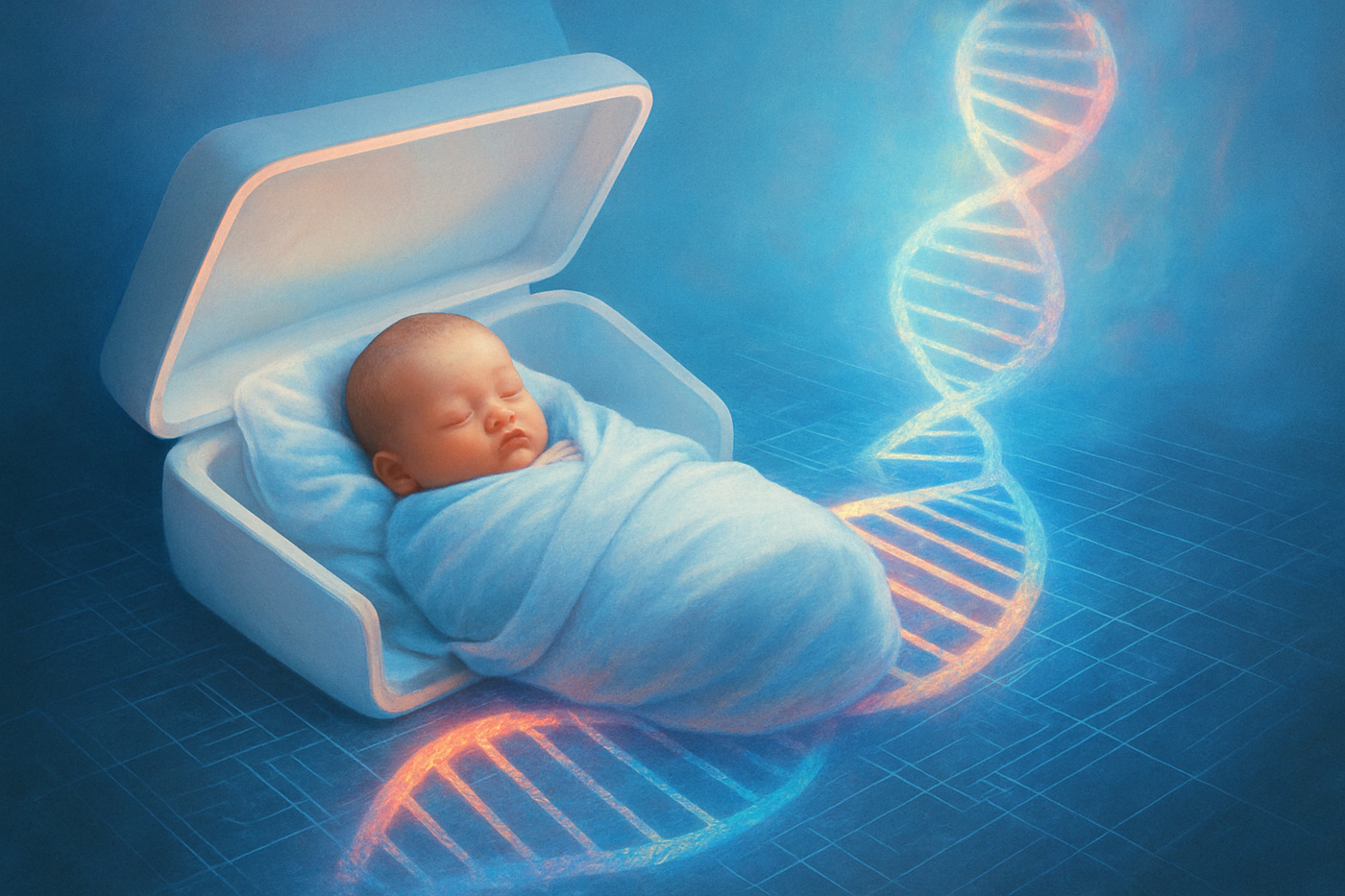
Herasight’s platform lets parents compare embryo profiles across multiple diseases and traits via an intuitive dashboard.
Designer Babies Are Here — And You Won’t Believe Who’s Selling the Blueprint
Herasight’s platform lets parents compare embryo profiles across multiple diseases and traits via an intuitive dashboard.
Imagine ordering off a menu of genetic traits for your child: lower risk of diabetes, reduced chance of schizophrenia, maybe a slight IQ boost. This isn’t dystopian fiction — it’s exactly what **Herasight** offers today. Their polygenic embryo screening platform provides parents with detailed risk scores for Alzheimer’s, cancers, autism, depression — and even cognitive potential — based on cutting-edge research and within-family validation techniques.
Ready or not, we’re in the age of precision parenthood. But before you click “Next,” here’s everything you need to understand: from the science behind those risk scores to the ethical minefields awaiting every embryo “menu.”

Explaining Polygenic Scores: A Crash Course
If you’ve never encountered a polygenic score (PGS), think of it as a health or trait “credit score” calculated from millions of genetic variants. Unlike single-gene disorders (e.g., cystic fibrosis), complex diseases and attributes — like heart disease, autism, or IQ — involve hundreds or thousands of genes, each contributing a tiny effect.
- Genome-Wide Association Studies (GWAS): Researchers scan the genomes of hundreds of thousands of people to find variants associated with specific outcomes (e.g., diabetes).
- Weighting Variants: Each variant receives a statistical weight based on its impact size. Combined, they form a polygenic score predicting risk or trait level.
- From Adults to Embryos: By genotyping embryos (via preimplantation genetic testing), companies can calculate PGS early — long before any symptoms manifest.
Crucially, Herasight’s PGS models use advanced Bayesian methods (SBayesRC) with functional annotations, and validate scores within families to ensure predictions hold true among siblings, not just unrelated individuals.
Herasight’s Scientific Edge
According to their whitepaper, Herasight developed 17 distinct polygenic scores covering monogenic and complex conditions:
- Alzheimer’s Disease
- Schizophrenia
- Multiple Cancer Types
- Level 3 Autism
- Type 2 Diabetes
- Major Depressive Disorder
- Cognitive Performance/Intelligence
Key performance metrics:
- Liability R² up to 0.21 for Type 2 diabetes, matching or exceeding academic benchmarks.
- Within-family attenuation negligible for 16 of 17 scores — meaning predictions remain accurate among siblings.
- Cross-ancestry calibration using diverse biobanks (FinnGen, UK Biobank, Biobank Japan) ensures global applicability.
Parents receive interactive reports showing absolute and relative risk reductions achievable by selecting among available embryos (e.g., a 15–20% lower diabetes risk if choosing the top-scoring embryo).
How Herasight Works — Step by Step
1. Data Collection & GWAS Meta-Analysis
By pooling cohorts like FinnGen, UK Biobank, and Million Veterans Program, Herasight trains PGS models on millions of variants.
2. Polygenic Score Construction
Using SBayesRC (a Bayesian method with functional genomic annotations), they fine-map causal variants across ancestries for robust cross-population performance.
3. Within-Family Validation
By imputing parental genotypes (via “snipar”), they confirm that 16 of 17 PGSs maintain predictive power inside families — essential for embryo screening credibility .
4. Clinical Reporting
Parents receive a clear risk profile for each embryo: absolute and relative risk reductions for diseases like T2D (12–20% risk cut), even when screening just ten embryos.
The Ethical Tightrope
As consumer genomics leaps forward, society grapples with tough questions:
- Disease Prevention vs. Enhancement: Screening to avoid conditions feels acceptable — but selecting for higher IQ or other traits veers into eugenics.
- Equity and Access: Will only affluent families afford precision parenthood, deepening social divides?
- Regulation and Oversight: How do we define acceptable uses and prevent rogue labs from offering unvalidated tests?
Critics warn of modern eugenics, while proponents highlight potential for reducing disease burden and healthcare costs. Striking the right regulatory balance will shape tomorrow’s society.
Beyond Herasight: Consumer Genomics Landscape
Herasight isn’t alone:
- Genomic Prediction offers embryo screening but lacks robust within-family validation.
- Orchid Health combines PGS with lifestyle recommendations for adults and prospective parents.
Meanwhile, CRISPR gene editing advances could soon pair with PGS: editing out high-risk variants and selecting high-scoring embryos, amplifying ethical stakes.
For more on gene-editing breakthroughs, see my earlier articles:
- CRISPR Just Took Another Leap: Scientists Remove Extra Chromosome in Down Syndrome Patients
- CRISPR Is Eating the World: The Gene-Editing Revolution Is Already Here
In the race for genetic perfection, the question isn’t whether we can — but whether we should.
메타데이터
- post_id
- 3d87c5df55bc
- slug
- designer-babies-are-here-and-you-wont-believe-who-s-selling-the-blueprint-3d87c5df55bc
- url
- https://medium.com/@abvcreative/designer-babies-are-here-and-you-wont-believe-who-s-selling-the-blueprint-3d87c5df55bc
- canonical_url
- https://medium.com/@abvcreative/designer-babies-are-here-and-you-wont-believe-who-s-selling-the-blueprint-3d87c5df55bc
- author_url
- https://medium.com/@abvcreative
- status
- ok
- fetched_at
- 2026-08-02 15:11:38