Bank Deregulation Explained: What’s Changing and Why It Matters
Explore the untold story of policy shifts, global financial pressures, and the ripple effects deregulation could have on the economy.
Bank Deregulation Explained: What’s Changing and Why It Matters
Explore the untold story of policy shifts, global financial pressures, and the ripple effects deregulation could have on the economy.
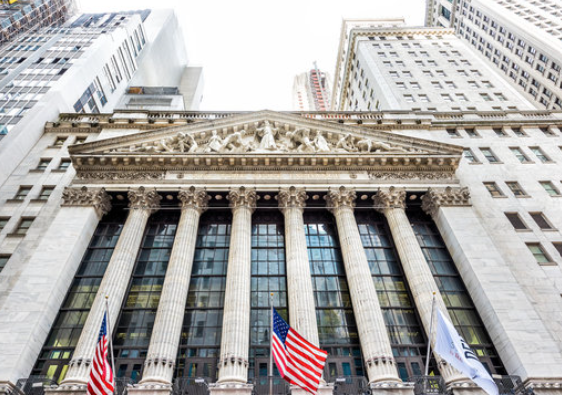
Image used from stock.adobe
Hey there, friends! It’s great to see you back.
Today, I want to dive into a topic that tends to make a lot of folks uneasy bank deregulation. Just saying it makes the atmosphere a bit tense, doesn’t it? For many, it brings back the haunting memories of 2008, conjuring thoughts of risky moves, financial disasters, and those government bailouts we all remember.
And here we are again, with deregulation making headlines once more.
So, let’s take a moment to unpack what’s really going on, why it’s happening, and what it could mean for all of us whether you’re an investor, a business owner, or just someone trying to get by.
As always, I’ll keep it straightforward. No fancy jargon here, just honest conversation.
People Blame Bank Deregulation for the Financial Crisis
For a lot of people, the term bank deregulation is synonymous with crisis.
After the financial meltdown in 2008, a widespread belief emerged: banks were given too much freedom to take risks. They made bold loans, chased after profits, and overlooked the long-term fallout. When the dust settled, it was taxpayers who had to bail them out.
It doesn’t matter if you lean left or right politically there’s a shared sentiment: deregulation feels risky.
So, when regulators start hinting at loosening those leverage rules again, it’s no wonder that fear starts to creep in.
I totally get that fear. I felt it myself when I first came across the news.
But here’s the key takeaway: not all deregulation is created equal.
Banks Are About to Be Deregulated Again

Image used from marketwatch
The US is stepping into a new era of financial deregulation. Back in November 2025, the Federal Deposit Insurance Corporation (FDIC) and other regulatory bodies decided to ease some key leverage rules.
To be more specific, they lowered the enhanced Supplementary Leverage Ratio (eSLR) for the biggest banks and relaxed capital requirements for smaller ones.
Reports indicate that major bank subsidiaries could see their capital requirements drop by about 27%, which translates to roughly $213 billion being freed up. While the reductions at the holding company level are smaller, they still carry significant weight.
This isn’t just a minor adjustment. We’re talking about serious balance sheet space being opened up.
And whenever I see that kind of capital being released, my first thought is: Where’s that money going to flow next?
What Is the Supplementary Leverage Ratio SLR
Let’s break it down simply.
When you deposit money in a bank, you’re essentially lending it to them. The bank then takes that money and lends it out again — whether it’s for a mortgage, a business loan, or even to purchase US Treasury bonds.
The Supplementary Leverage Ratio (SLR) is a measure of how much capital a bank has compared to its total assets.
Regular banks need to keep about 3%.
Meanwhile, globally systemically important banks are required to maintain around 5%.
The crucial point to grasp here is that the SLR treats all assets equally.
It doesn’t differentiate between risky loans and ultra-safe US Treasuries. Everything counts the same against the cap.
That detail is really important.
Banks Borrow From You and Loan to Someone Else
Let’s break down the core business model.
You start by depositing $1,000. Then, the bank takes that $1,000 and lends it to someone else. They make money by charging interest to the borrower, and in return, they pay you a smaller interest amount.
The bank keeps the difference for themselves. Pretty straightforward, right? However, after the 2008 financial crisis, regulators wanted to make sure banks didn’t take on too much risk.
So, they introduced limits like the SLR. The goal was to enhance safety. But sometimes, these safety measures can lead to unexpected consequences.
SLR Treats All Loans the Same Regardless of Risk
Now, here’s where it gets really interesting.
Picture two banks.
One is willing to lend to high-risk startups.
The other only invests in US government bonds.
Under the SLR rules, both banks are treated the same.
Doesn’t that seem a bit off?
Safe assets and risky assets are evaluated in the same way under this regulation. This can restrict banks even when they’re holding more conservative investments.
And this becomes crucial when the government needs someone to step in and buy a significant amount of debt.
The Liquidity Coverage Ratio LCR Explained
There’s this important rule known as the Liquidity Coverage Ratio (LCR).
What it does is require banks to keep a stash of high-quality liquid assets mostly US Treasuries so they can weather 30 days of financial stress.
Now, here’s where it gets a bit tricky:
One rule tells banks to stockpile safe assets. But another rule says that holding onto those assets bumps up their leverage ratio.
So, banks are caught in a bit of a tug-of-war.
During COVID the Fed Temporarily Suspended SLR for Treasuries

Image used from wolfstreet
Back in 2020, the US government had to issue a huge amount of debt.
To help with that, the Federal Reserve decided to temporarily lift the SLR requirement for Treasuries.
This move gave banks the green light to scoop up as many Treasuries as they wanted and lend more money.
And that’s exactly what they did. Treasury yields dropped. Bank lending shot up. Liquidity poured into the system.
But this suspension didn’t last forever. By 2021, it came to an end.
This Would Allow Banks to Buy Unlimited Treasuries
With deregulation making a comeback, we might witness a situation reminiscent of the past.
If banks are allowed to loosen their leverage caps, they could snap up a lot more Treasuries.
This would be beneficial for the government, especially since the national debt has soared past $38 trillion and deficits are still quite high.
Having more buyers for Treasuries typically leads to lower yields.
And lower yields translate to cheaper borrowing costs for the government.
It’s almost like giving banks the power to conduct quantitative easing instead of relying solely on the Federal Reserve.
Treasury Yields Would Fall Government Borrowing Gets Cheaper
If banks start buying aggressively:
Yields drop.
The government can refinance its debt at more favorable rates.
Interest expenses decrease.
From a policy standpoint, that’s pretty appealing.
But let’s keep it real injecting more money into the system often raises the risk of inflation.
Bank QE Would Also Cause Inflation
When more loans are issued, more dollars flow into the economy.
And with more dollars chasing the same goods, prices usually go up.
That’s just basic economics.
However, here’s where it gets interesting.
If some of that new lending is directed toward productive investments like factories, technology, and infrastructure the economy can actually expand.
If the economy grows alongside an increase in the money supply, inflation can be somewhat mitigated.
Pizza Analogy More Slices vs Bigger Pizza
Let me break down my thoughts on this.
Picture the economy as a pizza.
When you slice up the same pizza into more pieces, each slice gets smaller. That’s what we call inflation.
On the flip side, if the pizza itself gets bigger while you’re adding more slices, each piece can stay about the same size.
That’s what happens when money supply grows alongside economic growth.
Deregulation could boost both of these factors simultaneously.
Bank Deregulation Is Almost Certain Probably This Year
From what we’re observing, deregulation is no longer just a theory; it’s actually happening. Supporters claim that the capital rules put in place after 2008 have restricted lending and hindered growth.
Meanwhile, critics caution that easing these regulations could heighten systemic risk.
Personally, I believe this shift is rooted in one main issue: the sustainability of debt. Right now, lower yields are appealing both politically and economically.
Kevin Warsh and Scott Bessent Will Coordinate This
The collaboration between the Treasury and the Federal Reserve leadership will be crucial in this scenario.
If deregulation keeps moving forward: Banks will lend more. Treasury yields will drop. Private lending will rise.
We might see a temporary boost in economic growth. However, the responsibility for this growth will shift.
What this means for GRC execs
Governance, risk, and compliance teams are taking on a heavier load these days.
With capital buffers getting thinner, banks really need to tighten up their internal controls.
Stress testing is becoming increasingly vital. Liquidity planning is now more crucial than ever. Board reporting needs to be clearer and more straightforward.
In my view, this is where the real challenge lies.
Regulations may ease up, but the risk is always lurking.
The ripple effect
Even though the SEC doesn’t directly set the rules for bank capital, it keeps a close eye on the markets.
Having lower capital buffers can lead to more volatility in repo markets, Treasury trading, and securities lending.
We should anticipate stricter disclosure requirements. We should expect more intense scrutiny of risk reporting. We should be ready for greater demands for transparency.
When the safety nets are loosened, having clear visibility becomes essential.
My Personal View
I don’t view this as reckless chaos at all.
To me, it feels like a strategic decision aimed at tackling an unsustainable debt trajectory.
Will it heighten risk? Absolutely.
Will it spark growth? Most likely.
Will it eliminate the chance of future instability? Definitely not.
We’re stepping into a time where banks have more leeway but with that comes greater responsibility.
That balance will shape the next economic cycle.
Final Thoughts
As I put this down, I can sense we’re entering a new financial era.
Deregulation isn’t just a topic of discussion anymore — it’s happening right before our eyes.
The real question isn’t if change is on the horizon; it’s already here.
What we need to consider is whether this transition will lead to balanced growth or if it will create unseen pressures lurking beneath the surface.
What’s your take? Is this a wise policy shift or are we just repeating past errors?
Let’s dive into this in the comments!
Reference
메타데이터
- post_id
- 3db8aef943f9
- slug
- bank-deregulation-explained-whats-changing-and-why-it-matters-3db8aef943f9
- url
- https://medium.com/geopolitics-beyond/bank-deregulation-explained-whats-changing-and-why-it-matters-3db8aef943f9
- canonical_url
- https://medium.com/geopolitics-beyond/bank-deregulation-explained-whats-changing-and-why-it-matters-3db8aef943f9
- author_url
- https://medium.com/@nairsahil08
- status
- ok
- fetched_at
- 2026-07-21 00:41:21