How to Lean Bulk for Beginners (Complete Blueprint)
If I could go back and redo my first bulk from scratch — knowing everything I know now — I wouldn’t change just one thing. I’d change…
How to Lean Bulk for Beginners (Complete Blueprint)
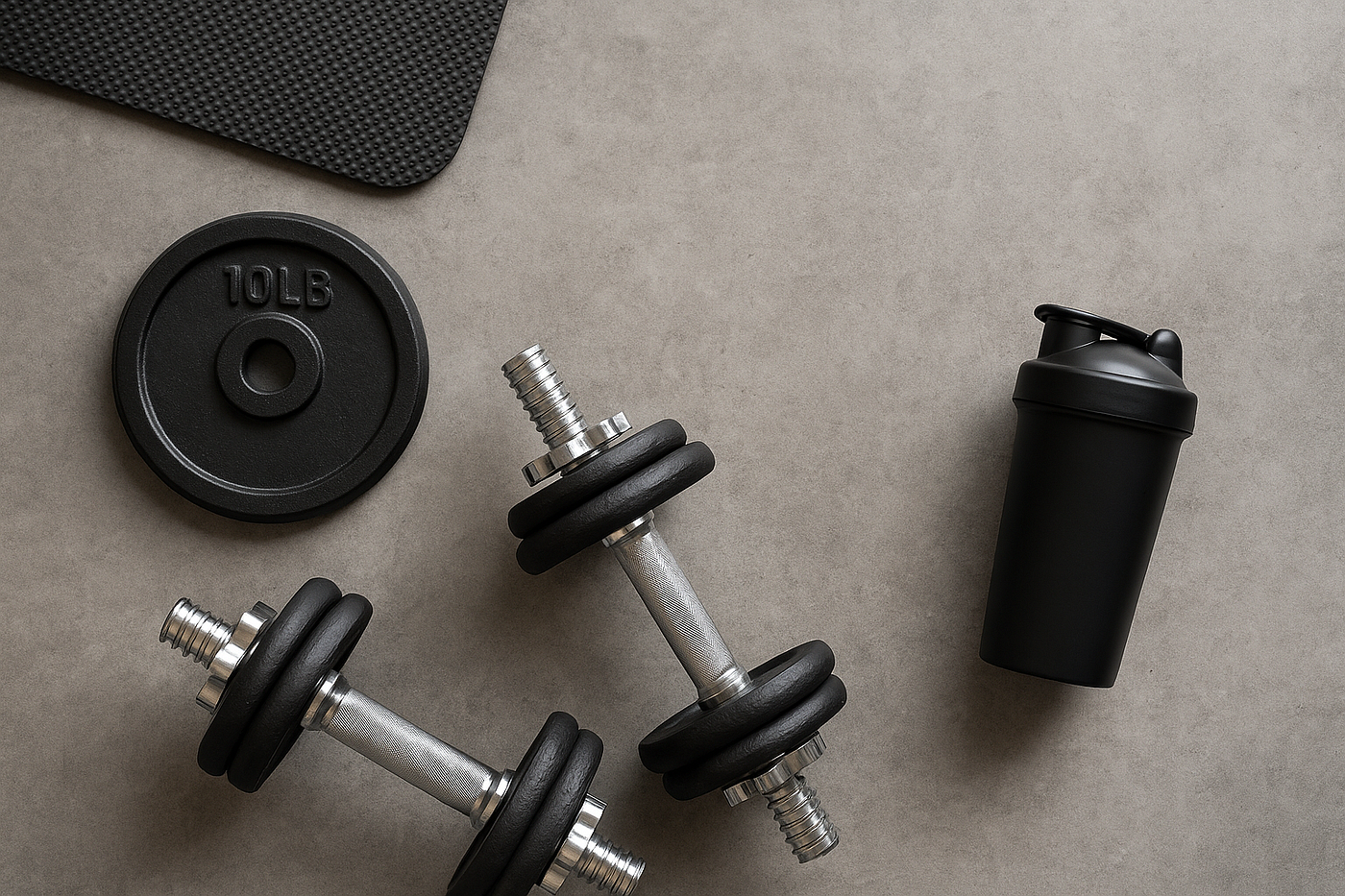
If I could go back and redo my first bulk from scratch — knowing everything I know now — I wouldn’t change just one thing. I’d change almost everything.
Not because I did it all wrong. I trained. I ate. I showed up. But I did what most beginners do: I followed bits and pieces of advice from ten different sources, stitched them together into something that sort of made sense, and then wondered why I was gaining more fat than muscle after three months of effort.
And that’s the trap. It’s not that the information is bad. It’s that no one gives you the full picture — the actual operating sequence — from day one.
So that’s what this video is. This is the complete lean bulk blueprint I wish someone had handed me before I ever touched a barbell. Every section starts with the mistake I made, then walks you through exactly what I’d do instead. No fluff. No hype. Just the blueprint.
Let’s start at the foundation.
The mistake: I ate too much, too fast.
I’d heard the word “surplus” and treated it like a permission slip. More food meant more muscle, right? So I went from roughly 2,400 calories a day to 3,200 overnight. Within six weeks, the scale was climbing — but so was the softness around my midsection. I was bulking. I was not lean bulking.
Here’s what I didn’t understand: your body can only synthesize a limited amount of muscle tissue in a given week. For a beginner, under good conditions, that ceiling is roughly half a pound per week. Maybe slightly more if genetics are favorable. Everything beyond what’s needed to support that growth gets stored as fat. It doesn’t matter how hard you train — biology has a speed limit.
What I’d do instead:
First, I’d find my maintenance calories — my Total Daily Energy Expenditure, or TDEE. That’s the number of calories my body burns in a full day including training, daily movement, digestion, and just existing. There are calculators online that use formulas like Mifflin-St Jeor, and they’ll get you in the right neighborhood. But they’re estimates. So I’d use one as a starting point, eat at that number for about ten days, weigh myself every morning under the same conditions, and watch the trend. If my weight holds steady, that’s my maintenance.
Then — and this is the part I got wrong — I’d add only 200 to 300 calories above that number. Not 500. Not 800. Two to three hundred. That small surplus is enough to support muscle protein synthesis without flooding your body with energy it can’t use.
For a 170-pound beginner, that might look like going from 2,500 maintenance to roughly 2,750. That’s it. One extra meal’s worth of food spread across the day. Underwhelming? Maybe. But three months later, when you’ve added eight to ten pounds and most of it is muscle, you won’t think so.
The goal is to gain somewhere between a quarter and half a percent of your bodyweight per week. If you’re gaining faster than that, your surplus is too large. Pull it back by 100 to 150 calories. If the scale isn’t moving at all after two weeks, nudge it up by the same amount. Small adjustments. That’s the game.
The mistake: I tracked calories but ignored where they came from.
I hit my number every day. I was proud of that. But some days half my intake was from cereal and peanut butter sandwiches. My protein was inconsistent — high one day, barely adequate the next. And I treated fats and carbs as interchangeable, which they are not.
What I’d do instead:
Macronutrients are the architecture inside your calorie target. Calories determine whether you gain weight. Macros determine what kind of weight you gain.
Protein comes first. Always. It drives muscle protein synthesis — the actual biological process that repairs and thickens muscle fibers after training. Without adequate protein, the surplus is just extra energy with nowhere productive to go. The target for a lean bulk is 0.7 to 1 gram of protein per pound of bodyweight per day. If you weigh 170 pounds, that’s 120 to 170 grams. I’d aim for the higher end and not stress about going slightly over. Chicken, turkey, fish, eggs, Greek yogurt, tofu, legumes — rotate through what you enjoy so compliance stays high.
Fats come second. They support hormone production — including testosterone, which is directly involved in muscle growth. Drop fats too low for too long and your hormones suffer, your energy tanks, and your mood follows. A good floor is around 0.3 to 0.4 grams per pound of bodyweight. For our 170-pound example, that’s roughly 50 to 70 grams of fat per day. Avocado, olive oil, nuts, fatty fish — quality matters here more than people think.
Carbohydrates fill the rest. Once protein and fats are accounted for, the remaining calories come from carbs. And beginners consistently undervalue carbs during a bulk. Carbohydrates are your primary training fuel. They replenish muscle glycogen — the stored energy your muscles draw on during sets. They improve workout performance, recovery between sessions, and even sleep quality. Rice, oats, potatoes, fruit, whole grain bread — these are not the enemy. During a lean bulk, they’re the engine.
A practical starting split for a 2,750-calorie lean bulk might look like this: 170 grams of protein, 60 grams of fat, and roughly 350 grams of carbs. You don’t need to hit these numbers to the gram. Within ten to fifteen grams on protein, and within reasonable range on the others. Consistency across the week matters more than perfection on any single day.
Now — if you’re listening to all of this and thinking “I understand the principles, but I don’t want to piece this together myself” — I built something for exactly that situation. My Bulking Program lays out your calories, your macros, your meal structures, your training splits, and your weekly adjustment protocol in one place. No guesswork. No stitching together advice from five different sources like I did. Everything I’m walking you through in this video is systemized, step by step, inside that program. The link is at the end if you want to check it out. But whether you use it or build your own plan from this post — either way, you’ll be ahead of where I started.
The mistake: I followed a program built for someone who’d been lifting for five years.
I found a six-day push-pull-legs split from a fitness influencer, loaded up the exercises, and went at it. High volume. Tons of isolation work. I thought more time in the gym meant more growth. What I got instead was fatigue, joint soreness, and mediocre progress because I was spreading my energy too thin across too many movements I hadn’t earned the right to prioritize yet.
What I’d do instead:
As a beginner, your number one advantage is that almost any reasonable stimulus will trigger growth. Your muscles have never been asked to do this work before. That means you don’t need a complicated program — you need a focused one.
I’d train four days per week. An upper-lower split or a full-body program three to four days a week covers everything a beginner needs. Compound lifts are the foundation: squats, deadlifts, bench press, overhead press, barbell rows, and pull-ups or lat pulldowns. These movements load multiple joints and muscle groups simultaneously, which means more total muscle activation per set and more efficient use of your training time.
Isolation work — curls, lateral raises, tricep extensions — has its place, but it’s the seasoning, not the meal. Two to three isolation exercises at the end of a session is plenty during your first lean bulk.
Volume should land in the range of 10 to 20 hard sets per muscle group per week. For a beginner, start closer to 10. You can add sets over time as your recovery capacity improves. More is not automatically better — more is only better when you can recover from it.
And here’s the principle that ties all of it together: progressive overload. This is the single most important concept in resistance training, and it’s the one I wish I’d taken more seriously from day one.
Progressive overload means gradually increasing the demands you place on your muscles over time. It doesn’t have to be dramatic. Add five pounds to the bar. Add one rep to a set. Add one set to an exercise. Slow down the tempo so each rep is more controlled. Any of these count. What matters is that this week is slightly harder than last week.
Without progressive overload, your body has no reason to build new tissue. The surplus feeds the process, but the training signal is what starts it.
I’d keep a training log — a notebook, a spreadsheet, an app, anything — and I’d write down every set, every rep, and every weight. If I can’t look back and see a clear trend of doing more work over time, something needs to change.
The mistake: I treated rest days like wasted days.
I thought rest meant regression. If I wasn’t in the gym, I wasn’t growing. So I trained six, sometimes seven days a week, slept five to six hours because I was “grinding,” and wondered why my lifts stalled after the first month.
Here’s the reality that nobody wants to hear: you do not build muscle in the gym. You build muscle when you recover from the gym. Training creates the damage — the micro-tears in muscle fibers, the metabolic stress, the mechanical tension. Recovery is when your body repairs that damage and adds a little extra tissue so it’s better prepared next time. Skip the recovery, and you skip the growth.
What I’d do instead:
Sleep is the single most underrated variable in a lean bulk. Research has shown that even one night of total sleep deprivation can reduce muscle protein synthesis by roughly 18 percent. That’s not a marginal hit — that’s nearly a fifth of your recovery capacity gone because you stayed up watching videos about how to recover better. The irony is not lost on me.
I’d aim for seven to nine hours of sleep per night. Not “in bed” time — actual sleep time. That means being in bed early enough to account for the time it takes to fall asleep. It means keeping the room dark, cool, and quiet. It means putting the phone away at least thirty minutes before lights out. None of this is exciting advice. All of it works.
Growth hormone — one of the key hormones involved in tissue repair and muscle growth — is released primarily during deep sleep. Cut your sleep short, and you’re cutting that release short. It’s that direct.
Beyond sleep, I’d schedule at least two full rest days per week. Not “active recovery” days where you convince yourself a light session doesn’t count. Actual rest. Walk if you want. Stretch. But let your nervous system and your connective tissue catch up to your muscles.
And on the topic of cardio while bulking — because this comes up constantly — it’s not the enemy, but it needs to be managed. Two to three low-intensity sessions per week, around 20 to 30 minutes each, are enough to keep your cardiovascular health in check without interfering with muscle recovery. Walking is genuinely underrated here. High-intensity interval training has its place, but during a lean bulk, it’s an added stressor that competes with your lifting recovery. Use it sparingly, if at all.
The mistake: I relied on the mirror and vibes.
For the first two months of my bulk, I didn’t weigh myself consistently. I didn’t track body measurements. I looked in the mirror, thought “yeah, I look a bit bigger,” and kept going. By the time I realized I was gaining too fast, I’d already accumulated more fat than I needed to.
The mirror is a terrible short-term tracking tool. Day-to-day changes are invisible. Lighting changes. Bloating changes. Your brain fills in what it expects to see. Without objective data, you’re navigating blind.
What I’d do instead:
I’d weigh myself every morning, same conditions — after using the bathroom, before eating, in minimal clothing. I’d write that number down and ignore it. Because the daily number is noise. What matters is the weekly average.
At the end of each week, I’d average those seven weigh-ins and compare the average to last week. That trend line is your compass. If your weekly average is climbing by 0.25 to 0.5 percent of your bodyweight, you’re in the sweet spot. Faster than that, reduce your surplus slightly. Slower, increase it.
I’d also take body measurements every two to three weeks — chest, waist, arms, thighs. And I’d take progress photos under the same lighting, same time of day, same angles. Photos are more useful than the mirror because you can compare them side by side over months. Your eyes can’t do that in real time.
Every two weeks, I’d run a simple audit: Is my weight trending up at the right rate? Are my lifts progressing? Am I recovering well between sessions? Do I feel reasonably energized? If three or four of those answers are yes, stay the course. If something’s off, make one small adjustment — not three — and re-evaluate in another two weeks.
This is the difference between a bulk that produces results and one that produces regret. The discipline isn’t in the gym. The discipline is in the data.
And this is actually one of the main reasons I put my Bulking Program together — because when I was doing all of this for the first time, the hardest part wasn’t the training or the eating. It was knowing whether my numbers were actually right and what to adjust when they weren’t. The program includes the tracking frameworks, the adjustment triggers, and the checkpoint system so you’re never sitting there wondering “is this working?” You’ll know. Link’s at the end of the post if you want to take a look.
The mistake: I spent money on supplements before I had my food dialed in.
Pre-workout. BCAAs. A mass gainer that tasted like chalk and sugar. A fat burner I took “just in case.” I was spending sixty to eighty dollars a month on powders and pills while my actual meals were inconsistent and poorly planned.
Supplements are the last two to three percent. They are the polish on a car that’s already built and running. If your nutrition isn’t consistent, if your training isn’t structured, if your sleep is five hours a night — no supplement on earth is going to close that gap.
What I’d do instead:
I’d keep it to three things, maybe four.
Creatine monohydrate. Five grams per day, every day, no loading phase needed. It’s the most researched sports supplement in existence, and it works. It increases your muscles’ phosphocreatine stores, which means slightly more energy available during high-intensity sets. Over time, that translates to a small but real edge in performance and muscle fullness. It’s cheap and it’s effective. Take it whenever you want — timing doesn’t matter.
A protein powder — whey, casein, or a plant blend if dairy isn’t your thing. Not as a meal replacement. As a convenience tool for days when you can’t hit your protein target through whole food alone. One to two scoops a day, max. The rest should come from actual meals.
And a basic multivitamin to cover any micronutrient gaps, especially if your diet isn’t varied enough yet. It’s insurance, not a performance enhancer.
That’s it. Everything else can wait until your training age is measured in years, not weeks. Save the money. Spend it on better food.
The mistake: I expected visible results in four weeks.
I did everything right for about three weeks. Then I looked in the mirror, didn’t see a dramatic change, and started second-guessing everything. Maybe my program was wrong. Maybe I needed more volume. Maybe my surplus was too low. So I changed things. Then I changed them again two weeks later. And again.
This is the cycle that kills more first bulks than any bad program ever could. Impatience leads to program hopping, which leads to zero consistent data, which leads to zero meaningful progress, which feeds more impatience. The loop closes on itself.
What I’d do instead:
I’d commit to twelve weeks. Minimum. No changes to the program unless something is genuinely wrong — like pain, not discomfort. No swapping exercises because I saw something new online. No adjusting macros because of one bad weigh-in.
Muscle growth is slow. Under ideal conditions — proper surplus, solid training, adequate sleep — a natural beginner can expect to gain somewhere between one and a half to two and a half pounds of actual lean tissue per month. That’s real, measurable progress, but it doesn’t look like much in the mirror on a week-to-week basis. It reveals itself over months.
The compound effect is real. Four pounds of muscle after two months won’t turn heads. Fifteen to twenty pounds of muscle after eighteen months will change how you look in every piece of clothing you own. But you only get there by staying on the path long enough for the work to accumulate.
I’d also stop comparing my progress to people who’ve been training for five or ten years, or to people whose genetics are different from mine, or — and I say this carefully — to people whose physiques may not be entirely natural. Comparison in fitness is almost always a losing game because you’re comparing your chapter one to someone else’s chapter ten.
The only comparison that matters is you six months ago versus you today. If you’re stronger, if you’re heavier at a similar body fat level, if your lifts have gone up and your measurements have grown — the process is working. Trust it.
The mistake: I didn’t know when to stop.
I bulked for six months straight because I didn’t have a plan for when to end it. By month five, I’d accumulated enough fat that I didn’t feel great about how I looked, but I kept going because I didn’t want to “waste” the bulk. That’s the sunk cost fallacy dressed in a stringer tank.
What I’d do instead:
I’d set a clear endpoint before I start. Most coaches recommend ending a bulk when your body fat reaches roughly 18 to 20 percent for men, or 28 to 30 percent for women. Beyond those levels, insulin sensitivity starts to decline, which means a larger proportion of the calories you eat gets directed toward fat storage rather than muscle. You get diminishing returns the leaner you aren’t.
For a first bulk, I’d plan for 12 to 16 weeks. At the end of that window, I’d assess: Did I gain at the right rate? Am I still within a comfortable body fat range? Do I want to continue, or is it time for a short cut to strip back the fat I’ve gained before starting another round?
This is the part that separates a lean bulk from a directionless bulk. You’re not just eating more and hoping for the best. You have an entry point, a process, checkpoints along the way, and a planned exit. That’s a system. And systems produce results.
So that’s the blueprint. Not what I did — what I’d do if I could start over with everything I’ve learned since.
Find your maintenance. Add a small surplus. Set your protein first, then fats, then carbs. Train with compound movements and chase progressive overload. Sleep like it matters — because it does. Track your weight, your lifts, and your measurements. Keep supplements minimal. Stay patient. And have a plan for when the bulk ends before it begins.
None of this is complicated. But doing all of it, consistently, for three to four months — that’s where the results live. Not in the latest program. Not in the newest supplement. In the boring, repeatable basics done well enough for long enough.
If you’re about to start your first lean bulk, this is your map. And if you want the full system — the meal plans, the training program, the macro calculator, the weekly check-in protocol, all of it built around exactly what I’ve covered today — my Bulking Program is waiting for you in the description. It’s everything I wish existed when I started. I built it so you don’t have to learn the hard way like I did.
Trust the process. And I’ll see you on the other side.
The full video : https://www.youtube.com/@BulkForge
My Bulking Program : https://whop.com/the-bulking-blueprint-77/the-bulking-blueprint-23/
메타데이터
- post_id
- 3dc19c02bcd0
- slug
- how-to-lean-bulk-for-beginners-complete-blueprint-3dc19c02bcd0
- url
- https://medium.com/@Bulkforge/how-to-lean-bulk-for-beginners-complete-blueprint-3dc19c02bcd0
- canonical_url
- https://medium.com/@Bulkforge/how-to-lean-bulk-for-beginners-complete-blueprint-3dc19c02bcd0
- author_url
- https://medium.com/@Bulkforge
- status
- ok
- fetched_at
- 2026-06-09 15:37:30