Maslow Never Drew That Pyramid. His Advice for a Better Life Were Far More Powerful
Maslow tried to warn us about making a great life.
Maslow Never Drew That Pyramid. His Advice for a Better Life Were Far More Powerful
Maslow tried to warn us about making a great life.

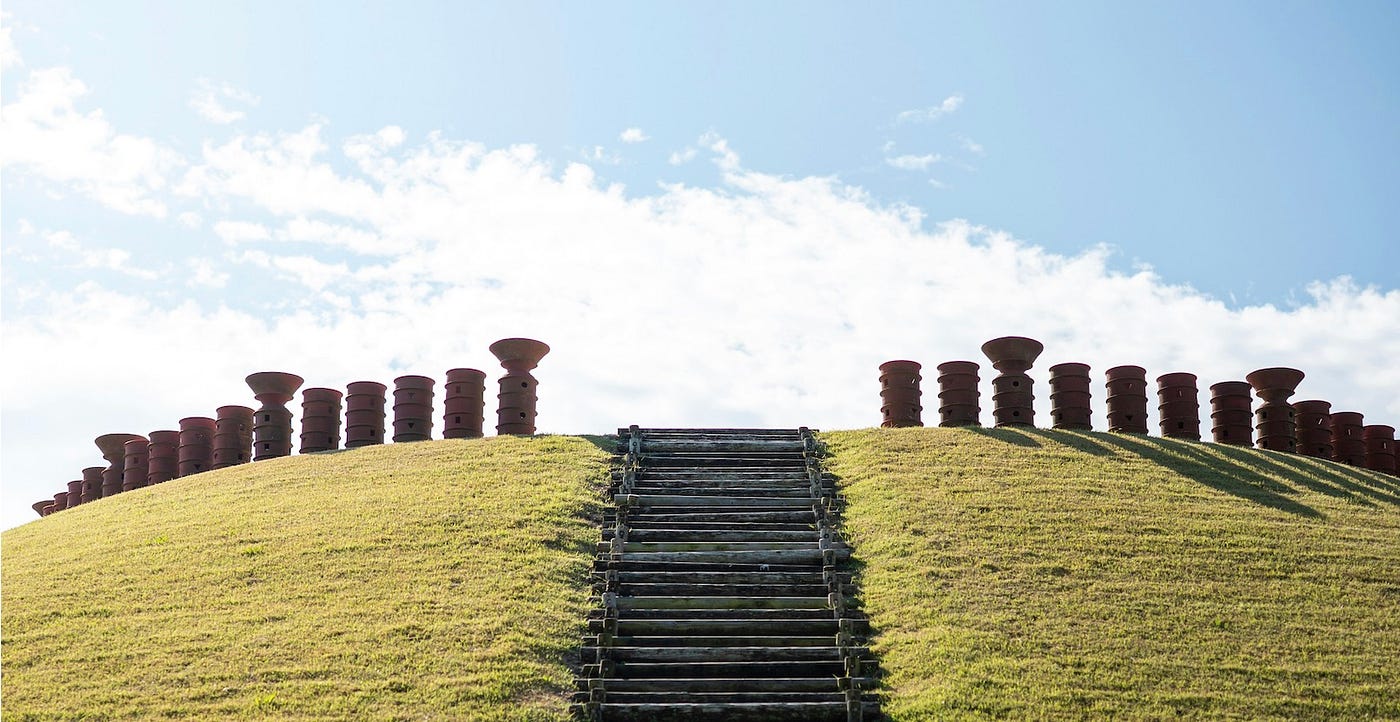
Photo by Noriely Fernandez on Unsplash
I’ve seen it too many times. Maslow’s hierarchy of needs. It’s in many management and psychology books. A triangle divided into blocks. Survival needs sit at the bottom. Safety comes next. Then love, esteem, and finally, at the very peak, “self-actualisation.” Becoming your best self is the holy grail. But psychologist and philosopher Abraham Maslow didn’t create it. A management consultant in the 1960s created it to make Maslow’s complex ideas easy to sell. Maslow spent his career studying what made people become their best selves.
When you go back and read Maslow’s work, Motivation and Personality (1954), Toward a Psychology of Being (1962), his journals and later, the lectures, you will find his key secrets for personal growth. Maslow studied people he thought were psychologically healthy. Lincoln, Einstein, Eleanor Roosevelt, Frederick Douglass, William James and many more. Many of them grew through deprivation, not after escaping it. Frankl found meaning inside a concentration camp. Douglass educated himself while enslaved. Einstein did his most creative work while in financial stress. The study of self-actualising people must be the basis for a more universal science of psychology,” Maslow said.
The pyramid says you need a stable life before you can grow.
But Maslow’s work proved growth is what creates stability, at least in your mind. You don’t find meaning after your life is sorted. You build a life worth living by pursuing meaning even when things are not good yet. His practical advice on personal growth can’t be reduced to a pyramid.
There’s so much more outside the triangle.
Growth is a choice
“Growth takes place when the next step forward is semi-consciously taken as more delightful, more joyous, more intrinsically satisfying than the previous state with which we have become familiar and even bored.” — Toward a Psychology of Being
Maslow said growth is a choice. Every day, you face a hundred tiny choices. He argued that in each of these experiences, you have two options. You can step forward into growth. Or step backwards into safety. “In any given moment we have two options: to step forward into growth or to step back into safety,” he said. Growth means choosing the unfamiliar option. It is choosing to speak up in a meeting, trying a new skill, or admitting you were wrong. Safety is doing what you have always done because it feels comfortable. The lesson here is that you don’t become “self-actualised” at a certain age. You choose self-actualisation one action at a time. Every day.
If you choose safety every time, you stay small. If you choose growth too fast, you burn out from anxiety. The sweet spot is pushing yourself just past your comfort zone, repeatedly. In his later work, especially The Farther Reaches of Human Nature, Maslow wrote about “transcendence.” The idea that growth keeps opening. The further you develop, the more you become aware of how much further there is to go.
Invest in peak experiences
“Peak experiences are transient moments of self-actualization. They are moments of ecstasy which cannot be bought, cannot be guaranteed, cannot even be sought… But one can provide the conditions in which they are more likely to occur.” — The Farther Reaches of Human Nature
Maslow observed that highly fulfilled people frequently have what he called “peak experiences.” These are times of pure joy, deep focus, or intense clarity. You lose track of time. You feel entirely connected to what you are doing. You might experience this while working, running, playing an instrument, and even having a conversation. Many people treat these things as rare accidents. Maslow thought they were clues. Pay close attention to what triggers a peak experience for you. Do not ignore them. If you feel that deep sense of flow while working, but feel miserable managing people, your mind is telling you something. Structure your life to do more of what sparks those peaks.
Expect the growing pains
“We are generally afraid of any knowledge that would cause us to despise ourselves or to make us feel inferior, weak, worthless, evil, shameful. We protect ourselves against such knowledge… But there is another kind of truth we tend to evade. We are also afraid of our highest possibilities.” — Toward a Psychology of Being
The pyramid suggests that once you reach the top, you are done. Maslow coined the term “the Jonah complex” to describe our fear of our own greatness. We sabotage ourselves because growth is terrifying. It means leaving the comfortable herd. It means risking failure. When you try to improve your life, you will feel anxious. You will doubt yourself. Your friends might even get uncomfortable. Expect all of that. Do not mistake the discomfort of growth for a sign that you are doing something wrong. It means you are finally doing something right.
Life is like sailing
“The self-actualizer’s desire for growth is not a desperate effort to satisfy a deficiency. It is an intrinsic, natural unfolding, like a tree seeking light. We must understand the difference between living to avoid drowning, and living to navigate the open sea.” — The Journals of Abraham Maslow
Your basic needs, food, shelter, safety, and connection are the framework of the boat. They keep you afloat. If it has a massive leak, you cannot focus on anything else. You will sink. A good boat just keeps you from drowning; it doesn’t take you anywhere. Now your growth, values, and purpose are the sail. The courage to unfurl that sail is what takes you through life. You don’t have to wait for a perfect boat before you open the sail. You patch the leaks while you catch the wind.
You can fix the leaks while you move forward.
Audit your “needs”
“Self-actualizing people are not primarily motivated by basic needs, but by higher needs — the ‘metaneeds’ or Being-values. When these spiritual needs are not met, a person can become psychologically sick, just as surely as someone lacking vitamins.” — Toward a Psychology of Being
People confuse what they want with what we need.
Maslow separated our motives into two categories. Deficiency motives (d-needs) and being motives (b-needs). D-Needs are born from lack. When you lack food, safety, or love, you feel a void. You scramble to fill it. B-Needs are born from a desire to grow. They include a thirst for truth, beauty, justice, and order. You seek them because you want to expand. The trap of life is treating B-needs like D-needs. You think you lack love, so you buy a better car to get attention. You think you lack purpose, so you pursue a higher job title. The fix is to stop trying to solve internal spiritual hunger with external material things. Identify the real hunger. If you are bored, you need novelty or learning, not a new “thing.”
Develop “freshness of appreciation”
“Self-actualizing people have the wonderful capacity to appreciate again and again, freshly and naively, the basic goods of life, with awe, pleasure, wonder, and even ecstasy, however stale these experiences may have become to others.” — Motivation and Personality
As we age, we get bored. We barely notice the wonders of life or nature. You’ve seen a thousand times. So your brain automates the magic of life to save energy. Maslow found that self-actualising people retain a child-like capacity to appreciate the world. They can look at the same things every day and still find wonder in them. They do not take life for granted. I practice gratitude to remind myself that the ordinary would feel like a miracle if I lost it. Forget the peak of the pyramid. You do not arrive at greatness; you practice it daily. Open your sail. Patch your leaks. Grow action by action, choice by choice.
메타데이터
- post_id
- 3df7c42981d7
- slug
- maslow-never-drew-that-pyramid-his-advice-for-a-better-life-were-far-more-powerful-3df7c42981d7
- url
- https://medium.com/personal-growth/maslow-never-drew-that-pyramid-his-advice-for-a-better-life-were-far-more-powerful-3df7c42981d7
- canonical_url
- https://medium.com/personal-growth/maslow-never-drew-that-pyramid-his-advice-for-a-better-life-were-far-more-powerful-3df7c42981d7
- author_url
- https://medium.com/@thomas-oppong
- status
- ok
- fetched_at
- 2026-06-09 15:37:30