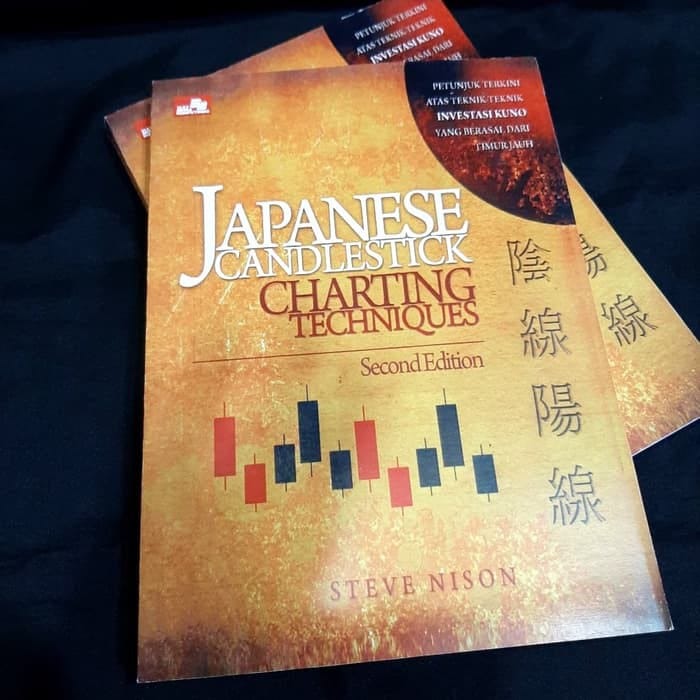
Reviews of the book Japanese Candlestick Charting Techniques 2nd edition
What are the Three White Soldiers and how do they work?
Three white soldiers bullish reversal

Japanese Candlestick Charting Techniques USA UK AUS
What are the Three White Soldiers and how do they work?
It is the reverse pattern of the three black crows. It is a bullish reversal pattern and it should appear after a downtrend.
The three white soldiers is a pattern made up of 3 large-bodied green candles, where the close of each candle is higher than the close of the previous candle. The pattern consists of three long candlesticks that trend upward like a staircase.
This pattern is a bullish reversal signal, and the top of it can be used as support. It’s rare to see it, so when you find it especially in higher timeframes and with good volume, trade it with confidence.
To find out more about the candlesticks patterns, bullish or bearish… you can read one of the best guides about trading candlesticks, the Japanese Candlestick Charting Techniques.
You can find this amazing book in Amazon, click in your country name to access USA UK AUS
Here I will share with you the Good and the Bad reviews about this book, all the reviews are raw, wrote from real traders and not modified for any commercial purpose.
The good ones…
1. The first time I looked at Candlesticks charting on the Internet was 3 years ago with my broker. However, I didn’t understand it just by looking and said to myself “this looks ugly” how can people view this, and then I forgot about it.
After reading the 2 books by Nison I only look at candlesticks charting “intra day” or yearly chart. What difference a book can make.
So far the book of “Edwards Magee on Technical analysis” and the book of Steve Nison are the best of all I have encountered on explaining charts, they are classic work. The first one is complex to read, the later one is fun. I have shorted a lot of stocks too many times and lost in most cases, but never understood what is the right time and the correct signal to do so, now I know the answer from these two books.
The book is an easy one to read, it’s well put together in simple English. It has a lot of charts and well classified. The author explains the different patterns that appear in charts and their implications on a potential move in one direction or another.
2. I have dozens of books on trading and several books on candlestick charting, but this is the candlestick book I return to over and over. However, the reason I like this book so much is not for the candlestick pattern explanations.
Candlestick patterns are fairly simple and are explained very well in many books (including this one) as well as for free on the internet. This book excels because of the way candlestick patterns are integrated with technical analysis.
The author combines candlestick patterns with trend lines, fibonacci retracement levels, moving averages, RSI, Stochastics, MACD, volume, chart patterns, etc.
Every time I pick up this book, I learn not just more about candlesticks, but about technical analysis as well. The author’s explanations are written in an easy to read, conversational tone and are packed with pearls of trading wisdom. I do not know this author or have any affiliation with him. I simply love this book and believe that most traders will, too.
Japanese Candlestick Charting Techniques USA UK AUS
The Bad ones…
1. The book is comprehensive but my issue is that after carefully reading about each candlestick pattern, I feel all candlestick charts are useless because they only look at one or at most a few candle lines, which are noise and non-trending anyway. I compared a few candle charts from real market price movements and then convinced myself that those candle patterns are random and non-conclusive.
The author stated on page 182 that “candle charting techniques are a tool, not a system,” in the sense that it should never be used standalone but needs to be paired with other more quantitative methods. This, on the other hand, means that candle charts have really no use. In fact, a Robo trading system as described in Forecasting and Timing Markets: A Quantitative Approach is a much better choice, as it relies on historic statistical patterns, rather than a few adjacent candles, to generate buy/sell signals, which are much more reliable.
2. I have finally finished reading the book. The information it contains is good, but could be laid out much better. I hope that this review might help someone else avoid (or at least be aware of) the issues I have with this rather expensive book.
To start, I’m not commenting on the actual information in the book (mostly). Most everyone says that Steve Nison knows his stuff. Rather I’m very disappointed in the layout of the book. This makes it very difficult to follow, and comprehend the information.
- The font is VERY large, I can read it from 6 feet away.
- While the book is large, text is only printed on two-thirds of the page, which causes you to change lines every 5 seconds. It is also bunched to the center fold.
- Charts also take up only 66% of the page width. There is way too much vertical white space along the outside of the pages.
- Very often he refers to a chart in the text, but that chart is 2 pages back, it’s hard to follow the explanation.
- Since the charts could be wider, and as they don’t have every date listed at the bottom, (or other identifier) he often points out a day in the text, that doesn’t have a date on the chart. This makes you have to hunt (and guess) for which candle he’s talking about.
Overall, I feel that if the font issue, and white space issues were resolved, this would be a much better book. But, I would suggest trying to find an old version of it (used). I have a PDF copy of the one from 1991, and while the white space isn’t perfect, it’s better, and the font size is much better.
The publisher certainly should have corrected all of these issues.
I did read an online version “Profitable Candlestick Trading: Pinpointing Market Opportunities to Maximize Profits” by Stephen W. Bigalow from my local library website, and found that to be very good. It is the next one I’ll be getting in print.
Like another reviewer stated, getting the good information is like pulling teeth, painful.
The Japanese Candlestick Charting Techniques, 2nd Edition has areview score of 4.6 stars out of 5.
You can find this book in Amazon following my affiliate link:
Amazon USA https://amzn.to/2QuUdU0
Amazon UK https://amzn.to/34H4MLN
Amazon Australia https://amzn.to/3gyZpk3
Thanks for reading!
This article will be part of the blog(under construction)
메타데이터
- post_id
- 3e0e08c3c76d
- slug
- reviews-of-the-book-japanese-candlestick-charting-techniques-2nd-edition-3e0e08c3c76d
- url
- https://medium.com/@robercalee/reviews-of-the-book-japanese-candlestick-charting-techniques-2nd-edition-3e0e08c3c76d
- canonical_url
- https://medium.com/@robercalee/reviews-of-the-book-japanese-candlestick-charting-techniques-2nd-edition-3e0e08c3c76d
- author_url
- https://medium.com/@robercalee
- status
- ok
- fetched_at
- 2026-06-22 00:13:37