How to Jump Higher
Almost three decades have lapsed since Cuban athlete Javier Sotomayor became the first human to jump higher than eight feet. Even more…
How to Jump Higher
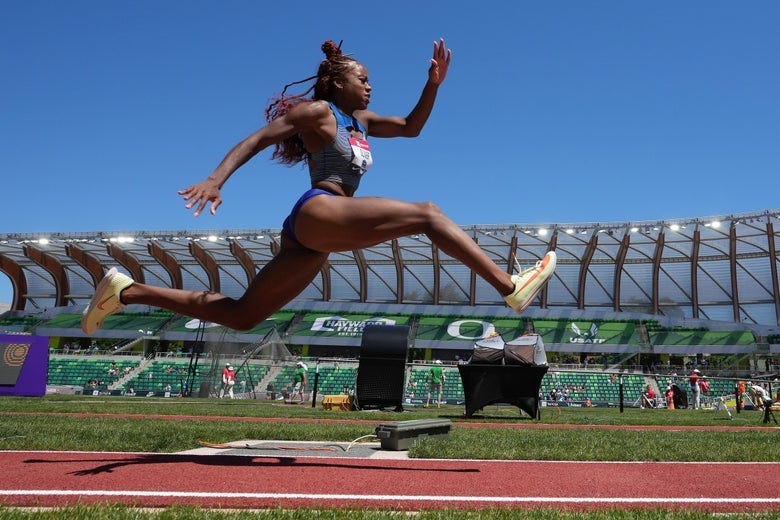
Almost three decades have lapsed since Cuban athlete **Javier Sotomayor became the first human to jump higher than eight feet. Even more startling is that Sotomayor**, now 52 years old, might not actually live long enough to see another man (or woman) match that achievement.
That is a sobering reality but at least Sotomayor’s historic 1993 jump — a staggering 2.45m — provides several clues on how to jump higher, even if you are not a professional athlete.
How To Jump Higher?
If you want to jump higher, you need to generate explosive power. That can be trained and is not a genetic trait.
To generate the kind of explosive power required to jump higher, you need genuine speed and meaningful momentum/rhythm. Both facets require that you have some form of run-up before jumping.
The length of the run-up is less important than the momentum gathered during the run-up. You should always bear that in mind when trying to jump higher.
To jump higher, you ought to try and emulate Sotomayor by sustaining acceleration during the last few strides of your run-up, before making the jump. Again, that is more important than having a long run-up.
The other obvious detail about Sotomayor’s jump is that he took off from one leg when he made that historic leap in Salamanca.
There is compelling evidence to suggest that athletes who take off from one leg are more likely to jump higher than those who opt to take off from two legs, regardless of the sports code.
Track and field might provide the blueprint on this subject but these details are relevant for athletes competing in any sport and at any level. As long as jumping higher is required to help get ahead in that sport.
Squat Less, Push More, and Jump Higher
If you harbour any aspirations of jumping higher an important point of departure will be the method which you use to jump.
You want to use a method that produces a higher stimulation level, greater force, and ultimately more work during the preparatory phase of your jump.
In the context of this blog — and all matters jumping — countermovement is the only method that will produce the desired results.
That said, there are actually two scientifically acceptable methods for jumping and we shall briefly explore both of them.
The first is something we all refer to as the **Counter Movement Jump (CMJ). Secondly, there is something we athletes all refer to as the [Squat Jump (SJ)](https://gethealthyu.com/exercise/squat-jumps/?cn-reloaded=1).** The latter is useful for exercise routines and techniques but it is never going to help you jump higher.
A core principle of the Counter Movement Jump — which we encourage you to adopt if you want to jump higher — is that you will start off from an erect position.
Subsequent to that, you will then use your entire body to make a downward movement before pushing yourself back up when you are ready to make a jump. Think of your body as a spring here.
When you execute the Squat Jump, your body is already in a semi-squatted position and you propel yourself forward from there…unlike a fully functional spring. When you try the latter method, you will immediately notice that it does not generate the same kind of rhythm or even power that you could have done when executing the CMJ.
The question is why. Why does moving downwards and then pushing yourself up make it easier to jump higher, as opposed to starting from a semi-squatted position? Why are you able to generate more power and work when jumping with CMJ?
There is a theory — and it is probably not very far from the absolute truth either — that your body is simply better conditioned to jump higher using CMJ because the method allows your entire body’s coordination to be at an optimal level when making the jump.
That is to say, your body simply isn‘t used to jumping from a squatting position, as that is not the natural movement to make under the circumstances.
If you are more in control of your body, you will jump higher. When you jump with countermovement you will always be in more control of your body.
In addition, it does become exceedingly difficult to extract the maximum value from the muscle force in your body when you prepare to jump from a squatting position, as opposed to using countermovement.
Countermovement allows the muscles in your body, especially the legs, the time they need to contract and produce the maximum amount of force needed to propel yourself in an upward direction when jumping.
Then there is the small matter of something we call **elastic energy**, which you need to jump higher and further. When you prepare to jump higher, your body will first store and then reuse the elastic energy required to make the great leap.
When you jump using countermovement, the muscles that are involved in the entire process are better equipped to store that elastic energy. That is because the muscles would have been pre-stretched during the motion/process used to jump. The same results cannot be achieved when jumping from a squatting position.
Become Faster To Jump Higher
If you have trouble believing that speed — at any level — can be trained then one need only look at the progression of the 100m sprint record since Donald Lippincott first clocked 10.6 seconds in 1912.
While it is true that some men are just born faster than others, it does not mean you cannot work on improving your speed with the view to jumping higher.
Even professional sprinters work on specific techniques to improve their track speed. It is worth noting the latter is not necessarily the kind of speed you need to jump higher, even if it does help you realize that objective.
You can also teach yourself to improve your jump speed by ignoring genetics and focusing all of your attention on making your body more efficient. Teaching yourself to always jump off one leg — instead of two — is one example of how to be more efficient and faster.
The next time you try to take off from one leg, to jump higher, pay attention to the time it takes for your knees to flex. You will notice almost immediately that the flexing of the knees was considerably deeper and effectively slower when you took off from two legs. Your body just does that. It is not a conscious decision but it is natural.
By taking off from one leg, in order to jump higher, you have already improved on your speed. Every little increment matters a considerable amount here.
By taking off from one leg when trying to jump higher, you would have enhanced the “ballistic movement” that is ordinarily required to spring your body higher than before. Because you jumped off one leg, you also enhanced the speed of your motor unit mobilization and you would also have increased the speed at which your muscles were stimulated.
That encourages quicker and sharper movements from the limbs when trying to jump higher and is directly related to that “ballistic movement” that is so critical to executing this well.
Become Stronger To Jump Higher
Earlier in this blog post we noted that Sotomayor — and frankly all quality professional athletes like him — were/are able to sustain acceleration shortly before jumping higher.
A considerable amount of that will be influenced by speed and rhythm (both elements we have dealt with above) but one cannot possibly overstate the significance of **strength **when trying to jump higher.
Most of that strength will come from the legs but your core will also have a considerable impact on how high you jump. The stronger you are, the higher you are likely to jump. Both these aspects of jumping can be adequately addressed by standard gym work, really.
Something often taken for granted about professional athletes who know how to jump high is that many of them are actually quite tall. Taller people tend to weigh a considerable amount too. They are actually deceptively heavy athletes/people.
Sotomayor weighed in at about 82kg when competing at the peak of his powers, yet he jumped higher than everybody else.
When dealing with strength and speed, weight does actually matter — and not in the way that you were thinking. The most important thing to factor into the equation here is that the weight of which we speak is muscle weight and not fat!
There is a very clear difference between the two.
A detail often taken for granted is that muscle actually weighs more than fat. It is denser than fat and it is that density that will propel your body faster and further when you are trying to jump higher.
Be More Diverse To Jump Higher
While we currently live in a world where young athletes are more competitive than ever, we would discourage children (and their parents) from specializing in a specific sport at too young an age. It limits development.
There is clear evidence to suggest that making a young child choose a specific sport earlier in his/her development can actually be detrimental to his/her capacity to jump higher later in life.
The logic behind this is that good all-round sports boys or sports girls are better equipped to develop basic movement skills as they get older. Once they have mastered that, they can consider specializing in a specific code.
Basic movement involves jumping but all of the other components — like speed and rhythm — are also related to that. The entire package is important.
If you are no longer a spring chicken, there is no need to despair there either. You can still focus your attention on being as physically active and diverse as possible, with the view to enhancing your capacity to jump higher.
메타데이터
- post_id
- 3e4a79ce281c
- slug
- how-to-jump-higher-3e4a79ce281c
- url
- https://medium.com/@heelextension/how-to-jump-higher-3e4a79ce281c
- canonical_url
- https://medium.com/@heelextension/how-to-jump-higher-3e4a79ce281c
- author_url
- https://medium.com/@heelextension
- status
- ok
- fetched_at
- 2026-08-04 16:56:05