Versailles in the Seventeenth and Early Eighteenth Centuries: Architecture, Power, and Historical…
Versailles is often remembered as the finished symbol of royal grandeur, yet its history reveals a far more complex process of…
Versailles in the Seventeenth and Early Eighteenth Centuries: Architecture, Power, and Historical Reconstruction
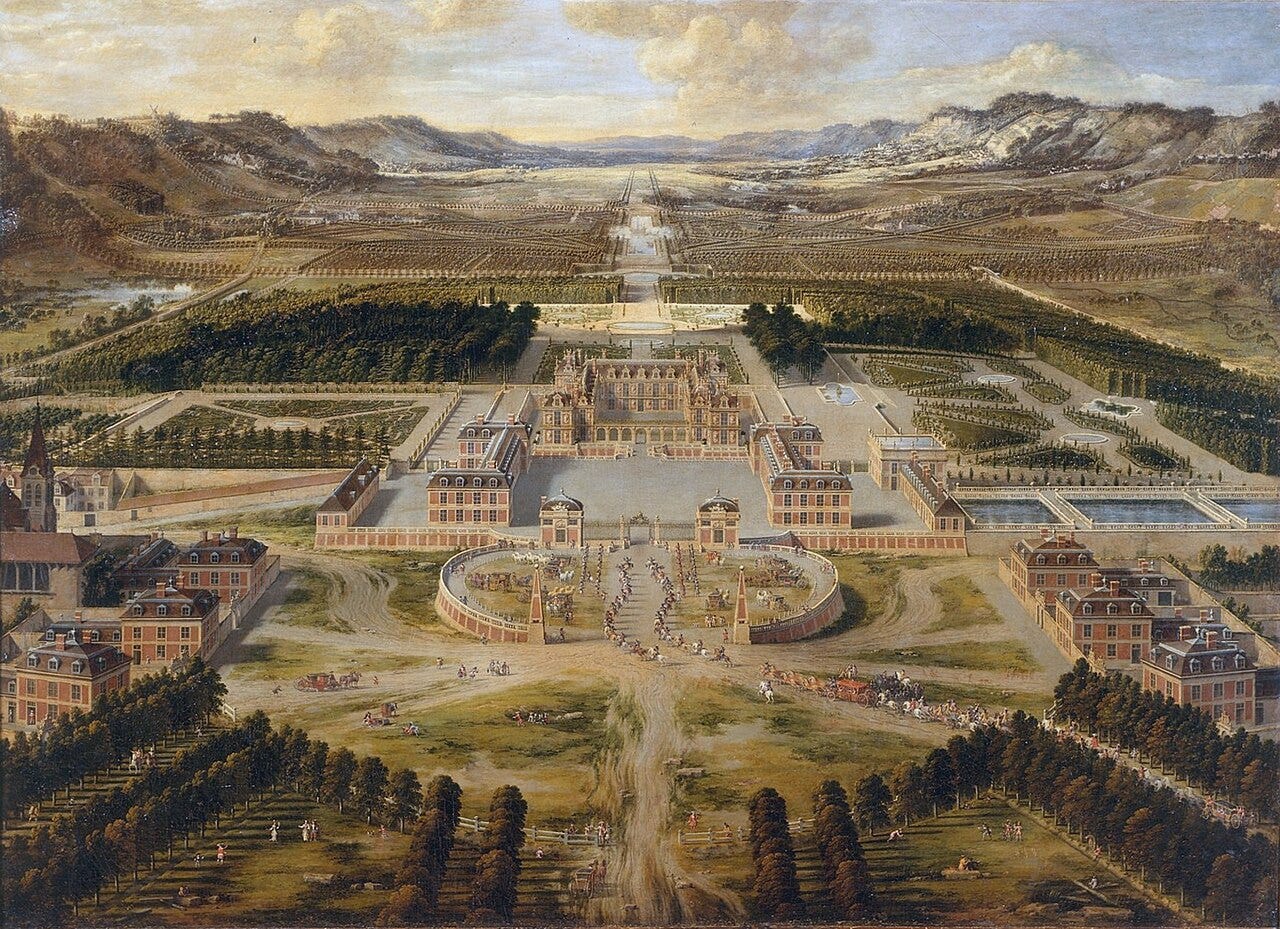
Pierre Patel — View of the Palace of Versailles, 1668. This painting depicts the early stage of the transformation of Versailles under King Louis XIV, before the palace reached its monumental later form. (Public domain.)
Versailles is often remembered as the finished symbol of royal grandeur, yet its history reveals a far more complex process of architectural and political formation. The palace emerged gradually through decades of construction, planning, and transformation, reflecting the changing nature of French monarchy in the seventeenth century.
The history of the Palace of Versailles is often perceived through the lens of its completed grandeur, as though the monumental symbol of absolute monarchy had emerged immediately in its final form. In reality, the development of this complex was a long process of spatial and political transformation, unfolding across several decades and closely connected with the evolution of French statehood, court culture, and architectural thought in the seventeenth century. Versailles should therefore be understood not merely as an architectural object but as a dynamic space of power, whose physical structure reflected the transition from personal monarchical representation to more stable forms of institutional authority.
The origins of the complex date to the reign of Louis XIII, when, in the 1620s, a relatively modest hunting lodge was constructed near Versailles. At that time the area was largely wooded and partly marshland, situated on the periphery and lacking any significant courtly function. The building itself was not conceived as a centre of political life: it was limited in scale, practical in layout, and closely integrated into its natural surroundings. At this stage Versailles represented a place of retreat rather than an instrument of governance.

Louis XIV, King of France. Portrait by Hyacinthe Rigaud, 1701.
Under Louis XIV Versailles would cease to be a royal retreat and become the central stage of absolutist power.
Continue reading the full article on → merutta.com
메타데이터
- post_id
- 3e4ccd9cc23b
- slug
- versailles-in-the-seventeenth-and-early-eighteenth-centuries-architecture-power-and-historical-3e4ccd9cc23b
- url
- https://medium.com/@MERUTTA/versailles-in-the-seventeenth-and-early-eighteenth-centuries-architecture-power-and-historical-3e4ccd9cc23b
- canonical_url
- https://medium.com/@MERUTTA/versailles-in-the-seventeenth-and-early-eighteenth-centuries-architecture-power-and-historical-3e4ccd9cc23b
- author_url
- https://medium.com/@MERUTTA
- status
- ok
- fetched_at
- 2026-06-12 07:40:50






