What the Funk? Artists Who Went Back to the Well [Pt 1]
James Brown is synonymous with The One, but sometimes once wasn’t enough
What the Funk? Artists Who Went Back to the Well [Pt 1]
James Brown is synonymous with The One, but sometimes once wasn’t enough

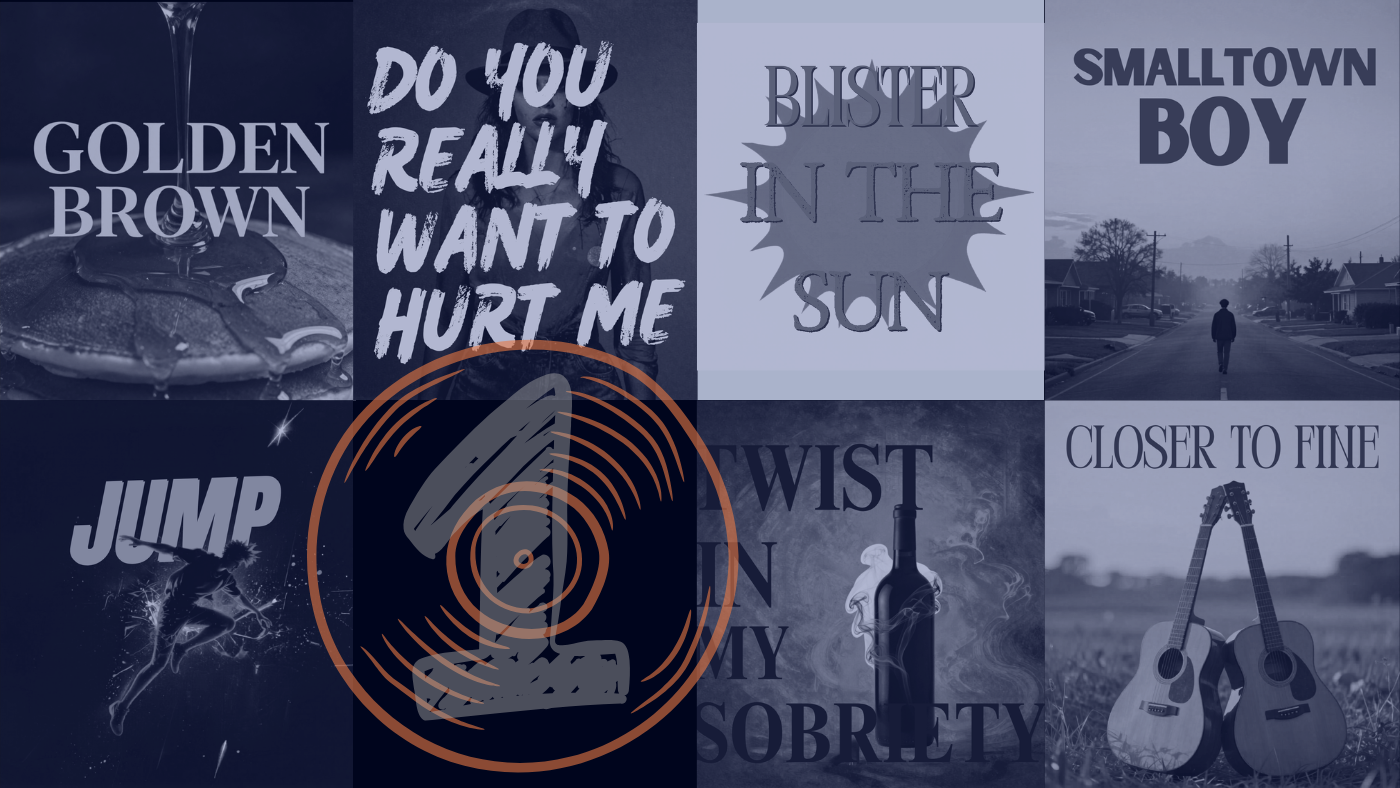
Image: Gemini AI generated
There is a particular kind of artistic restlessness that never quite accepts a recording as finished. Most artists, once a song has been released, let it go — it belongs to the world now, or to the radio, or to whatever cultural moment adopted it. A smaller group can’t leave it alone. They return, sometimes years later, sometimes decades, with a different band or a different tempo or a different understanding of what they were trying to say in the first place.
This series is about those artists and those returns. Not remixes, not live recordings dressed up as something more considered, not the Unplugged treatment — but genuine re-recordings, made with purpose, that ask what a song becomes when its creator comes back to it with different hands and different ears.
The net is wide. Any artist, any era, any genre.
Part 1 belongs entirely to James Brown, which is appropriate given that nobody returned to their own catalogue more compulsively, or with more justification. The Godfather of Soul spent 50 years in motion — gospel singer, R&B balladeer, the architect of funk, a figure so central to 20th-century music that hip-hop built an entire vocabulary from his drum breaks. Along the way, he developed a habit of revisiting his own songs that went beyond nostalgia or commercial calculation. Brown re-recorded because the music was still alive to him, still capable of becoming something else.
Five songs. Multiple versions. One argument: that Brown always knew exactly what he had.
1. Please, Please, Please, 1956
The song began on a napkin. According to Etta James, Little Richard had written the words please, please, please on a scrap of paper that Brown carried around until he’d turned it into something. That origin story — part myth, part biography — suits a debut recording that sounds less like a first attempt than a fully formed declaration of intent.
Brown had been out of youth detention for four years, briefly tried sports, sung gospel, and joined Bobby Byrd’s vocal group before The Flames found their sound and walked into Federal Records in 1956. What they recorded was raw, churchy, and built almost entirely on repetition — a single word wrung for every drop of feeling it could yield. It reached №5 on the R&B charts and sold up to three million copies.
Brown returned to it repeatedly throughout his career, as if the song were unfinished business. A 12-minute upbeat version in 1972 [Please, Please]. A salsa reading in 1974, complete with Spanish vocal. A quiet storm ballad in 1976, Barry White’s influence audible in the background vocals. Three different arguments about what the same song could mean — from a man who clearly felt the first word hadn’t been the last.
[embed]Source: YouTube
[embed]Source: YouTube
[embed]Source: YouTube
2. I Got You (I Feel Good), 1965
The song had at least three lives before it became the one everyone knows. It started as I Found You, recorded by Brown’s backing singer Yvonne Fair in 1962 with little success. Brown reclaimed the melody, recorded an early version in 1964 with a stuttering rhythm and Maceo Parker on baritone sax [below], then watched a court order block its single release. The version that reached the world was cut in Miami in 1965, where the studio’s custom console impressed King Records’ owner enough to book a session. Parker returned, this time on alto sax. The arrangement locked in. The scream that opens it settled the question of whether anyone needed an introduction.
Built on 12-bar blues with brass-heavy arrangements and Brown’s developing emphasis on the first beat of every measure, the song is both a formal exercise and pure abandon — the architecture of funk arriving in plain sight, disguised as joy.
Brown re-recorded it with The JB’s for Sex Machine Today in 1975, a version later resurrected for the movie White Men Can’t Jump in 1992. The original needed no improvement. Brown knew that. He recorded it again anyway, because some songs are worth the argument.
[embed]Source: YouTube
[embed]Source: YouTube
[embed]Source: YouTube
3. Papa’s Got A Brand New Bag, 1965
Brown shouted “This is a hit!” before the drums even came in. He was right, and he knew it, which is the kind of confidence that either looks foolish or prophetic depending on what happens next. What happened next was funk.
The band recorded it in one take, tired enough that they couldn’t push the tempo any faster — a happy accident that kept the groove exactly where it needed to be. Brown later reflected that the bass never moves, just holds its position while everything else orbits around it. The recording was sped up for single release, raising the pitch by a semitone; the original, slower version didn’t surface until the Star Time box set in 1991 [below], where it sounds like a different argument about the same idea.
It topped the R&B charts for eight weeks, reached №8 on the Hot 100, and won Brown his first Grammy. Jimmy Nolen’s guitar appears here for the first time in the catalogue, establishing a sound that would define the next decade.
Brown returned to the song with Louie Bellson’s Orchestra in 1970, recasting it as big band jazz for Soul on Top — a version that treats the original as a standard rather than a revolution, which, by 1970, it effectively was. And he had another crack in 1975 for Everybody’s Doin’ the Hustle & Dead on the Double Bump.
[embed]Source: YouTube
[embed]Source: YouTube
[embed]Source: YouTube
4. It’s A Man’s, Man’s, Man’s World, 1966
The lyric was written by Betty Jean Newsome, Brown’s girlfriend at the time, based on her observations of relations between the sexes. Brown claimed sole authorship. Newsome disputed this in court and won. The song’s central irony — that a world built by men means nothing without a woman — acquired a biographical dimension its composer probably didn’t intend.
The chord changes had been circulating since 1963, when Tammi Terrell recorded an earlier Brown composition, *I Cried*, built on the same foundation. Brown demoed the song in 1964, recorded the released version in two takes in 1966 with a string section arranged by Sammy Lowe, then edited out the female chorus from the final master. What remained was one of his most restrained and devastating performances — the strings doing work that the horns couldn’t, Brown’s vocal finding a register closer to grief than triumph.
It reached №1 on the R&B chart and eight on the Hot 100. Brown recorded it again with Louie Bellson’s Orchestra for Soul on Top, and in 2002 performed it alongside Luciano Pavarotti at a charity concert, Pavarotti contributing a new Italian verse. The song, it turns out, had room for everyone. The Pavarotti performance doesn’t fit our criteria, but you really do need to see this, so here it is.
[embed]Source: YouTube
[embed]Source: YouTube
5. (Get Up I Feel Like Being A) Sex Machine, 1970
Brown had just fired his entire band. The JB’s were their replacements — younger, cheaper, less experienced — and *Sex Machine* was among the first things they recorded together. The horn section, stripped of the veterans who had defined Brown’s 60s sound, plays a minor role. What fills the space instead is Bootsy and Catfish Collins on bass and guitar, Jabo Starks on drums, and a riff so insistent it functions less like music than like a physical condition. Bobby Byrd answers Brown’s exhortations from the side. The dialogue between them — call and response reduced to its absolute essentials — sounds like it could continue indefinitely. In live performances, it frequently did.
Recorded in two takes, it reached №2 on the R&B chart and 15 on the Hot 100. Rolling Stone placed it at 326 on its greatest songs list in 2004; by 2021 it had climbed to 196, which is the correct direction of travel.
Brown’s relationship with the song didn’t end at the studio door. A version for the ostensibly live Sex Machine album stretched past 10 minutes, with overdubbed audience noise concealing its studio origins. In 1975, he rebuilt it entirely for disco audiences, nearly 12 minutes across two single sides. In 1986, a radically reworked version appeared as Get Up, Get Into It, Get Involved on In The Jungle Groove. That same year, he added his vocals to Friends Of The Earth’s digital funk version.
In 1993 he recorded a version advertising Japanese instant noodles. In 2002 he cut it again for the soundtrack to Jackie Chan’s movie The Tuxedo.
Some artists revisit their best work out of nostalgia. Brown revisited his because the groove was still there, still available, still capable of doing whatever the moment required.
[embed]Source: YouTube
[embed]Source: YouTube
[embed]Source: YouTube
[embed]Source: YouTube
[embed]Source: YouTube
[embed]Source: YouTube
메타데이터
- post_id
- 3e4daf1c92e5
- slug
- what-the-funk-artists-who-went-back-to-the-well-pt-1-3e4daf1c92e5
- url
- https://medium.com/big-list-energy/what-the-funk-artists-who-went-back-to-the-well-pt-1-3e4daf1c92e5
- canonical_url
- https://medium.com/big-list-energy/what-the-funk-artists-who-went-back-to-the-well-pt-1-3e4daf1c92e5
- author_url
- https://medium.com/@sacott66
- status
- ok
- fetched_at
- 2026-06-20 20:29:01