The Bald Truth: Male Hair Loss and the Art of Denial
Hair is vanity made visible. For men, it’s not just protein filaments sprouting from the scalp — it’s identity, it’s currency, it’s proof…
The Bald Truth: Male Hair Loss and the Art of Denial
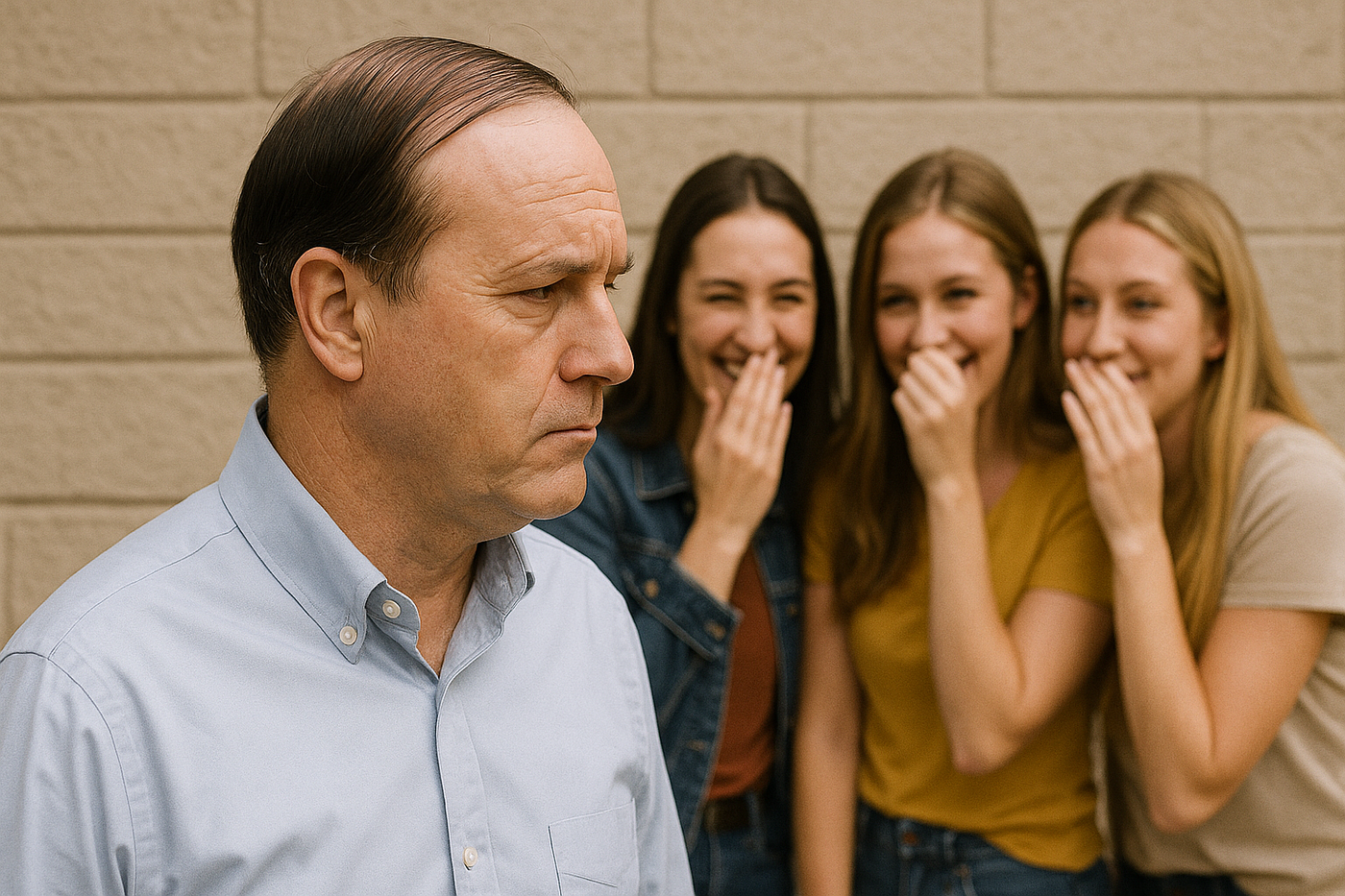
Source: Created by Author with ChatGPT
Hair is vanity made visible. For men, it’s not just protein filaments sprouting from the scalp — it’s identity, it’s currency, it’s proof you haven’t been chewed up and spat out by Father Time. When your hairline starts receding, you’re not just losing strands — you’re losing swagger, the easy confidence that comes from looking in the mirror and seeing yourself the way you’ve always imagined. And when that starts slipping away, men will try just about anything to hold on.
This is the story of coping mechanisms. The good, the bad, the humiliating. From tragic comb overs to billion-dollar medical fixes, male hair loss is a saga of denial, science, and, for the rare few, acceptance.
The Psychology of Losing It
Here’s the part men don’t like to admit: hair loss cuts deeper than looks. A retreating hairline feels like a public countdown clock, a billboard that says, “He’s past his prime.” It’s why so many men panic. They buy miracle shampoos, late-night infomercial gadgets, and pills that promise a follicular fountain of youth. It’s not about hair. It’s about control.
Studies show male pattern baldness is tied to genetics and hormones, particularly dihydrotestosterone (DHT). But to the man staring at his thinning crown under fluorescent lights, the science doesn’t matter. It feels like betrayal. The body you thought you owned suddenly turns against you, and every shower drain full of hair becomes an existential crisis.
And when the panic sets in, most men don’t leap straight to surgery or pharmaceuticals. They start with the cheap tricks — the illusions. The first stop on the road of denial?
The Comb Over: A Masterclass in Self-Deception
The comb over is the classic move, the haircut equivalent of saying, “Nothing to see here, folks.” It’s not a style; it’s denial stretched strand by strand across your scalp. The idea is simple: grow the hair you still have on the sides or back, then sweep it over the bald spot like wallpaper over a cracked wall.
But here’s the problem: hair is not drywall. It moves. It shifts. It betrays you at the slightest gust of wind. Everyone sees it. From the waiter above you pouring water into your glass to the coworker who casually glances down during the Monday meeting.
The comb over is the male ego’s tragicomic play: “If I can’t see it, maybe no one else can.” But people can. And they’re silently begging you to let go.
And once the comb over fails — and it always fails — some men escalate to the next disguise.
Toupees: The Original Crime Scene
If the comb over is denial, the toupee is fraud. A small, furry deception strapped to the scalp in hopes that the world won’t notice. Toupees are the granddaddy of hair loss coping mechanisms, going back centuries. In the 18th century, wigs weren’t just acceptable — they were fashionable. But somewhere along the way, the wig became the punchline, a desperate man’s last refuge.
The modern toupee industry claims to have evolved. They call them “hair systems” now. They’re glued, weaved, or bonded so seamlessly that, in theory, nobody could tell. But in practice? People can always tell. It’s the uncanny valley of grooming: looks almost real, but not quite.
And the moment someone suspects, the game is over. Every interaction becomes about your rug. Friends politely look away, but strangers snicker. You live in constant fear of discovery — rainstorms, swimming pools, or worse, intimacy. A toupee isn’t just hair — it’s a leash of anxiety.
But if wigs feel too fake and comb overs too flimsy, there’s always the big guns: medical intervention.
Hair Transplants: Vanity Meets Science
For men with money and pain tolerance, hair transplants offer salvation. Surgeons take hair from the back of your scalp — the donor zone — and implant it where you’re balding. Follicular Unit Extraction (FUE), Follicular Unit Transplantation (FUT) — the acronyms sound like futuristic weapons, but they’re really just surgical ways of rearranging the deck chairs on the Titanic.
Done well, the results can be stunning. Elon Musk went from looking like a tech goblin in the PayPal years to sporting a near-perfect hairline in his Tesla prime. Actors, athletes, and Instagram influencers line up for the procedure because it works.
But it’s not cheap. A decent transplant runs $10,000 to $20,000, often requiring multiple sessions. And it’s not painless — tiny grafts, scalp soreness, weeks of awkward healing. Worst of all, not everyone is a candidate. If your donor hair is thin, no amount of money can conjure density out of nothing.
And then there’s the risk. Bad transplants look like doll hair, unnatural rows sprouting from the scalp. Once it’s botched, there’s no going back. You’ve turned your head into a surgical cautionary tale.
Not ready to go under the knife? Then you’re probably heading for the pharmacy.
Medicine: The Pills and Potions
If surgery sounds extreme, the pharmaceutical aisle beckons. Enter finasteride (Propecia) and minoxidil (Rogaine), the Batman and Robin of hair preservation.
Minoxidil was originally a blood pressure medication until someone noticed patients were sprouting new hair. Applied topically, it stimulates follicles to keep producing. The catch? Stop using it, and your gains vanish like Cinderella’s carriage at midnight.
Finasteride works differently. It blocks the conversion of testosterone into DHT, the hormone that shrinks hair follicles. The result: slowed hair loss, sometimes regrowth. Sounds like magic. But here’s the trade-off: possible sexual side effects, lowered libido, even reported depression. Imagine keeping your hair but losing your desire. Some men shrug and say, “Worth it.” Others quit in panic.
There are also experimental treatments — PRP (platelet-rich plasma) injections, stem cell therapy, laser caps that make you look like a sci-fi extra. Each comes with a price tag and a promise that hasn’t always been peer-reviewed.
And that raises the bigger question: why do we care so much in the first place?
Cultural Obsession: Why Hair Matters So Damn Much
Why does hair loss carry so much weight? Because hair is shorthand for youth. Look at advertising: every shampoo commercial is a cascade of glossy strands, every romantic lead in Hollywood has an artfully tousled mane. Bald men, when they’re cast at all, are usually villains, comic relief, or the aging dad.
Hair is coded as virility, attractiveness, even leadership. When you lose it, society reads you differently. The irony? Roughly two-thirds of men experience significant hair loss by age 35. This is normal, but we treat it as failure.
And so men fight it. They deny, disguise, or surgically defy it. Anything but accept it.
The Nuclear Option: Acceptance
But let’s talk about the option that scares most men the most — acceptance. Shaving it all off. Going full bald. No props, no chemicals, no illusions. Just skin and sunlight.
It’s not weakness. Done right, it’s dominance. Look at Dwayne “The Rock” Johnson. Look at Jason Statham. Look at Sir Patrick Stewart. These men didn’t lose hair — they weaponized baldness. Their scalps became part of their brand, a symbol of strength, confidence, and defiance.
When you embrace baldness, you cut the leash of anxiety. No more pills. No more toupees. No more praying your hairline holds until your next transplant session. You’re free. Baldness becomes the aesthetic of power.
The Social Layer: Dating, Work, and Ego
The question men secretly ask: “Will women still find me attractive?” The answer is complicated. Some will, some won’t. But confidence matters more than follicles. Studies show women rate bald men as more dominant and mature, though less youthful. Translation: you lose boyish charm, but gain gravitas.
At work, baldness can shift perceptions. In politics, business, and leadership, the bald look often signals toughness. Jeff Bezos shaved his head and suddenly looked less like a nerdy founder and more like a Bond villain plotting world domination. That’s an upgrade.
The ego, though, takes the longest to adjust. Accepting hair loss isn’t about the world — it’s about you. It’s about letting go of the version of yourself you thought was permanent. That’s why so many men cling to comb overs, wigs, or prescriptions: they’re not trying to fool others. They’re trying to fool themselves.
The Spectrum of Coping
So let’s lay it out plainly:
- Comb Over: Cheap, delusional, universally ridiculed.
- Toupee/Hair System: Slightly more convincing, but socially radioactive.
- Transplant: Effective but expensive, risky, and not for everyone.
- Medicine: Works for many, but comes with lifelong commitment and possible side effects.
- Acceptance: Free, permanent, liberating, but requires real confidence.
Every man picks his place on this spectrum. Most hover in the middle, dabbling in potions or praying surgery works. Few have the guts to pick the nuclear option.
Closing Thoughts
Male hair loss is not a disease. It’s not a moral failure. It’s a genetic roll of the dice, a hormonal reality check. The tragedy isn’t the baldness — it’s the endless denial. Watching men spend fortunes, hide under wigs, or drape a comb over like a magician’s cape is sadder than the shine of a bare scalp.
The truth is liberating: nobody cares as much as you do. People are too busy worrying about their own aging, their own insecurities, their own bathroom-mirror betrayals. Your bald spot is not a billboard. It’s just a patch of skin.
So, comb it, glue it, transplant it, or shave it. But whatever you do, own it. Because the only thing worse than going bald is going bald while pretending you’re not.
☕ “Without music, life would be a mistake.” — Friedrich Nietzsche Without coffee, writing would be impossible. **Buy Me a Coffee**.
메타데이터
- post_id
- 3e7a5a2ecd33
- slug
- the-bald-truth-male-hair-loss-and-the-art-of-denial-3e7a5a2ecd33
- url
- https://medium.com/@troybreiland/the-bald-truth-male-hair-loss-and-the-art-of-denial-3e7a5a2ecd33
- canonical_url
- https://medium.com/@troybreiland/the-bald-truth-male-hair-loss-and-the-art-of-denial-3e7a5a2ecd33
- author_url
- https://medium.com/@troybreiland
- status
- ok
- fetched_at
- 2026-06-09 15:37:30