The Gorkha Conundrum — A Search for Identity and Belonging
The Gorkha conundrum — of carrying a history that has rarely offered us a definitive home and often labeled us by convenience.
The Gorkha Conundrum — A Search for Identity and Belonging
The Gorkha conundrum — of carrying a history that has rarely offered us a definitive home and often labeled us by convenience.

The Gorkha Conundrum — A Search for Identity and Belonging (Darjeeling)
Growing up as a member of the Gorkha community in West Bengal, I’ve often felt like a puzzle piece that doesn’t quite fit anywhere. There’s a particular flinch that happens when the word ‘Nepali’ lands on our ears from someone outside our community. It isn’t the word that hurts us — it’s the assumption packed into it. To the ignorant, “Nepali” is “from Nepal,” a migrant, an outsider, a forever guest in someone else’s home. Among ourselves, we use the word freely. We don’t pause mid-sentence to correct each other to address ourselves as “Gorkha.” But the moment, we step outside our circles, we cling to the word “Gorkha” as a shield, as a reminder to the world and to ourselves: our history and home are here, on this side of Mechi and Teesta, on the side of the Toy Train’s steam and the tea garden’s hard sunlight. This kind of knee-jerk reaction to labels is just one of the many symptoms of a deeper issue — a profound sense of insecurity and longing for a place to call our own.
This piece is more of a relief valve. A gathering of the old ache — not belonging, and being told to pick a side, to declare a provenance, to prove a right to exist where our grandparents passed and our children will be born.
A Name, A Misunderstanding, An Identity Crisis
There is a difference between what we call ourselves and what we are called. “Nepali” is our shared language, yes, but in the plains and metros of India it often gets mistranslated into nationality, and that mistranslation bruises. Our ancestors have lived here for generations, yet the assumption persists that we don’t belong. So, we push back, insisting on “Gorkha” — a name tied to our ethnic and cultural heritage, evoking the warrior spirit of our forefathers. It’s a small act of defiance, a way to assert that we are not foreigners, even if the world around us often treats us as such.
The reflex to correct it, to insist on Gorkha, is an act of self-preservation born out of years of being asked, “So, you are from Nepal?”
At the center of this confusion is Darjeeling — our cultural heart — whose story is itself a saga of transfers and exclusions. Darjeeling wasn’t Bengal’s to begin with. This identity crisis isn’t just about semantics. It’s rooted in a history of displacement and marginalization. We’ve never truly had a place to call our own, a homeland where we are unequivocally accepted. **Darjeeling once belonged to Sikkim, before being gifted to the British East India Company in 1835 through the Deed of Grant.**

The Deed of Grant in Lepcha language (translated to Hindi under it) — Source: https://gorkhalandstate.blogspot.com/
When India gained independence, Darjeeling was never returned to Sikkim; it became a district in West Bengal. Over time, many in Sikkim began to hold us at arm’s length — “we are not the same,” “we don’t want you” — as if history were a courtroom and we had lost the case by default. There’s a special kind of loneliness in hearing a neighbour say “not ours” after generations of shared tongue, blood, and even the same border.
The Gorkhaland Movement

The first Gorkhaland Movemement — 1986
When people do not have a space that recognizes them, the demand for a state becomes the closest language for dignity. The first big wave came in the 1980s under the **Gorkha National Liberation Front, led by Subash Ghisingh. It was not a gentle decade. It was strikes, shutters, and flames; the sort of upheaval that ripples through children’s memories and grandparents’ silences alike. It ended with a compromise — the Darjeeling Gorkha Hill Council (DGHC) — meant to give us administrative say, but too thin to carry the weight of what was asked: recognition, power over our affairs, an end to the feeling of being administered rather than represented. My father lived through this era while partaking in the events from a journalist’s point of view. I will not dive into the details because it is not my story to tell.**
The second crest rose in 2007 with the **Gorkha Janmukti Morcha**, led by Bimal Gurung. New faces, familiar hunger. Once more the hills stood still; once more the state responded with the language of containment. The Gorkhaland Territorial Administration (GTA) arrived — another semi-autonomous promise with clipped wings. Each iteration, it seemed, drew a smaller circle than the last. Borders shrank on paper, and with them shrank the imagination of what was possible. It was as if the solution kept being designed to outlast the agitation, not to resolve the justice beneath it.
Microaggressions in Siliguri, and the Sound of Doors Half-Closed
Even within West Bengal, where Darjeeling and its surrounding areas are located, acceptance is hard to come by. In Siliguri, the gateway to the hills and a city I’ve called home for over a decade, microaggressions are an everyday reality. Often it is the steady hum of being tolerated but not embraced — as if we are permanent tourists in the city where we pay taxes and raise children.
I belong to a railway family, not an army one, though “Gorkha” and “army” are too often used as synonyms by those who don’t know us. Generations of my family worked for the Darjeeling Himalayan Railway — the Toy Train with a laugh and a whistle, a UNESCO-inscribed memory that still loops through our imagination even when the city honks drown it out. I broke the line by moving away from the generational legacy. We left the small railway colony of **Tindharey** (now known as Tindharia) when I turned 16, for the city for a better quality of life, or so we told ourselves. But the city, after more than a decade, has not softened.
Home is where the heart opens without permission; Siliguri is where I keep a spare key and a polite smile.
A History of Being “Lesser Than”

This sense of being lesser isn’t unique to West Bengal. Across the region, Nepali-speaking communities have faced systemic discrimination. In the days of the Chogyals in Sikkim, Nepali-speaking communities were cordoned by rules, routinely made to feel junior to the Bhutia-Lepcha aristocracy.
The word “migrant” hung over us like a label you can’t peel off, no matter how long you’ve lived in the house.
In Bhutan (Yes, the nation where they measure the “happiness index” evicted and tortured hundreds of thousands of Gorkhas for being different than the ruling class), the story is even darker. The Nepali-speaking Lhotsampas, who had lived in southern Bhutan for generations, faced brutal persecution in the late 1980s and early 1990s. They were stripped of citizenship, tortured, and forcibly evicted in a campaign of ethnic cleansing by the Bhutanese ruling class. Over 100,000 Lhotsampas fled, hoping to find refuge in India. But India, despite being a neighbor and a cultural kin, refused to let them settle here. Instead, they were redirected to refugee camps in Nepal, where many still languish, struggling to survive in limbo. This rejection by both Bhutan and India reinforced the narrative that we are unwanted, disposable, always seen as migrant workers rather than rightful citizens.
When people tell us to “move on,” they are asking us to forget the smell of smoke in the 1980s hills, the silence of refugee tents in the Terai, the “not you” echoing from a neighbor’s window. Forgetfulness is a luxury for those who were never asked to relocate their identity.
There is a pattern here, simple and cruel. Sikkim says, “You’re not us.” Bhutan says, “You were never us.” Bengal says, “You are ours, but you are not of us.” Nepal is a sibling’s house where the language is shared (not the dialect) but the passports are not. Darjeeling — our anchor and altar — is a district that exists beautifully on postcards and uneasily in budgets. We are threaded through all these geographies and fully claimed by none.
It makes sense, then, that the word “Nepali” feels like a moving target and “Gorkha” feels like a braided rope — one we hold onto not just to name ourselves, but to not be renamed by others.
A Family Story, Not a Footnote
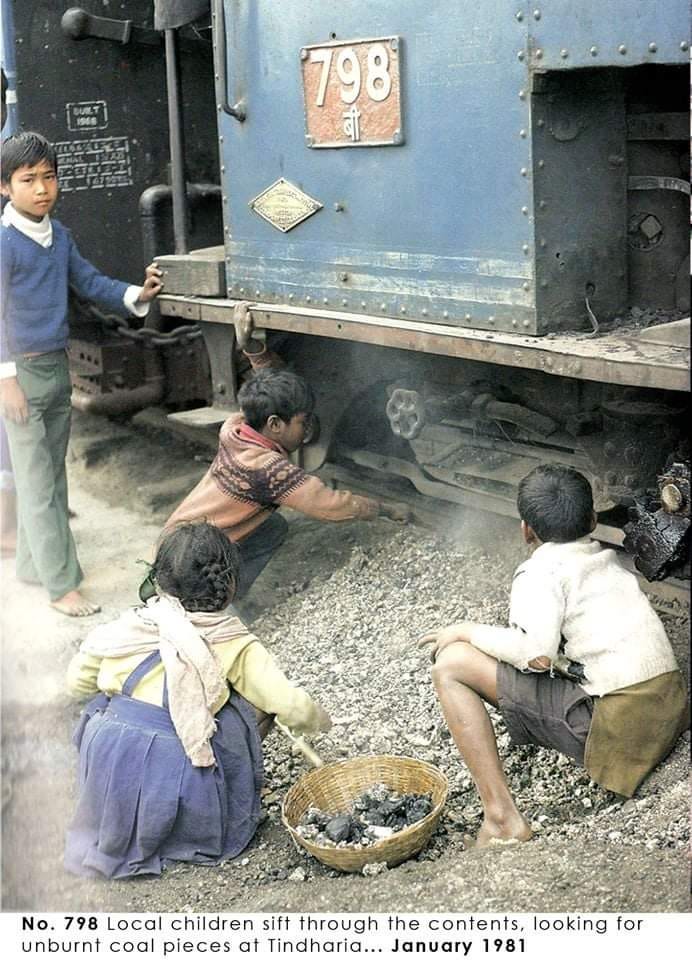
Tindharey — Modern day Tindharia — The true railway colony of Darjeeling
The railway is in our blood: oil-slick palms, metal’s clean ring, the patient rhythm of wheels on narrow-gauge rails. The DHR isn’t just transport; it’s a memory machine. In our home, timetables and tea were conversation partners. The elders told stories in stations like Tindharey (now Tindharia), as if the line itself were our family tree. I broke with that calling, and I still don’t know if it was escape or ambition.
We left a hillside hamlet for a city address. Yet, more than a decade later, Siliguri still feels alien. The city’s hustle and bustle can’t mask the undercurrent of exclusion. We’ve tried to assimilate, to blend in, but the whispers and sideways glances remind us that we’re different. It’s exhausting, this constant need to prove that we belong, that we’re not just passing through.
I often wonder if my children will feel the same way, or if they’ll ever find a place where they’re not questioned for simply existing.
People ask, “How do you like Siliguri?” I say, “It likes me when I spend money and it doubts me when I speak Nepali.”
Is There a Map That Can Hold Us?
What is the solution? A state of our own? A line on a map that gathers our people into a single promise? In a country wary of redrawing borders, the dream of Gorkhaland is both necessary and nearly impossible. Necessary, because recognition is not a courtesy; it is the ground where dignity stands. Nearly impossible, because politics rarely yields to pain without a calculation that pain alone cannot supply.
Another council? Another GTA with budgets bargained yearly, powers interpreted hourly, and boundaries that recede like tidewater?
Administrative answers rarely cure existential questions.
Our ask isn’t only better roads and schools — though we need them — it’s the end of conditional belonging. It’s to stop being cross-checked at the door of our own house.
What If There Is No Final Answer?
Perhaps the conundrum is not a riddle to be solved once but a vigilance to be practiced daily. The demand for Gorkhaland is one articulation of that vigilance. The insistence on being called Gorkha is another. The refusal to be gaslit by “It’s not that bad” is another. The promise we make to our children — that they won’t have to practice their belonging in the mirror before stepping outside — might be the bravest of all.
I think of the Toy Train again: its patient climb, the way it loops back on itself to gain height slowly, refusing the easy straight line that the mountain will not allow. Maybe that’s us. Looping, insisting, inching upward. The world calls it slow; we call it arriving.
메타데이터
- post_id
- 3e7b1c29cdfd
- slug
- the-gorkha-conundrum-a-search-for-identity-and-belonging-3e7b1c29cdfd
- url
- https://medium.com/@thelielama/the-gorkha-conundrum-a-search-for-identity-and-belonging-3e7b1c29cdfd
- canonical_url
- https://medium.com/@thelielama/the-gorkha-conundrum-a-search-for-identity-and-belonging-3e7b1c29cdfd
- author_url
- https://medium.com/@thelielama
- status
- ok
- fetched_at
- 2026-07-14 13:03:24



