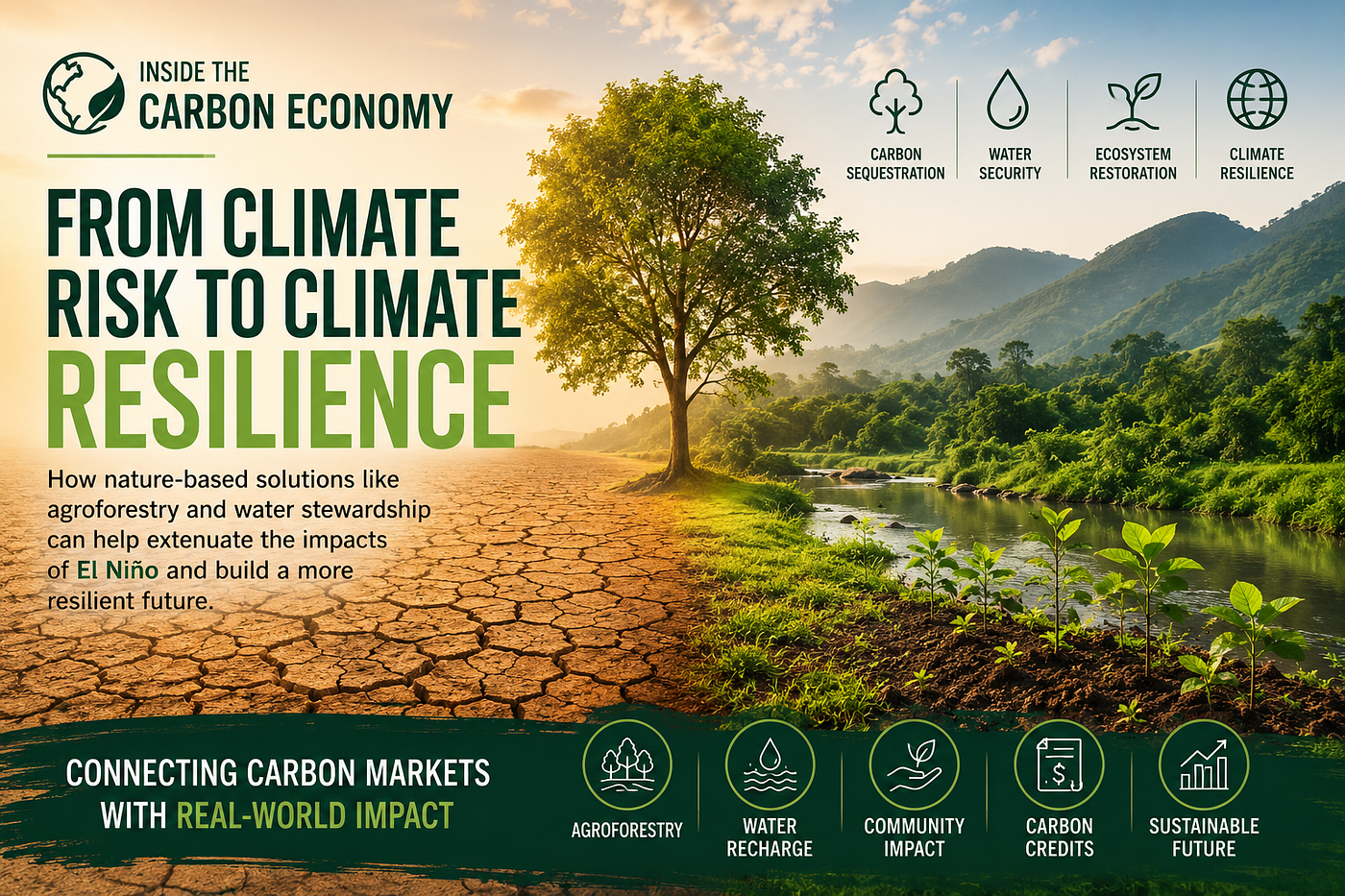
Understanding El Niño: Why It Matters Beyond the Weather
Climate resilience begins with understanding one of Earth’s most influential climate patterns.
Understanding El Niño: Why It Matters Beyond the Weather
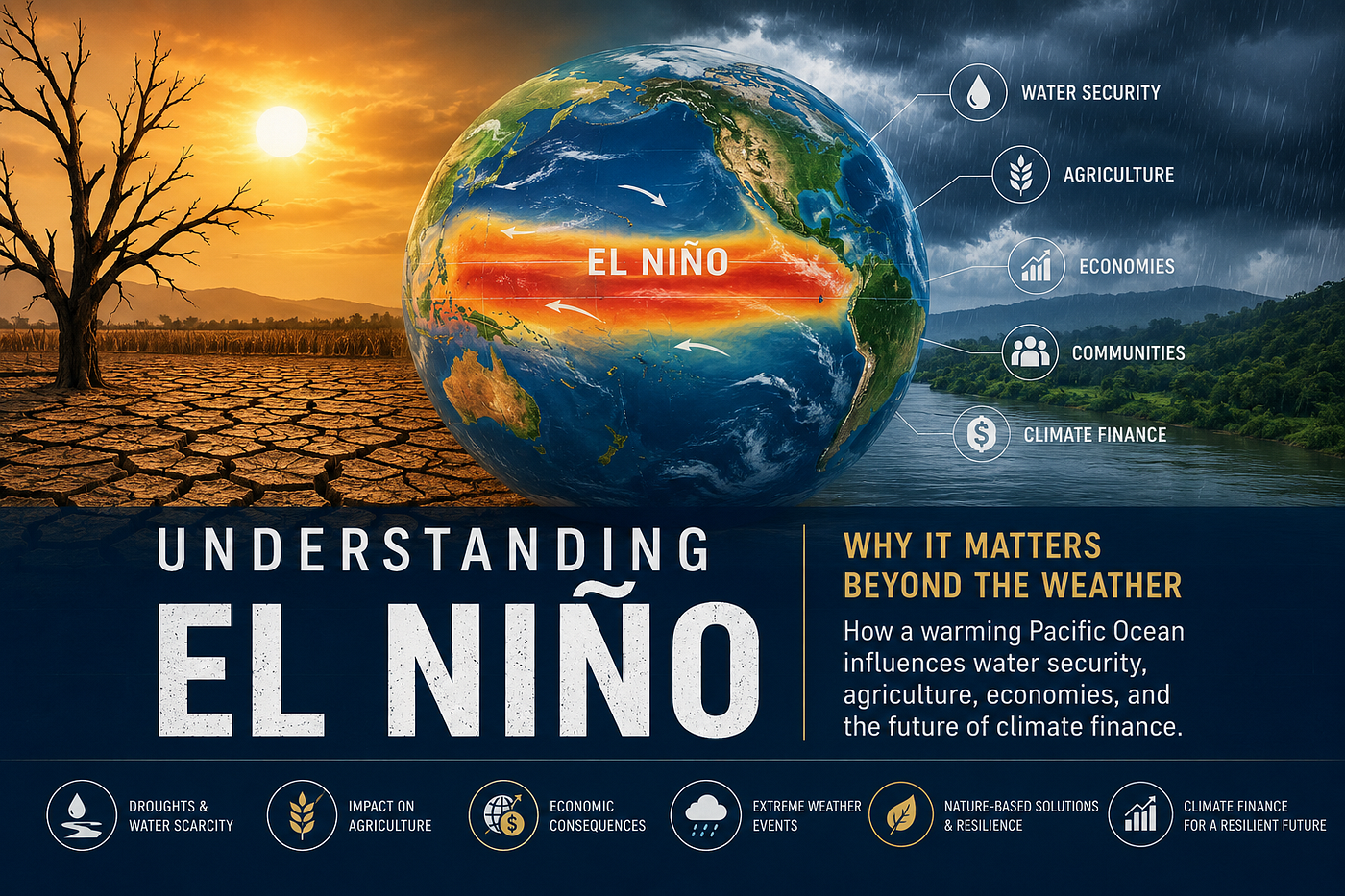
The story of El Niño isn’t just about changing weather — it’s about the growing need to invest in a more water-secure and climate-resilient world.
Climate resilience begins with understanding one of Earth’s most influential climate patterns.
Every few years, a warming ocean thousands of kilometres away quietly reshapes lives across the globe.
Farmers worry about rainfall. Reservoirs shrink. Food prices fluctuate. Hydropower generation becomes uncertain. Governments prepare for droughts, floods, and wildfires.
The driving force behind many of these changes is El Niño.
To many people, El Niño is simply a weather event mentioned in news headlines. In reality, it is one of the most influential climate phenomena on Earth, capable of affecting water security, agriculture, economies, and the way societies prepare for climate risks.
As climate change intensifies existing vulnerabilities, understanding El Niño has become more than a scientific exercise — it has become essential for building resilient communities.
What Exactly Is El Niño?
El Niño is the warm phase of the El Niño–Southern Oscillation (ENSO), a naturally occurring climate cycle in the tropical Pacific Ocean.
During an El Niño event, sea surface temperatures in parts of the Pacific become warmer than usual. These changes influence atmospheric circulation, shifting rainfall patterns and weather systems around the world.
Although it originates in the Pacific Ocean, its consequences are global.
Some regions experience severe droughts, while others face unusually heavy rainfall and flooding. Agricultural productivity, fisheries, water supplies, and energy systems can all be affected.
This interconnectedness reminds us that climate events rarely remain local.
Why El Niño Matters
The real significance of El Niño is measured not by ocean temperatures, but by its impact on people.
When rainfall becomes unreliable, farmers struggle to plan planting seasons. Reduced river flows affect drinking water supplies and hydropower generation. Prolonged droughts increase wildfire risks and place additional stress on ecosystems already facing climate pressures.
The economic consequences can be substantial.
Lower agricultural output may contribute to higher food prices. Water shortages can disrupt industrial production. Governments may need to allocate significant resources to emergency response and recovery.
Climate variability increasingly influences economic resilience.
Water Scarcity: One of the Greatest Challenges
Among El Niño’s many impacts, water scarcity deserves particular attention.
Water underpins nearly every aspect of modern society — from agriculture and manufacturing to public health and ecosystem stability.
When prolonged dry conditions reduce river flows and reservoir levels, communities face difficult decisions about how limited resources should be allocated.
As populations continue to grow and climate risks become more pronounced, improving water resilience is becoming an urgent priority rather than a long-term aspiration.
Beyond Disaster Response
One lesson from El Niño is that reacting after disasters occur is rarely the most effective strategy.
Building resilience before climate shocks arrive can reduce both environmental and economic costs.
This includes investments in:
- Climate-resilient agriculture
- Watershed restoration
- Modern irrigation systems
- Early warning technologies
- Nature-based solutions that strengthen ecosystems
These initiatives not only reduce vulnerability but also create long-term benefits for communities and economies.
Climate Finance Has a Critical Role
None of these solutions can be implemented at scale without investment.
Climate finance provides the capital needed to strengthen resilience before disasters occur rather than simply funding recovery afterward.
Carbon markets, green bonds, adaptation finance, and public-private partnerships all have important roles to play in supporting projects that improve water security and climate adaptation.
In many ways, climate finance is not just about reducing emissions.
It is about enabling societies to prepare for an increasingly uncertain climate future.
Looking Ahead
We cannot prevent El Niño from occurring.
But we can influence how prepared we are when it does.
That preparation depends on scientific understanding, thoughtful policy, resilient infrastructure, healthy ecosystems, and sustained investment.
As climate risks continue to evolve, conversations about El Niño should extend beyond weather forecasts.
They should encourage us to ask a broader question:
Are we investing enough today to build the resilience we’ll need tomorrow?
The answer may shape not only our response to the next El Niño, but also our ability to thrive in a changing climate.
Thank you for reading.
I write about climate finance, carbon markets, water security, and nature-based solutions. If these topics interest you, feel free to follow my work for more insights on building a climate-resilient future.
메타데이터
- post_id
- 3e9322eb6dc4
- slug
- understanding-el-niño-why-it-matters-beyond-the-weather-3e9322eb6dc4
- url
- https://medium.com/@vishrutbuch2406/understanding-el-ni%C3%B1o-why-it-matters-beyond-the-weather-3e9322eb6dc4
- canonical_url
- https://medium.com/@vishrutbuch2406/understanding-el-ni%C3%B1o-why-it-matters-beyond-the-weather-3e9322eb6dc4
- author_url
- https://medium.com/@vishrutbuch2406
- status
- ok
- fetched_at
- 2026-07-21 22:45:11