How Magnetic Technology Is Changing Medical Devices in 2026
Magnetic technology has quietly become one of the most versatile tools in medical device innovation. From surgical instruments that snap…
How Magnetic Technology Is Changing Medical Devices in 2026
Magnetic technology has quietly become one of the most versatile tools in medical device innovation. From surgical instruments that snap together inside the body to wearable monitoring devices that attach without adhesive, magnets are solving problems that mechanical fasteners, straps and clasps have struggled with for decades. The appeal is simple. Magnets create secure connections instantly, require zero dexterity to operate and can be disconnected just as quickly. For patients with limited mobility, poor vision or conditions that make fine motor tasks difficult, magnetic interfaces are transforming the daily experience of using medical devices.
Here is how magnetic technology is reshaping several areas of healthcare in 2026.
Sleep Therapy and CPAP Interfaces
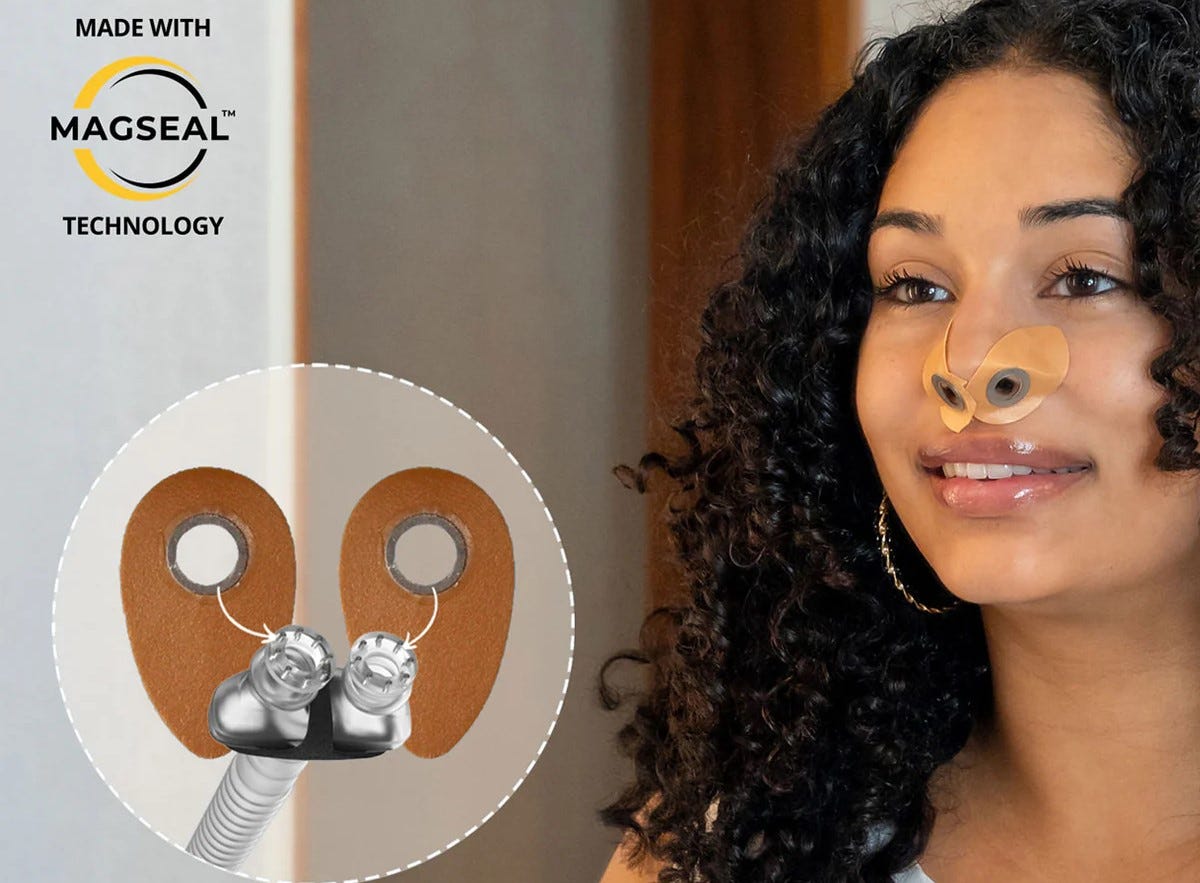
One of the most visible applications of magnetic technology in consumer healthcare is in CPAP mask design. Bleep Sleep’s Eclipse system uses a proprietary technology called MagSeal that connects the CPAP tubing to adhesive nasal ports through magnetic alignment. The user places the Halos adhesive pads around their nostrils, and the magnetic frame clicks into position on the stainless-steel rings embedded in the adhesive. The connection happens in under a second, requires no adjustment and holds securely throughout the night.
The MagSeal system was developed with funding from the National Institutes of Health and received FDA clearance under approval number K172335. In independent testing, the Eclipse achieved the lowest leak rate of any CPAP interface on the market at 1.680 L/min, suggesting that the magnetic seal actually outperforms traditional friction-based connections. For sleep apnea patients who struggle with the nightly ritual of adjusting straps and tightening headgear, the magnetic connection removes a significant barrier to therapy compliance.
Prosthetics and Orthotics
The prosthetics industry has embraced magnetic technology for attachment systems that replace traditional pin-lock and suction mechanisms. Magnetic suspension systems, such as those developed by Ottobock and Ossur, use rare-earth magnets embedded in both the prosthetic socket and the residual limb liner. The magnets create a secure, evenly distributed hold that is easy to engage and disengage. This is particularly valuable for upper-limb amputees who cannot use their other hand to operate a mechanical lock.
Research published in Prosthetics and Orthotics International found that magnetic suspension systems reduced socket pistoning, the movement of the residual limb within the socket, by up to 40% compared to pin-lock systems. This improves comfort, reduces skin irritation and enhances the natural feel of walking with a prosthetic.
Ostomy Care
Managing an ostomy pouch is one of the most physically and emotionally demanding aspects of living with a stoma. Traditional pouching systems use adhesive wafers that must be carefully aligned, pressed and held in place, then peeled off during changes. Magnetic ostomy systems, developed by companies like MagnetOstomy, use a magnetic ring around the stoma and a corresponding magnet in the pouch. The pouch clicks into place instantly and can be removed with a simple pull, dramatically simplifying daily pouch changes.
Early clinical trials have shown that magnetic ostomy systems reduce pouch change time by 60% and significantly decrease the incidence of skin irritation caused by repeated adhesive application and removal. For patients who change their pouch multiple times per day, this improvement in convenience and skin health is substantial.
Surgical Instruments and Implants
Inside the operating room, magnetic technology is enabling less invasive surgical techniques. Magnetic anchoring and guidance systems allow surgeons to control instruments inside the body using external magnets, reducing the number of incision points needed for laparoscopic procedures. Researchers at the University of Texas have developed magnetically steerable surgical cameras that can be positioned and repositioned from outside the patient’s body without requiring a dedicated port.
Magnetic implants are also gaining traction in orthopedic surgery. Growing rods for pediatric scoliosis correction now use magnetically adjustable mechanisms that allow physicians to lengthen the rod through the skin using an external magnetic controller, eliminating the need for repeated surgeries as the child grows.
Wearable Health Monitors
The wearable health technology sector is increasingly using magnetic clasps and attachment points for devices that need to be worn continuously but removed for charging or bathing. Continuous glucose monitors, ECG patches and pulse oximeters are incorporating magnetic charging stations that snap the device into perfect alignment with the charging contacts. This solves the common problem of devices failing to charge properly because they were not seated correctly in the cradle.
Some wearable devices are also using magnetic attachment directly to the body. Small neodymium magnets embedded in adhesive patches allow heart monitors and activity trackers to be repositioned on the skin without losing their connection to the base unit.
What Makes Magnetic Technology So Well-Suited to Healthcare
The common thread across all these applications is that magnets solve the same fundamental problem. They create secure, reliable connections without requiring manual dexterity, visual precision or mechanical force. In healthcare, where users may have tremors, limited hand strength, visual impairments or cognitive challenges, this simplicity is not a luxury. It is a clinical advantage that directly impacts adherence, safety and outcomes. As manufacturing costs for rare-earth magnets continue to decline and biocompatibility testing advances, expect magnetic interfaces to appear in an expanding range of medical devices over the coming years.
메타데이터
- post_id
- 3ed890777b60
- slug
- how-magnetic-technology-is-changing-medical-devices-in-2026-3ed890777b60
- url
- https://medium.com/@bleepsleep/how-magnetic-technology-is-changing-medical-devices-in-2026-3ed890777b60
- canonical_url
- https://medium.com/@bleepsleep/how-magnetic-technology-is-changing-medical-devices-in-2026-3ed890777b60
- author_url
- https://medium.com/@bleepsleep
- status
- ok
- fetched_at
- 2026-06-09 15:37:30