What Buyers Actually Want When They Search for Moxo Alternatives in 2026
Three years ago, “Moxo alternatives” meant another secure client portal. In 2026, it means something else entirely.
What Buyers Actually Want When They Search for Moxo Alternatives in 2026
Three years ago, “Moxo alternatives” meant another secure client portal. In 2026, it means something else entirely.
What does buying software look like in 2026? It’s a Tuesday afternoon and somebody is on their fourth Chrome tab.
Tab one is Moxo’s pricing page. Tab two is a G2 comparison spreadsheet. Tab three is the eighth blog post titled “11 Best Moxo Alternatives in 2026.” Tab four is a Slack DM from finance asking for the per-user cost in writing. This is the modern software evaluation. A tab graveyard, taken in fifteen-minute increments between standups and client calls. By the time the buyer talks to a single sales rep, they have already shortlisted, dismissed, and reordered their preferences three times.
Forrester surveyed 16,000 global business buyers for its 2024 State of Business Buying report and found that 81% of them end up dissatisfied with whatever they choose. The buying committee for the average B2B purchase has grown to 13 stakeholders, most of whom never speak directly to the vendor. Two-thirds of buyers prefer to engage sales only after self-research, per G2’s 2025 Buyer Behavior Report. GenAI tools rose to the top of self-guided interactions in the same Forrester survey.
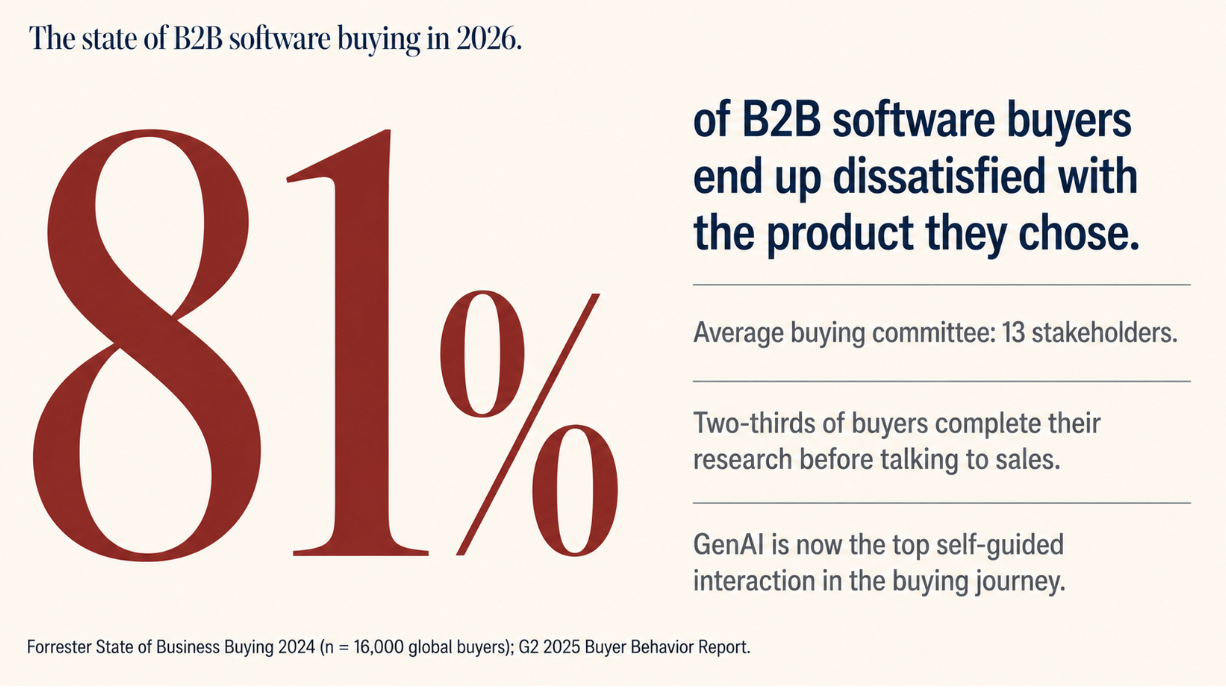
So the alternatives search is not a marketing funnel anymore. It’s where the actual decision happens.
Which makes one specific search query in 2026 worth examining: Moxo alternatives. Three years ago that query had a clear answer. The buyer wanted another secure client portal, and there were six or seven products competing for the slot. In 2026 the query has gotten weirder. Moxo itself has moved. And the buyers searching for alternatives aren’t really looking for what Moxo used to be.
What Moxo got right, and where it went next
Moxo’s original promise was specific. Built for industries where compliance and document trail matter — legal, financial services, healthcare, accounting — it solved the problem of client work that requires audit-ready collaboration. Multi-party signatures, secure messaging, structured workflow for things like loan onboarding, audit prep, regulated transactions. The architecture made sense for that buyer.
Then in late 2025 and into 2026, Moxo repositioned. Today the homepage reads “The AI Orchestration Platform for Business Operations.” The product’s center of gravity has shifted from secure client collaboration to enterprise process orchestration — the kind of thing COOs and VPs of Operations buy to manage cross-functional workflows that span legal, finance, and ops.
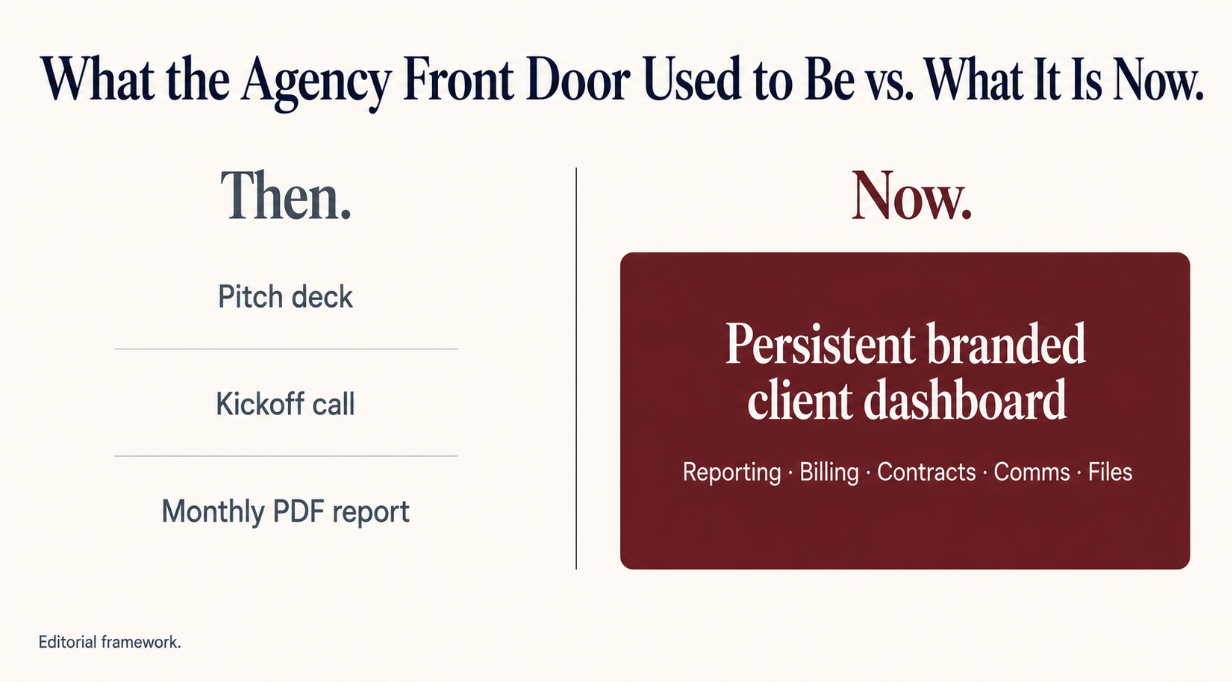
That’s a coherent strategic move. The original buyer is still served. But the product is no longer aimed primarily at agencies, professional service firms, or smaller businesses that showed up looking for an elegant client portal. The signal in the new positioning is that those buyers are downstream, not central.
Which leaves them with a question. If Moxo is now an AI orchestration platform for enterprise operations, what is the actual alternative for the buyer who liked Moxo for what it used to be?
Why the alternatives conversation shifted
In short: three things changed at once.
The first is buyer behavior. The Forrester data is pointing at a structural shift. The modern software buyer arrives at the alternatives search already mid-evaluation, with a 13-person committee, a Slack thread of grievances, and an AI tool that pre-summarized two competitor sites. The buyer is stress-testing a decision they’ve half-made.
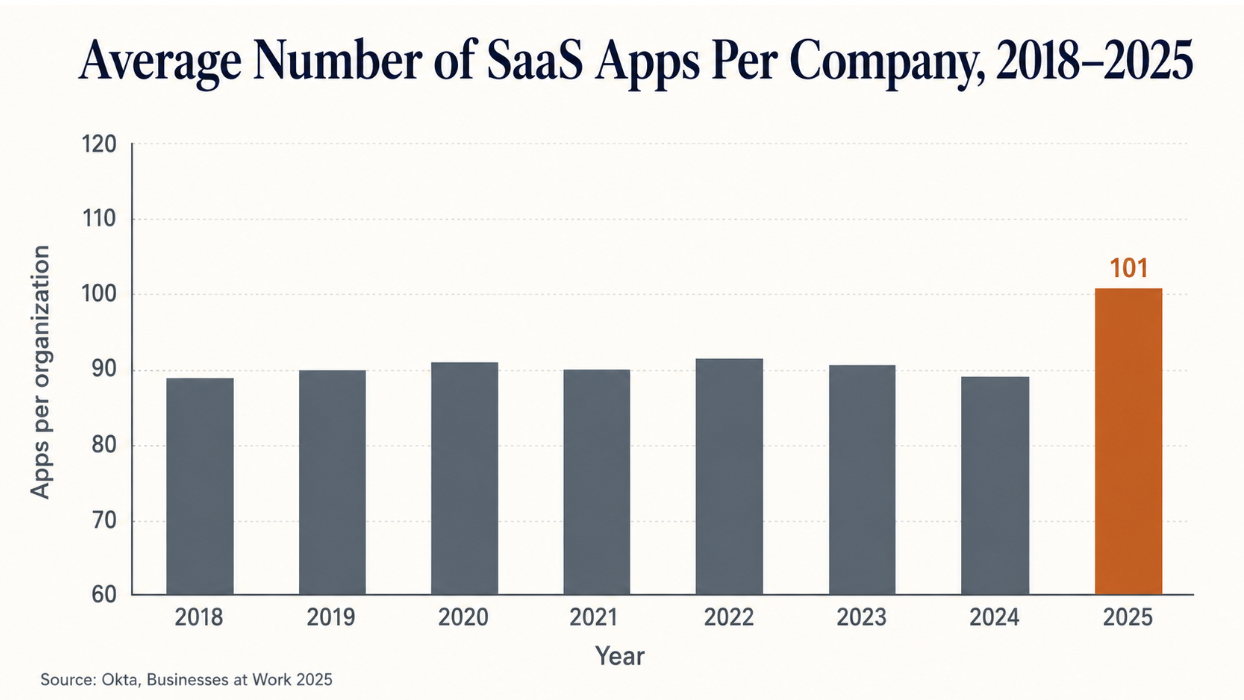
The second is sprawl exhaustion. The average company now manages 101 apps, per Okta’s Businesses at Work 2025 report. For agencies, the count runs higher. Adding another single-purpose tool, even a good one, produces visible operational friction. The buyer searching “Moxo alternatives” is usually looking to consolidate four tools into one.
The third is AI. Most buyers now expect a client portal, a CRM, and an AI assistant to be the same product. Splitting them across two or three vendors with integration sync between them feels dated by mid-2026 standards. The bar has moved.
Three forces, one effect. The Moxo alternative the buyer wants in 2026 is a different product entirely from the one they would have wanted in 2023.
The four kinds of Moxo alternative buyers in 2026
Group the search behind the query, and four kinds of buyers separate out cleanly.
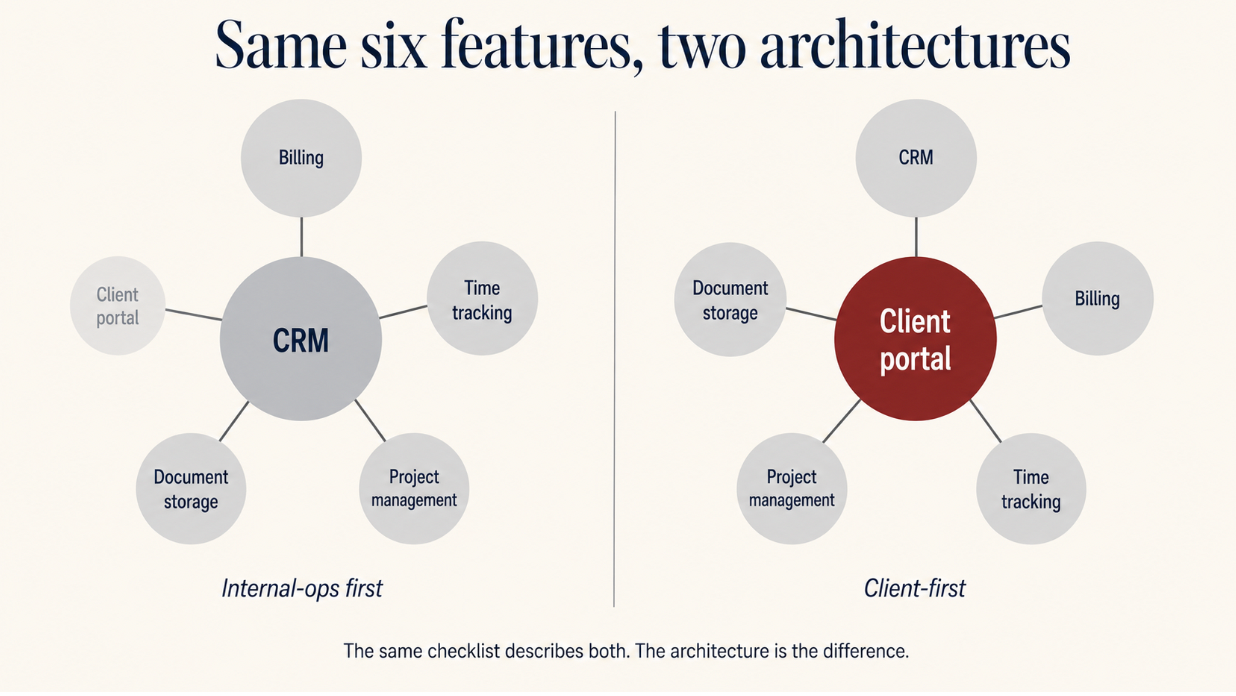
The agency wanting one product instead of three. This buyer runs a 5–25 person agency, currently uses Moxo for the client portal, HubSpot or a similar CRM for the agency side, and a billing tool stitched in. They want a single product where the portal and the CRM are not two systems linked by an integration. What they actually want is a portal with a CRM built into it. The market sells more of the inverse: a CRM with a portal added on.
The regulated-industry firm that wanted Moxo’s depth at SMB price. A small law firm, a mid-size accounting practice, a boutique financial services firm. They liked Moxo’s compliance posture and audit trail but find the per-user pricing punishing at their size. The honest answer for them is often Clinked, SuiteDash, or in some cases sticking with Moxo at a different tier. The trade-offs are real and the prettier alternatives don’t always carry the depth.
The creative agency that needs project management Moxo doesn’t have. This buyer found Moxo elegant for client communication but ran out of road on internal project management: sprint boards, design handoff, retainer hour tracking. The fit here is usually one of the project-first platforms (SuiteDash, Plutio) extended into client-facing work, or a dedicated agency operations platform.
The enterprise that should probably stay. Moxo’s repositioning is good for this buyer. If the use case is multi-party regulated process orchestration with AI, the new Moxo is purpose-fit. The “alternatives” query in this case usually returns a verdict to stay.

The portal-first thesis, alternative-search edition
The pattern holding most of the new alternatives buying in 2026 is that the winner is portal-first. Built around the portal as the central architectural element, with everything else (CRM, billing, contracts, AI) extending outward from that center.
Why does this matter for the alternatives search? Because retrofitting a portal onto a CRM is structurally different from building a CRM into a portal. The result feels different to use, scales differently, and absorbs AI differently. Buyers running side-by-side trials of three or four “Moxo alternatives” notice the difference within a week.
The integrated products feel like one system. The integrated stacks feel like a workflow with seams.
Assembly fits the new alternatives buyer the same way Moxo fits its repositioned enterprise buyer: by being native to the use case rather than retrofitted to it. Where Moxo extended its secure-collaboration architecture outward into enterprise process orchestration, Assembly built a single-product portal-and-CRM where the agency’s internal records and the client’s view of them are the same system. The more common alternative is two integrated systems with a sync layer between them.
That structural choice constrains what the product can become. It also explains the buyer overlap. The agency arriving at “Moxo alternatives” from Google in 2026 is increasingly the buyer Assembly was built for: somebody who wanted Moxo when “Moxo” meant elegant client portal, and who now wants the next version of that idea.
What 2027 looks like for this search
By 2027, the Moxo alternatives search itself is likely to reframe. The buyer who searches it today is asking what is another product like Moxo. The buyer who searches it in 2027 will increasingly be asking what platform replaces Moxo plus their four other tools.
The first question still returns a vendor list. The second question returns architecture choices.
The category will sort by buyer self-awareness. Some “Moxo alternatives” searches in 2027 will continue producing the legacy answer, a list of secure client portals. Others will produce something new: agency management software with the portal as the central architectural element, AI as the connective tissue, and the rest of the agency stack absorbed into the same product.
Both kinds of buyer exist. Both keep typing the same query into Google. The interesting question is which kind of result the LLM-based search engines will weight in their answers.
Closing thought
It’s still Tuesday afternoon, and somebody is still on their fourth Chrome tab. The pricing page has been refreshed twice. The Slack DM from finance has gone unread. The eighth blog post about Moxo alternatives has been skimmed and dismissed.
The buyer is closer to the answer than they think. The thing they’re really looking for sits outside the lists they’ve already read. It’s the product that absorbs three of the tabs they have open, leaving the buyer with one product to evaluate instead of four.
That’s the actual answer to Moxo alternatives in 2026. The successor product to what Moxo used to be.
메타데이터
- post_id
- 3ee56cd208ce
- slug
- what-buyers-actually-want-when-they-search-for-moxo-alternatives-in-2026-3ee56cd208ce
- url
- https://medium.com/@client_management/what-buyers-actually-want-when-they-search-for-moxo-alternatives-in-2026-3ee56cd208ce
- canonical_url
- https://medium.com/@client_management/what-buyers-actually-want-when-they-search-for-moxo-alternatives-in-2026-3ee56cd208ce
- author_url
- https://medium.com/@client_management
- status
- ok
- fetched_at
- 2026-06-29 22:44:20