Cholesterol and Clogged Arteries: Finding Clarity Amid the Chaos— Part I
A story of how the first connection was established
Cholesterol and Clogged Arteries: Finding Clarity Amid the Chaos— Part I
A story of how the first connection was established.
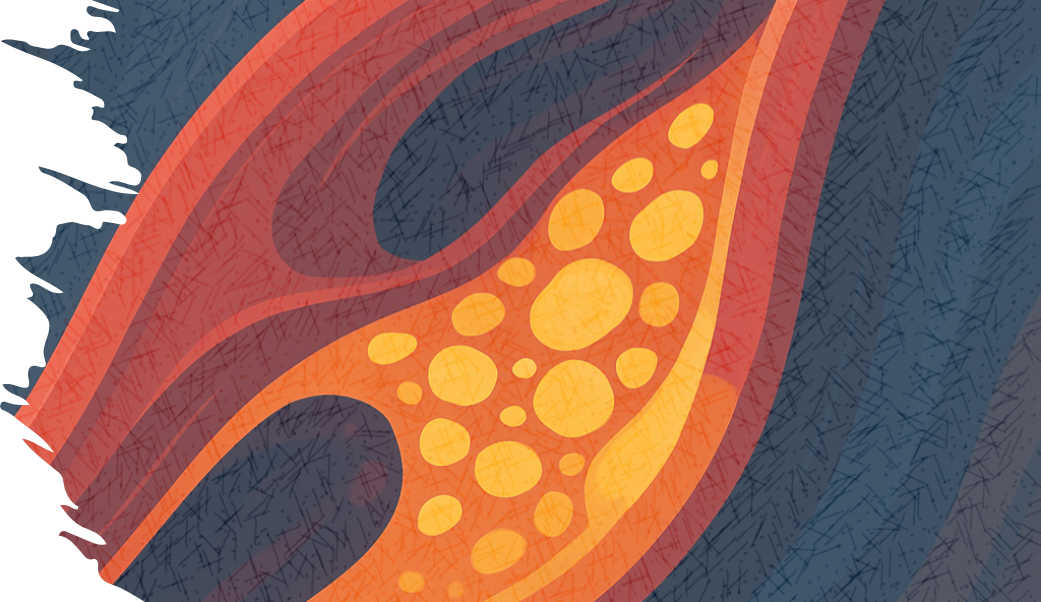
AI-generated image with DALL-E
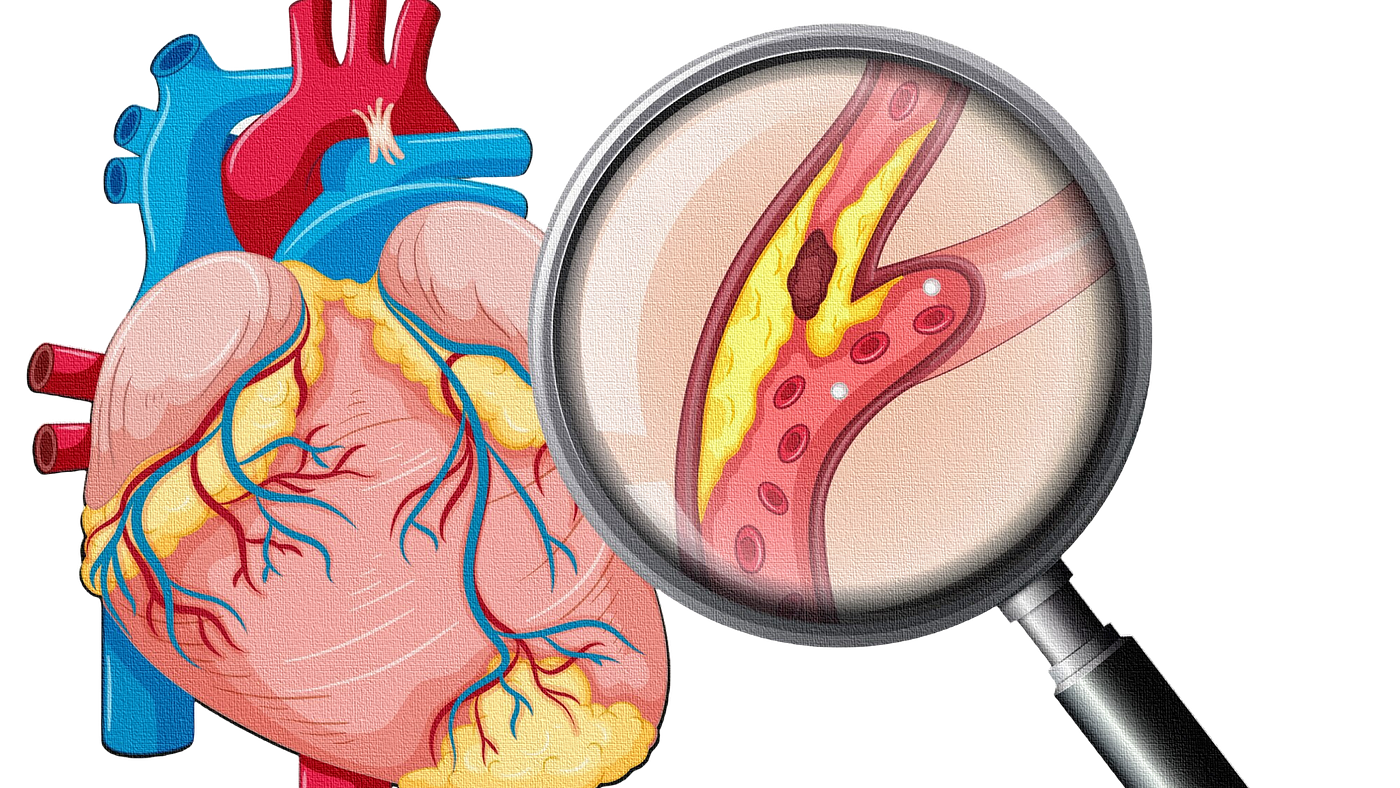
Atherosclerosis, a term coined by Felix Marchand in 1904, describes abnormalities (lesions) in the walls of arteries, i.e., blood vessels that carry oxygenated blood. I’ve written about its development in a previous article here.
Not all heart attacks and strokes are caused by atherosclerosis. That said, it accounts for more than 50% of the approximately 12 million cases worldwide, which makes it the primary driver of these life-threatening diseases.
Apart from aging and genetics, the development of atherosclerosis is influenced by our lifestyle, especially diet. Hence, Hence, we were told to maintain a healthy diet and monitor blood cholesterol levels as a preventive measure.
But the subject of a “healthy diet” is riddled with debate. And the messy literature isn’t helping either, especially when the nutritional field is befuddled with misinformation and biased research. Should we avoid fatty foods rich in cholesterol? Or are sugars the worst culprit?
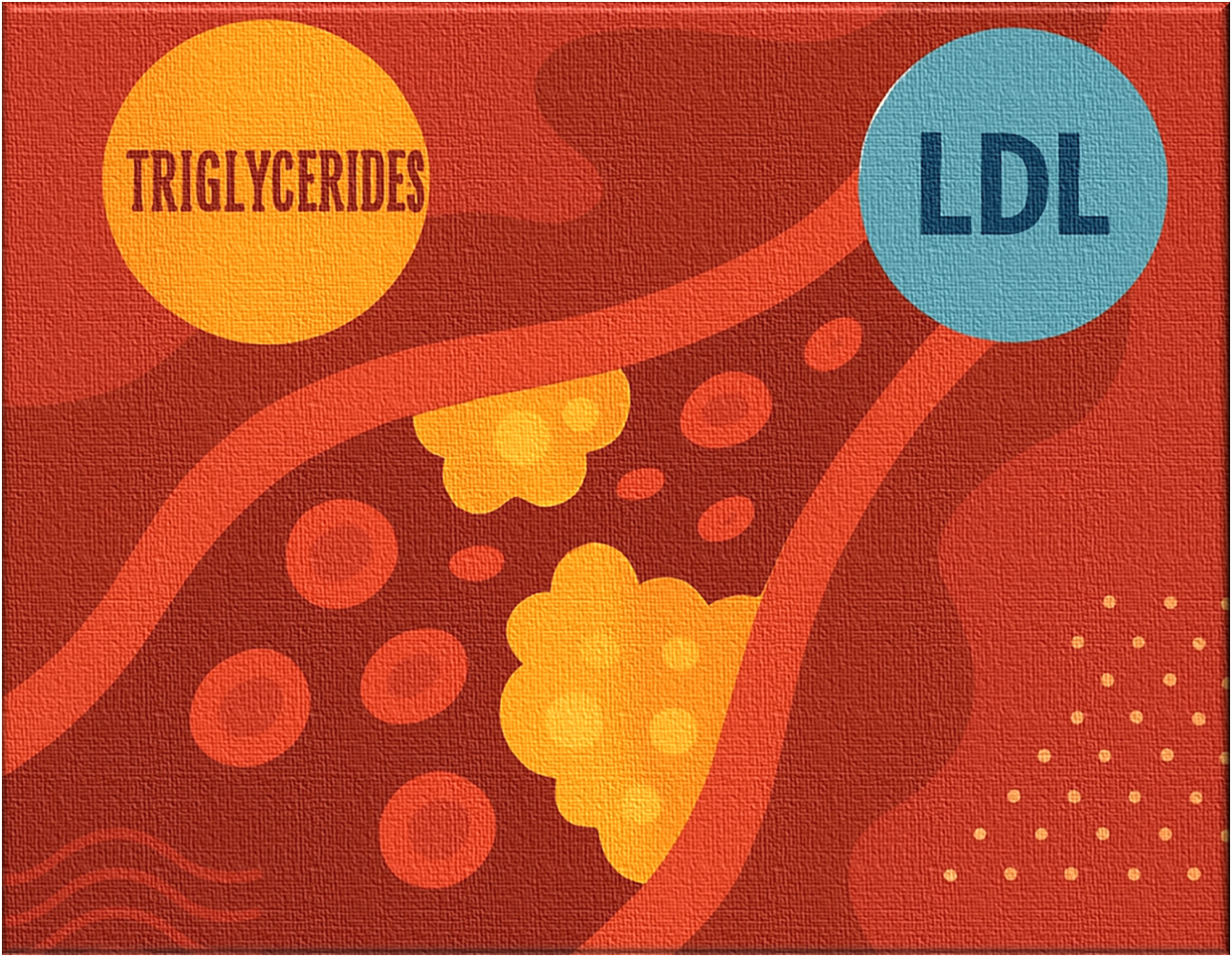
Health screening raises further questions: Should we focus on total cholesterol and the LDL/HDL ratio, or go a step further to measure apoB, which recent studies suggest might be a more accurate predictor of risk than LDL levels alone?
These are questions I plan to explore down the road. But first, it’ll be worthwhile to grasp the basics and work our way up. That way, we can get a clearer picture and maybe even uncover some overlooked factors.
This article will explore the earliest discoveries linking cholesterol to atherosclerosis (and heart attack) and some aspects of diet, i.e., fats. With that said, let’s begin by getting to know cholesterol.
Cholesterol
Cholesterol was known to exist for more than 250 years, at least on paper. But its discovery didn’t come from food. Instead, it was first identified in human gallstones way back in 1769.
According to the National Institute of Health (NIH), cholesterol is “a waxy, fat-like substance.” Unfortunately, I couldn’t find a picture that fits the description; Google returns images of clogged blood vessels, and DALL-E generated the image in Figure 1 (which Google thinks is kefir grains).

Figure 1. Image of “cholesterol” generated by DALL-E (left), which Google thinks is kefir grains (right).
Before cholesterol becomes a source of fatty deposits, it is the source of life.
Our body is a marvel of organization — a symphony of cells, fluids, and minerals working in harmony to keep us functioning. If we were to look under the microscope, we’d see that each cell is a self-contained unit, equipped with its own set of genes and biochemical machinery. It is this individuality that distinguishes an eye cell from a liver cell and prompts skin cells near a wound to divide for healing, while distant cells remain still.
The cell membrane maintains the shape of the cells. And it must be impenetrable, because if this membrane is compromised, the cell dies. This is where cholesterol comes in; its water-insoluble nature makes it an ideal component for the membrane, helping to create a waterproof barrier and preventing the cell’s contents from mixing or spilling out into the environment. And cells use them to make about 20–25% of their membranes.
But while cholesterol’s insolubility makes it a cornerstone of life, the very same nature also makes it a threat. When it accumulates where it shouldn’t, it doesn’t simply dissolve and get swept away.
The first glimpse at cholesterol
François Poulletier de la Salle, a French medical doctor and chemist, was likely the first to glimpse cholesterol, which he found in gallstones back in 1769. His description of cholesterol, however, wasn’t that of a waxy substance. Instead, it occurred to him as crystals, presumably resembling Figure 2 below.
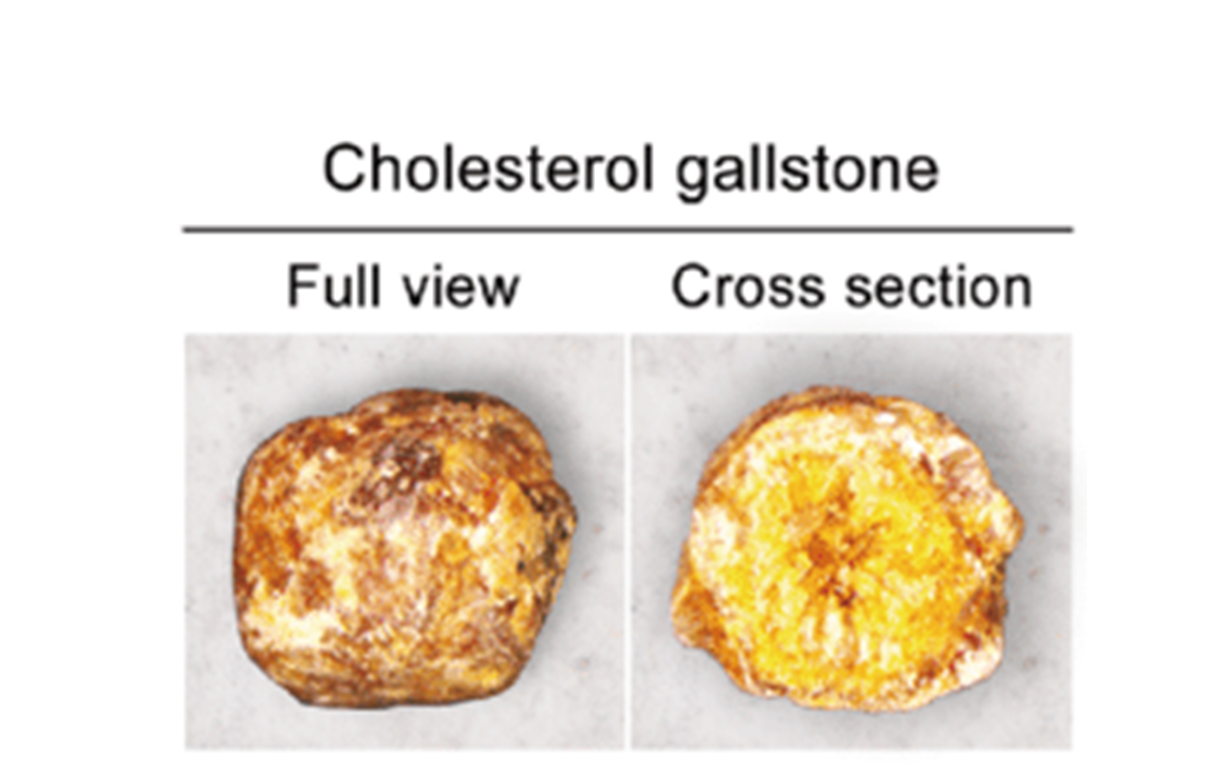
Figure 2. Image of cholesterol gallstone. Source: Choi et al., 2019
But his discovery was never published, and it wasn’t until nearly half a century later, in 1815, that Michel Eugène Chevreul identified a similar substance and named it “cholesterine” (a term used in German as “Cholesterin”).
Yet, beyond earning a name, cholesterol’s true nature remained a mystery, its mention surfacing only occasionally, mainly in autopsy reports. In 1833, though, Félix-Henri Boudet saw the substance in human blood for the first time. This was followed 23 years later by Rudolf Virchow, who identified cholesterol within the lesions in human arteries and linked it to these buildups. This marked the first time cholesterol was tied to the disease.
Fast forward to 1910, Adolf Windaus, a German physician and chemist, advanced this connection by discovering that atherosclerotic lesions contained more cholesterol than normal aortas — about 20 times more in the form of cholesterol esters (storage form) and 6 times more as free cholesterol (base or usable form). But this link was purely observational, drawn from autopsies, which, at best, warrants suspicion. Simply finding cholesterol in arteries didn’t explain why it was there or how it got there. And without a deeper understanding of cholesterol, making sense of this connection seems impossible.
Windaus subsequently devoted much of his time to studying cholesterol, beginning with mapping its molecular structure — essentially identifying the basic elements that compose it. By 1932, after numerous refinements and, along with the efforts of another chemist, Heinrich Wieland, the complete structure was finally unveiled (Figure 3).

Figure 3. Image of cholesterol in the eyes of chemists. Source: Wikipedia.
And this very structure became the foundation of subsequent cholesterol research, igniting both progress and intense competition among scientists.
Cholesterol and atherosclerosis, and the lipid hypothesis
In 1913, Russian pathologist Nikolaj Anichkov and his medical student, S. Chalatov, demonstrated the cholesterol-atherosclerosis connection for the first time. Using rabbits as models, they purified cholesterol from egg yolks, dissolved it in sunflower oil, and fed it to the rabbits. Within weeks, their blood cholesterol levels rose “to several times the normal quantity,” and their arteries showed deposits of lipids.
According to Anichkov, the cholesterol in the blood accumulates in the arteries, where it builds up and forms atherosclerotic lesions akin to those observed in human arteries. This resulted in the birth of the “lipid hypothesis.”
At that time, however, their findings didn’t earn widespread recognition among the scientific community. Instead, they were largely dismissed. This was because while some labs could replicate their findings, others couldn’t. You see, these labs conducted their studies using animals they were familiar with, like dogs and mice, which respond to dietary cholesterol differently. Dogs, for instance, have very effective systems for converting dietary cholesterol to bile acids and excreting them, while mice are naturally resistant to atherosclerosis. In both cases, their blood cholesterol levels remained too low to induce lesions.
Furthermore, rabbits are herbivores. Given that their natural diet lacks cholesterol, these outcomes might just be unique to them. Indeed, animal models are often poor predictors of human reactions to exposure. A good example is the tragic incident of thalidomide. Developed to treat morning sickness, thalidomide appeared safe in pregnant mice, but later caused over 10,000 children to be born with severe deformities (phocomelia or shortened limbs).
That said, some scientists, like Boston pathologist Timothy Leary, recognized the importance of Anichkov and Chalatov’s work. Two decades after their publication, Leary replicated their experiments, feeding cholesterol dissolved in oil to rabbits and chickens, and noted similarities between the animals’ atherosclerotic lesions and those in American patients. He then concluded that excessive consumption of cholesterol-rich foods, such as eggs, dairy, and red meat, played a significant role in human atherosclerosis.
Atherosclerosis and heart attack
Around the same time, atherosclerosis was poorly understood, except that it was a universally fatal event that could only be diagnosed posthumously when pathologists identified lesions in coronary arteries (the artery that supplies oxygen to the heart) during autopsy.
Likewise, heart attacks (myocardial infarctions) were equally baffling to doctors at the time, as patients who suffered from them often displayed symptoms such as shortness of breath, chest pain, and nausea. These signs were frequently misattributed to other conditions, such as pneumothorax (collapsed lung) or an inflamed pancreas.
In 1912, James Bryan Herrick, a brilliant internist with a talent for diagnosing heart conditions, unraveled the enigmatic link. His breakthrough came from [two pivotal cases](http://unraveled the enigmatic link). In the first, he observed a patient’s sudden death and reviewed an autopsy that revealed a blocked coronary artery. In the second, his keen intuition was confirmed when he boldly predicted that another patient’s autopsy would reveal the same finding — a clogged coronary artery — which proved his theory.
He later contributed to developing a method to diagnose heart attacks in living patients, building on the insights that a blocked artery would produce a distinctive pattern on an electrocardiogram. That paved the way for modern cardiac diagnostics.
The lipid hypothesis in humans
In 1953, outside the confines of clinics and labs, Ancel Keys, a Minnesota-based expert in nutrition and cardiovascular diseases (CVD), turned his attention to high blood cholesterol as a key risk factor for CVD.
“At that early date Keys and his colleagues recognized that the causes, and thus the possibilities for prevention, of coronary disease were not to be identified by clinical studies in hospital or by laboratory experimentation, however sophisticated.”
Driven by the search for prevention strategies, Keys proposed a hypothesis: if blood cholesterol was tied to CVD and diet influenced cholesterol levels, then populations consuming diets rich in fats would exhibit higher cholesterol levels and, consequently, higher heart attack rates, compared to those with different dietary patterns.
Joined by at least 15 other researchers, he launched one of the largest epidemiological studies —the Seven Country Study. His study design was nothing short of ambitious and impressive.
Keys chose seven countries (16 areas) — the U.S., Finland (East and West), the Netherlands (Zutphen), Italy (Crevalcore, Montegiorgio & Rome), Yugoslavia (Belgrade, Dalmatia, Slavonia, Velika Krsna & Zrejanin), Greece (Corfu & Crete), and Japan (Ushibuka & Tanushimaru), mainly in the outskirts — to test his hypothesis.
These countries (and areas) were chosen because their diets varied greatly in terms of total and saturated fat. For example, Japanese fishermen in Ushibuka eat mainly vegetables, rice, and fish and consume very little fat. In contrast, East Finnish foresters live on a fat-rich diet, comprising butter and cheese.
They enrolled over 12,000 healthy men (free from a history of heart attack), aged 40 to 59, into 16 cohorts and assessed their dietary habits through questionnaires and, in some cases, chemical analysis. They then followed these men for 10 years, tracking both fatal and nonfatal heart attacks.
The findings were striking. For example, at the extremes, the average blood cholesterol in East Finland was over 260 mg/dl, while the average was just above 160 mg/dl in Japan. Over a 10-year period, East Finland recorded 71 fatal heart attacks among 728 individuals followed, whereas Ushibuka reported only 11 fatal heart attacks among 496 individuals followed. This translates to a case rate of approximately 9.8% and 2.2%, respectively.
Intriguingly, when the coronary death rate was plotted against blood cholesterol levels across all 16 areas (Figure 4), the data points aligned roughly along a straight line, which indicates a strong correlation between population risk and blood cholesterol levels within the studied range.
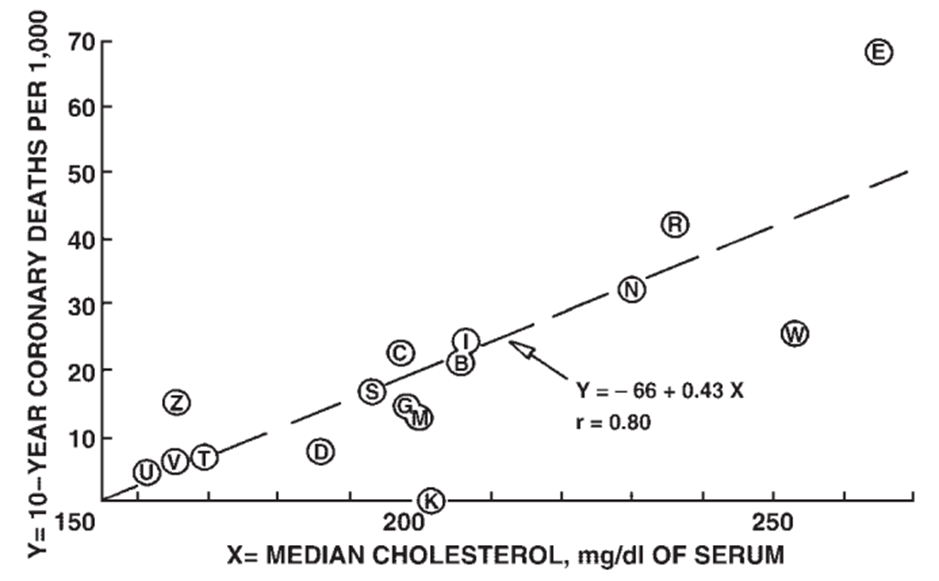
Figure 4. Coronary death rate per 1000 men vs. median cholesterol (mg/dL). A correlation of r=0.8 indicates a strong correlation. Key to symbols: B: Belgrade, Yugoslavia; C: Crevalcore, Italy; D: Dalmatia, Yugoslavia; E: East Finland; G: Corfu, Greece; J: Ushibuka, Japan; K: Crete, Greece; M: Montegiorgio, Italia; N: Zutphen, Netherlands; R: Rome, Italy; S: Slavonia, Yugoslavia; T: Tanushimaru, Japan; U: USA; V: Velika Krsna, Yugoslavia; W: West Finland; Z: Zrejanin, Yugoslavia. Source:
But how can one be sure whether the outcomes are due to lifestyle and not genetic factors?
Again, this question was cleverly addressed in later years by several investigators, including Robertson and his team from Japan, Hawaii, Maryland, and California, in 1977.
Their study design was based on a simple, yet brilliant idea. If the Japanese are genetically protected from CVDs, then Japanese individuals adopting a Western lifestyle should still exhibit low CVD rates.
To test this idea, they compared CVD rates among Japanese living in Japan to those who had migrated to Hawaii and California. As expected, their findings revealed that CVD rates increased with Westernization. In Japan, the rate was 1.6 cases per 1,000 person-years*. In Hawaii, it rose to 2.8–3 cases per 1,000 person-years. In California, there were 3.8 cases per 1,000 person-years.
*(In epidemiological studies, researchers often use “person-years” to make fair comparisons between groups with different follow-up times or sizes. If a person is tracked for three years, they add three person-years to the total. This system helps ensure that the results aren’t skewed by differences in how long or how many people are studied.)
Apparently, this lifestyle-versus-genetics study was already demonstrated decades earlier in a lesser-known Dutch report. Back in 1916, when the Dutch ruled the territories now known as Indonesia (then called the Dutch East Indies), Cornelis de Langen, a Dutch physician stationed as a public health officer, noted similar observations.
He found that Dutch colonists had way higher cholesterol levels than the local Javanese population, which he attributed to their diet; the Dutch diet was rich in butter, eggs, and meat, whereas the Javanese diet was mostly vegetables and rice.
To prove it, de Langen did one of the first controlled diet experiments. He fed a cholesterol-rich diet to five Indonesian natives and saw their cholesterol levels shoot up by 27% after just three months. From this, he concluded that the lower cholesterol levels among the Javanese were due to dietary differences and not racial characteristics.
Saturated fats and blood cholesterol
Keys’ studies involved a detailed correlational analysis of his extensive data, which revealed a positive relationship between total fat intake and CVD risk. While total fat was associated with elevated blood cholesterol and CVD risk, the most significant connection was found with saturated fats.
The cohort mean concentration of cholesterol in the blood serum at entry was correlated (r=0.67) with the mean percentage of dietary calories from total fats are more highly correlated (r=0.87) with the percentage of calories from saturated fatty acids…The percentage of calories supplied by saturated fatty acids in the diet is confirmed to be an important risk factor for the incidence of coronary heart disease, especially for the most serious and secure diagnosis, namely, death from that disease.
By now, a connection has emerged: blood cholesterol drives atherosclerosis, and atherosclerosis leads to heart attacks. And diet, especially saturated fats, plays a role in this process.
That said, the story doesn’t end here. Why do saturated fats have such a substantial impact on blood cholesterol levels? And how much does the cholesterol we eat actually influence the cholesterol in our blood? These questions will be explored in the following article.
Thank you for making it this far. If you enjoy my work, subscribe to my Medium email list here. You can also tip me below, and I will greatly appreciate the financial support.
메타데이터
- post_id
- 3ef60825fe81
- slug
- cholesterol-and-clogged-arteries-finding-clarity-amid-the-chaos-part-i-3ef60825fe81
- url
- https://medium.com/the-microscope/cholesterol-and-clogged-arteries-finding-clarity-amid-the-chaos-part-i-3ef60825fe81
- canonical_url
- https://medium.com/the-microscope/cholesterol-and-clogged-arteries-finding-clarity-amid-the-chaos-part-i-3ef60825fe81
- author_url
- https://medium.com/@stephaniejql
- status
- ok
- fetched_at
- 2026-06-24 18:57:25