The Energy Crisis Didn’t Change the Game — It Revealed It
And in Illinois, the future might already be built
The Energy Crisis Didn’t Change the Game — It Revealed It
And in Illinois, the future might already be built
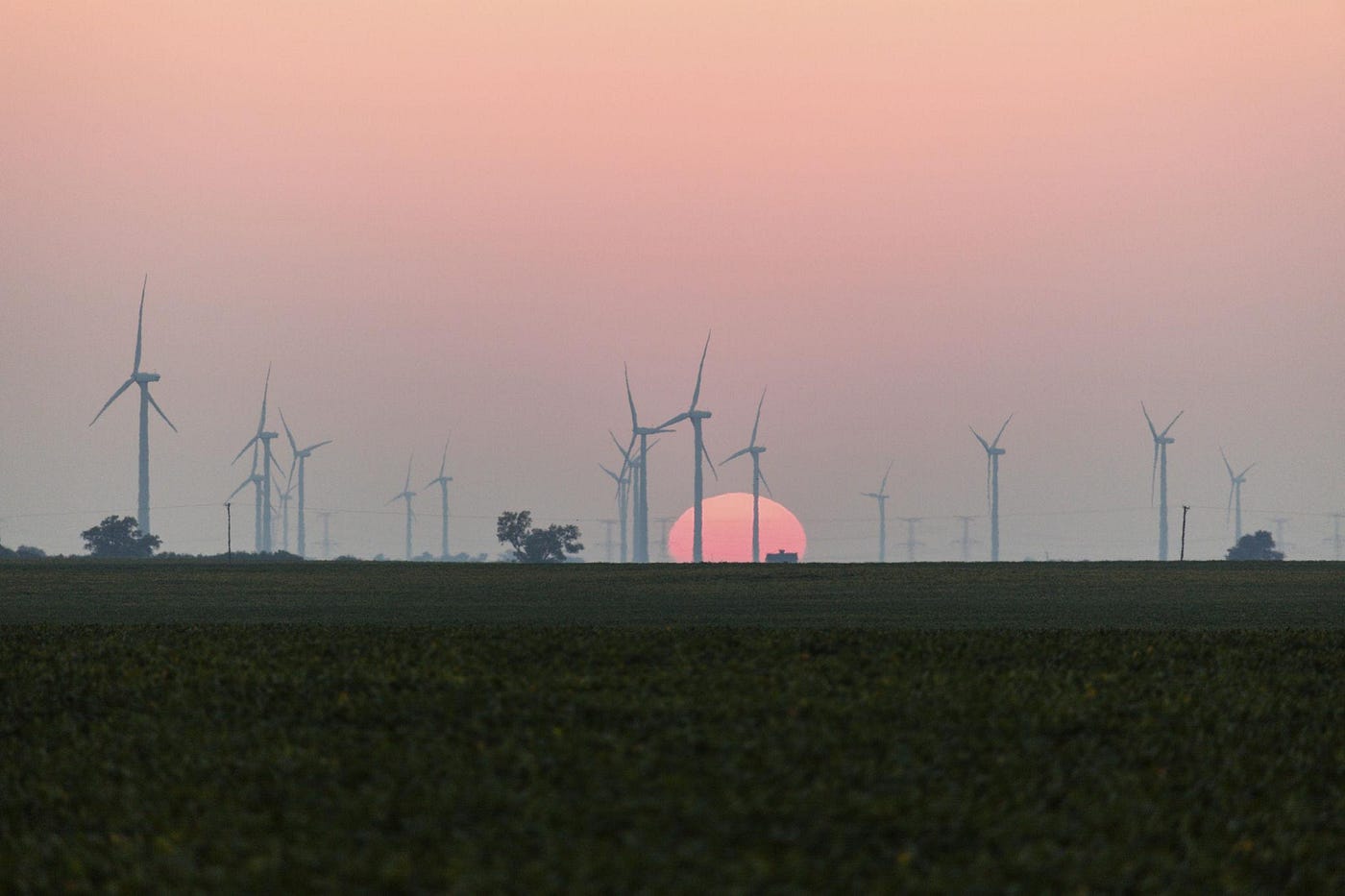
Photo by BlackBox (@blackboxvlogs) on Unsplash
There’s a version of this story where everyone loses.
Oil gets disrupted. Prices spike. Supply tightens. Another global shock, another round of panic.
We’ve seen it before. We’ll see it again.
But that version misses something.
Because what’s happening right now isn’t just an energy crisis.
It’s a frame shift.
The System Was Always Fragile
For decades, the case for clean energy sounded familiar.
Climate. Emissions. Sustainability.
Important, yes — but also easy to delay. Easy to debate. Easy to file under “we’ll get there eventually.”
Now?
That argument just got replaced in real time.
Clean energy isn’t being sold as climate anymore. It’s being sold as resilience.
Because when a single chokepoint — the Strait of Hormuz — can choke off a fifth of the world’s oil supply, the problem isn’t just environmental.
It’s structural.
A modern economy that depends on tankers clearing a military bottleneck isn’t just inefficient.
It’s exposed.
“A modern economy that depends on tankers clearing a military chokepoint is grossly exposed.”
And once you see that, you can’t unsee it.
The Shift Was Already Happening
What’s striking isn’t just the crisis.
It’s how quickly everything else is aligning around it.
Capital isn’t waiting for permission anymore.
- $2.3 trillion flowed into energy transition investment in 2025
- Grid investment alone hit $483 billion
- Clean energy ETFs surged dramatically in the wake of disruption
That’s not ideological momentum.
That’s money recognizing a vulnerability and moving to solve it.
Because the real takeaway isn’t “oil is expensive.”
It’s this:
👉 Oil is unstable in a way modern economies can’t afford.
The Transition Was Never About One Thing
Maybe that’s the biggest misconception in the entire debate.
For years, people treated the energy transition as if it were primarily an environmental project.
Reduce emissions.
Protect the climate.
Build a more sustainable future.
Those goals still matter.
But history suggests something else is happening too.
Major energy transitions rarely occur because societies collectively decide to do the right thing.
They happen because old systems become less practical than the alternatives.
Wood gave way to coal.
Coal gave way to oil.
Horse-drawn transportation gave way to automobiles.
Not because people voted for change.
Because the new systems eventually proved more useful.
More scalable.
More resilient.
That’s what makes this moment so interesting.
The question is no longer whether clean energy is better for the climate.
The question is whether modern economies can continue depending on systems that repeatedly demonstrate how vulnerable they are to conflict, disruption, and instability.
Investors seem to have already reached a conclusion.
After all, money doesn’t have political opinions.
Capital doesn’t care about culture wars, cable-news debates, or ideological labels.
It cares about risk.
And increasingly, risk is what this story is about.
Not the risk of what happens if the world changes.
The risk of what happens if it doesn’t.
And Then There’s Illinois
This is where the story gets interesting.
Because while the world is reacting to this shift —
Illinois is already sitting inside it.
Quietly.
Without much fanfare.
Illinois doesn’t run like most states.
Its electricity mix is dominated by nuclear, backed by growing renewables, with fossil fuels making up a smaller share than many parts of the country.
Which means something subtle, but important:
👉 Illinois already runs on a system that is less dependent on global oil movement
That doesn’t mean it’s immune.
Gas prices will still rise. Flights will still get more expensive. Supply chains will still ripple.
But at the level that actually keeps a modern economy functioning — electricity, infrastructure, baseline energy supply —
Illinois is operating on a different foundation.
The World Is Moving Toward Illinois (Not the Other Way Around)
What the crisis is doing is accelerating three things at once:
- Nuclear is being reframed as energy security
- Solar and wind are becoming economic defenses, not just climate tools
- Electric vehicles are turning into a way to opt out of oil volatility entirely
And all three point in the same direction:
👉 Less dependence on fuels that have to cross oceans 👉 More reliance on energy that can be generated locally
That’s the shift.
And Illinois is already halfway there.
The EV Layer: Where It Gets Personal
This is where the abstraction breaks down into real life.
Because transportation is still tied to oil.
And when oil becomes unstable, that’s when behavior changes.
Electric vehicles stop being a “future choice” and start becoming something else:
👉 A hedge.
Not just against emissions — but against price swings, supply shocks, and geopolitical risk.
And in a state where electricity is largely nuclear-powered?
That shift carries a different weight.
Switching to electric isn’t just going green.
It’s stepping out of a system that just proved how fragile it is.
Even Nuclear Looks Different Now
For years, nuclear energy sat in a strange place.
Too expensive. Too controversial. Too slow.
Now?
It’s being reconsidered through a different lens:
👉 Stability.
Because nuclear doesn’t rely on shipping lanes. It doesn’t depend on global fuel flows in the same way oil does.
It just runs.
And as investment starts flowing into next-generation nuclear technologies — public markets, private capital, IPO pipelines —
you start to see something else:
👉 The world is investing in the thing Illinois already has.
This Isn’t About Winning
Let’s be clear.
Illinois isn’t “winning” an energy crisis.
No one is.
Costs still rise. Markets still react. People still feel it.
But there’s a difference between being hit by a shock —
and being structurally exposed to it.
And what this moment is revealing is that those aren’t the same thing.
The Part No One Says Out Loud
For years, the energy transition was framed as a moral choice.
Something we should do.
Something we’d get to.
Something that made sense eventually.
Now?
It’s starting to look like something else entirely
“The alternative is to build energy systems that can’t be shut down by war.”
That’s not a climate argument.
That’s a survival argument.
The Real Takeaway
The crisis didn’t create a new path.
It exposed the one we were already on.
And in at least one place in the U.S., that path isn’t theoretical.
It’s already built.
Not perfectly. Not completely.
But enough to see where this is going.
Because the question isn’t just:
👉 How do we respond to this crisis?
It’s:
👉 What kind of system doesn’t break when it happens again?
And for once —
Illinois might actually have an answer.
메타데이터
- post_id
- 3f267a78657f
- slug
- the-energy-crisis-didnt-change-the-game-it-revealed-it-3f267a78657f
- url
- https://medium.com/the-prairie-dispatch-in-the-land-of-lincoln/the-energy-crisis-didnt-change-the-game-it-revealed-it-3f267a78657f
- canonical_url
- https://medium.com/the-prairie-dispatch-in-the-land-of-lincoln/the-energy-crisis-didnt-change-the-game-it-revealed-it-3f267a78657f
- author_url
- https://medium.com/@annalkuyperbellettiere
- status
- ok
- fetched_at
- 2026-06-16 19:09:56