Best Proxies for Ad Verification: Top Picks That Actually Work
Ad fraud is no longer a minor inconvenience. It has grown into one of the most damaging problems in digital advertising, costing businesses…
Best Proxies for Ad Verification: Top Picks That Actually Work
Ad fraud is no longer a minor inconvenience. It has grown into one of the most damaging problems in digital advertising, costing businesses billions every year. Fake impressions, misplaced ads, bot traffic, and click hijacking are just some of the ways fraudsters drain advertising budgets without delivering any real results.
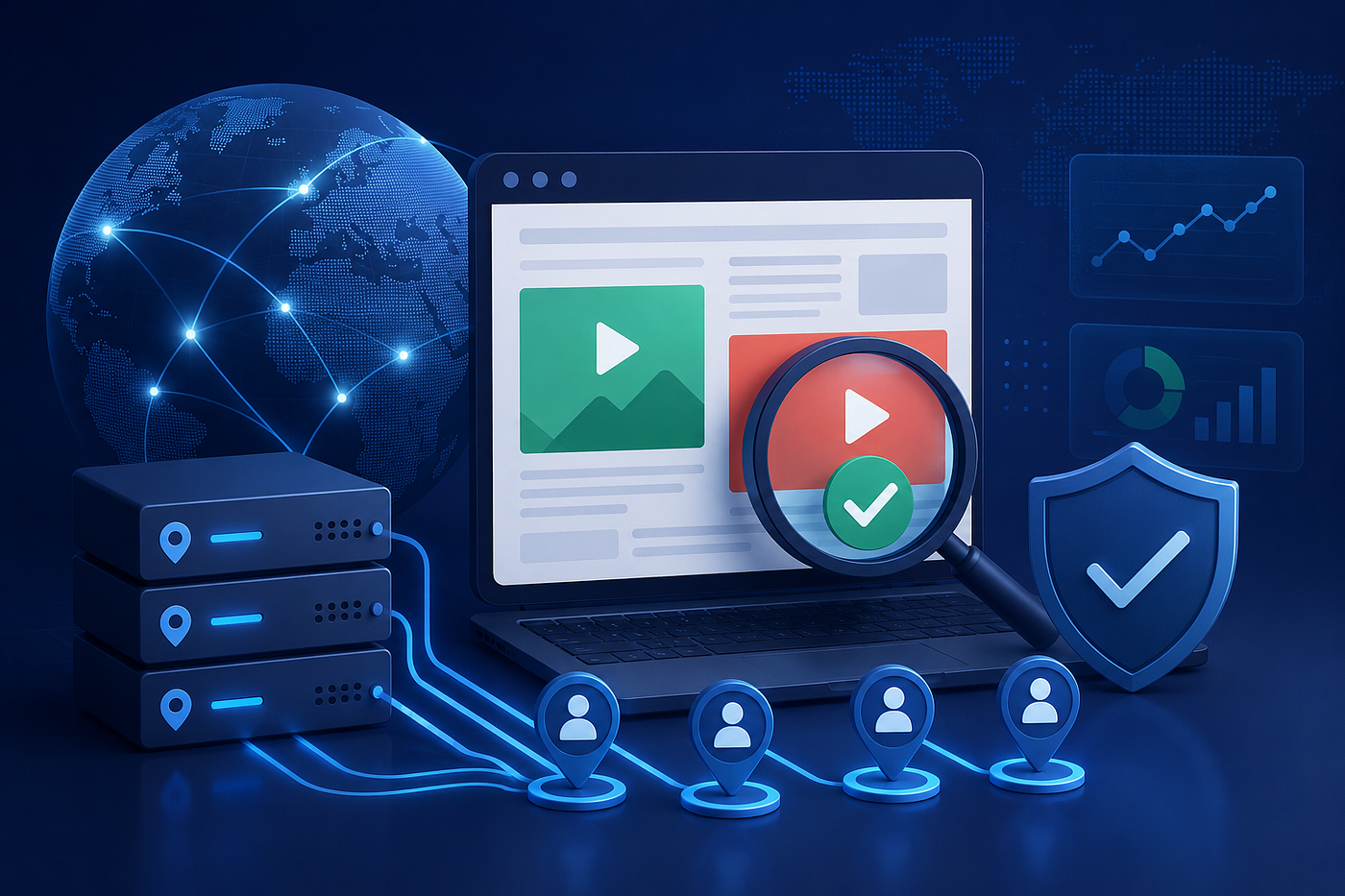
Ad verification is the process that helps advertisers fight back. It involves checking whether an ad appears on the right website, in the right location, and in front of real human users. The challenge, however, is that fraudsters are well aware of verification efforts and actively block known verification IPs.
That is exactly why proxies play a central role in this process.
Why Proxies Matter for Ad Verification
Scammers frequently blacklist the IP addresses of verification tools and scripts. Without proxies, any automated check would be blocked before it could gather useful data.
Residential proxies solve this by routing traffic through IPs assigned to real devices by internet service providers. To any website or ad network, the request looks like it is coming from an ordinary user browsing from home. That makes it far harder to detect and block the verification activity.
There are three main ways proxies support ad verification work. First, they allow checking ad redirect chains to catch click hijacking, where users get sent to fraudulent pages. Second, they make it possible to verify how ads appear across dozens of countries simultaneously, which matters for global campaigns. Third, they help confirm location targeting accuracy by simulating access from the exact regions an ad is supposed to serve.
What to Look for When Choosing a Proxy Provider
Not every proxy service is built equally for ad verification. A few things are worth keeping in mind before committing to a provider.
Residential proxies are the right type for this use case. Datacenter IPs are too easy to detect and block, making them unreliable for verification tasks. Location coverage is another key factor since ad campaigns often run across multiple regions, and the proxy pool needs to match that scope. Pool size and IP quality determine whether connections will hold up under repeated use. Granular targeting down to the city or ZIP code level is also valuable when verifying location-specific ad placements.
Top Proxy Providers for Ad Verification
1. Decodo
Decodo stands out as the strongest overall choice for ad verification work, particularly for teams that want solid performance without an enterprise-level price tag. The network holds over 155 million residential IPs spread across more than 195 countries, with targeting options that go down to the ZIP code level. Response times are fast, and the success rate sits at around 99.68%, which is among the best in the industry.
Setup is straightforward, and the platform comes with thorough documentation, a browser extension, and round-the-clock customer support. Pricing starts from $3.50 per GB, and a 3-day free trial is available for those who want to test before committing.
2. Oxylabs
Oxylabs consistently ranks as a top-tier option for professional and enterprise-level ad verification. The residential proxy pool covers over 100 million IPs across every country in the world, with location targeting that goes down to city, ASN, ZIP code, and even geographic coordinates. The response time is around 0.41 seconds, making it one of the fastest options available.
It is not the cheapest service on the market, with plans starting at $6 per GB. However, for teams running large-scale verification across multiple global markets, the reliability and targeting precision make the investment worthwhile. A 7-day free trial is available for business accounts.
3. Webshare
Webshare is a well-rounded option that serves both smaller operations and mid-range outfits. The proxy pool includes over 80 million IPs with coverage across 195 countries. Infrastructure reliability is strong, with a success rate of around 99.58%. The platform integrates easily through an API and also offers a browser extension for quick manual checks.
The main limitation is that location targeting only goes down to the country level, which may not be sufficient for campaigns with very specific regional requirements. Pricing starts at $3.50 per GB, making it one of the more accessible options in the market.
Other Notable Proxy Providers
Beyond the top three, a few other providers are worth considering depending on specific needs.
Bright Data is one of the largest proxy services in the world and offers an extensive set of tools alongside its 72 million residential IPs. It supports targeting by country, city, ASN, ZIP code, and operating system. The platform is feature-rich but comes with a steeper learning curve and higher pricing, starting at $8.40 per GB.
SOAX offers a pool of 155 million addresses with flexible targeting by country, city, and ASN. One distinguishing point is that ASN targeting is included without additional charges. Plans start at $4 per GB, and a 3-day trial is available.
IPRoyal provides a budget-friendly entry point with 32 million IPs across 195 locations. Traffic does not expire, which is a convenient feature for teams that do not use up their allowance quickly. Pricing begins at $7 per GB.
FAQ
What type of proxy is best for ad verification?
Residential proxies are the best choice for ad verification. Since they use IP addresses assigned to real devices by internet service providers, they appear as regular user traffic to ad networks and fraudulent websites. This makes them far harder to detect and block compared to datacenter proxies, which are commonly flagged and banned. For teams verifying ads across multiple regions, residential proxies with city or ZIP code level targeting offer the most accurate and reliable results.
Final Thoughts
Ad verification without proxies is largely ineffective. Fraudsters know how to identify and block standard verification traffic, so using residential proxies from a reliable provider is not optional; it is a baseline requirement.
For most teams, Decodo offers the best balance of performance, coverage, and price. Those running large-scale global operations will find Oxylabs worth the premium. Webshare serves as a capable, budget-conscious alternative with strong reliability. Bright Data and SOAX are solid additions for teams with more complex targeting requirements.
Choosing the right provider comes down to the scale of the campaigns being verified, the geographic scope involved, and the budget available. Any of the options covered here will deliver a meaningful improvement over working without proxies at all.
Read the detailed article covering Best Proxies for Ad Verification.
메타데이터
- post_id
- 3f28ba6c38de
- slug
- best-proxies-for-ad-verification-top-picks-that-actually-work-3f28ba6c38de
- url
- https://medium.com/@bloggrand/best-proxies-for-ad-verification-top-picks-that-actually-work-3f28ba6c38de
- canonical_url
- https://medium.com/@bloggrand/best-proxies-for-ad-verification-top-picks-that-actually-work-3f28ba6c38de
- author_url
- https://medium.com/@bloggrand
- status
- ok
- fetched_at
- 2026-06-22 18:00:48