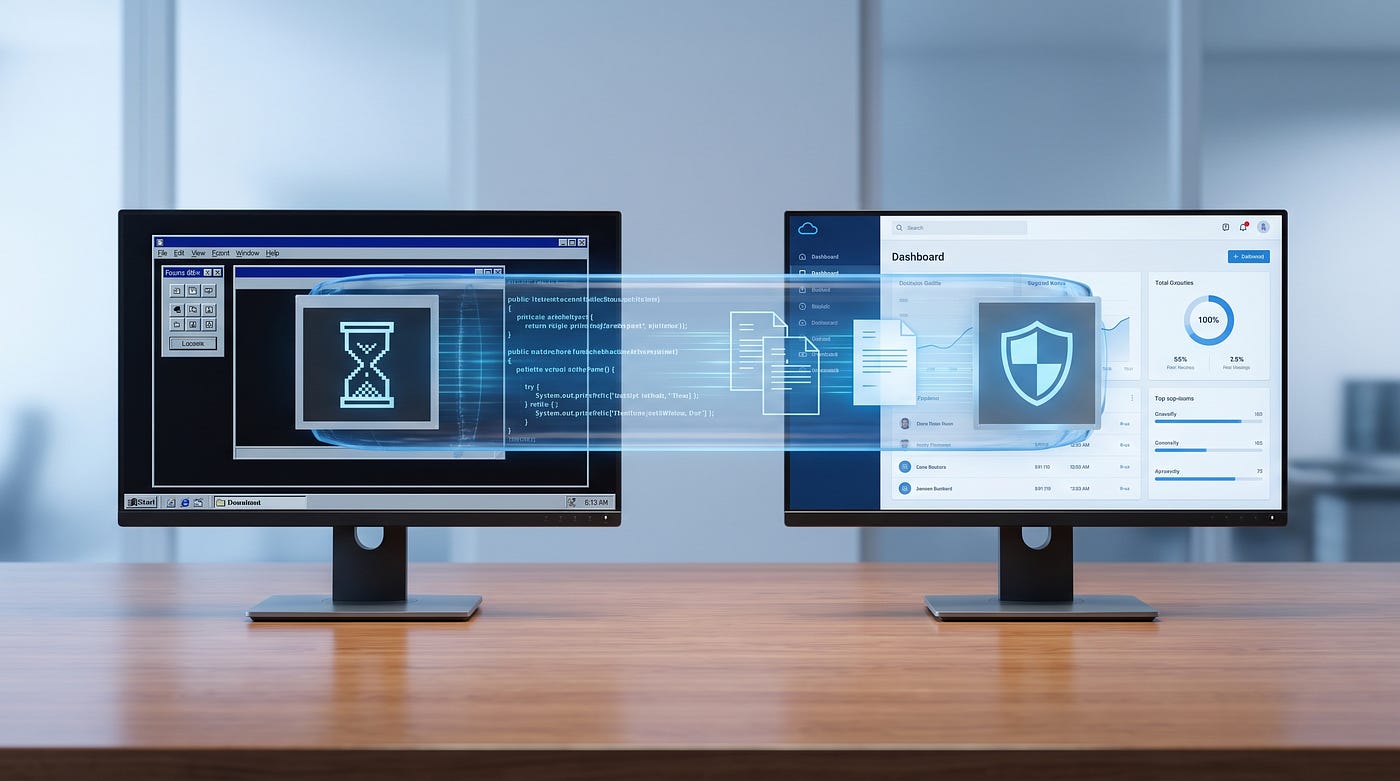
The Hidden Price of Rebuilding: Why Legacy Modernization Services Often Deliver Better ROI
Discover how Legacy Modernization Services help enterprises reduce costs, minimize risk, and accelerate digital transformation.
The Hidden Price of Rebuilding: Why Legacy Modernization Services Often Deliver Better ROI
Digital transformation continues to reshape enterprise operations. Yet many organizations still rely on aging systems that slow innovation, increase maintenance costs, and create security concerns. CIOs, IT Directors, and Technical Architects face one difficult question:

The Hidden Price of Rebuilding: Why Legacy Modernization Services Often Deliver Better ROI
Should you rebuild your legacy system from scratch or modernize what already works?
At first glance, rebuilding appears attractive. A clean architecture, modern frameworks, and cloud-native infrastructure sound like the perfect reset. However, the true cost of rebuilding often exceeds budgets, timelines, and operational expectations.
This is where **Legacy Modernization Services** becomes a strategic advantage.
Instead of replacing everything, modernization helps enterprises improve existing systems while preserving critical business logic, workflows, and operational continuity. The result is lower risk, faster ROI, and a more practical path toward digital transformation.
What Are Legacy Modernization Services?
Legacy Modernization Services improve outdated applications, infrastructure, and workflows without disrupting core business operations.
These services typically include:
- Application modernization
- Cloud migration
- API integration
- Infrastructure upgrades
- Data modernization
- UI/UX transformation
- Security enhancement
- DevOps implementation
The goal is simple: make legacy systems scalable, secure, and future-ready while reducing operational friction.
Organizations across healthcare, finance, manufacturing, retail, and logistics rely on modernization to remain competitive in rapidly changing markets.
According to research from McKinsey & Company, enterprises that modernize incrementally reduce transformation risks and accelerate business value delivery.
Why Do Enterprises Still Depend on Legacy Systems?
Many legacy systems continue to support mission-critical operations. They process transactions, manage customer data, and handle business workflows developed over decades.
The challenge is not functionality. The challenge is adaptability.
Legacy systems often create:
- High maintenance costs
- Security vulnerabilities
- Slow deployment cycles
- Integration limitations
- Poor customer experiences
- Limited scalability
Still, replacing these systems entirely introduces another layer of risk.
That is why many enterprise leaders now prioritize IT Modernization Solutions instead of full rebuild strategies.
What Is the True Cost of Rebuilding an Enterprise System?
A rebuild sounds modern and efficient. In reality, it often becomes one of the most expensive IT decisions organizations make.
1. Development Costs Escalate Quickly
Rebuilding requires:
- New architectural design
- Complete code redevelopment
- Extensive testing
- Data migration
- Security validation
- Infrastructure redesign
Large enterprise rebuilds can take years before delivering measurable business value.
According to Gartner, large-scale IT transformation projects frequently exceed initial budgets due to scope expansion and integration complexity.
2. Business Disruption Increases Operational Risk
Rebuilding from scratch introduces uncertainty.
Teams must recreate years of business logic and workflows. Even small errors can disrupt operations, customer experiences, or compliance requirements.
In highly regulated industries like healthcare or finance, system downtime creates serious financial and reputational risks.
3. Knowledge Gaps Slow Progress
Legacy applications often contain undocumented business rules developed over many years.
When organizations rebuild systems entirely, they risk losing institutional knowledge that existing platforms already support effectively.
This leads to delays, rework, and operational inefficiencies.
Why Are Legacy Modernization Services More Cost-Effective?
Modernization focuses on improving systems strategically instead of replacing everything at once.
This approach reduces cost while accelerating transformation goals.
Faster Time-to-Value
Modernization allows enterprises to upgrade systems incrementally.
Instead of waiting years for a full rebuild, organizations can modernize critical components first and deliver immediate operational improvements.
For example:
- Migrating workloads to the cloud
- Modernizing user interfaces
- Integrating APIs
- Automating workflows
This phased strategy supports faster ROI.
Lower Infrastructure Costs
Modernized systems consume fewer resources and operate more efficiently.
Cloud-native modernization reduces dependency on expensive on-premise infrastructure while improving scalability and disaster recovery capabilities.
According to IBM, application modernization significantly improves operational efficiency and reduces long-term maintenance expenses.
Reduced Downtime and Risk
Unlike rebuilds, modernization minimizes disruption.
Organizations continue operating while improvements happen in controlled phases. This protects customer experiences and business continuity.
For CIOs managing enterprise-scale systems, risk reduction often matters more than architectural perfection.
How Does Application Modernization Support Digital Transformation?
Digital transformation requires agility, integration, and scalability.
Modernization enables organizations to adopt emerging technologies without replacing entire systems.
This includes:
- AI integration
- Cloud computing
- Real-time analytics
- Automation
- Microservices architecture
- Mobile-first experiences
Modernized applications integrate more easily with evolving digital ecosystems.
For enterprises planning long-term innovation, modernization creates a sustainable transformation roadmap.
A deeper breakdown of modernization strategies and rebuild considerations appears in this detailed guide from ViitorCloud.
What Questions Should CIOs Ask Before Choosing Rebuild vs Modernization?
How critical is operational continuity?
If downtime impacts revenue or compliance, modernization typically offers lower risk.
Does the legacy system still support core business logic?
If the existing system still functions effectively, rebuilding everything may create unnecessary costs.
What is the expected transformation timeline?
Rebuilds often require multi-year commitments. Modernization delivers phased improvements faster.
Can the existing architecture integrate with modern technologies?
In many cases, APIs, cloud infrastructure, and microservices extend legacy system capabilities without full replacement.
Why SMBs and Enterprises Choose IT Modernization Solutions
Both SMBs and enterprises face increasing pressure to modernize quickly while controlling costs.
Modernization provides:
- Greater agility
- Faster innovation
- Improved cybersecurity
- Better customer experiences
- Reduced technical debt
- Lower operational expenses
Most importantly, modernization aligns technology investments with measurable business outcomes.
This balance becomes critical in competitive industries where speed and efficiency determine market leadership.
The Future of Legacy Modernization Services
The modernization market continues to grow as enterprises prioritize AI readiness, cloud adoption, and scalable digital infrastructure.
Future-focused modernization strategies now include:
- AI-powered automation
- Hybrid cloud optimization
- Predictive analytics
- Intelligent workflow orchestration
- API-first ecosystems
Organizations that modernize strategically position themselves for long-term resilience and innovation.
Those that delay transformation risk higher operational costs and declining competitiveness.
Modernization Is Often the Smarter Investment
Rebuilding may sound transformative, but it often introduces hidden costs, delays, and operational risks.
Legacy Modernization Services provide a more balanced approach.
They preserve existing business value while enabling innovation, scalability, and digital transformation. For CIOs and IT leaders managing complex enterprise environments, modernization delivers faster ROI with significantly lower disruption.
The most successful organizations do not replace everything overnight. They modernize strategically, prioritize business continuity, and evolve technology in phases that support long-term growth.
Ready to Modernize Your Legacy Systems?
Organizations looking to reduce operational costs, improve scalability, and accelerate digital transformation should evaluate modernization before committing to a costly rebuild.
Explore how modern IT Modernization Solutions help enterprises modernize applications, integrate cloud technologies, and future-proof digital operations with expert guidance from the ViitorCloud Official Website.
메타데이터
- post_id
- 3f31bf2bf71e
- slug
- the-hidden-price-of-rebuilding-why-legacy-modernization-services-often-deliver-better-roi-3f31bf2bf71e
- url
- https://medium.com/@oliviawatson0123/the-hidden-price-of-rebuilding-why-legacy-modernization-services-often-deliver-better-roi-3f31bf2bf71e
- canonical_url
- https://medium.com/@oliviawatson0123/the-hidden-price-of-rebuilding-why-legacy-modernization-services-often-deliver-better-roi-3f31bf2bf71e
- author_url
- https://medium.com/@oliviawatson0123
- status
- ok
- fetched_at
- 2026-06-09 15:37:30