Nairs of the Bloodline: Duty Beyond Dynasty
In 1734, Anizham Thirunal Marthanda Varma began his expansion campaign by annexing the Nedumangad and Elayadathu Swaroopams. These…
Nairs of the Bloodline: Duty Beyond Dynasty
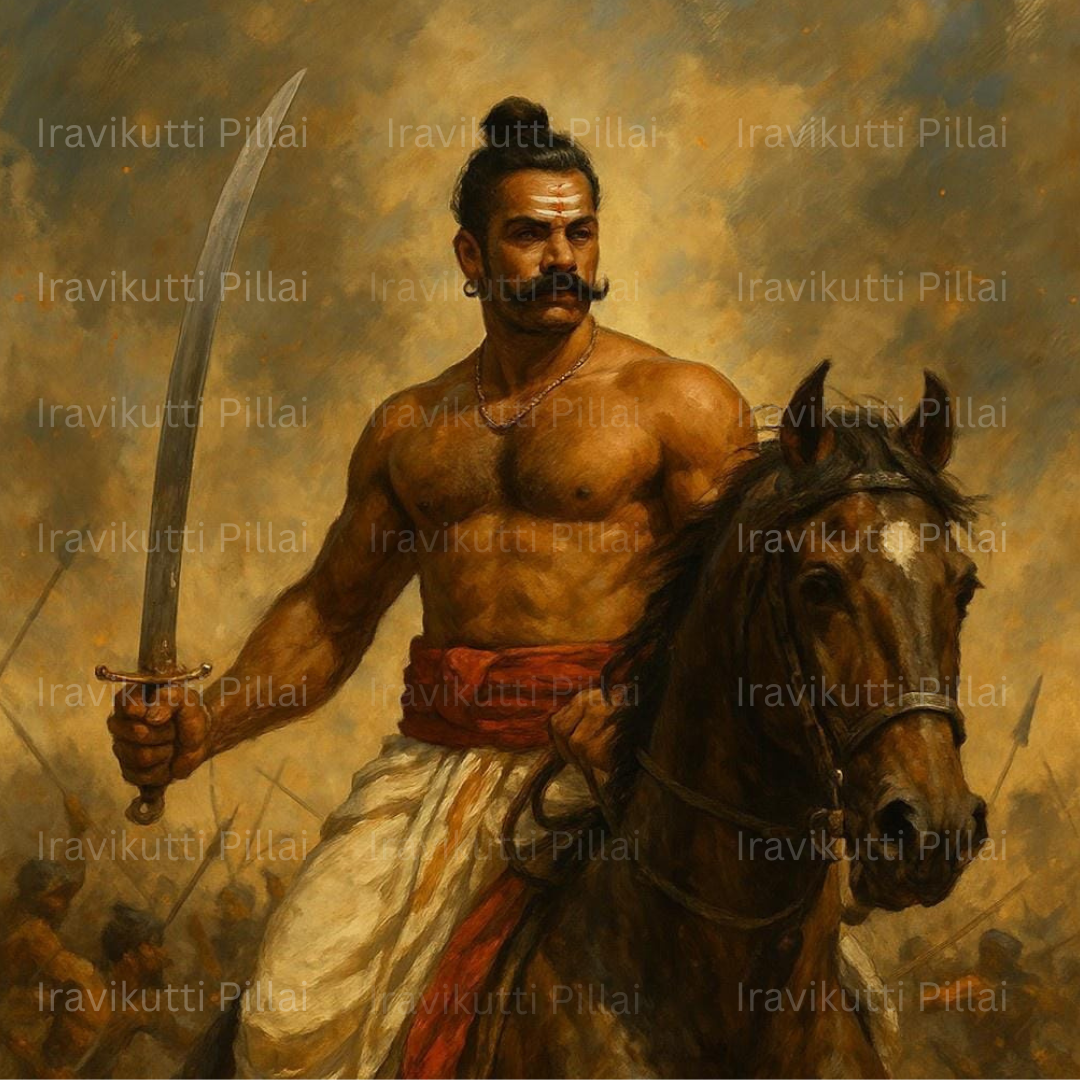
In 1734, Anizham Thirunal Marthanda Varma began his expansion campaign by annexing the Nedumangad and Elayadathu Swaroopams. These swaroopams were related by blood ties and shared administrative traditions. Each of them maintained their own traditional Nair military forces, sworn to protect their rulers — even at the cost of their lives. At this point, the Dutch East India Company had already established trade agreements with these now-annexed kingdoms. The rulers of the annexed territories were forcibly confined to a fort, provoking widespread unrest. Marthanda Varma’s attempts to increase his authority alarmed other regional rulers, such as the Raja of Thekkumkur. In response to his continued aggression, the rulers of Cochin, Purakkad, Vadakkumkur, and Kayamkulam formed a military alliance.
The Nairs, under the leadership of Dalawa Arumukham Pillai, advanced against Kollam. The Travancore army was unable to withstand the combined might of the Kayamkulam and Quilon (Kollam) forces. With Dutch support in the form of firearms, Marthanda Varma was forced to withdraw. Encouraged by this retreat, the Raja of Kollam launched a counteroffensive, employing his own Nair forces. It is significant that Nairs — the traditional military class of these kingdoms — were now battling fellow Nairs of Travancore. On April 18, 1734, Marthanda Varma launched another offensive against Kollam and Kayamkulam but suffered heavy losses and was forced to retreat. On May 1, 1734, Travancore and Kayamkulam forces again clashed in a bloody encounter, with heavy casualties on both sides. Then, on May 4, Travancore’s attempt to cross the Kunnatur to Puyappalli line ended in failure against the united Kollam–Kayamkulam front. Travancore, however, managed to reconquer Kallada from Kollam.
Following these events, Marthanda Varma hired Marava mercenaries to counter the alliance. As a result, on June 1, 1734, the Raja of Kayamkulam was killed. Marthanda Varma then redirected his aggression toward Kollam and succeeded in defeating the combined forces of Kollam and Kayamkulam. Though Dutch commander Adriaan Maten attempted to mediate, a peaceful settlement between Travancore and the swaroopams remained elusive. The continuing annexations raised alarm among regional rulers, who sought support from the Dutch. The Dutch feared that the fall of Kollam and Kayamkulam would strengthen Travancore and threaten their own trading position. Political instability in Elayadathu, Maruthurkulangara, and Nedumangad affected commerce and disrupted Dutch operations. The Dutch commander accused Travancore of violating existing trade treaties and demanded Marthanda Varma’s compliance. However, Varma’s refusal led to further tensions, causing significant losses to Dutch factories and trade posts in the annexed regions. Van Imhoff, the stern Dutch Governor of Ceylon, demanded that Marthanda Varma reinstate the princes of the Elayadathu Swaroopam. After diplomatic talks failed, the Dutch launched a military assault on Travancore near Kollam on November 12, 1739. Hand grenades were hurled at the Nair forces of Travancore, causing major setbacks. Dutch-allied troops captured Travancore’s cannons and pushed back its forces from several occupied regions. Dutch and Kayamkulam troops began advancing toward Attingal, and Kollam was reclaimed by the Dutch-aided alliance. In response, Travancore’s Nair army fortified the area, setting up batteries and reinforcing the pagers (fortifications) with 5,000 Nairs.
However, Travancore’s defenses faltered as the Nawab of Carnatic launched a simultaneous invasion into Kanyakumari. Exploiting this distraction, Kollam and Kayamkulam launched an attack between Ayrur and Attingal. The Kollam Nair army, after a successful campaign in Kottarakkara, clashed with Travancore Nairs at Navayikulam on December 30, 1739, forcing them to retreat. On January 25, 1740, the Kollam Nairs scored a significant victory against Travancore at Attingal. A combined Dutch and allied assault on February 20, 1740, resulted in heavy losses on both sides, with Kollam alone losing 4,000 Nair warriors. On March 8, 1740, Travancore suffered another setback on its own soil. The Dutch used this opportunity to pressure Marthanda Varma, deploying 105 soldiers from Ceylon, thus beginning the second stage of the war. On November 26, two large ships and three support vessels bombarded Colachel for two to three days, forcing civilians to abandon the town.In defense, Marthanda Varma dispatched 2,000 Nairs to protect the coastal town. Despite the Dutch bombardment, Travancore’s Nairs resisted fiercely, and after two days of relentless fighting, the Dutch surrendered.
Ballads from the Colachel War praise the heroic actions of Amsi Thaitotath Tarawad Kanakku Thampi Chempakaraman Marthandan Pillai of Patthira Tarawad, who reportedly captured the Dutch commander De Lannoy by destroying his ship — an act of extraordinary valor. By 1742, Marthanda Varma, with Nairs recruited from Eraniel, Kalkulam, Neyyattinkara, and Trivandrum, advanced to Kilimanoor. In the ensuing battles, several European and Kayamkulam Nair fighters were captured. Using French-supplied arms, Travancore decisively took control of Kayamkulam and Kollam.
Reference
The Dutch Power in Kerala, 1729–1758 By M. O. Koshy
메타데이터
- post_id
- 3f39b9785de7
- slug
- nairs-of-the-bloodline-duty-beyond-dynasty-3f39b9785de7
- url
- https://medium.com/@nairsofkerala/nairs-of-the-bloodline-duty-beyond-dynasty-3f39b9785de7
- canonical_url
- https://medium.com/@nairsofkerala/nairs-of-the-bloodline-duty-beyond-dynasty-3f39b9785de7
- author_url
- https://medium.com/@nairsofkerala
- status
- ok
- fetched_at
- 2026-06-11 10:13:20