Is Trampoline an Olympic Sport?
Yes, trampoline is an Olympic sport. Officially known as Olympic trampoline gymnastics, the sport features athletes performing high…
Is Trampoline an Olympic Sport?
Yes, trampoline is an Olympic sport. Officially known as Olympic trampoline gymnastics, the sport features athletes performing high, fast-paced routines filled with flips, twists, and complex aerial skills while bouncing on a trampoline. Trampoline gymnastics has been part of the Olympic Games since 2000 and is recognized as a competitive gymnastics discipline worldwide.
Many people still think of trampolines mainly as backyard equipment for casual fun and outdoor play. While recreational trampolining is extremely popular, Olympic trampoline is a very different type of trampoline sport built around precision, control, timing, height, and body awareness. Athletes train for years to master advanced routines that combine difficult skills with clean execution and consistent control in the air.
Olympic trampoline gymnastics requires much more than simply jumping high. Competitors perform carefully choreographed routines that include somersaults, twists, and combinations of aerial movements while maintaining balance and accuracy throughout the routine. The sport demands strength, coordination, focus, and spatial awareness at an elite level, which is why trampoline gymnastics is considered one of the most technical disciplines in modern gymnastics.
When Did Trampoline Become an Olympic Sport?
Trampoline gymnastics developed from acrobatics, tumbling, and aerial training exercises that were originally used by performers, gymnasts, and athletes. Early trampolines helped athletes practice body control, coordination, and aerial awareness long before trampolining became an official competitive sport.
As the sport grew, competitions became more structured and athletes began performing increasingly difficult routines filled with flips, twists, and controlled landings. Over time, trampoline gymnastics evolved into a formal discipline with international judging standards and organized events.
A major milestone came on January 1, 1999, when trampoline gymnastics officially became a discipline of the Fédération Internationale de Gymnastique (FIG), the international governing body for gymnastics. Just one year later, Olympic trampoline debuted at the Sydney 2000 Olympic Games. Both men’s and women’s individual trampoline events were included, introducing the sport to a global Olympic audience for the first time.
Since then, trampoline gymnastics has remained part of the Olympic program and continues to be one of the most visually impressive disciplines in modern gymnastics.

What Is Olympic Trampoline Gymnastics?
Olympic trampoline gymnastics is a competitive sport where athletes perform a routine while bouncing on a trampoline. Each routine includes a series of aerial skills such as jumps, flips, somersaults, and twists that must be performed with control, precision, and consistent timing.
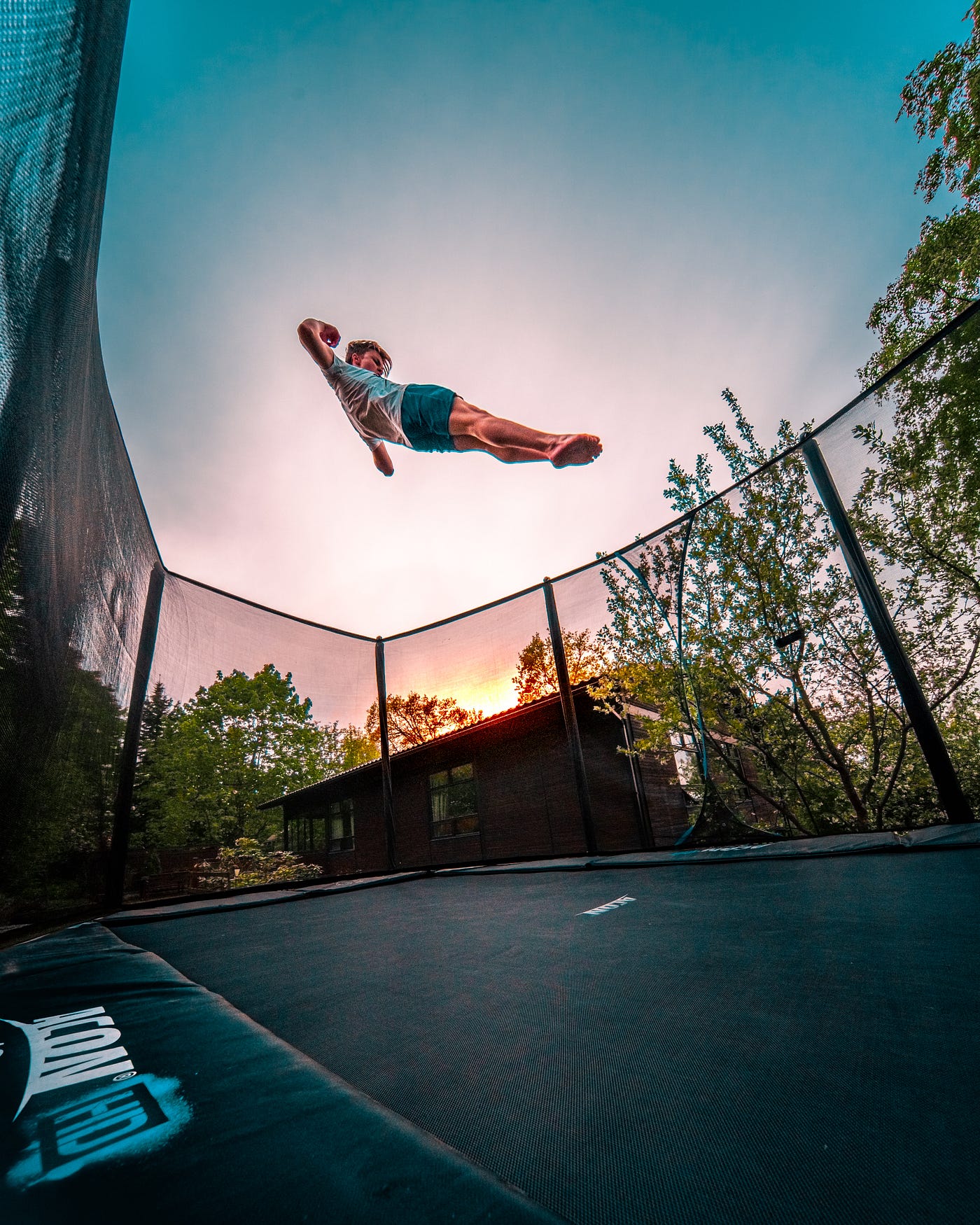
To many viewers, Olympic trampoline can look almost unreal because athletes reach incredible heights while continuing to rotate and twist through the air. But the sport is not only about height. Judges also score how cleanly the skills are performed, how difficult the routine is, and how well the athlete stays controlled throughout the performance.
Even a short routine can take years of practice to master. Athletes train body awareness, coordination, balance, and timing so they can perform complex movements while staying centered on the trampoline.
Olympic trampoline gymnastics is part of the broader gymnastics world, but it has its own unique style and rhythm. The combination of height, speed, and aerial movement is what makes the sport so impressive to watch at the Olympic level.

How Is Olympic Trampoline Different from Backyard Trampolining?
Olympic trampoline and backyard trampolining use the same basic concept, but in practice they are very different activities. Both involve bouncing, aerial movement, and body control, yet the equipment, training environment, and skill level are on completely different levels.
Olympic trampoline gymnasts train on highly specialized rectangular trampolines designed for professional competition. These trampolines are built to create extremely powerful and consistent bounce so athletes can perform advanced flips, twists, and complex routines with precise timing and control.
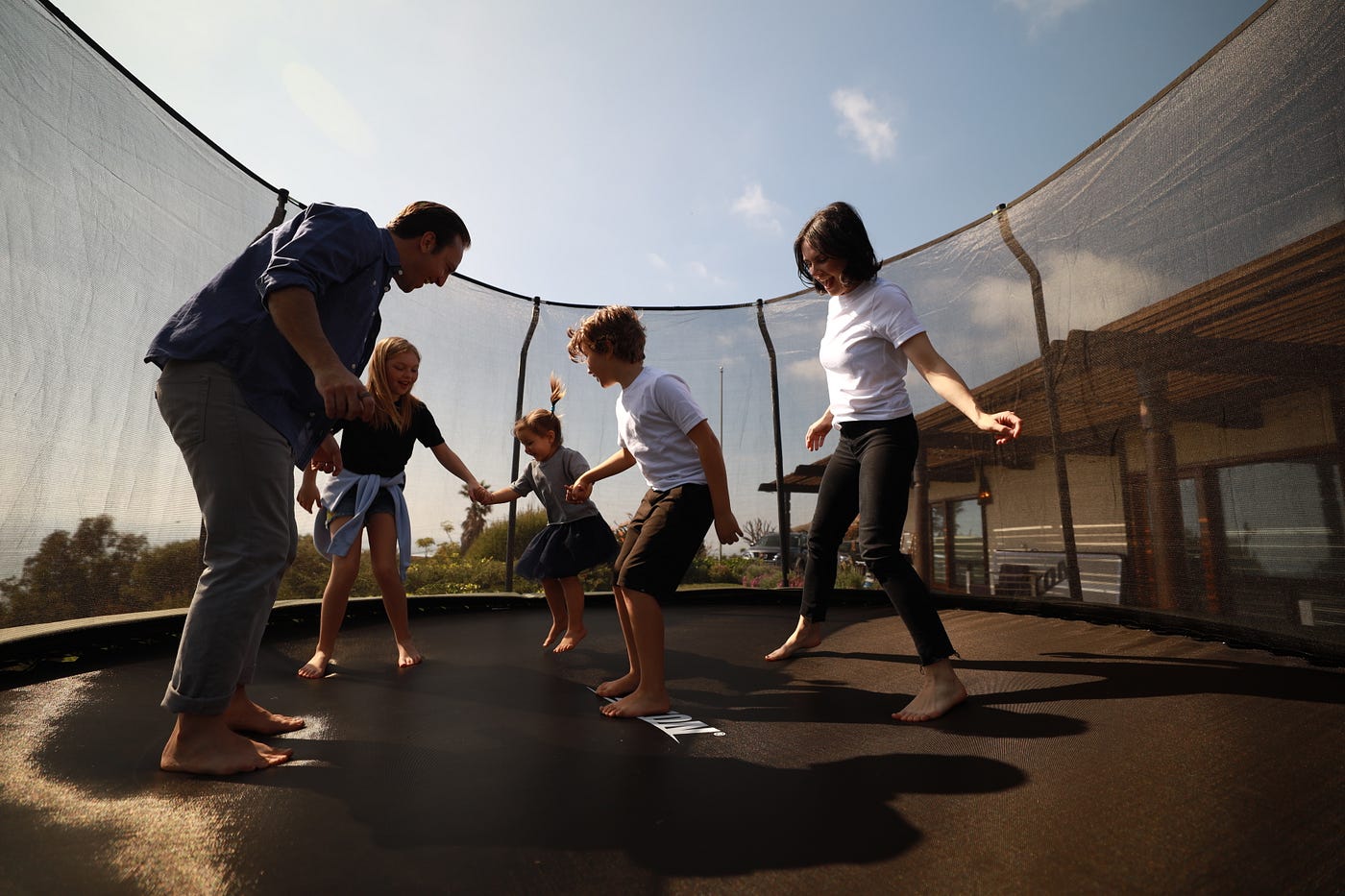
Backyard trampolines are designed more for recreational use, exercise, and family fun. They can still help jumpers develop coordination, balance, confidence, and basic trampoline skills, but they are not built to fully replicate an Olympic training setup. The training environment is also much more controlled in competitive trampoline gymnastics, where athletes work with coaches, spotters, padded training areas, and structured skill progression systems.
Even so, many ambitious jumpers and gymnastics-focused families look for trampolines that provide a more controlled and performance-oriented bounce experience at home. Rectangular trampolines are especially popular for this because they create a more even rebound across the trampoline bed, which many athletes feel works better for tricks, gymnastics drills, and skill progression.
For families interested in Olympic-inspired trampoline training, performance-focused rectangular models like the ACON X 17ft Rectangle Trampoline and the ACON 16 HD PRO Trampoline are designed to provide a more consistent bounce experience for advanced jumping and skill development. ACON’s Gymnastics Equipment collection can also support trampoline training with airtracks, mats, and other practice accessories for developing coordination and body control more safely.

Can You Train for Trampoline Gymnastics at Home?
Yes, some trampoline gymnastics basics can be practiced at home, especially balance, body control, coordination, and simple jumping techniques. Recreational trampolines can help beginners develop confidence in the air while improving timing, spatial awareness, and overall fitness.
However, advanced trampoline gymnastics skills should always be learned under proper coaching and supervision. Olympic trampoline routines involve complex flips, twists, and aerial combinations that require technical instruction, safe progression, and specialized training environments.
For home practice, the safest approach is to focus on controlled movement, conditioning, and fundamental trampoline skills rather than attempting advanced tricks too early. Many athletes also use training accessories like airtracks and mats to improve strength, coordination, and body awareness outside of trampoline sessions.
For jumpers interested in a more gymnastics-focused backyard setup, rectangular trampolines are often preferred because they provide a more consistent and controlled bounce experience. Performance-oriented trampoline designs and gymnastics training equipment from ACON can help support safer skill development and more structured trampoline practice at home.
메타데이터
- post_id
- 3f457f4d06a2
- slug
- is-trampoline-an-olympic-sport-3f457f4d06a2
- url
- https://medium.com/@acon24/is-trampoline-an-olympic-sport-3f457f4d06a2
- canonical_url
- https://medium.com/@acon24/is-trampoline-an-olympic-sport-3f457f4d06a2
- author_url
- https://medium.com/@acon24
- status
- ok
- fetched_at
- 2026-07-10 13:32:34