WHY DISCOUNTS MAKE YOU SPEND MORE (NOT SAVE MORE)
Recently, I went to metro mall to buy some usual groceries like soy sauce, flour, atta etc. I consciously planned this time that I will buy…
WHY DISCOUNTS MAKE YOU SPEND MORE (NOT SAVE MORE)
Recently, I went to metro mall to buy some usual groceries like soy sauce, flour, atta etc. I consciously planned this time that I will buy only what I need and I will not get tempted by other things like a huge bag of KitKat which happens to be my favourite chocolate but then I looked at the price, way cheaper than everywhere else.
Then my dad came up and put a bag of suji in the cart, I told him we already have a lot of suji at home, and he said that it is only ₹1 so we should buy it. This was how we eventually got a bill of ₹15000. it always happens with me, but I do not think I am the only one who gets tempted by cheap prices. we all do.
The funny part is, we think we are saving money but in reality, we’re just spending more… differently because discounts make us feel smart for saving money. So yes dad we did not need that packet of suji when we already had seven packets of it at home. Wholesale companies are also aware of this, and they take huge advantage of this.
This is mainly driven by psychological triggers like FOMO (fear of missing out) and perceived high value. I mean seriously if you see limited time sale offer of a ₹2,000 dress being sold at half the price it will obviously make you feel like you will miss out and end up paying a higher price if you decide to buy later especially if you like that dress a lot.
As for e-commerce, I have noticed that during sale, Sometimes, companies inflate original prices to make discounts look bigger making consumers feel that FOMO and urgency…well that is the actual reason why they can even afford to make offers like “buy 2 and get 3 free”.
What about successive discounts then? You know those offers which say if you buy things worth three thousand rupees you will get a 50% discount and if you buy things worth five hundred rupees more you will get an additional 25% discount. Now when I was 5, I used to think “oh wow we will get discount of 75%”. But really the actual discount you are getting is a 62.5% discount for this value. If you remember the formula for successive discounts which we learnt in middle school, then you can see through the bullshit but if you do not then there is a probability you can fall for it.
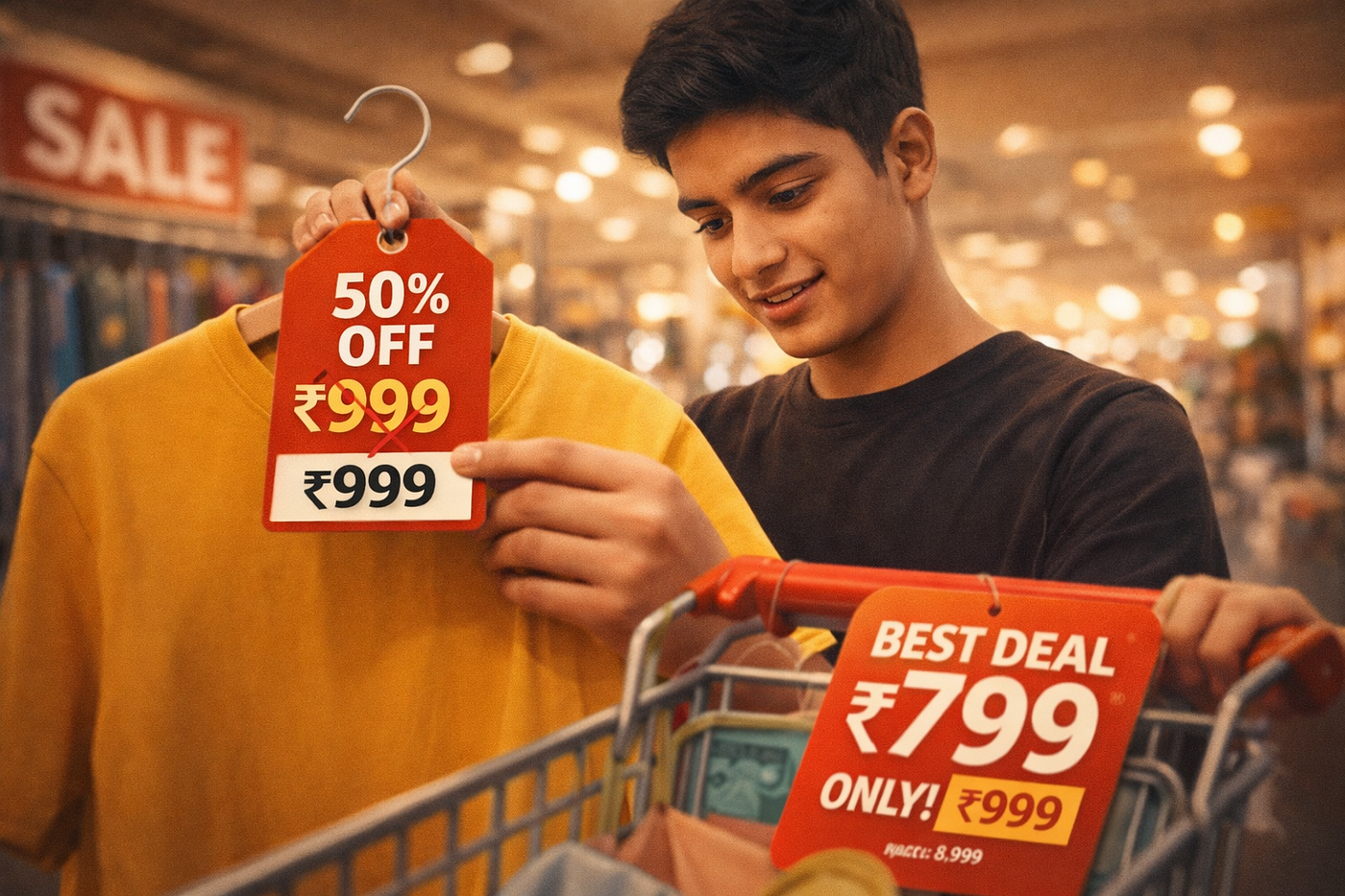
But really the placards and all the signs above certain grocery sections saying 50% off will make anyone feel like all the products are insanely cheap making you buy more. Plus, when we all look around and explore the area and see so many products around why wouldn’t it make you impulsively buy something? I mean seriously I bought two cute mugs I saw at smart bazaar even though I have several mugs at home which I have not used for years now…I really haven’t used those two mugs after I bought them impulsively and it has been months now.
So yes, a lot of companies do take advantage of our impulsiveness and how psychology works because they know we as consumers are irrational and driven by emotions so all they do is change our perception on how we see those products which brings out urgency in us and we buy things which we do not need. So next time when you go out shopping whether it’s for clothes or groceries or anything, ask yourself: would you buy this if it was not sale?
메타데이터
- post_id
- 3f61525a2f48
- slug
- why-discounts-make-you-spend-more-not-save-more-3f61525a2f48
- url
- https://medium.com/@aashkagupta03/why-discounts-make-you-spend-more-not-save-more-3f61525a2f48
- canonical_url
- https://medium.com/@aashkagupta03/why-discounts-make-you-spend-more-not-save-more-3f61525a2f48
- author_url
- https://medium.com/@aashkagupta03
- status
- ok
- fetched_at
- 2026-06-27 07:40:21



