Surfing Ending Bean Temperature for Coffee Roasting
Feasibility
Coffee Data Science
Surfing Ending Bean Temperature for Coffee Roasting
Feasibility
In 2025, I found such a strong correlation between bean color and ending temperature that I changed my profile to end at a specific bean temperature. For my roasts, that was 212 C which caused a bean color between 55 and 65 depending on the roast.
After more profile advancements, I decided to play around with the end bean temperature to see if there is a temperature and development that is better for me for espresso that I previously had.
So I did four roasts for four different temperatures to end the roast using my Counter Flow profile:
- 208 C
- 210 C
- 212 C (Baseline)
- 214 C
Post-Roast Metrics
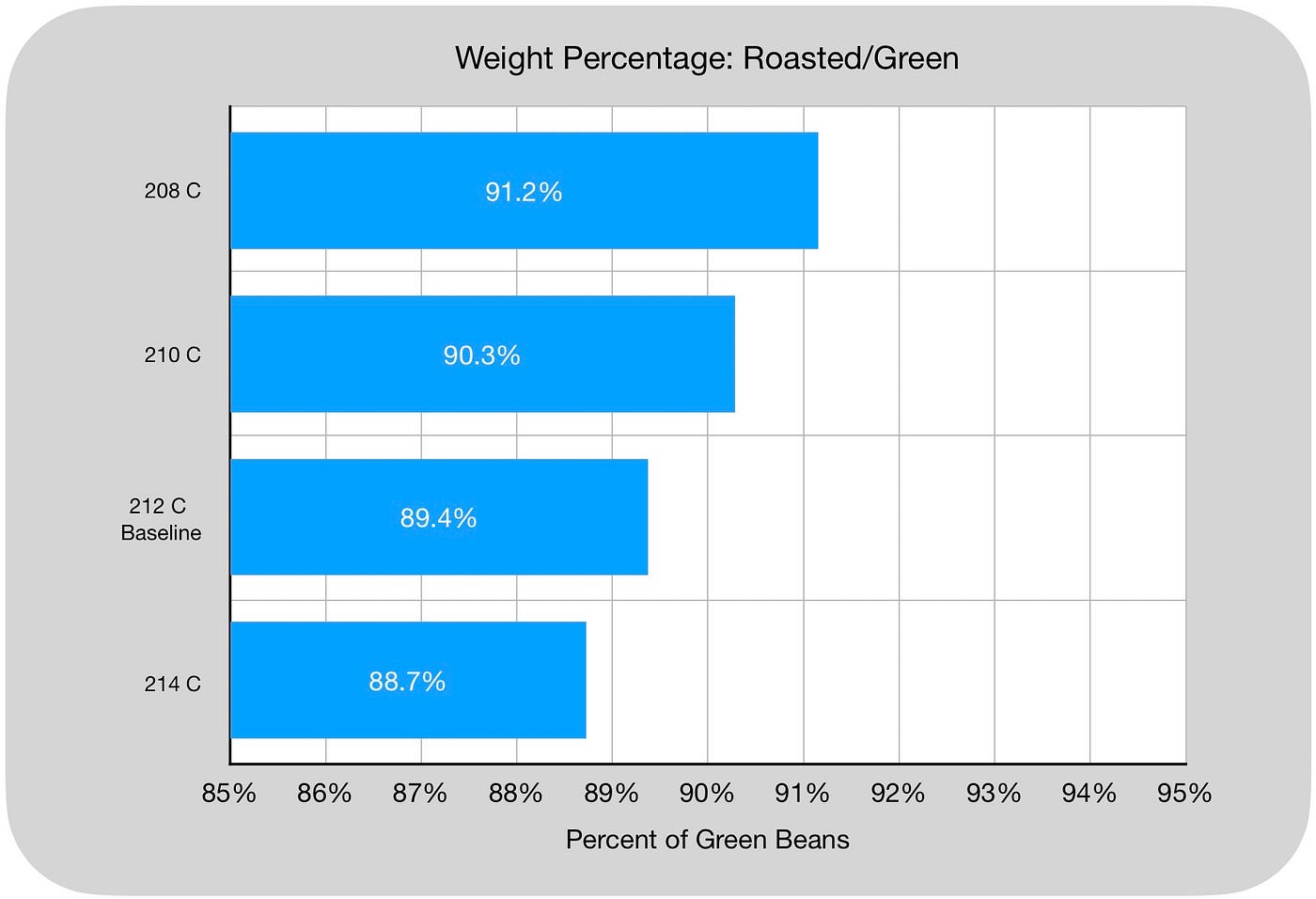
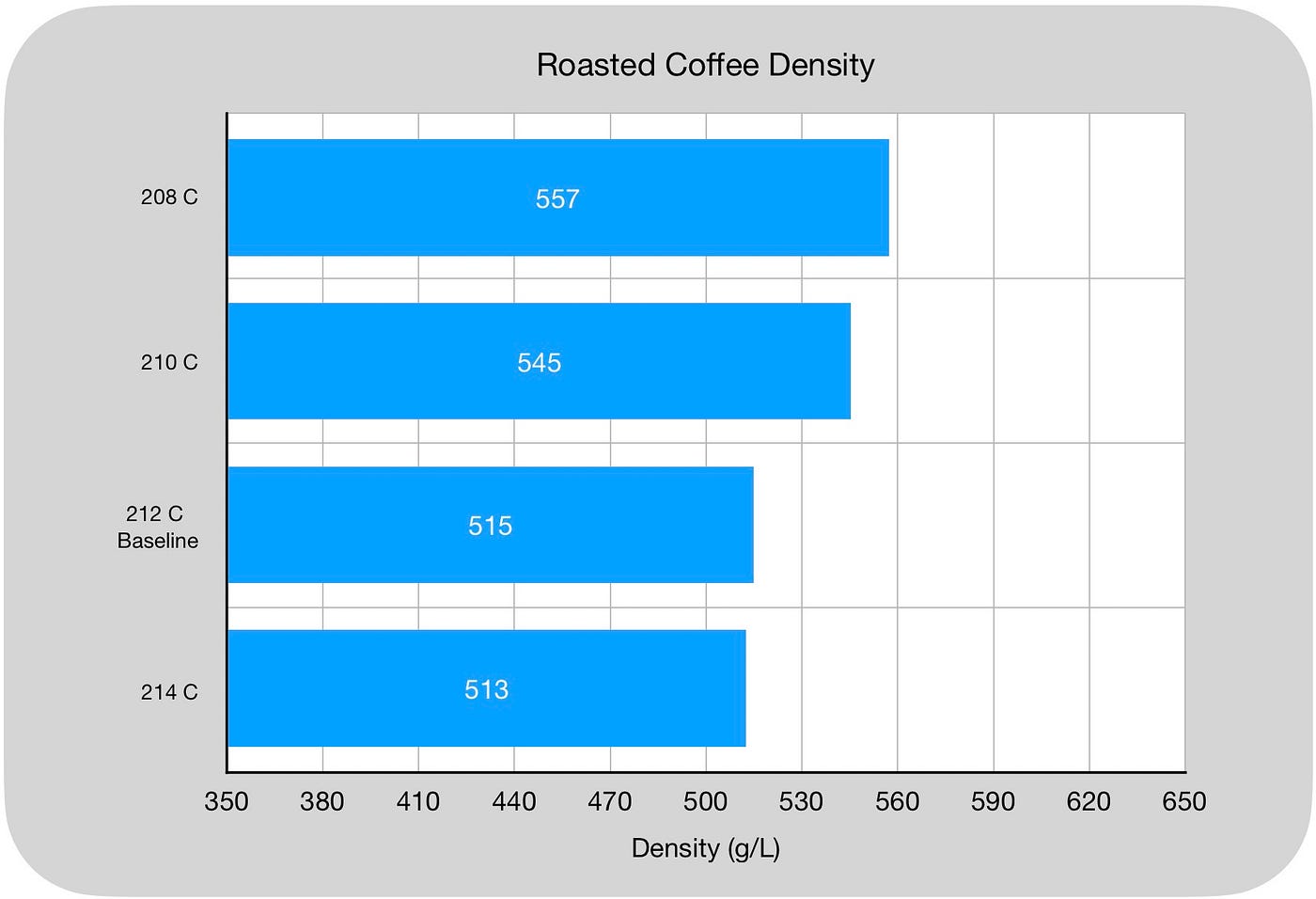
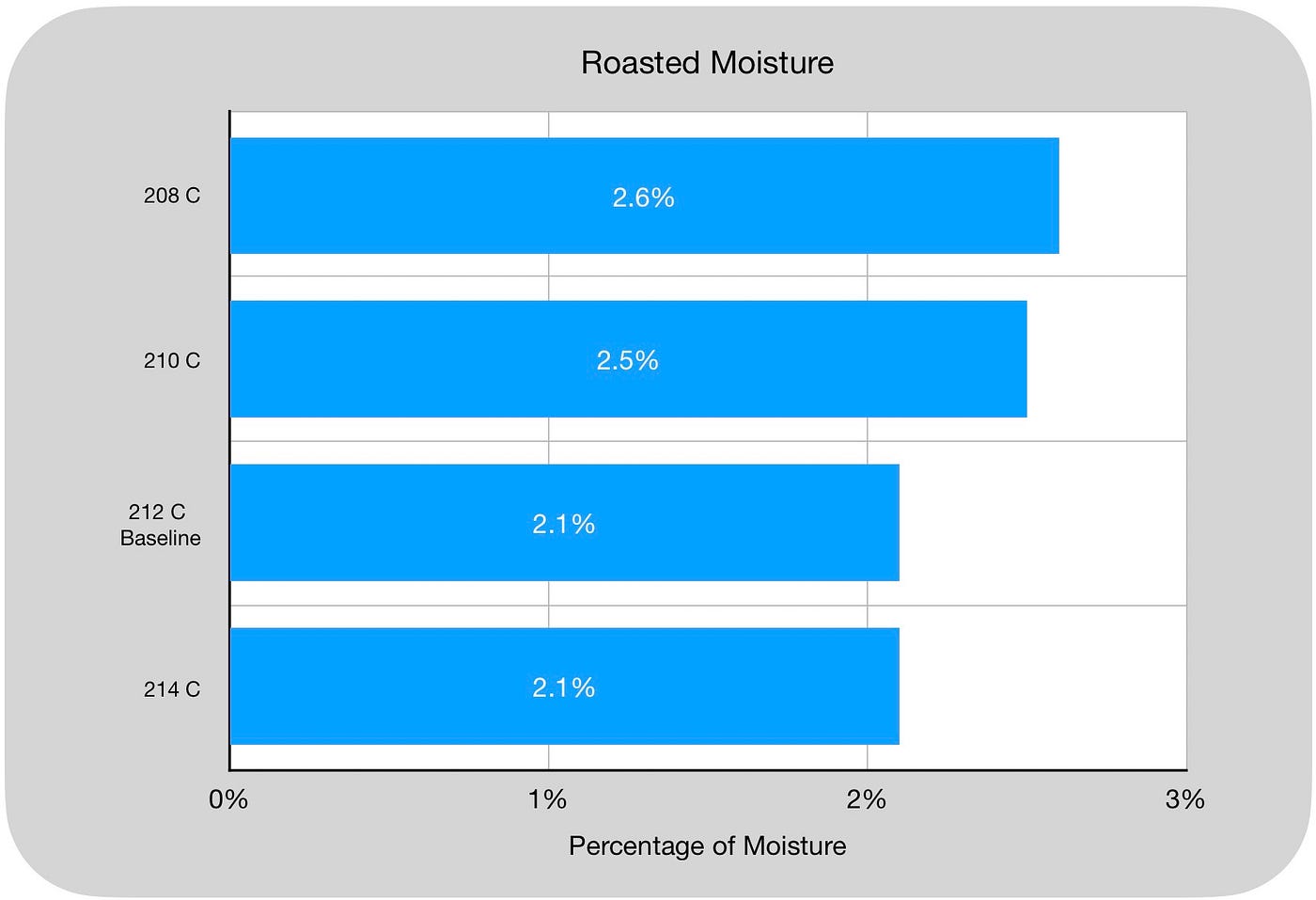
For these roasts, the metrics definitely have a trend as the end bean temperature causes a longer development.
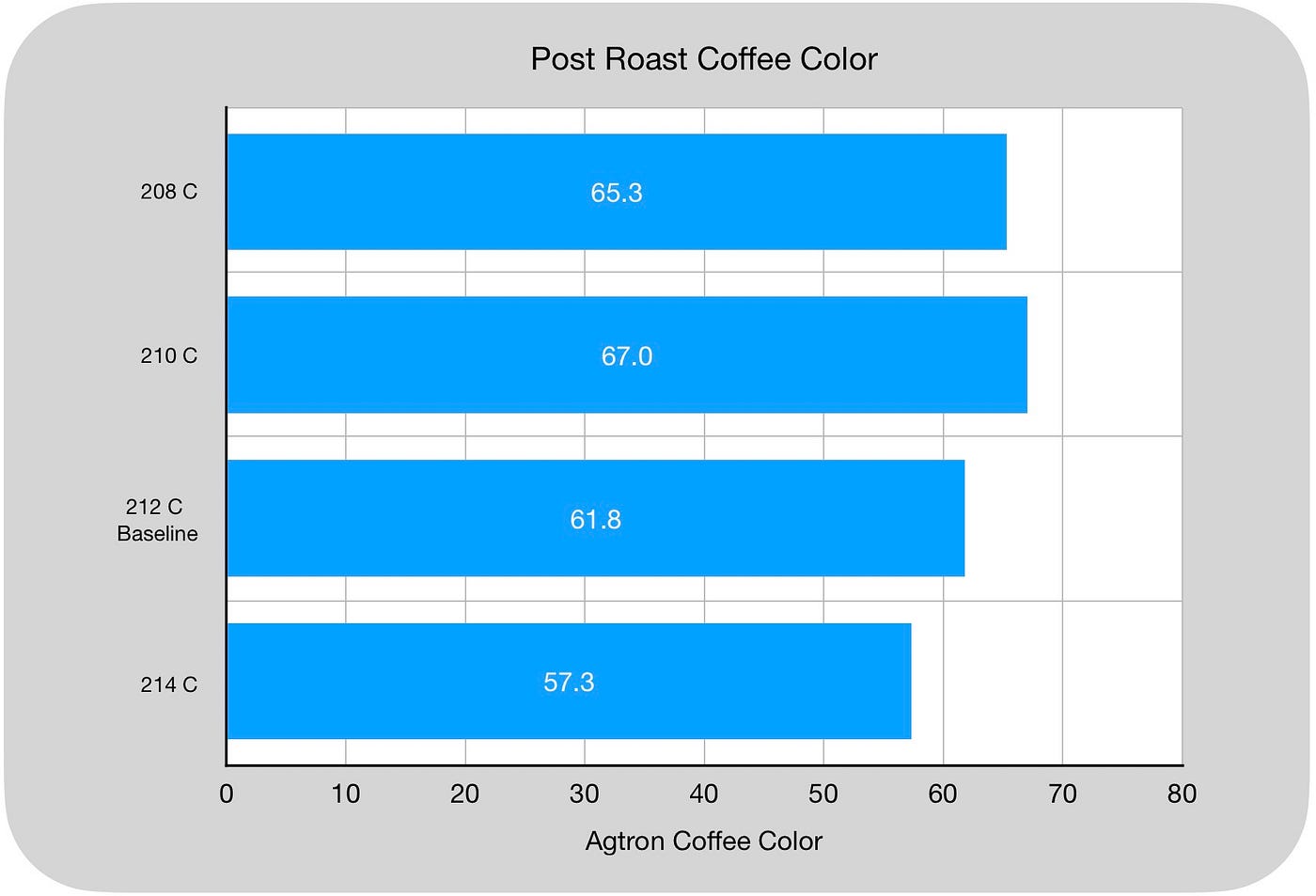
Color was interesting because I would have expected 208 C to be higher (and therefore lighter).
Metrics of Performance
I used two sets of metrics for evaluating the differences between techniques: Final Score and Coffee Extraction.
**Final score **is the average of a scorecard of 7 metrics (Sharp, Rich, Syrup, Sweet, Sour, Bitter, and Aftertaste). These scores were subjective, of course, but they were calibrated to my tastes and helped me improve my shots. There is some variation in the scores. My aim was to be consistent for each metric, but some times the granularity was difficult.
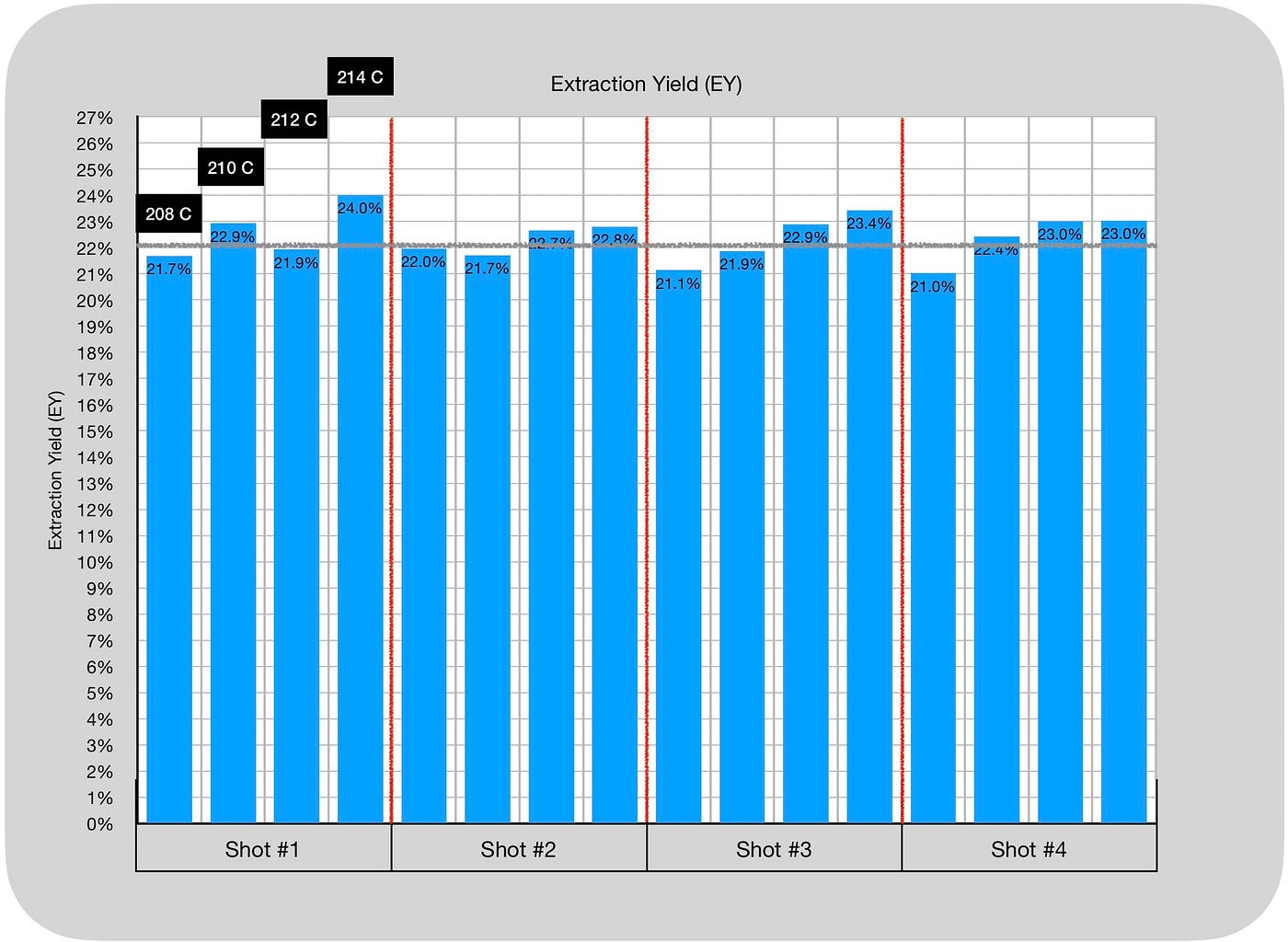
**Total Dissolved Solids (TDS) is measured using a refractometer, and this number combined with the output weight of the shot and the input weight of the coffee is used to determine the percentage of coffee extracted into the cup, called Extraction Yield (EY)**.
Shot Data
I pulled four shot pairs, and I was surprised to find the 214 C roast was better for me.
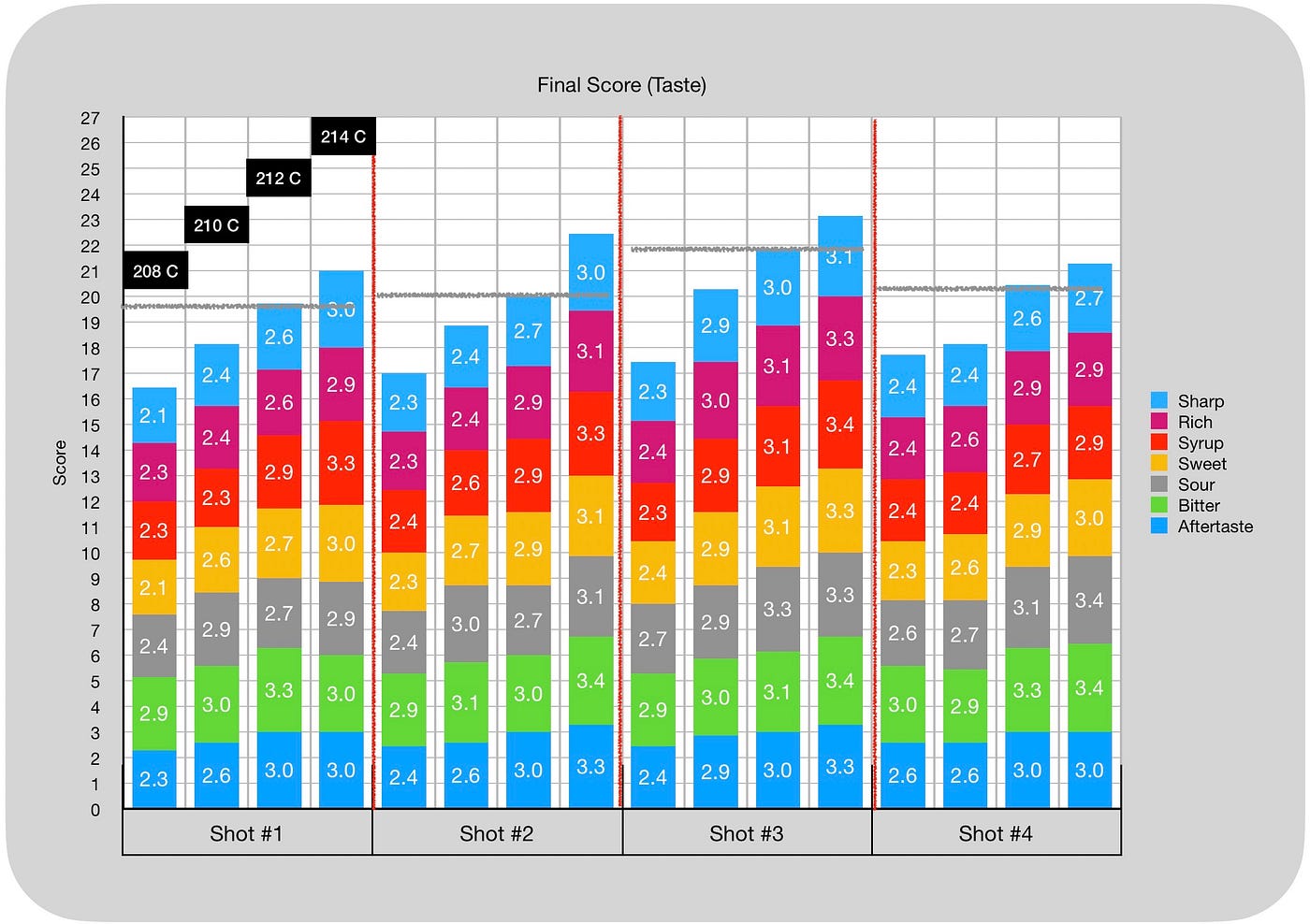
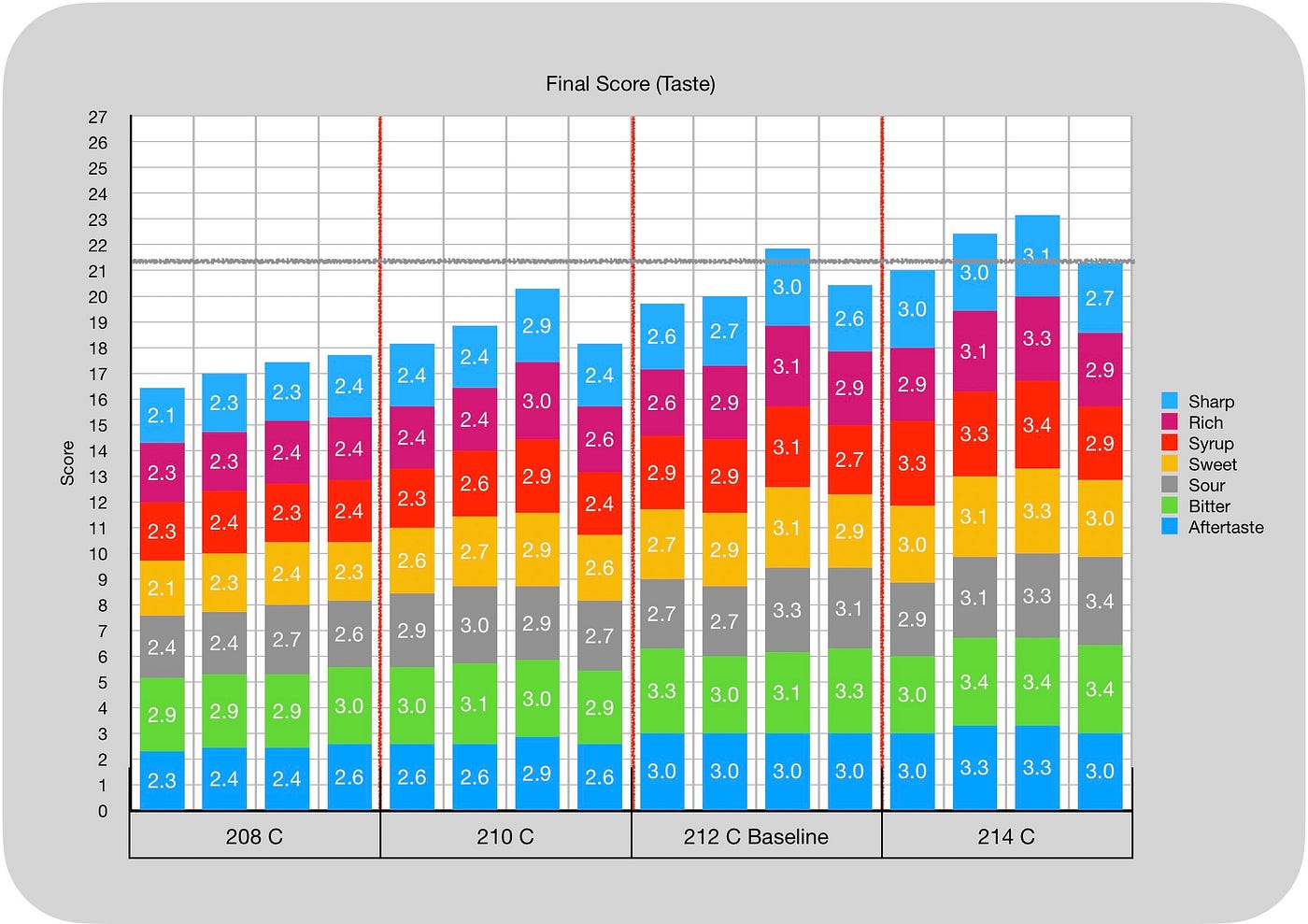
Extraction yield seemed to have a slight increase for a slightly darker roast.
This experiment inspires me to experiment more:
- Variations in end bean temperature.
- The length of development phase.
The challenge is that surfing two variables is a bit time consuming. So we shall see how it goes.
If you like, follow me on YouTube and Instagram where I post videos of espresso shots on different machines and espresso related stuff. You can also find me on LinkedIn. You can also follow me on Medium and Subscribe.
Further readings of mine:
My Second Book: Advanced Espresso
My First Book: Engineering Better Espresso
메타데이터
- post_id
- 3f69aa8aee25
- slug
- surfing-ending-bean-temperature-for-coffee-roasting-3f69aa8aee25
- url
- https://medium.com/@rmckeon/surfing-ending-bean-temperature-for-coffee-roasting-3f69aa8aee25
- canonical_url
- https://medium.com/@rmckeon/surfing-ending-bean-temperature-for-coffee-roasting-3f69aa8aee25
- author_url
- https://medium.com/@rmckeon
- status
- ok
- fetched_at
- 2026-06-09 15:37:30