The Era of Big Tech Isn’t Over — It Has Reborn as the Age of AI Platforms
Data → Compute → Intelligence. The structural shift reshaping Google, Amazon, Meta, and Microsoft.
The Era of Big Tech Isn’t Over — It Has Reborn as the Age of AI Platforms
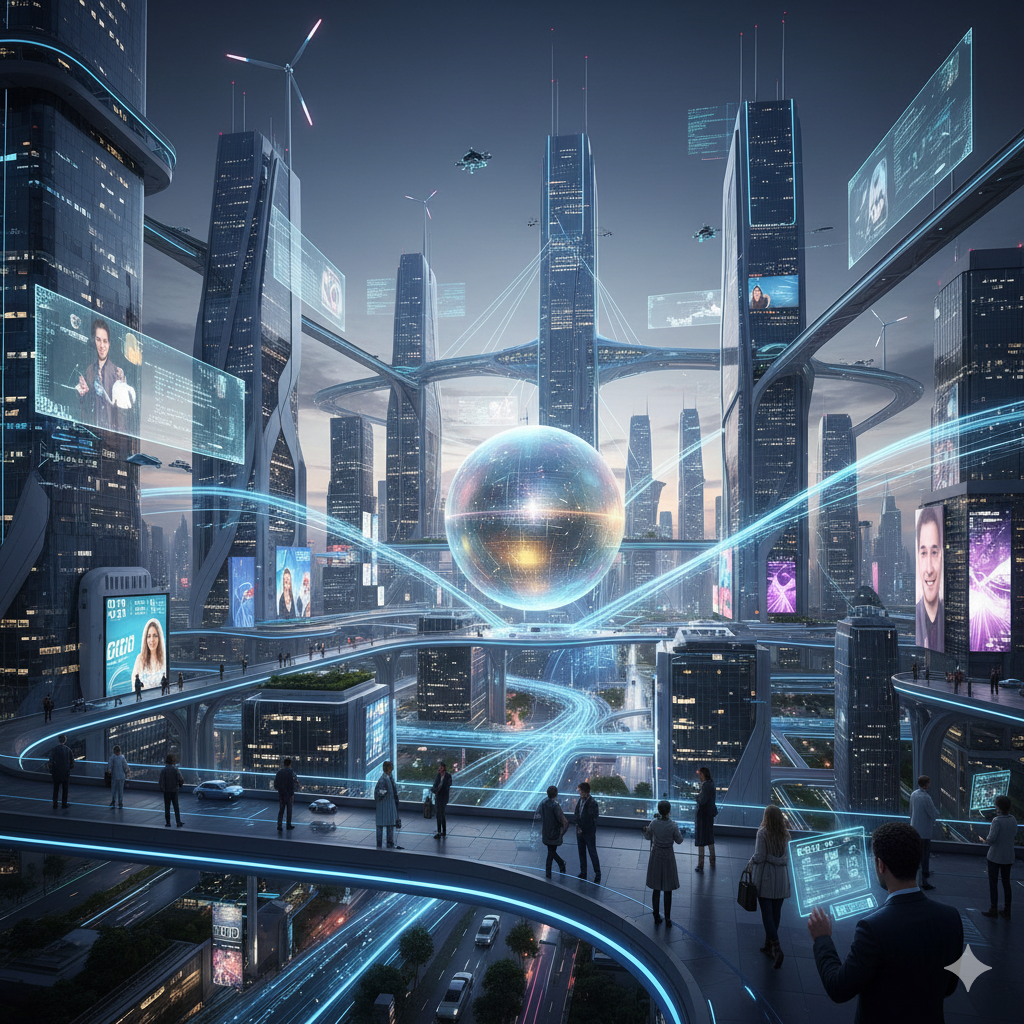
▲ Digital transformation futuristic city (Source: Nano Banana)
Data → Compute → Intelligence. The structural shift reshaping Google, Amazon, Meta, and Microsoft.
In 2023, a powerful narrative took hold:
“Google is done. OpenAI owns the future.”
ChatGPT dominated global attention. Startups felt unstoppable. Big Tech looked slow, exhausted, and perhaps obsolete.
But the story changed.
Between late 2024 and 2025, the industry pivoted in the opposite direction.
Google’s Gemini overtook GPT-4. Google’s TPU began weakening Nvidia’s compute monopoly. Amazon, Meta, and Microsoft launched the largest AI infrastructure investments in their history.
Big Tech didn’t fall. It transformed.
And the transformation points to something deeper: the rise of AI Platforms — a new category only a handful of companies on Earth can operate.
1. Platforms Didn’t Die — They Changed Shape
For two decades, platform dominance came from three assets:
- users
- data
- cloud infrastructure
AI reframed these assets completely.
Data became training fuel. Users became reinforcement signals. Infrastructure became large-scale compute.
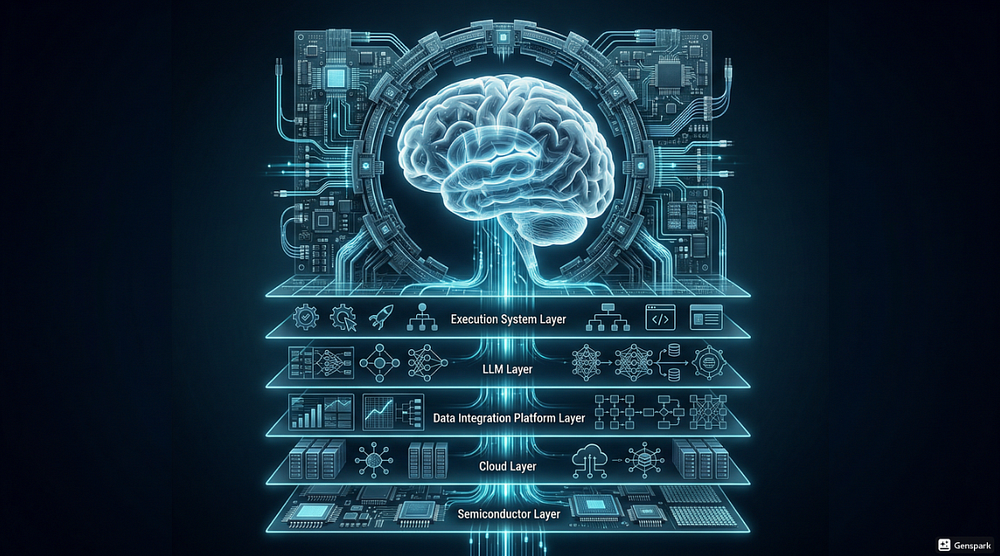
The platform model expanded into a new hierarchy: Data → Compute → Intelligence.
This is why Big Tech didn’t collapse. AI simply revealed the structural advantages they already possessed.
Only these firms had enough users, enough data, and enough global compute to build frontier-scale intelligence.
2. AI CapEx Is the New Arms Race
From 2024 to 2025, Big Tech’s AI capital expenditure surged at historic levels:
Google +37%
Amazon AWS +45%
Meta +60%
Microsoft +68%
These aren’t product budgets — these are infrastructure reallocations.
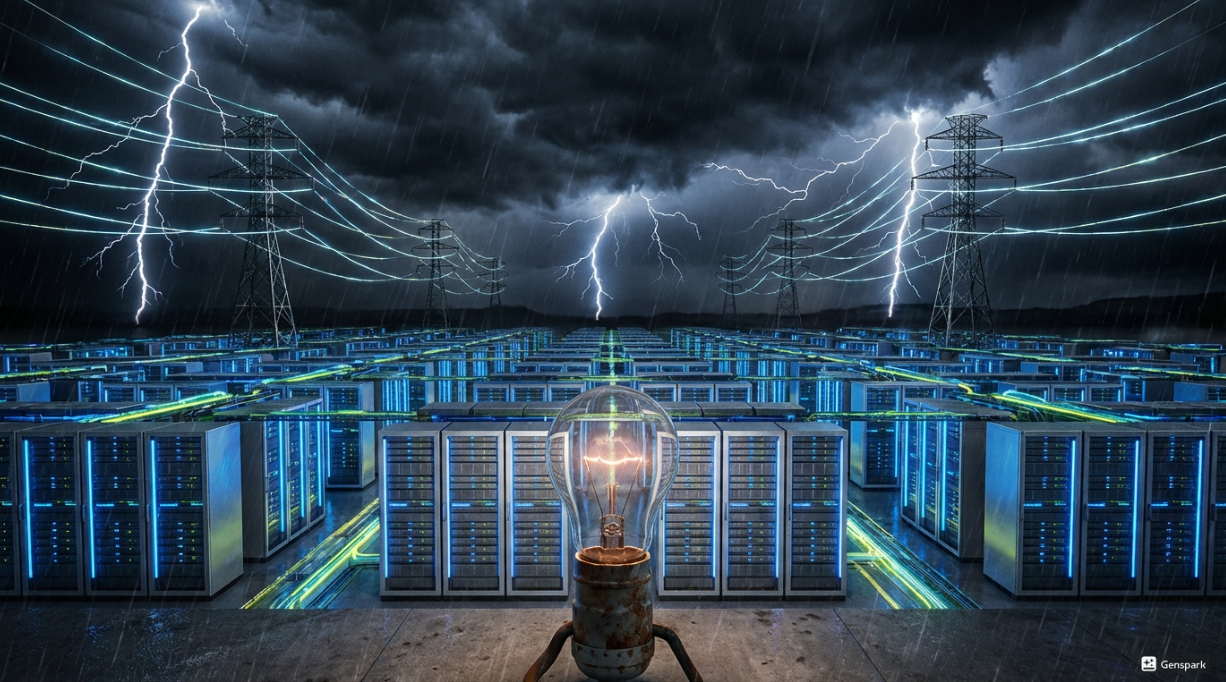
AI isn’t a model you run. It’s an industrial stack consisting of:
- high-density compute clusters
- multi-gigawatt energy supply
- advanced cooling systems
- HBM-heavy memory architectures
- hyperscale data centers
AI is no longer a software industry. It is an infrastructure industry.
And infrastructure industries are won by scale — the kind Big Tech already built.
3. Google’s “Comeback” Was Never a Comeback
In 2023, observers said Google was behind. But that conclusion ignored three structural truths.
3.1 Google held the world’s deepest behavioral dataset
Search queries, YouTube, Gmail, Maps, Android. Not scraped text — but real, human-behavior-level data.
These are datasets no startup can replicate.
3.2 Google built its own compute: TPU
TPU v5p (2024–2025):
- 30–50% lower training cost than GPT-4 equivalent
- up to 2× better energy efficiency than H100
- 20–30% faster large-model training
Google is not just a software giant. It is a vertically integrated AI hardware company.
3.3 Google operates AI-optimized hyperscale data centers
AI-first power distribution. Custom cooling. TPU farms. End-to-end model training pipelines.
Google didn’t “catch up.” It simply turned on an infrastructure stack it had been building for a decade.
4. The Compute Economy: AI Moves the Entire Supply Chain
Nvidia won the first battle. But the AI war is much larger than GPUs.
Every GPU sold activates the entire compute economy:
- HBM memory (SK Hynix 50%, Samsung 40%)
- foundry capacity (TSMC, Samsung)
- power grid upgrades (transformers, SMRs, HVDC)
- cooling technologies (immersion, chillers)
- materials (Japan, Korea, Taiwan)
- data center construction
If Nvidia generates $100B, the surrounding ecosystem creates $250B–$300B.
AI is not a chip story. It is a supply-chain story.
Compute is the new oil — and its value chain spans continents.
5. AI Isn’t a Feature — It’s Corporate Architecture
2025 saw over 22,000 tech layoffs. The headline read “tech slowdown.”
But the deeper story was structural:
- automated coding
- autonomous customer support
- warehouse robotics
- forecasting optimization
- back-office automation
AI is not a function. AI is the operating system of the modern corporation.
Companies aren’t shrinking — they’re rewiring themselves around intelligence.
6. South Korea: The Silent Pivot of AI Supply Chains
South Korea is emerging as one of the most critical players in the global compute economy.
HBM market share:
SK Hynix 50%
Samsung 40%
Micron 10%
Each AI server requires 8–12 HBM units.
Combine this with Korea’s:
- advanced manufacturing
- battery and energy systems
- smart factory leadership
and the country becomes a structural anchor in the AI supply chain.
As AI scales, Korea scales.
7. Regulation Is Rising — but AI Accelerates Anyway
The U.S. and EU expanded rules on safety, antitrust, and data governance.
Yet Big Tech accelerated:
- hyperscale data center build-outs
- custom AI chip design
- enterprise AI deployments
- AI-native product ecosystems
AI is regulated, but not stoppable. Its economic gravity is too strong.
8. The New Structure of Power:
Data → Compute → Intelligence
This simple sequence explains modern technology better than any narrative.
Data creates compute demand. Compute enables intelligence. Intelligence creates new industries.
And only four companies fully control this chain:
Google, Amazon, Meta, Microsoft.
This is not luck, nor momentum. It is structure — and structure compounds.
9. Where the Next Decade of Growth Will Come From
The industries with the strongest tailwinds are all infrastructure-anchored:
- HBM & memory semiconductors
- AI compute infrastructure (data centers, cooling, energy)
- AI-driven manufacturing
- nuclear, hydrogen, EV batteries
- semiconductor supply-chain realignment
These markets are not speculative. They are policy-backed, demand-guaranteed industrial systems.
The AI era will not be won by building the most models — but by building the infrastructure that allows models to exist.
Final Thought
The belief that Big Tech is over misunderstands the moment.
Big Tech is not shrinking. It is consolidating power at a deeper, infrastructural level.
Only the companies that control Data → Compute → Intelligence will define the next decade.
Everyone else participates in fragments.
The era of Big Tech didn’t end. It evolved — into something far bigger, more structural, and harder to disrupt.
We’re not watching the decline of platforms. We’re watching the rise of AI Platforms.
And this time, the stakes are global.
BeomView: Structure, not information. Frames, not data.
메타데이터
- post_id
- 3fa8faf7654c
- slug
- data-compute-intelligence-why-only-four-companies-can-win-the-ai-platform-race-3fa8faf7654c
- url
- https://medium.com/@beomview/data-compute-intelligence-why-only-four-companies-can-win-the-ai-platform-race-3fa8faf7654c
- canonical_url
- https://medium.com/@beomview/data-compute-intelligence-why-only-four-companies-can-win-the-ai-platform-race-3fa8faf7654c
- author_url
- https://medium.com/@beomview
- status
- ok
- fetched_at
- 2026-07-16 22:47:37