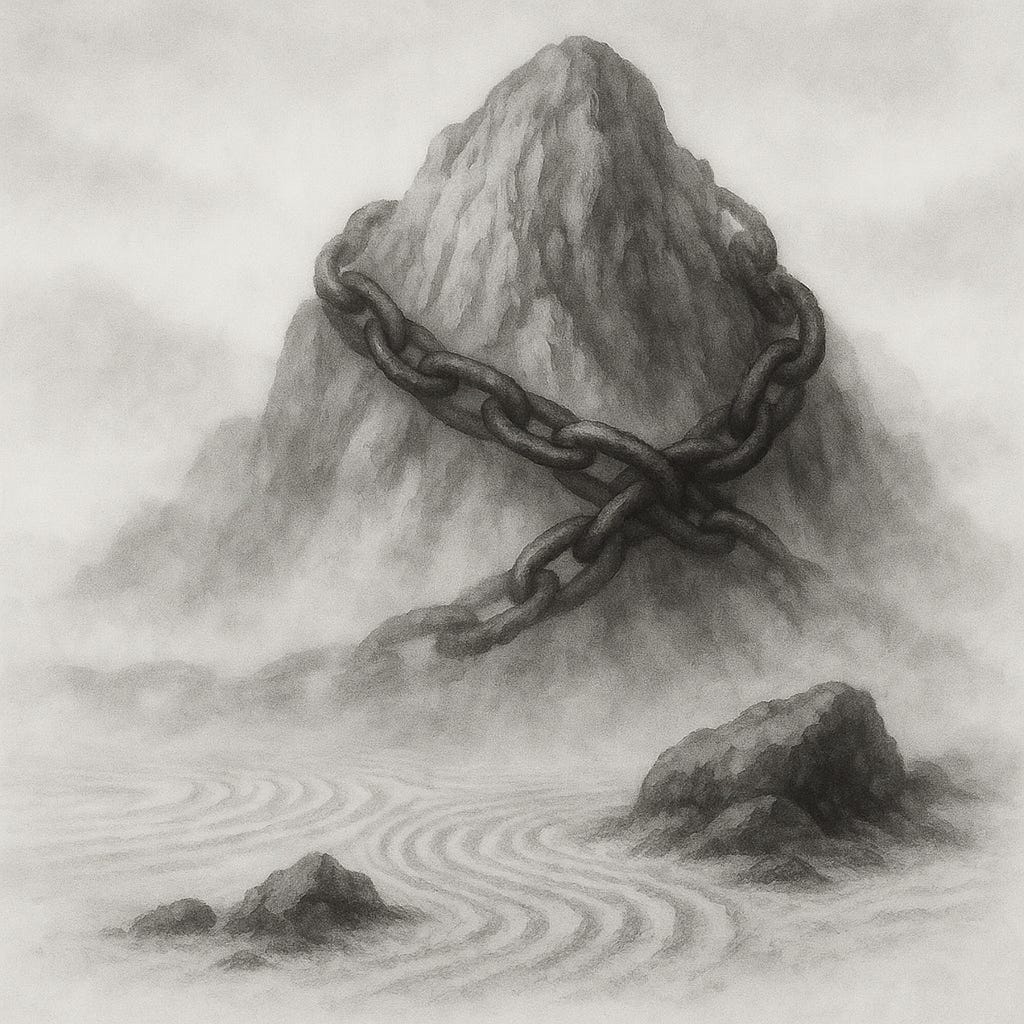
Why Your Thoughts Matter More Than Events
Most people believe that events determine how they feel. A difficult conversation causes anger. A setback creates frustration. Praise…
Why Your Thoughts Matter More Than Events
Most people believe that events determine how they feel. A difficult conversation causes anger. A setback creates frustration. Praise brings confidence. Criticism produces self-doubt. We naturally assume that what happens to us is responsible for our emotional state.
Stoicism challenges this assumption. It argues that events themselves are neither good nor bad. What gives them meaning is the judgement we make about them. The same event can produce completely different responses depending on how it is interpreted. This is why the Stoics placed such importance on examining the mind rather than attempting to control the world.
Learning to recognise the difference between an event and your interpretation of it is one of the most practical skills Stoicism offers. It does not remove difficulty from life, but it changes how difficulty is experienced. Once you understand that your thoughts sit between the world and your emotions, you gain the ability to respond with greater clarity instead of reacting automatically.

Events Are Neutral. Interpretation Gives Them Meaning.
The Stoics did not claim that painful events are pleasant or that hardship should be ignored. They recognised that loss, failure, illness, and conflict are genuine parts of life. Their argument was more precise: events happen first, but suffering is often intensified by the meaning we attach to those events.
Consider two people who lose their jobs. One immediately concludes that they are a failure and that their future is ruined. The other sees the same event as difficult but temporary — a problem that requires action rather than despair. The circumstances are identical, yet the emotional experience is entirely different.
The difference lies not in the event itself, but in the interpretation.
This principle applies to countless situations throughout daily life. Someone interrupts you during a meeting. A stranger speaks abruptly. Plans change unexpectedly. None of these events arrive carrying emotional meaning. That meaning is supplied by the mind.
When we fail to distinguish between reality and interpretation, we begin treating our assumptions as facts. We tell ourselves stories about what happened, why it happened, and what it says about us. Before long, we are responding more to our own narrative than to the event itself.
Recognising this distinction creates space for clearer thinking.
Ask yourself:
- What actually happened?
- What assumptions have I added?
- Would someone else necessarily interpret this in the same way?
These questions separate observable facts from personal judgement. That separation is where greater freedom begins.
Judgement Shapes Experience
According to Stoicism, it is not external events that disturb us but the judgements we make about them. Every experience passes through the filter of our beliefs, expectations, values, and assumptions before it becomes an emotional response.
This means our internal dialogue deserves far more attention than most people give it.
Imagine receiving constructive criticism from a colleague. If you judge criticism as evidence of incompetence, you may become defensive or discouraged. If you judge it as useful information, the same conversation becomes an opportunity to improve.
Nothing about the external event has changed.
The Stoics understood that judgement is often so fast we fail to notice it. An impression appears, we immediately accept it as true, and emotion follows almost instantly. Because the process feels automatic, it seems as though events themselves caused the emotion.
In reality, judgement happened in between.
This does not mean every judgement is incorrect. Some are accurate and appropriate. The important question is whether your judgement has been examined or merely accepted.
Before accepting your first interpretation, consider:
- Is there evidence for this conclusion?
- Am I confusing possibility with certainty?
- Is there another reasonable explanation?
- Would I advise someone else to think this way?
Judgement is not something that happens once. It is an ongoing process. The more carefully it is exercised, the more stable your responses become.
Thoughts Create Emotional Consequences
Emotions are not enemies in Stoicism. They are signals that reveal how we have interpreted a situation. Strong emotional reactions often point towards equally strong underlying judgements.
If you believe every mistake damages your worth, mistakes will produce anxiety.
If you believe disagreement is personal rejection, criticism will create resentment.
If you believe uncertainty is unacceptable, unexpected change will produce fear.
In each case, the emotional consequence follows the thought that came before it.
This understanding shifts the focus away from trying to suppress emotions. Instead, it encourages examining the beliefs that generated them. Lasting change rarely comes from forcing yourself to feel differently. It comes from learning to think more clearly.
This approach also encourages responsibility without blame.
You cannot always control what you initially feel. Initial impressions often arise automatically. What you can control is whether you reinforce those impressions through repeated thought or whether you examine them carefully before accepting them.
Over time, repeated patterns of judgement become habits of mind. They influence how you see yourself, how you view others, and how you approach challenges.
Changing those habits requires patience, but it begins with recognising that thoughts are not passive observations. They actively shape emotional experience.
Awareness Is a Skill
If judgement influences emotion, then awareness becomes one of the most valuable skills we can develop.
Awareness means noticing what is happening inside your own mind before reacting to it. It is the ability to observe your thoughts rather than becoming completely absorbed by them.
This skill does not develop automatically. Like physical fitness, it improves through deliberate practice.
Many of our interpretations occur so quickly that they seem invisible. We move directly from event to emotion without recognising the chain of thinking that connects the two.
Awareness slows this process down.
Rather than immediately concluding, “This is terrible,” awareness asks, “What am I telling myself about this?”
Rather than assuming, “They disrespected me,” awareness asks, “Do I know that to be true?”
This small pause changes everything.
It allows reason to enter before emotion takes complete control. It creates enough distance to evaluate impressions instead of simply obeying them.
Practical ways to strengthen awareness include:
- Pausing before responding to emotionally charged situations.
- Naming the thought you are experiencing rather than identifying with it.
- Writing down recurring reactions to identify patterns.
- Reviewing the day to notice where automatic judgements appeared.
Awareness does not eliminate difficult thoughts. It simply prevents them from directing your behaviour without examination.
Interrupting Automatic Reactions
The ultimate aim is not to eliminate emotion or become detached from life. It is to replace automatic reaction with deliberate response.
Automatic reactions are driven by habit. Someone criticises you and you immediately become defensive. Plans change and frustration appears instantly. An inconvenience occurs and irritation takes over before you have consciously considered the situation.
Stoicism teaches that these reactions can be interrupted.
The interruption may only last a few seconds, but those seconds create the opportunity to choose your response instead of repeating an old pattern.
The process is straightforward:
First, notice the event.
Second, identify your immediate interpretation.
Third, question whether that interpretation is accurate.
Finally, choose the response that aligns with reason rather than impulse.
This process rarely feels natural at first. Years of habitual thinking cannot be replaced overnight. But each interruption weakens the automatic pattern and strengthens deliberate judgement.
Progress should not be measured by never reacting emotionally. It should be measured by how quickly you recognise the reaction and return to thoughtful action.
Every pause is practice.
Practical Application
Understanding these ideas matters only if they change how you approach ordinary life. Stoicism is not concerned with abstract theory for its own sake. Its purpose is practical improvement.
Most opportunities to practise this principle appear in small, everyday situations rather than dramatic life events.
When something frustrates you, separate the event from your interpretation before responding.
When criticism arrives, ask whether you are reacting to the words themselves or to what you believe they imply.
When plans change unexpectedly, notice whether your distress comes from the inconvenience or from the expectation that life should always follow your preferred schedule.
A simple daily practice might look like this:
- Pause whenever you notice a strong emotional reaction.
- Describe the event using only observable facts.
- Identify the judgement you have added.
- Ask whether that judgement is necessary or accurate.
- Choose the next action based on reason rather than immediate emotion.
At the end of each day, reflect on one situation where your interpretation shaped your experience.
Ask yourself:
- What happened?
- What did I immediately believe?
- Was that belief justified?
- How could I interpret it more clearly next time?
Repeated consistently, this practice develops greater awareness and steadier judgement. Over time, your responses become less dependent on circumstance and more grounded in deliberate thought.
Reflection
Life continually presents situations outside our control. Other people’s behaviour, unexpected setbacks, changing circumstances, and uncertainty will always remain part of the human experience.
What remains within our influence is the meaning we assign to those experiences.
This is why Stoicism places such importance on examining thought. Events begin the process, but judgement shapes the experience that follows. The quality of your inner life depends less on what happens to you than on how carefully you examine the conclusions your mind reaches.
The aim is not to deny reality or suppress emotion. It is to become more deliberate about the thoughts you accept as true.
When you learn to question your judgements instead of immediately believing them, you begin to respond with greater clarity. And as clarity improves, so does the quality of your actions.
The world will continue to present challenges. Your practice is to ensure that your first interpretation is never your final conclusion.
메타데이터
- post_id
- 3fab082bc12e
- slug
- why-your-thoughts-matter-more-than-events-3fab082bc12e
- url
- https://medium.com/@thestoicjournal/why-your-thoughts-matter-more-than-events-3fab082bc12e
- canonical_url
- https://medium.com/@thestoicjournal/why-your-thoughts-matter-more-than-events-3fab082bc12e
- author_url
- https://medium.com/@thestoicjournal
- status
- ok
- fetched_at
- 2026-07-09 13:13:48