The Timeless Values Portrayed in Little House on the Prairie
Illustrating a balanced way to live out biblical principles
The Timeless Values Portrayed in Little House on the Prairie
Illustrating a balanced way to live out biblical principles

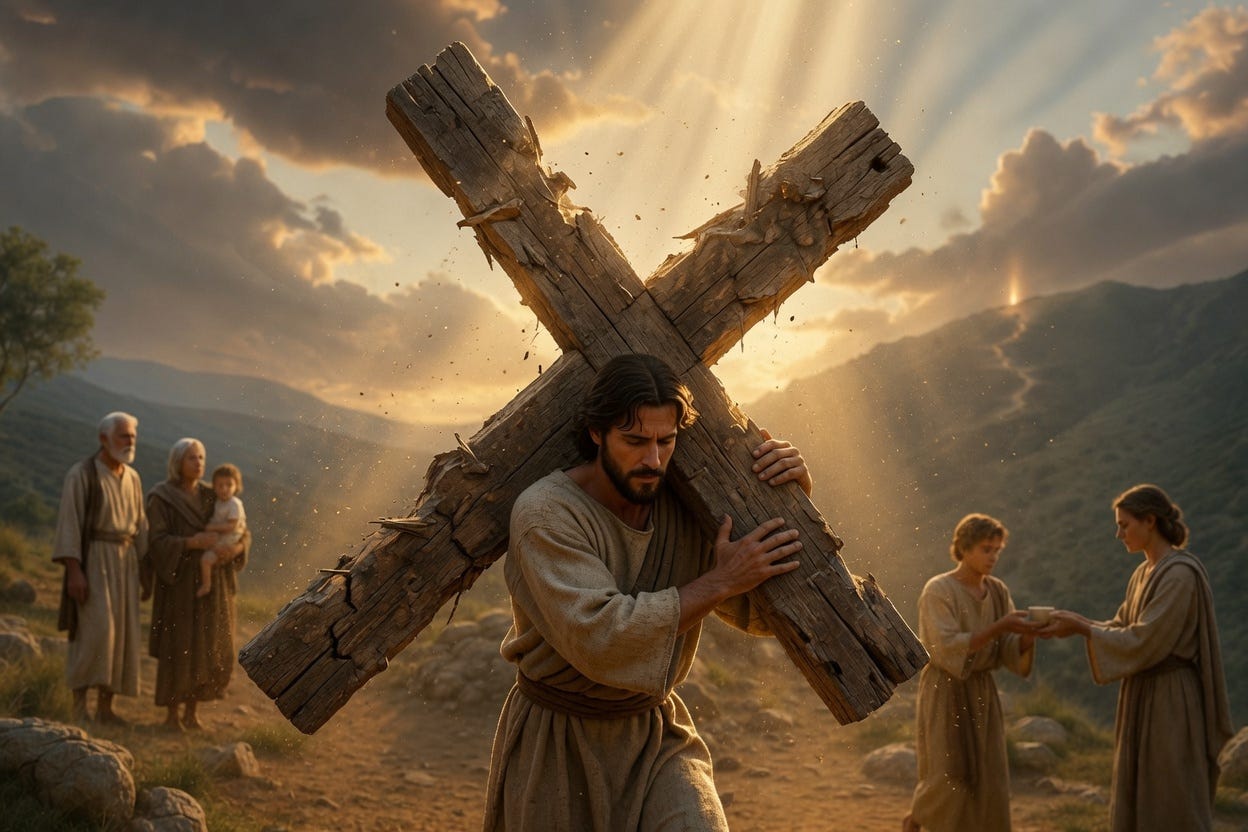
Image by Author via Raphael
Being in the hospital gives you a lot of time to watch TV. I grew up in the 70s when the Little House on the Prairie TV series was in its heyday, but I never watched it; I thought it was dumb. This past week, I watched many episodes of the series and was astounded at the impact each one had on me. I marveled at the balanced way the Ingalls family lived out biblical principles; the parents being neither too harsh nor too lenient in their implementation.
This series is based on Laura Ingalls Wilder’s books and highlights the enduring virtues of faith, family, hard work, and perseverance in the face of struggle. Currently, this series is relegated to its own “genre,” or even its own network, so the general public doesn’t have to be exposed to a show based on Christianity.
Faith in God’s providence
Each episode shows how the Ingalls family faces and overcomes hardships like crop failures, illness, poverty, and loss. In many episodes, the Bible is opened, and Scripture is read aloud to help someone face a personal crisis. You witness the family consistently turning to prayer and trust in God’s provision. The family models what it means to heed the biblical call to rely on the Lord in all circumstances. It also reminds people that faith is not about escaping hardship but about enduring it with confidence in God’s care.
Trust in the LORD with all your heart and lean not on your own understanding; in all your ways acknowledge Him, and He will make your paths straight. (Proverbs 3:5–6, BSB).
Family and community
The Ingalls family’s love for family and their emphasis on maintaining peace and unity echo the biblical design for family life. Many episodes show the parents teaching their children moral values, disciplining them with love, and nurturing them in faith, demonstrating principles rooted in Scripture.
Train up a child in the way he should go, and when he is old, he will not depart from it. (Proverbs 22:6, BSB).
The family’s neighbors come together to help each other, whether it’s building homes, sharing food, or comforting the grieving; the small community of Walnut Grove demonstrates the biblical principle of bearing one another’s burdens. This spirit of mutual care is in stark contrast to much of today’s modern culture, which admires individual independence and values wealth and prosperity over deep, reciprocal relationships.
Carry one another’s burdens, and in this way you will fulfill the law of Christ (Galatians 6:2, BSB).
The show illustrates how God designed people to live in fellowship. It’s a great reminder of how He wants us to reflect His love for others through our service.
Contentment and simplicity
In this series, the Ingalls live day to day with not much more than the basic necessities. Yet in nearly every episode, you hear peals of laughter, see a lot of hugging, and feel a whole lot of love. This is proof that the family is enjoying life and finding fulfillment in the little things that bring them gratitude and joy. Their lifestyle models the biblical commands to be content with what you have and to be a good steward of all your God-given blessings.
But godliness with contentment is great gain. For we brought nothing into the world, and we can take nothing out of it (1 Timothy 6:6–7, BSB).
We see from this show that happiness doesn’t come from having great possessions but from a heart aligned with God’s will. The Ingalls family exhibits the humility and gratitude that Paul talked about in Philippians 4:11–12 (BSB), where he learned to be content “in any and every situation.”
Morality and forgiveness
We see from this series examples of how to make good moral decisions. Those decisions that involve doing the hard things in life, like being honest when it would be more beneficial to be dishonest. Also, those difficult decisions that require compassion and forgiveness when it would be easier to hold a grudge or ignore a responsibility.
In one episode, where the middle child, Laura, struggles with jealousy and anger, her “Ma” and “Pa” guide her to choose repentance and reconciliation instead. They maintain their commitment to live by biblical truth by confronting Laura with her sin, while also teaching her that grace and forgiveness are always available through Christ. In this way, they align their family’s behavior with the gospel message: that righteousness is not about perfection but about repentance and grace.
Be kind and tenderhearted to one another, forgiving each other just as in Christ God forgave you (Ephesians 4:32, BSB).
Hard work and perseverance
The Ingalls family models a good work ethic. In many episodes, there are scenes of the whole family pitching in to help each other. They all labor diligently (sometimes even when they’re in a lot of pain), not for wealth but to honor God and care for one another. This reflects how God views work as a calling from Him.
Whatever you do, work at it with all your heart, as working for the Lord and not for men (Colossians 3:23, BSB).
The way the Ingalls family and the families in their small community persevere through trials rather than avoid them aligns with this verse in James.
Blessed is the man who perseveres under trial, because when he has stood the test, he will receive the crown of life that God has promised to those who love Him (James 1:12, BSB).
Faith in action
This series demonstrates what active faith looks like. In it, we see them consistently living morally by their acts of faith, kindness, service, and generosity. This takes courage, which they receive daily from reading Scripture. Their example reminds us that living biblically isn’t about legalism or ritual, but about love expressed through obedience and service.
Faith by itself, if it does not have works, is dead (James 2:17, BSB).
The episode titled *Whisper Country* drives this point home with poignant force. It’s the one where the Ingalls oldest daughter, Mary, goes to teach school in an extremely backward, tiny, rural community. The townspeople are scared to death of an overbearing elderly lady named Miss Peel, who is believed to have special powers granted by God. Miss Peel hates Mary and is determined to force her to leave the town. Mary stands up to her and exposes the fact that Miss Peel can’t even read the Bible. Events turn in Mary’s favor when her name is cleared of the lies told about her, and her teaching resumes.
Contrast between the old and new covenants
Little House on the Prairie depicts authentic biblical principles, emphasizing grace over legalism. In the Old Testament, believers were bound by all the Mosaic laws. In contrast, the New Testament makes clear that believers are not bound by the Old Covenant laws (Romans 10:4; Galatians 3:23–25; Ephesians 2:15). These verses illustrate the need to live by the law of Christ, which is love demonstrated through faith and obedience. Jesus modeled this kind of love by shedding His blood on the cross to pay for our sins, which completed His Father’s mission for Him on Earth.
Conclusion
I learned a lot by watching Little House on the Prairie. It reminded me of a time when much of society lived in a way that deeply honored God. The majority of people lived out and valued biblical principles of love for family, contentment, honesty, and perseverance over wealth, status, and popularity.
The practical situations represented in this series remind us that we can walk daily with God, using His Word to guide and strengthen us. Even in ordinary circumstances, the Ingalls family’s story beautifully illustrates this truth: that a simple, faithful life can produce contentment and fulfillment, enabling us to shine brightly for God’s glory.
메타데이터
- post_id
- 3fb5d80c14de
- slug
- the-timeless-values-portrayed-in-little-house-on-the-prairie-3fb5d80c14de
- url
- https://medium.com/koinonia/the-timeless-values-portrayed-in-little-house-on-the-prairie-3fb5d80c14de
- canonical_url
- https://medium.com/koinonia/the-timeless-values-portrayed-in-little-house-on-the-prairie-3fb5d80c14de
- author_url
- https://medium.com/@dhodges351
- status
- ok
- fetched_at
- 2026-06-25 12:15:08