How Better Distance Control Builds Confidence on the Course
Ask most weekend golfers what they want more of, and the answer usually isn’t complicated.
How Better Distance Control Builds Confidence on the Course
Ask most weekend golfers what they want more of, and the answer usually isn’t complicated.
More consistency. More confidence. Fewer shots that feel like total guesses.
Distance control plays a bigger role in that than many golfers realize. It’s easy to blame a bad approach shot on the swing, the lie, the wind, or just “not having it today.” And sometimes that’s true. But a lot of missed greens and awkward chips start before the swing even happens.
They start with a number that wasn’t clear.
Maybe the flag looked closer than it was. Maybe the front bunker was farther out than expected. Maybe the golfer picked a club based on the best shot they’ve ever hit with it, not the shot they normally hit.
That little bit of uncertainty can creep into the setup, the tempo, and the decision itself. Better distance control doesn’t make golf easy, but it does make the game feel less random.
Confidence Starts Before the Swing
A confident golf swing usually starts with a clear decision.
When you stand over the ball thinking, “I think this is the right club,” your body knows there’s doubt in the system. You might swing harder to make sure it gets there. You might guide the club because you’re afraid of going long. You might change your mind halfway through the motion.
None of those are great.
When you know the yardage, understand the carry distance, and choose a club that fits your normal swing, it becomes easier to commit. You’re not trying to manufacture a perfect shot. You’re just making a decision and trusting it.
That’s a big deal for weekend golfers, because most of us don’t play enough to rely on feel alone every time.
Distance Control Is More Than Knowing the Pin Yardage
A lot of golfers think distance control means knowing how far it is to the flag.
That’s part of it, but not the whole thing.
Good distance control also means knowing:
- how far it is to clear a bunker
- how much room is behind the green
- whether the pin is front, middle, or back
- where the safest miss is
- how far your club actually goes on an average swing
Sometimes the smartest shot is not aimed at the flag at all. If the pin is tucked behind a bunker, the better play might be the middle of the green. If there’s water long, taking one less club may save a big number. If the front edge is open, landing short and running it up might be the right move.
Better players think this way all the time. Weekend golfers can borrow the same idea without making the game overly technical.
Guessing Creates Tension
There’s a different feeling between “this is about 150” and “this is 147 to the pin, 138 to cover the front.”
The second one gives you something to work with.
The first one leaves too much open. You may still hit a decent shot, but you’re making the swing with a question mark in your head. Over a full round, those small guesses add up.
One guessed wedge may leave you 35 feet short. One guessed approach may find the bunker. One guessed layup may roll into trouble you didn’t think was in range.
Distance control doesn’t remove mistakes. Golf will always have those. But it reduces the number of mistakes caused by poor information.
Know Your Real Club Distances
This is where many amateur golfers get themselves in trouble.
They remember the one 8-iron they flushed 160 yards and start treating that as their normal 8-iron distance. But if most of their solid 8-irons actually fly 145 to 150, then playing for 160 is going to leave them short more often than not.
Better distance control requires honesty.
Not your best distance. Not your downhill, downwind distance. Not the one you hit perfectly at the range.
Your real distance.
A simple way to think about it is this: choose clubs based on the shot you can repeat, not the shot you hope shows up.
That one adjustment can make approach shots feel calmer almost immediately.
Rangefinders Help Because They Remove One Layer of Doubt
There are a few ways golfers get yardages. Course markers, GPS watches, phone apps, and laser rangefinders all have their place.
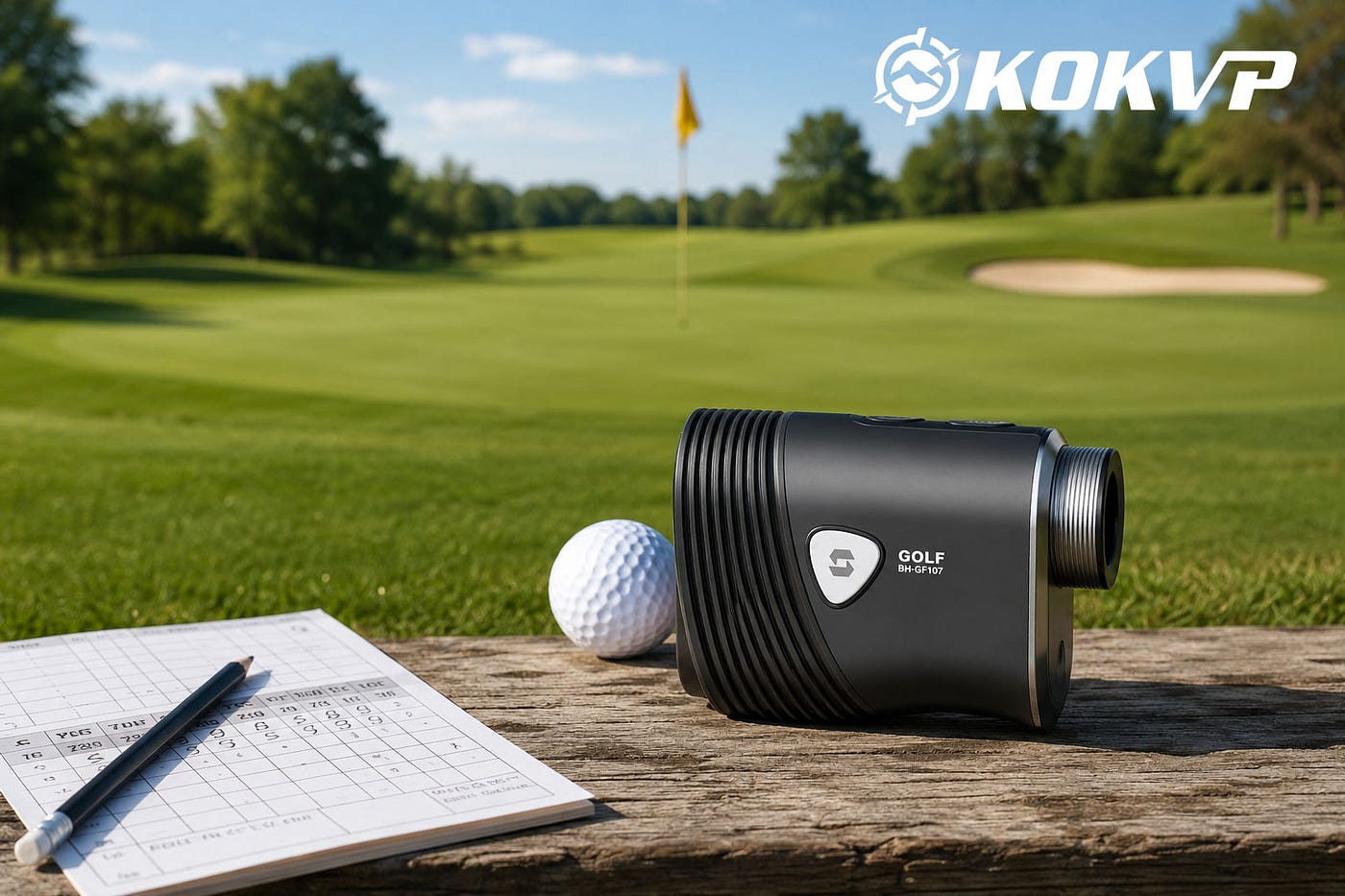
A rangefinder is useful because it gives target-specific distance. You can check the flag, the lip of a bunker, a tree at the corner of a dogleg, or a safe landing area. That makes it easier to build a shot plan instead of just guessing from a marker in the fairway.
I’ve noticed more casual players looking at practical brands like KOKVP when they want a rangefinder that’s simple enough for weekend golf but still useful for real on-course decisions. The point isn’t to turn a Saturday round into a science project. It’s just to get a dependable number and move on.
Used the right way, a rangefinder can actually speed up decision-making. One quick check, one clear number, one committed swing.
Better Distance Control Helps Your Short Game Too
People usually connect distance control with approach shots, but it affects the short game as well.
If you keep missing greens in better spots, your chips become easier. If you know the carry over a bunker, you’re less likely to leave yourself plugged in the sand. If you understand that the back pin has only a few yards behind it, you may choose a safer shot and avoid a tough downhill chip.
Confidence is not only about hitting it close. Sometimes confidence comes from knowing you’ve left yourself a manageable next shot.
That’s real golf for most weekend players.
Stop Trying to Be Perfect
Better distance control is not about becoming robotic.
You don’t need to know every number to the decimal. You don’t need to calculate every slope, wind gust, and spin rate like you’re on TV. In fact, overthinking can make things worse.
The goal is simpler than that:
Get a better number. Pick a realistic club. Choose a smart target. Make a committed swing.
That’s it.
When you do that more often, the game starts to feel different. You still hit bad shots, but fewer of them feel confused. You start to see patterns. You learn which clubs you trust. You stop forcing shots that don’t fit your normal game.
And slowly, confidence builds.
메타데이터
- post_id
- 3fcf20be6770
- slug
- how-better-distance-control-builds-confidence-on-the-course-3fcf20be6770
- url
- https://medium.com/@poxiaoxi2/how-better-distance-control-builds-confidence-on-the-course-3fcf20be6770
- canonical_url
- https://medium.com/@poxiaoxi2/how-better-distance-control-builds-confidence-on-the-course-3fcf20be6770
- author_url
- https://medium.com/@poxiaoxi2
- status
- ok
- fetched_at
- 2026-06-09 15:37:30