Unified: Art, Beauty, and the Body
We do not come to understand humans as a complete whole upon first meeting them. We understand them as a process over time.
This essay serves as a commentary of a section in Merleau-Ponty’s Phenomenology of Perception. I want to specifically focus on the section in Part One: The Synthesis of One’s Own Body, and the subsection, *[b. The unity of the body and the unity of the work of art.]** on page 152.
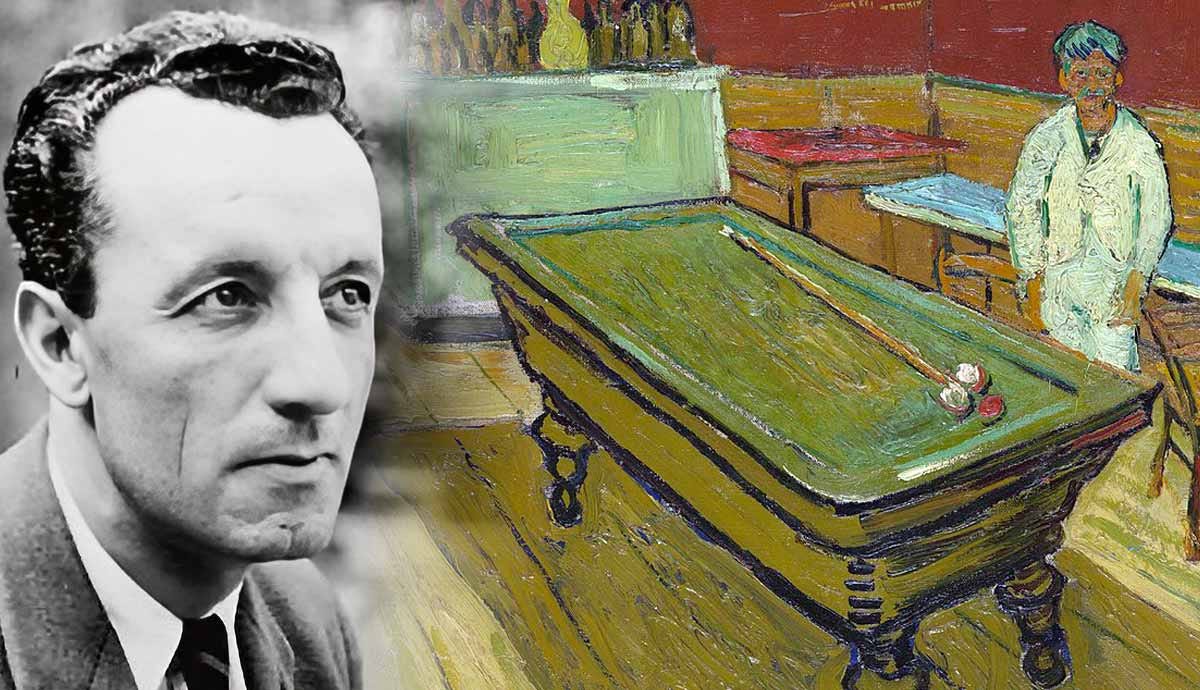
Before I actually get into the essay, I would like to share a few quotes that I believe sum up the section itself. These include art, poetry, music, and novel writing:
“The Body cannot be compared to the physical object, but rather to the work of art.”
“Just as speech does not merely signify through words, but also through accent, tone, gestures, and facial expressions… so too poetry — while it may be accidentally narrating and signifying — is essentially a modulation of existence.”
“… just as the description of a person is drawn from the concrete appearance of his physiognomy. The novelist’s role is not to set forth ideas, or even to analyze characters, but rather to present, without ideological commentary, an inter-human event and to allow it to ripen and burst-forth…
“A novel, a poem, a painting, and a piece of music are individuals, that is, beings in which the expression cannot be distinguished from the expressed, whose sense is only accessible through direct contact, and who send forth their signification without ever leaving their temporal and spatial space.”
One of the reasons that I thoroughly praise Merleau-Ponty, his phenomenology, and his outlook on the world, is because he has thus shifted my outlook upon the world. While I will not necessarily “follow” him as one who would regurgitate his thoughts, I rather find myself philosophizing as an interplay between his thoughts and my own — even revealing that interplay in my two essays, On Beauty.
In my essays about beauty, I wrote:
“It seems, to me, that a natural death is the completion of a story or piece of art. Each step or action of their life is a brushstroke or sentence written; and even if the story or artwork is “unfinished” by a premature natural death, it is still finished as a complete whole.”
My intuition has led me to this idea of unification between humans and art/writing in those essays, as well as in the past before even reading Merleau-Ponty. Seeing time as linear in a sense, I see the temporality of the appreciation of art or beauty, or the timely process of reading a story, as holding a connection to the human as a whole.
We do not come to understand humans as a complete whole upon first meeting them — understanding their likeness, interests, values, and personality — we rather come to understand another human as a process over time — a sentiment that is common and that we can agree on. Just as the poem, artpiece, or novel reveals itself to us over time with active interaction with it, humans thus reveal themselves to us as a process of temporality.
Merleau-Ponty writes:
“It is in this sense that our body is comparable to the work of art. It is a knot of living significations and not the law of a certain number of covariant terms.”
As humans, we aren’t a line of static descriptors that signify who we are, we are a totality of experience. For example, someone may inquire about a friend of mine who stands across the room from us. I could simply list out a series of descriptors that match static instances of them as a person such as tall, lanky, works a solid job, hikes for fun, and lives alone; but that isn’t really who they are, is it? I would ask about why they are inquiring about them, of course, but in most instances I would describe them through relational means — what is the description of them that I have perceived. I would then say that they are an outgoing and funny person who may take jokes a little too far sometimes; they have a good heart and care deeply for their dogs at home; and they love to hike because it grants them a sense of adventure in their life. So, instead of simply listing attributes, I am more so describing my lived experience with them. This, I think, lets us understand who a person actually may be, if only done so from a perspective that is my own.
The lived patterns and significance of a person is, now, thus extended to areas such as art, poetry, novels, or music. We experience these areas, not as static descriptors, but as a thing temporally experienced. I wouldn’t explain my favorite song to someone by merely saying the meaning of it, I would explain how it made me feel, the significance of the song to me, and why it’s a great song. I apply this thinking towards the other areas of poetry, novels, and art as well. They exist as an object of temporality, only understood as an experience over time. How we come to understand them is often quite different, but the initial understanding of them is through that temporality and continued experience.

The Union of Humanity And Nature by Agota Bričkutė
In this sense, when I compare a natural death to the completion of a story or piece of art, I genuinely mean that as a comparable thing, not something that I simply used for an example. I also think that in making the comparisons of the body (human) to works of art or novels, Merleau-Ponty is also showing us the intertwinement of us as humans and the world around us. We’re not disconnected beings perceiving other objects or beings as fundamentally separate from us. The perception we hold as humans connects us as a living whole. I find this to be utterly beautiful because it shows we aren’t disconnected beings, even despite our attempts to disconnect us from reality. Those attempts are always futile, we are fundamentally connected to the world around us.
메타데이터
- post_id
- 3fdca05c4383
- slug
- this-essay-serves-as-a-commentary-of-a-section-in-merleau-pontys-phenomenology-of-perception-3fdca05c4383
- url
- https://medium.com/@writer-in-the-world/this-essay-serves-as-a-commentary-of-a-section-in-merleau-pontys-phenomenology-of-perception-3fdca05c4383
- canonical_url
- https://medium.com/@writer-in-the-world/this-essay-serves-as-a-commentary-of-a-section-in-merleau-pontys-phenomenology-of-perception-3fdca05c4383
- author_url
- https://medium.com/@writer-in-the-world
- status
- ok
- fetched_at
- 2026-08-12 11:02:35