Commodity Tokenization: Bridging Traditional Markets and Blockchain
For centuries, commodities such as gold, silver, oil, agricultural products, and industrial metals have served as the backbone of global…
Commodity Tokenization: Bridging Traditional Markets and Blockchain
For centuries, commodities such as gold, silver, oil, agricultural products, and industrial metals have served as the backbone of global commerce. These assets underpin financial markets, supply chains, and economic development worldwide. Yet despite their importance, commodity markets often face challenges related to accessibility, liquidity, settlement efficiency, and transparency.
Blockchain technology is introducing a new model for commodity ownership and trading through **commodity tokenization**. By converting physical commodities into blockchain-based digital assets, organizations can unlock greater liquidity, improve market accessibility, and streamline asset management.
As the broader market for real-world asset (RWA) tokenization continues to expand, commodity tokenization is emerging as one of the most promising applications of blockchain technology. It enables traditional commodity markets to benefit from the efficiency, transparency, and programmability of digital assets while maintaining ties to tangible underlying resources.
What Is Commodity Tokenization?
Commodity tokenization is the process of converting ownership rights or economic interests in physical commodities into blockchain-based digital tokens.
Each token represents a specific quantity or share of an underlying commodity, such as:
- Gold
- Silver
- Platinum
- Oil reserves
- Natural gas
- Copper
- Agricultural products
- Carbon credits
- Renewable energy certificates
These digital tokens are issued on a blockchain and backed by legally verifiable ownership structures, custody arrangements, or asset reserves.
Rather than purchasing and storing a physical commodity directly, investors can buy and hold tokens that represent ownership rights in the underlying asset.
Why Traditional Commodity Markets Face Challenges
Although commodity markets are among the world’s largest financial sectors, they often encounter operational limitations.
High Entry Barriers
Many commodities require significant capital investments, making participation difficult for smaller investors.
Limited Liquidity
Certain commodity investments can be difficult to buy or sell quickly.
Complex Settlement Processes
Traditional transactions often involve multiple intermediaries, paperwork, and lengthy settlement periods.
Custody and Storage Costs
Physical commodities require secure storage, insurance, and management.
Geographic Restrictions
Cross-border trading may involve regulatory complexities and operational inefficiencies.
These challenges create opportunities for blockchain-enabled solutions.
How Commodity Tokenization Works
Commodity tokenization generally follows a structured process designed to ensure legal ownership and asset backing.
1. Asset Identification and Verification
The commodity is identified and independently verified.
Examples include:
- Gold stored in vaults
- Silver reserves
- Oil production rights
- Agricultural inventories
2. Custody Arrangements
A qualified custodian holds and secures the physical asset.
Documentation confirms ownership and reserve backing.
3. Legal Structuring
Issuers establish legal frameworks connecting digital tokens to the underlying commodity.
Common structures include:
- Trusts
- Special Purpose Vehicles (SPVs)
- Commodity funds
- Custodial agreements
4. Smart Contract Development
Blockchain smart contracts govern:
- Token issuance
- Ownership records
- Transfers
- Compliance rules
- Redemption mechanisms
5. Token Issuance
Digital tokens are minted and distributed to approved investors.
6. Secondary Trading
Tokenized commodities may be traded on regulated marketplaces or digital asset exchanges, subject to applicable regulations.
Types of Commodities Suitable for Tokenization
Virtually any commodity with verifiable ownership and custody structures can be tokenized.
Precious Metals
Among the most popular tokenized commodities:
- Gold
- Silver
- Platinum
- Palladium
Precious metal tokenization allows investors to gain exposure without physically storing bullion.
Energy Commodities
Energy-sector tokenization is gaining traction through:
- Oil reserves
- Natural gas assets
- Renewable energy certificates
- Renewable energy infrastructure
Agricultural Commodities
Blockchain-based tokens can represent:
- Wheat
- Corn
- Coffee
- Cocoa
- Cotton
- Sugar
Industrial Metals
Growing industrial demand makes these assets attractive for tokenization:
- Copper
- Nickel
- Lithium
- Aluminum
Environmental Commodities
Sustainability markets increasingly rely on blockchain infrastructure for:
- Carbon credits
- Renewable Energy Certificates (RECs)
- Biodiversity credits
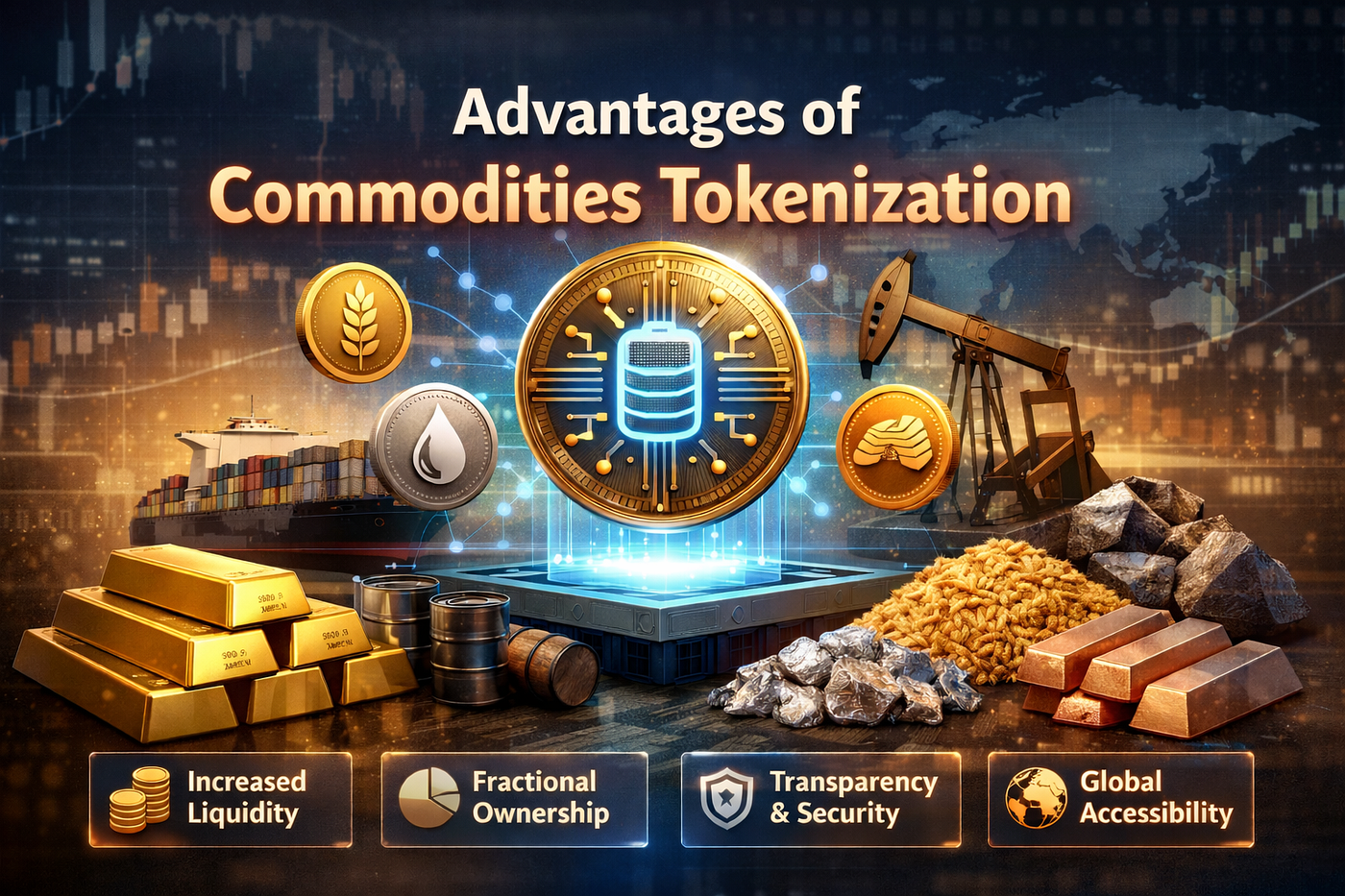
Benefits of Commodity Tokenization
Fractional Ownership
One of the most significant advantages of tokenization is fractional ownership.
Rather than purchasing large commodity positions, investors can acquire smaller portions represented by digital tokens.
This lowers barriers to entry and expands participation.
Enhanced Liquidity
Traditional commodity investments often lack flexibility.
Tokenized assets can be traded more efficiently, potentially creating more liquid markets.
Global Investor Access
Blockchain networks operate globally, enabling broader participation from qualified investors across jurisdictions.
Faster Settlement
Traditional commodity transactions may take days to settle.
Blockchain-based transactions can significantly reduce settlement times.
Increased Transparency
Blockchain provides immutable transaction records and auditable ownership histories.
Reduced Administrative Costs
Automation reduces reliance on intermediaries and manual processes.
Improved Market Efficiency
Smart contracts automate operational workflows and reduce processing delays.
Gold Tokenization: The Leading Commodity Use Case
Gold remains one of the most widely adopted tokenized commodities.
Traditionally, investors seeking gold exposure have relied on:
- Physical bullion
- Exchange-traded funds (ETFs)
- Futures contracts
- Mining stocks
Tokenized gold introduces an alternative ownership model.
Advantages of Tokenized Gold
- Fractional ownership
- 24/7 accessibility
- Simplified transfers
- Transparent reserves
- Lower operational complexity
By combining the stability of physical gold with blockchain infrastructure, tokenized gold demonstrates how traditional assets can evolve for the digital economy.
Commodity Tokenization and Decentralized Finance (DeFi)
Commodity tokenization is increasingly intersecting with decentralized finance.
Tokenized commodities can potentially be used for:
- Collateralized lending
- Yield generation strategies
- Liquidity pools
- Asset-backed financial products
This integration creates opportunities for commodities to participate in blockchain-based financial ecosystems while retaining links to real-world assets.
The Role of Smart Contracts
Smart contracts are fundamental to commodity tokenization.
They automate:
Ownership Transfers
Blockchain records update ownership automatically after transactions.
Compliance Controls
Transfer restrictions and regulatory requirements can be embedded directly into token logic.
Redemption Mechanisms
Investors may redeem eligible tokens for underlying commodity exposure according to predefined rules.
Reporting and Auditing
Blockchain transparency improves recordkeeping and investor confidence.
Challenges Facing Commodity Tokenization
Despite significant potential, several challenges remain.
Regulatory Uncertainty
Different jurisdictions maintain varying approaches to digital asset regulation.
Asset Verification
Investors must trust that tokenized commodities are properly backed and audited.
Custody Requirements
Secure storage and asset management remain essential.
Market Adoption
Institutional participation continues to develop.
Liquidity Development
Secondary trading infrastructure is still maturing in many regions.
Organizations entering this market must prioritize compliance, governance, and transparency.
Real-World Applications
Commodity tokenization is already supporting a variety of use cases.
Precious Metals Trading
Tokenized gold and silver provide digital ownership of physical reserves.
Energy Asset Financing
Energy companies can raise capital through tokenized commodity-backed structures.
Agricultural Supply Chains
Blockchain improves traceability and ownership management.
Carbon Credit Markets
Tokenization increases transparency and accessibility within sustainability markets.
Industrial Resource Investments
Investors gain exposure to critical materials supporting technology and infrastructure development.
The Future of Commodity Tokenization
The convergence of traditional commodities and blockchain technology is expected to accelerate over the coming decade.
Key trends include:
- Institutional adoption of tokenized commodities
- Growth of regulated digital asset marketplaces
- Expansion of commodity-backed digital securities
- Integration with decentralized finance
- Increased transparency in global commodity trading
- Growth of carbon credit tokenization markets
As financial institutions, regulators, and technology providers continue to build supporting infrastructure, commodity tokenization is positioned to become a major segment of the broader real-world asset tokenization market.
How Spydra Supports Commodity Tokenization
Modern tokenization platforms are helping organizations bridge physical assets and blockchain infrastructure.
Spydra enables organizations to:
- Tokenize commodity-backed assets
- Create compliant digital securities
- Manage investor onboarding and KYC
- Automate lifecycle events
- Implement smart contract-based compliance
- Facilitate transparent ownership management
- Support secondary market readiness
By combining blockchain technology with enterprise-grade compliance tools, organizations can launch and manage commodity tokenization initiatives more efficiently.
Conclusion
Commodity tokenization represents a significant step forward in the evolution of global financial markets. By transforming physical commodities into blockchain-based digital securities, organizations can improve liquidity, increase transparency, reduce operational complexity, and broaden investor participation.
From gold and silver to energy assets, agricultural products, and carbon credits, tokenized commodities are creating new opportunities for issuers and investors alike. As blockchain adoption continues to expand across financial services, commodity tokenization is poised to become a cornerstone of the emerging digital asset economy.
Frequently Asked Questions
What is commodity tokenization?
Commodity tokenization is the process of converting ownership rights in physical commodities into blockchain-based digital tokens.
Which commodities can be tokenized?
Gold, silver, oil, natural gas, agricultural products, industrial metals, carbon credits, and renewable energy certificates can all be tokenized.
What are the benefits of commodity tokenization?
Benefits include fractional ownership, improved liquidity, global investor access, faster settlement, and enhanced transparency.
How does tokenized gold work?
Tokenized gold represents ownership of physical gold held in secure custody, with blockchain tokens serving as digital proof of ownership.
Is commodity tokenization regulated?
Regulation varies by jurisdiction and depends on the structure of the tokenized asset and applicable securities laws.
Can tokenized commodities be traded?
Yes. Subject to regulatory requirements, tokenized commodities may be traded on approved digital asset marketplaces and exchanges.
What role do smart contracts play in commodity tokenization?
Smart contracts automate ownership transfers, compliance controls, reporting, and other operational processes.
How does commodity tokenization support real-world asset tokenization?
Commodity tokenization is a major category of real-world asset tokenization, enabling physical resources to be represented and managed as blockchain-based digital assets.
메타데이터
- post_id
- 3ff9592e2df8
- slug
- commodity-tokenization-bridging-traditional-markets-and-blockchain-3ff9592e2df8
- url
- https://medium.com/@spydra/commodity-tokenization-bridging-traditional-markets-and-blockchain-3ff9592e2df8
- canonical_url
- https://medium.com/@spydra/commodity-tokenization-bridging-traditional-markets-and-blockchain-3ff9592e2df8
- author_url
- https://medium.com/@spydra
- status
- ok
- fetched_at
- 2026-06-12 07:40:50