What Really Deserves a Spot on Your Automation Checklist
You’ve probably heard this again and again: “Automate more”.
What Really Deserves a Spot on Your Automation Checklist
You’ve probably heard this again and again: “Automate more”.
The discussion is one of the most popular ones these days, considering how powerful and beneficial automation can be.
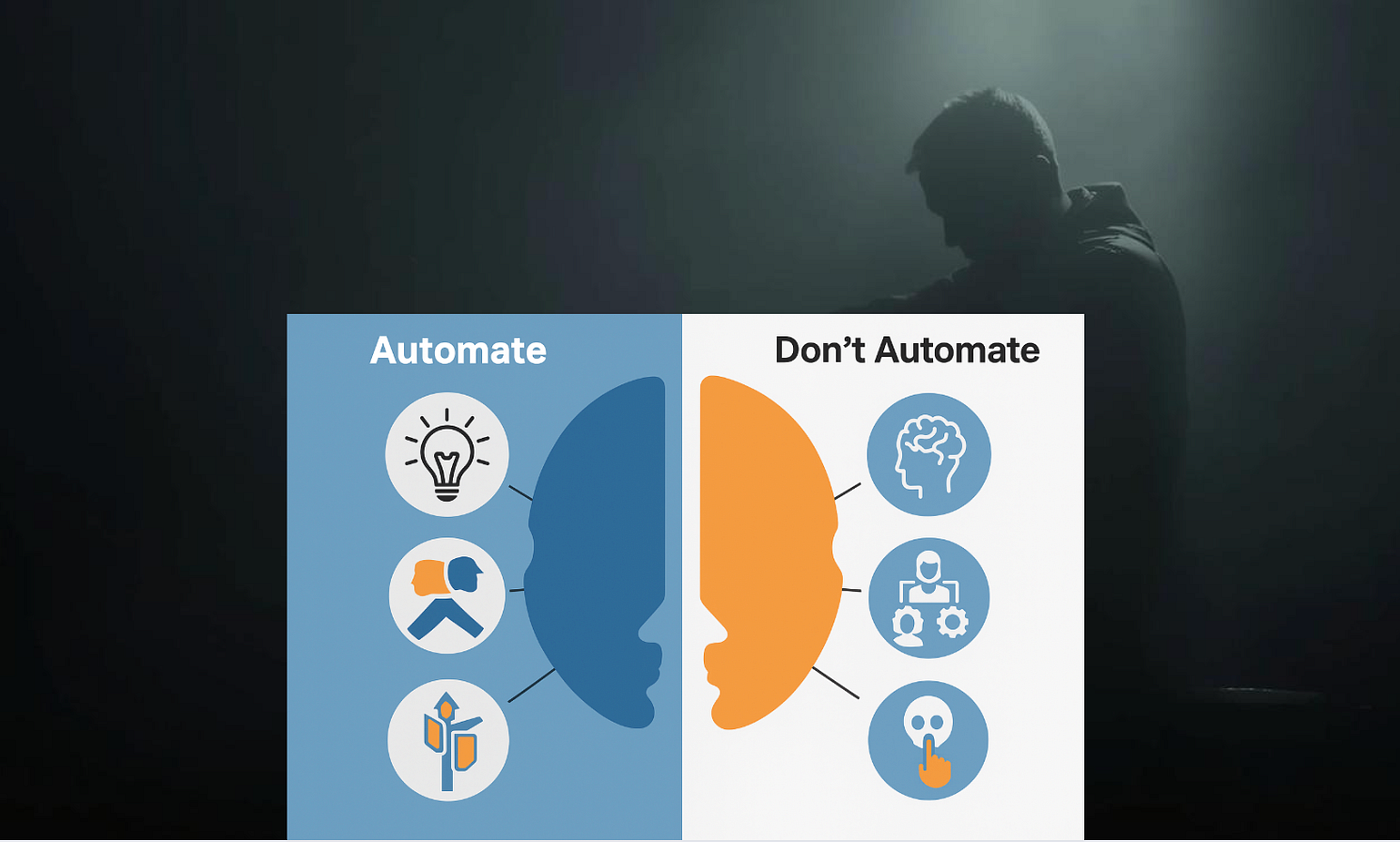
But is every task worth automating? Some tasks genuinely get better with automation. Others hold up better in human hands.
In this article, we will look at both. So let's dive in!
Tasks you should be automating
Not all tasks should be automated simply by virtue of the fact that a technology exists for them. The tasks that perform well with automation generally share certain traits in common; they are repetitive, rule-based, and tiring to perform. Automation truly adds value in such tasks.
Here are more specific factors that make work automatable.
1. Repetitive tasks
Automation excels at work that is done over and over again with few differences at a larger scale and without tiring. Tasks that would be considered a higher volume, done repetitively, with a certain set of rules, are perfect candidates for automation. Common tasks that fall in this category include data entry, reporting, or transferring data between systems.
These tasks are repetitive, tedious, and usually boring, so people would rather be doing something more meaningful than working on them.
2. Tasks prone to human error
Any task that has a higher chance of going wrong because they are error prone, tedious, or boring for a human being to do, is a good candidate for automation. People make mistakes if they get bored or they’re not paying close enough attention when focused on a task that involves a lot of other variables.
Common examples include things like copying values between systems, computations, and documentation.
Things like this are mundane and should really be left to a machine to do, so less time is wasted on boring tasks. People are happier, data is more reliable, and mistakes tend to be minimised when boring tasks are performed by machines.
3. Monitoring and Compliance Checks
If you’re having to pay a person to watch for a reason to do something at a set time, maybe it’s worth automating.
These types of tasks are mostly tedious or time-consuming.
Some good examples to think about are monitoring regulations for compliance and data checks, etc to make sure they’re running smoothly and notifying someone right away if they aren’t.
4. Connectors Between Processes
If there’s someone whose job is primarily to move data from point A to point B, you need to consider automating this work.
One thing to consider is if the time and effort to automate is worth the time saved. Some inefficiencies might not be worth the time and effort of automation.
5. Things That Have Become A Bottleneck
If you find yourself consistently frustrated by something that holds up progress, it’s most likely a bottleneck. You can look for things that cause you to consistently fall behind, add extra people to get more work done, and drain your resources. These are usually some of the most tedious, high volume, repetitive tasks that are perfect for automation and can give you an immediate boost in productivity.
What Doesn’t Belong on an Automation List
Some things don’t belong on an automation list, as they yield better results when handled manually. Forcing automation on the wrong tasks can cause more harm than good.
Here are some examples of work that should be better left to humans.
1. Anything You Can’t Describe Completely
Automating something you can’t describe means creating uncertainty around how something works. This is usually seen with things like
“If it’s not broken, don’t fix it”, “Only one person knows how to handle it”, or “It’s situational”
The first step to handling these tasks is to document them and make sure there are standard operating procedures in place. Then, automation can be handled when it’s ready.
2. Processes That Are Still Changing Frequently
Automating tasks like this is like building a bridge while cars are rushing up and down it. If there’s something that’s always in a state of change, it’s not a good candidate for automation. Something you can test if it’s ready for automation is whether a process has changed more than 2–3 times in the last 6 months.
3. Work That Needs Judgment or Relationships
People often forget that some things are better left to people. Some common examples of things that should stay human are
- Strategic calls made with incomplete information
- Creative problem solving without one clear answer
- Building relationships and reading emotional cues
- Navigating genuinely ambiguous situations
- Negotiations that depend on nuance
The goal here is to free people from busy work by automating, so they have more time and mental energy to handle these situations.
4. Rare, or Inconsistent Processes
If something only occurs a few times a year, it’s not a good candidate for automation. Something that changes frequently would be another sign. A good rule of thumb is to automate if it happens at least every 2–3 months, unless it’s really complicated. More common examples include big planning sessions, occasional projects, random requests from leadership, or reports that change each time.
Something to keep in mind when deciding whether to automate infrequent processes is to ask if it takes two hours every quarter to run, compared to twenty hours to automate.
5. Things That Cost More Than They’re Worth
If something is only taking half an hour a week for someone to do manually, and it would cost thousands or even millions of dollars to automate, it’s probably not worth it. Some things are just cheaper and easier to be left as they are.
Where Do We Stand?
Automation is a great tool, but it’s a tool that can be misused. Not all tasks are right for automation, and some can even hurt your team. As automation becomes more of a priority in the workplace, it’s important to understand what things belong on the automation list and what what doesn’t.
This guide can help you decide where to start.
Thank you for reading!
메타데이터
- post_id
- 401b5888d7d7
- slug
- what-really-deserves-a-spot-on-your-automation-checklist-401b5888d7d7
- url
- https://medium.com/@boanongjoshua/what-really-deserves-a-spot-on-your-automation-checklist-401b5888d7d7
- canonical_url
- https://medium.com/@boanongjoshua/what-really-deserves-a-spot-on-your-automation-checklist-401b5888d7d7
- author_url
- https://medium.com/@boanongjoshua
- status
- ok
- fetched_at
- 2026-07-30 15:14:27