Rife Technology: The Definitive Guide (What It Is, How It Works, Evidence, Safety, and Best…
Everything you need to understand Rife frequency technology — clear definitions, what research can and can’t show, safety considerations…
Rife Technology: The Definitive Guide (What It Is, How It Works, Evidence, Safety, and Best Practices)
Everything you need to understand Rife frequency technology — clear definitions, what research can and can’t show, safety considerations, and a responsible wellness routine.
If you searched “Rife technology,” you’re not looking for hype. You’re looking for truth you can use to make decisions about your health and wellness.
You want to know:
- What Rife technology actually is and **how it works**
- What it isn’t (and what claims are a hard stop)
- What people use it for in a general wellness routine
- What evidence exists, what’s missing, and how to think clearly
- How to use it responsibly — without overdoing it or getting scammed
- Bonus: The **best benefits of a Rife machine**
That’s what this guide delivers.
I’m **Brian Reese — combat veteran, entrepreneur, and author of [THE RIFE WAY](https://www.amazon.com/RIFE-WAY-Frequency-Technology-Self-Healing/dp/B0FQP2H9NC). I’ve spent years studying frequency-based wellness tools and, more importantly, teaching people how to approach this space with integrity, discipline, and guardrails…because Rife technology attracts sincere wellness seekers — and opportunists**.
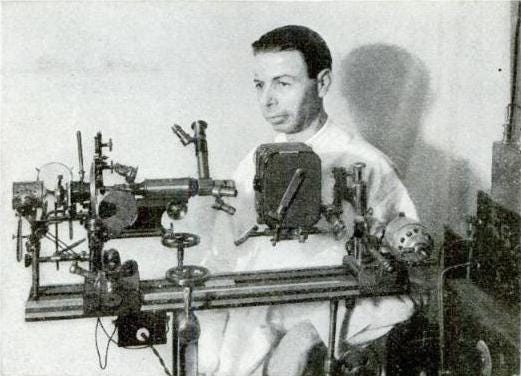
[Watch Video] Rife Frequency Technology: The Incredible Story of Dr. Royal Rife (1934)
[embed]
Summary of Key Points
- Rife technology = frequency-based wellness input (not medicine). Rife technology is a broad category of low-energy electromagnetic signal devices (often “Rife machines” / frequency generators) delivered through plasma tubes (non-contact broadcast) or contact electrodes (hand cylinders/pads/footplates). Used responsibly, it’s positioned as a repeatable, non-invasive support tool alongside fundamentals (sleep, movement, breathwork, hydration, nutrition) — not something that “forces” the body or replaces a healthy routine.
- Evidence lens: avoid emotional hijacking, think variables + outcomes. The most responsible framing is: there’s no reliable clinical evidence supporting “cure” claims for serious disease, but many people explore Rife sessions in the general wellness lane (relaxation, sleep support, stress downshifting, recovery support). Because “Rife technology” isn’t one standardized thing, outcomes can vary based on device type (plasma vs contact), waveform/output, quality, dosing, routine consistency, and expectations/placebo/nocebo — so the mature approach is conservative dosing, tracking trends, and refusing certainty marketing.
- Responsible routine that sticks: low-and-slow, track trends, adjust one variable at a time. Start by choosing one goal (sleep, stress downshift, recovery, or tension), then track a 7-day baseline (time-to-sleep, wakeups, morning clarity, energy stability, tension, mood). Run a 14-day protocol: Days 1–7 (10–20 min, 3–4 days/week, low intensity, 1–2 simple programs); Days 8–14 (15–30 min, 4–5 days/week, change only ONE variable). Watch for “overdoing it” signals (fatigue, irritability, wired-at-night, headaches, sleep disruption) and back off by reducing time/intensity and increasing spacing. Avoid scams by demanding claim discipline, safety transparency, documented specs, training/support, and fair policies — and walking away from pressure tactics and cure language.
1) Editorial guardrails
- Rife technology is general wellness only. It is not intended to diagnose, treat, cure, or prevent any disease.
- This article is educational, not medical advice.
- Do not stop, delay, or replace medical care because of something you read online.
- Talk to your clinician first, especially if you’re pregnant/nursing, have significant cardiac conditions, a seizure disorder, or implanted medical devices (pacemaker/ICD, neurostimulator, insulin pump, etc.).
- If anyone promises cures — especially for cancer — treat it as a hard stop. Walk away.
2) What is Rife technology?

Rife technology is a category of frequency-based wellness devices (often called “**Rife machines” or “frequency generators”) that produce low-energy electromagnetic signals** and deliver them through external applicators.
Think of it like this:
You’re not “forcing” the body to do something. You’re providing a repeatable signal input that some people use to support relaxation, recovery, and nervous system downshifting — within a wellness routine.
The two most common delivery methods
A) Plasma tube (non-contact broadcast)
A plasma tube emits a field into the surrounding space. You sit or lie nearby while a program runs.
- Pros: non-contact, simple.
- Cons: user expectations can drift into “magic wand” thinking — don’t.
B) Contact electrodes (conductive delivery)
Hand cylinders, pads, footplates, or similar applicators deliver the signal through direct contact.
- Pros: more “tangible” session, often easier to standardize.
- Cons: intensity can be overdone if you don’t respect dosing.
Where Rife technology fits in a modern wellness routine
Rife sessions are usually used as a non-invasive, time-efficient input that can fit alongside fundamentals like:
- Sleep hygiene
- Walking and strength training
- Breathwork and stress regulation
- Hydration + whole-food nutrition
- Sauna/red light (if appropriate/cleared)
If your routine is chaos, Rife won’t fix that. But if your routine is solid, Rife can become a repeatable support tool.
3) What Rife technology is not
Let’s remove confusion ultra-fast.
Rife technology is not:
- A proven medical treatment modality
- FDA-approved to cure disease
- A substitute for a medical team
- A license to ignore symptoms that need evaluation
Also: watch the word games.
- “FDA registered” does not mean “FDA approved to treat disease.”
- “Approved” and “registered” are not the same claim, and unethical marketers lean on that confusion.
4) Why people use Rife technology
Most people aren’t looking for “more biohacking.”
They’re looking for a different lane because they feel off:
- Wired at night, tired mid-day
- Achy from travel, posture, stress, training
- Slower recovery than they used to have
- A nervous system that won’t downshift
The best analogy: a “tuning” tool
Think of Rife technology like a tuning fork for routine.
Not a cure. Not a miracle.
More like a structured input that helps some people shift from “noise” toward coherence — a calmer, more organized internal state where recovery becomes easier.
Common general-wellness goals people track
- Falling asleep faster
- Fewer night wake-ups
- Feeling less “revved” in the evening
- Less tension in the body
- Smoother energy and recovery trends
Notice what’s missing: disease claims. That’s intentional.
5) How Rife technology works (plain English)
Your body runs on rhythms: breathing cadence, HRV patterns, stress physiology, circadian timing, and complex signaling.
Modern life pushes those rhythms toward “static”:
- too little sleep
- too much stress
- too much stimulation
- too little recovery time
A Rife session is often used as a gentle, repeatable input — something people schedule the way they schedule a walk, stretching, or breathwork.
What’s happening “under the hood” (4 core components)
- Frequency generator: Creates a set signal (frequency, waveform, modulation, duty cycle).
- Amplifier: Boosts signal to a controlled, consistent output.
- Delivery system: Plasma tube or contact applicators.
- Interface/programs: The practical part: how you run sessions consistently without turning it into a complicated hobby.
What most people notice (when it helps)
Not fireworks. More like:
- “I fell asleep easier.”
- “I woke up clearer.”
- “I feel less tight.”
- “My evenings feel calmer.”
If someone tells you they “felt nothing,” that’s not automatically bad. Many wellness inputs are subtle and trend-based.
6) Evidence: what we know, what’s claimed, what’s missing
This is where people get emotionally hijacked.
Because most people ask one question but mean five.
“Does Rife technology cure cancer?”
The responsible answer is: No reliable clinical evidence supports that claim, and no one should replace cancer care with a device, protocol, or internet program.
“Can Rife technology support general wellness?”
That’s the mature question.
Many people explore frequency sessions as part of a wellness routine aimed at:
- relaxation
- sleep support
- stress downshifting
- recovery support
But here’s the key: “Rife technology” is not one standardized thing. It’s a wide category with variables that change outcomes:
- plasma vs contact delivery
- different waveforms and outputs
- different device quality
- different routines and dosing
- different expectations and placebo/nocebo effects
So the most honest lens is:
- Stay in the wellness lane
- Use conservative dosing
- Track outcomes
- Avoid cure claims
- Keep your clinician involved when needed
7) Safety: who should avoid it (or get clearance first)
Safety depends on three things:
- the person
- the device
- the dose
Higher-caution groups (get medical clearance first)
- Pregnant/nursing
- Significant cardiac conditions
- Seizure disorders
- Implanted medical devices (pacemaker/ICD, neurostimulator, insulin pump, etc.)
Can you overdo it?
Yes.
And overdoing it looks like:
- unusually fatigued
- irritable
- “wired” at night
- headaches
- sleep disruption after sessions
- “over-revved” nervous system feeling
If that happens: reduce time, reduce intensity, increase spacing, simplify programs.
The #1 beginner mistake
Stacking too many programs and running long sessions early because you’re excited.
Consistency beats intensity. Every time.
8) The simplest Rife routine that actually sticks (Beginner → Advanced)
This is where most people fail: they make it complicated.
Here’s the repeatable system.
Step 1: Pick one primary goal (don’t pick five)
Choose one:
- Sleep support
- Stress downshift
- Recovery support
- “Body tension” support
Step 2: Set a baseline for 7 days
Track these daily (1–10 scale is fine):
- time-to-sleep
- night wake-ups
- morning clarity
- daytime energy stability
- body tension/stiffness
- mood/irritability
No baseline = you’re guessing.
Step 3: Run a 14-day “low and slow” protocol
Days 1–7:
- 10–20 minutes
- 3–4 days total
- low intensity
- 1–2 simple programs max
Days 8–14:
- 15–30 minutes
- 4–5 days total
- only adjust ONE variable (time or frequency selection or timing)
Step 4: Review trends, not feelings
Ask:
- Is sleep trending better?
- Is evening tension trending lower?
- Is recovery smoother?
- Any signs I’m overdoing it?
If you want consistency, you need a routine you can run on your worst week, not your best week.
9) Real-world examples
Example 1: “Wired at night” executive
Goal: fall asleep faster and wake clearer Routine: 20 minutes pre-bed, 4 nights/week Stack: dim lights + no screens last 30 minutes + cool room Track: time-to-sleep, wakeups, morning clarity
Example 2: “Achy from normal life” parent
Goal: less tension and more comfortable movement Routine: 15–20 minutes after work, 4 days/week Stack: 5 minutes mobility + hydration Track: night tension rating, morning stiffness rating
Example 3: Fitness-focused athlete
Goal: shorter soreness window + better readiness Routine: 20–40 minutes after training days Stack: protein + walk + sleep priority Track: soreness window, readiness, sleep quality
Notice the pattern: simple, repeatable, trackable.
10) How to evaluate a device and avoid scams
This industry rewards discernment.
What to look for (green flags)
- Claim discipline: wellness language, no cure claims
- Safety transparency: clear contraindications and warnings
- Engineering credibility: stable output, documented specs, reproducibility
- Support & training: education, onboarding, reachable customer support
- Fair policies: warranty + reasonable return policy
Red flags (walk away)
- “Cures cancer” or “kills pathogens” certainty
- pressure tactics (“buy today or you lose the deal”)
- no contraindications listed
- vague specs, no documentation
- using “FDA registered” to imply disease approval
- a seller who discourages medical care
If someone is selling certainty, they’re selling you.
11) Rife vs PEMF vs TENS vs clinical radiofrequency
People confuse these constantly.
- Rife technology: frequency programs delivered via plasma/contact; used in wellness routines
- PEMF: pulsed electromagnetic fields; often marketed for comfort/recovery support
- TENS: electrical stimulation mainly used for pain modulation
- Clinical radiofrequency: medical procedures under protocols with trained providers
Different tools. Different intent. Different evidence standards.
12) Frequently Asked Questions (FAQs)
Is Rife technology FDA approved?
Rife devices are not approved to diagnose, treat, cure, or prevent disease. Be careful with “FDA registered” marketing language.
Can Rife technology cure cancer, Lyme, or serious disease?
There is no reliable clinical evidence supporting those cure claims, and it should never replace medical care.
What does a session feel like?
Often calm and uneventful. With contact devices, some people notice mild tingling or warmth. Many feel nothing dramatic — and that’s normal.
How often should I use Rife technology?
A good starting point: 10–20 minutes, 3–4 days/week for 2 weeks. Then adjust based on trends and tolerance.
When is the best time to run a session?
Depends on your goal:
- Sleep support: evening / pre-bed
- Stress downshift: midday or after work
- Recovery support: post-training or evening
Can I overdo it?
Yes. If you feel wired, fatigued, irritable, or your sleep worsens — back off.
What’s the best beginner mistake to avoid?
Running long sessions, stacking programs, chasing “more.” Low and slow wins.
How long until I notice benefits?
Some notice changes quickly; others need 2–4 weeks of consistent use. Track trends.
Should I combine Rife with other modalities?
You can, but avoid stacking everything at once. Add one variable at a time so you know what’s doing what.
What should I track?
Sleep, energy stability, tension, mood, recovery, and any negative signals like sleep disruption.
Who should not use Rife technology without medical clearance?
Pregnant/nursing, seizure disorders, significant cardiac conditions, and anyone with implanted medical devices.
Is “detox” real?
Your body already detoxes through liver, kidneys, lymph, lungs, skin, and GI. If you feel worse after sessions, reduce intensity/time and prioritize hydration + sleep.
Do I need a “scan” device?
You don’t need one. The simplest path is: pick one goal, run a simple routine, track outcomes, adjust.
How do I avoid scams?
Refuse cure claims. Demand safety transparency. Ask for documentation. Avoid pressure.
13) Next steps (do this, in order)
If you want the best chance of real-world benefit, follow this sequence:
- Stay in the wellness lane. No disease claims. No miracle thinking.
- Pick one goal (sleep, stress, recovery, tension).
- Track a 7-day baseline.
- Run a 14-day low-and-slow routine.
- Adjust one variable at a time.
- Keep your clinician in the loop if you have any medical complexity.
- Refuse certainty salesmen. Every time.
How to download and get my book: THE RIFE WAY by Brian Reese
If you want the full story, the guardrails, and the most disciplined approach I know how to teach about Rife machines, download my eBook for free: **THE RIFE WAY: The Untold Story of Frequency Technology and the New Science of Self-Healing.**
You can also buy the paperback version on Amazon:
- Open Amazon
- Search “THE RIFE WAY Brian Reese” or click this link: https://www.amazon.com/dp/B0FQP2H9NC
- Choose your format (Kindle / Paperback)
- Download the Kindle app (phone/tablet) if you want to read immediately
Bottom line on Rife technology
Rife technology isn’t a magic wand. It’s a repeatable wellness input that some people use to support relaxation, sleep, stress downshifting, and recovery — especially when paired with fundamentals.
If you want the best outcomes:
- stay in the wellness lane
- start low and go slow
- track trends (sleep, energy, mood, recovery)
- choose a device you’ll actually use consistently
- keep your clinician involved when needed
- refuse cure claims — no exceptions
About The Author

**Brian Reese** is one of the world’s leading experts on VA disability benefits and a bestselling author dedicated to serving those who served. Since 2013, his education and coaching have helped millions of veterans and families pursue the VA benefits they’ve earned — unlocking billions in tax-free compensation.
A former active-duty U.S. Air Force officer, Brian deployed to Afghanistan in support of Operation Enduring Freedom and received the Defense Meritorious Service Medal. He is a Distinguished Graduate of Management from the U.S. Air Force Academy and earned an MBA as a National Honor Scholar from Oklahoma State University.
In 2024, Brian was diagnosed with Stage 4 Hodgkin’s Lymphoma and completed thirteen rounds of chemotherapy — an experience that deepened his commitment to responsible, evidence-aware wellness education. He writes practical, compliance-aware guides on Rife frequency technology for general wellness — relaxation, sleep quality, stress management, and recovery support. He is the author of **THE RIFE WAY: The Untold Story of Frequency Technology and the New Science of Self-Healing**. His approach: educate first, avoid hype, cite balanced sources, and help people use frequency tools responsibly.
Beyond veteran advocacy and wellness education, Brian is an entrepreneur and investor who backs ventures that improve lives and create lasting impact. He is a supporter of Eden Life and its mission to make frequency-based wellness clear and accessible. His mission is to multiply every blessing God has entrusted to him by 100× — for His glory and the advancement of His Kingdom.
Disclosure: Brian supports Eden Life and may write about its products. All content is educational, general-wellness in scope, and not medical advice.
메타데이터
- post_id
- 40a38c2d1b1a
- slug
- rife-technology-the-definitive-guide-40a38c2d1b1a
- url
- https://medium.com/@briantreese/rife-technology-the-definitive-guide-40a38c2d1b1a
- canonical_url
- https://medium.com/@briantreese/rife-technology-the-definitive-guide-40a38c2d1b1a
- author_url
- https://medium.com/@briantreese
- status
- ok
- fetched_at
- 2026-06-21 07:44:09